Japanese Automakers Commit Billions to Thai Manufacturing
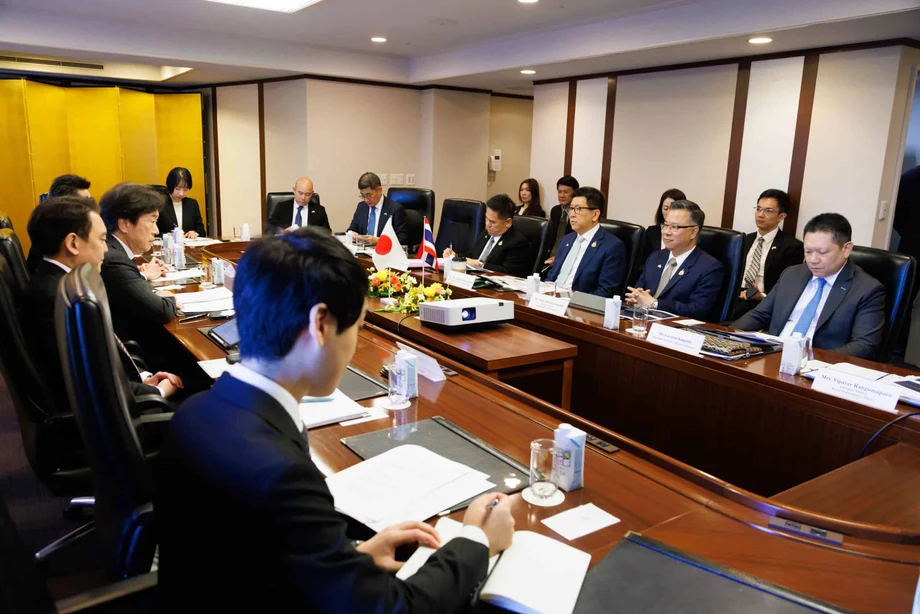
Six major Japanese vehicle manufacturers have officially committed to investing more than 134 billion baht (approximately USD 4.1 billion) in Thailand over a five-year span from 2026 to 2030. Toyota, Honda, Isuzu, Mitsubishi, Mazda, and Nissan announced these financial plans following discussions held on November 20, 2026, in Tokyo, Japan. The announcements follow recent economic shifts, continuing a trend where digital industries and manufacturing have seen surging interest, much like Thailand investment applications hit 1.7 trillion baht earlier in the year. The fresh capital injection is designed to upgrade local factories, support multi-pathway electrified vehicles, and advance automation and domestic parts production.
Contents
Deputy Prime Minister and Finance Minister Ekniti Nitithanprapas led the Thai delegation, which included Industry Minister Varawut Silpa-archa and other senior officials. Ekniti outlined the core objectives of the visit, emphasizing long-term investments that position Thailand as an environmentally friendly production and export hub. The talks addressed how automotive companies can utilize locally sourced components to build resilient supply chains.
Executive representatives from the participating automotive companies expressed confidence in the country's industrial potential. Narit Therdsteerasukdi, Secretary-General of the Thailand Board of Investment, noted that Japanese investors have already submitted 367 applications for automotive promotion worth over 79 billion baht between 2021 and September 2026. This ongoing commitment cements the nation's status as a premier regional vehicle hub.
New Excise Tax Structure Targets Fully Imported Vehicles
The core policy catalyst behind the new investment pledges is a revised automotive excise tax structure set to take effect on January 1, 2027. Under this policy, fully imported battery electric vehicles and extended-range electric vehicles brought in by companies without a domestic manufacturing base will face a 35 percent excise tax rate. This adjustment follows earlier policy discussions exploring various import tax adjustments, mirroring efforts seen when Thailand plans EV excise tax of about 30% to encourage local assembly lines.
Vehicles produced within the country or imported by companies maintaining active local factories will benefit from tax rates directly tied to their local investments, workforce numbers, and component sourcing. Ekniti explained the policy rationale during the Tokyo meetings:
The government aims to build fair and equal competition for every technology, where privileges tie directly to investments and benefits for Thailand through technology transfer, job creation, skill development, local parts usage, and supply chain strengthening.
Automotive executives acknowledged that the clear distinction between domestic producers and pure importers provides crucial regulatory certainty. While current domestic vehicles pay a much lower excise rate of around 2 percent compared to the standard 35 percent import baseline, industry representatives requested consideration for a mid-tier tax rate and flexibility on local content timelines for key hybrid electric vehicle parts.
Individual Automaker Strategies and Green Technologies
Each of the six manufacturers has outlined specific production focuses to navigate the ongoing transition toward sustainable transportation. Toyota plans to expand its vehicle and pickup truck platforms to support hybrid electric vehicles, battery electric vehicles, and hydrogen fuel cell electric vehicles. The company specifically intends to use Thailand as a global export base for a brand-new hydrogen fuel cell pickup truck.
Isuzu aims to maintain the country's strength as a commercial vehicle hub while developing battery electric pickups and hydrogen fuel cell trucks. The company also promotes B20 biodiesel usage and prepares to test B30 fuel blends. Honda focuses on its Smart Hybrid lineup, combining fuel-efficient hybrid systems with advanced smart car technology. Mitsubishi targets hybrid and plug-in hybrid powertrains specifically for pickup trucks and passenger vehicle utilities.
Mazda is developing a mild hybrid manufacturing line, automating assembly processes, and laying the foundation for future battery-electric models. Nissan plans to expand supply chain investments and train local personnel to elevate domestic production technology. These strategic adaptations arrive as automakers balance rising operational costs and technological pressures.
Addressing Domestic Market Pressures and Supply Chain Demands
The discussions in Tokyo also tackled broader economic headwinds, including a slowdown in the domestic pickup truck segment. Industry representatives proposed a trade-in program for older vehicles tied to carbon dioxide emission levels to stimulate domestic sales and encourage drivers to upgrade to cleaner models. Government officials agreed to review these proposals while weighing potential budget burdens and fairness to consumers.
Automakers additionally requested that authorities streamline redundant customs procedures and standards inspections. They also asked for a definitive timeline for enforcing Euro 6 emission standards and clearer regulatory guidelines for compensatory production under previous electric vehicle support measures. Narit Therdsteerasukdi confirmed that the Board of Investment will coordinate with relevant agencies to analyze these technical requests.
Supply chain development remains a central priority for both the government and foreign investors. Companies plan to work closely with local suppliers to upgrade engineering skills in electric drivetrains, electronic components, and automated manufacturing systems. This collaborative approach builds upon ongoing national efforts to strengthen industrial infrastructure, echoing how Thailand approves 65 billion baht PCB investment to secure foundational electronic components for advanced manufacturing.
Workforce Development and Research Initiatives
Upgrading local talent is a fundamental pillar of the new multi-year investment strategy. Technical institutes and manufacturing plants are aligning training programs to prepare engineers and technicians for the specialized demands of electric and automated vehicle production. Research and development activities will receive increased focus to ensure local suppliers remain competitive globally.
The integration of local parts manufacturers into multinational supply chains helps guarantee that economic growth benefits domestic operators. By emphasizing local value addition alongside foreign direct investment, authorities seek to avoid past pitfalls where industrial growth remained isolated from the domestic workforce.
These developments unfold within a broader national economic recovery. As highlighted when Thailand's GDP grows 2.9% as AI investment lifts exports, the manufacturing sector continues to adapt to rapid technological changes. Automotive investments are expected to provide a stable foundation for long-term industrial employment.
At a Glance
- Six Japanese automakers pledged over 134 billion baht for investments in Thailand between 2026 and 2030.
- Fully imported battery electric and extended-range electric vehicles without local plants will face a 35 percent excise tax starting January 1, 2027.
- Toyota announced plans to build and export new hydrogen fuel cell pickup trucks from Thai facilities.
- Isuzu is promoting alternative fuels, including B20 biodiesel and upcoming B30 trials.
- Japanese investors submitted 367 automotive promotion applications worth over 79 billion baht between 2021 and September 2026.
- Discussions included proposals for a carbon-based trade-in program for older vehicles to revive the domestic market.