Digital projects dominate a 28% investment surge
Thailand received 1,954 applications for investment promotion worth 1.70743 trillion baht, about US$50.37 billion, between January and September 2026, according to figures announced by the Board of Investment (BOI) on October 26. The value rose 28% from the same period in 2025, with digital infrastructure, electronics, agriculture and food providing the main engines of growth.
Contents
- Digital projects dominate a 28% investment surge
- Why digital investment carries so much weight
- AI investment reaches beyond data centres
- Food and agriculture grow alongside technology
- Power and industrial services support the expansion
- Singapore leads foreign investment by value
- Central and eastern Thailand receive most proposals
- Approvals bring projected jobs and local purchases
- Existing factories are also seeking upgrades
- Key Points
Digital projects alone accounted for more than 1.17 trillion baht, roughly 69% of the total value, despite representing just 139 applications. Across several industries, projects connected to the artificial intelligence supply chain exceeded 1.2 trillion baht. The figures show how strongly Thailand's investment pipeline now depends on the buildings, equipment and services needed to store data and run increasingly powerful computing systems.
Foreign investment applications rose even faster, increasing 62% to 1.550784 trillion baht. Applications attributed to Singapore accounted for about three quarters of that foreign investment value, while China submitted the largest number of projects among the five leading foreign investor locations.
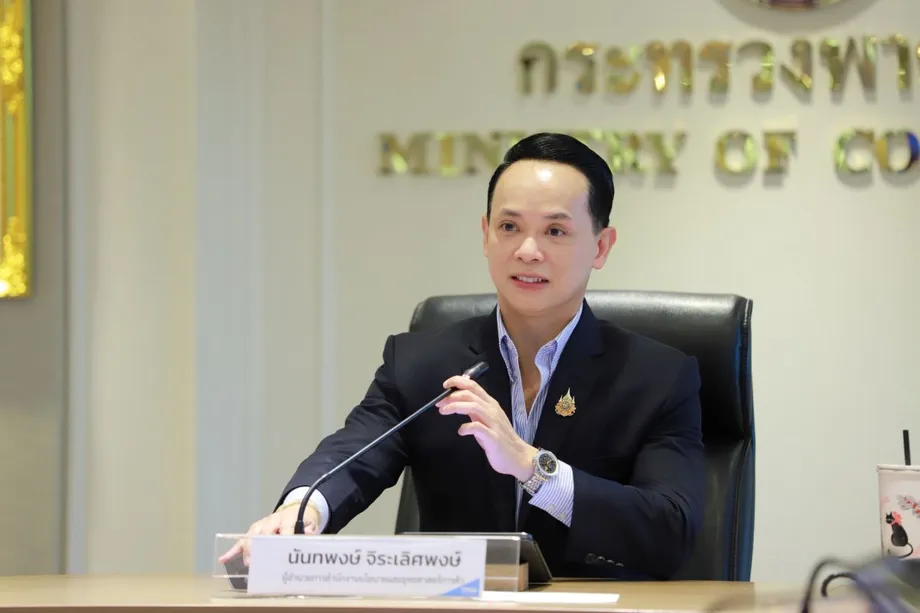
Narit Therdsteerasukdi, secretary general of the BOI, presented the figures against a backdrop of geopolitical pressure and changing technology that is prompting companies to reconsider where they invest and manufacture. The agency linked Thailand's performance to improvements in regulation and infrastructure, its Thailand FastPass investment acceleration mechanism and the government's Skill Bridge workforce development measure.
The headline total measures the value of projects seeking investment promotion. Approvals and promotion certificates mark later stages in the process, with their own totals. For workers and local businesses, the practical benefits will come as projects move into construction, production, purchasing and hiring.
Why digital investment carries so much weight
The digital sector's 139 applications were worth almost twice as much as in the same period a year earlier. Its share of application value was far larger than its roughly 7% share of project numbers, showing the influence of large individual investments on the national total.
Electronics and electrical appliances followed with 262 projects worth 189.37 billion baht, an increase of 7%. Together, digital projects and electronics accounted for about 1.36 trillion baht, close to 80% of all application value. Their growth rates were very different: digital investment nearly doubled, while electronics expanded more gradually.
The BOI connected both industries to rising demand for AI and modern electronic products. AI services need computing capacity, while the machines providing that capacity need chips, circuit boards, storage devices, communications equipment and electrical systems. Thailand is attracting proposals across those connected activities.
A data centre is a facility that houses computers and equipment used to process and store information. Cloud services let customers use computing resources over a network instead of keeping all the equipment themselves. Investment in those services can therefore generate demand for physical products made by electronics manufacturers.
AI investment reaches beyond data centres
The BOI identified 111 applications worth more than 1.2 trillion baht across the AI supply chain, equivalent to more than 70% of total application value. This grouping brings together related activities across industrial categories, including digital services and electronics.
The projects cover data centres, data hosting, cloud services, chip design, semiconductor manufacturing and testing, electronic components and printed circuit boards. They also include photonics, which uses light to carry information, along with electrical supply systems, AI servers and hard disk drives.
Named applicants illustrate the range. Analog Devices sought promotion for semiconductor and integrated circuit testing. Delta Electronics applied for circuit board production and systems that supply, convert and control electricity. Western Digital Storage Technologies proposed expanding production of advanced hard disk drives.
Eoptolink Technology's proposed activities include optical transceivers, devices that send and receive information using light at high speed. Celestica's applications cover network switches, mainboards and AI servers. Together, these products help computers communicate, process information, store results and receive the electricity they need.
Narit described the BOI's priorities in a statement in Thai. In English translation, he said:
The BOI continues to attract new investment alongside upgrading the existing industrial base, giving priority to technology and workforce development, while encouraging Thai businesses to enter the supply chains of advanced technologies to create added value domestically and strengthen long term competitiveness.
Food and agriculture grow alongside technology
Agriculture and food attracted 218 applications worth 80.19 billion baht, up 59% from the same period in 2025. That was much faster growth than the 7% recorded for electronics, although the sector's investment value remained considerably smaller.
The applications cover food and beverages made using modern technology, animal feed, modified starches, extracts from natural materials and rubber products. They also include products and packaging made from crops or agricultural residues, linking manufacturing proposals to Thailand's existing raw material base.
Nestle applied for coffee and pet food production, while Thai Inaba Foods sought promotion for pet food. Siam Quality Starch and Siam Modified Starch proposed producing starches with specialised properties. European Food submitted an application for snack production.
These projects offer a different route to domestic economic activity from large computing facilities. Food processors can purchase agricultural inputs and turn them into more valuable manufactured products. The BOI identified greater use of domestic raw materials and a wider range of products as opportunities arising from these investments.
Power and industrial services support the expansion
Energy and basic utilities recorded the largest number of applications of any sector: 313 projects worth 59.87 billion baht. The proposals included electricity generation from solar, wind, biomass and biogas, along with industrial estates and water production for industrial use.
Computing facilities and advanced factories depend on reliable electricity and utilities. The BOI placed these investments alongside Thailand's efforts to prepare its industrial base for more demanding production and greater access to clean energy.
Other applications show activity beyond the sectors dominating the headlines. Logistics and services attracted 51.82 billion baht across 236 projects, while vehicles and components accounted for 36.34 billion baht across 191 projects.
Minerals, metals and materials drew 28.46 billion baht across 183 projects. Chemicals and petrochemicals recorded 22.16 billion baht across 178 projects, and machinery, automation and robotics attracted 18.88 billion baht across 122 projects. Their smaller values sit alongside a substantial number of proposed factories and services.
Singapore leads foreign investment by value
Foreign direct investment applications totalled 1,309 projects worth 1.550784 trillion baht. That represented about 91% of the value of all investment promotion applications, compared with about 67% of the project count. Foreign participation was therefore especially prominent in the larger proposals.
Singapore led with 214 projects worth 1.164595 trillion baht, about 75% of foreign application value and 68% of the national total. China followed by value with 493 projects worth 63.39 billion baht. China submitted more than twice as many projects as Singapore, while Singapore's applications carried a much larger combined value.
The United Kingdom accounted for 15 projects worth 48.311 billion baht. Japan submitted 192 projects worth 45.478 billion baht, and Taiwan accounted for 70 projects worth 43.243 billion baht.
Foreign applications were concentrated in digital infrastructure, semiconductors, electronics and electrical appliances. Large proposals also covered food and beverages, animal feed, vehicles and components, precision machinery and parts, metal products and chemicals.
The 62% rise in foreign application value exceeded the 28% increase in the total. That difference helps explain the scale of the current investment wave: foreign investment proposals were growing faster than the combined pipeline, with a particularly heavy concentration of value attributed to Singapore.
Central and eastern Thailand receive most proposals
Central Thailand attracted 778 projects worth 955.26 billion baht, the largest regional total by value. Eastern Thailand followed with 856 projects worth 632.32 billion baht. Together, the two established industrial regions accounted for about 93% of total application value.
The eastern region recorded more projects, while the central region attracted more money. Their combined dominance means that much of the proposed expansion is concentrated in Thailand's existing industrial centres.
Southern Thailand attracted 34.14 billion baht, up 40% from a year earlier. Leading activities included hotels, palm oil production, rubber processing, rubber products and renewable electricity. Phuket, Phangnga, Songkhla and Surat Thani were among the provinces with the highest investment values in the region.
The northeast recorded applications worth 23.93 billion baht, followed by the north with 12.68 billion baht and the west with 8.96 billion baht. Southern growth was faster than the national rate, but its much smaller total shows the continuing distance between the main industrial centres and other regions.
Approvals bring projected jobs and local purchases
The BOI approved 1,951 projects worth 1.5126 trillion baht during the first nine months of 2026. It projected that those approved projects would create more than 116,000 additional jobs for Thai workers, purchase over 693 billion baht in domestic raw materials and components annually, and generate annual exports exceeding 1.96 trillion baht.
Those projections describe several ways investment could reach households and businesses: wages for employees, orders for domestic suppliers and production for export markets. The BOI also identified opportunities for Thai companies to produce components, supply materials, install equipment and maintain systems connected to new investments.
Promotion certificates were issued for 1,961 projects worth 1.04771 trillion baht, a 10% increase in value. The BOI described certificate issuance as the stage closest to actual investment. Application, approval and certificate totals each count projects at a different point in the process; projects can move between those stages across reporting periods.
The announcement gave the following reporting timeline:
- January to September 2026: The BOI recorded 1,954 applications, 1,951 approvals and 1,961 promotion certificates.
- September 30, 2026: The nine month reporting period ended.
- October 26, 2026: Narit announced the investment figures.
The BOI gave no common construction or opening date for the proposed projects. The employment, purchasing and export figures are forecasts attached to approved investments, with benefits arriving as individual operations proceed.
Existing factories are also seeking upgrades
Thailand's investment drive includes changes to established businesses. Under the BOI's Smart and Sustainable Industry measure, 196 applications worth 20.431 billion baht sought support for industrial improvements during the first nine months.
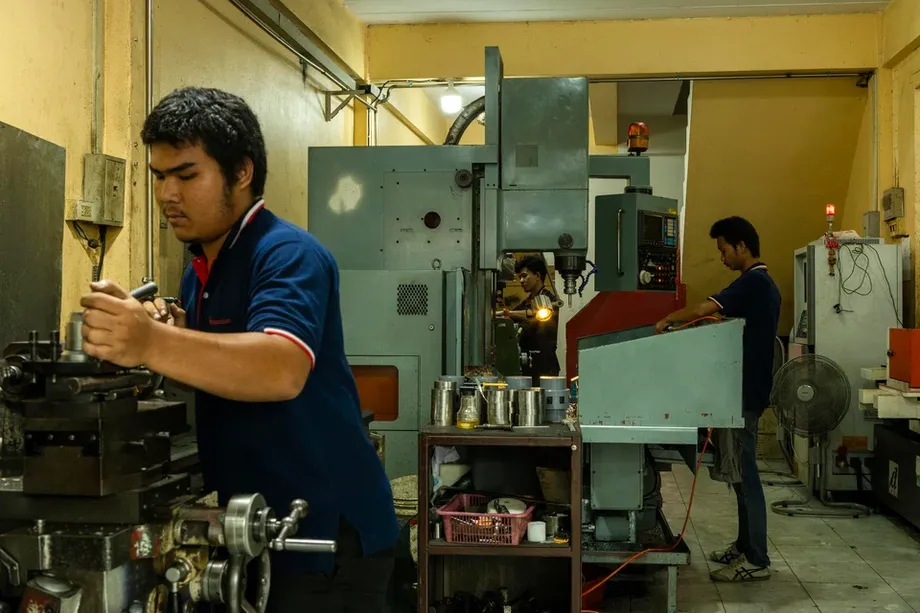
The proposed upgrades included replacing machinery to improve production efficiency, saving energy, using renewable energy, adopting digital technology and introducing automation and robots into manufacturing and services. For an existing factory, these changes can mean producing more with the same resources or lowering the cost of each item.
Thailand FastPass and Skill Bridge address two other parts of the investment process: moving projects forward and preparing workers for industries requiring new skills. The BOI cited both measures in explaining the investment momentum, alongside regulatory and infrastructure improvements.
The figures put two developments side by side. A small number of large digital projects dominates investment value, while food producers, utilities and established manufacturers account for many other applications. Thailand's stated goal is to connect the new technology investments with domestic production, services and workforce development so that more of the resulting business reaches local companies and workers.
Key Points
- Thailand received 1,954 investment promotion applications worth 1.70743 trillion baht in January to September 2026, up 28% by value.
- Digital projects accounted for more than 1.17 trillion baht, roughly 69% of total application value.
- Across related industries, 111 AI supply chain projects were worth more than 1.2 trillion baht.
- Foreign investment applications rose 62% to 1.550784 trillion baht, with Singapore leading by value.
- Agriculture and food applications rose 59% to 80.19 billion baht across 218 projects.
- Central and eastern Thailand together attracted about 93% of application value.
- Approved projects were expected to create more than 116,000 Thai jobs and purchase over 693 billion baht in domestic materials and components annually.
- Applications, approvals and promotion certificates represent different stages before projects begin operating.