New Trade Framework Signed in Manila
Thailand and the United States reached a major milestone in their bilateral economic relations on November 17, 2026, when Prime Minister Anutin Charnvirakul and U.S. President Donald Trump signed a joint statement in Manila, Philippines. The agreement establishes a foundational framework for a future trade pact known as the Agreement on Reciprocal Trade, or ART. The signing marks the continuation of economic discussions that build upon the longstanding U.S.-Thailand Treaty of Amity and Economic Relations, signed in 1966, and the U.S.-Thailand Trade and Investment Framework Agreement, signed in 2002. While the joint statement signals political alignment and sets clear economic goals, the formal agreement requires additional legal steps before taking effect.
Contents
- New Trade Framework Signed in Manila
- Understanding the Tariff Structure and Section 301 Negotiations
- Market Opening Commitments and Commercial Purchases
- Timeline and Domestic Legal Requirements
- Addressing Agricultural Concerns and Red Meat Standards
- Regional Context and Broader Economic Strategy
- The Bottom Line
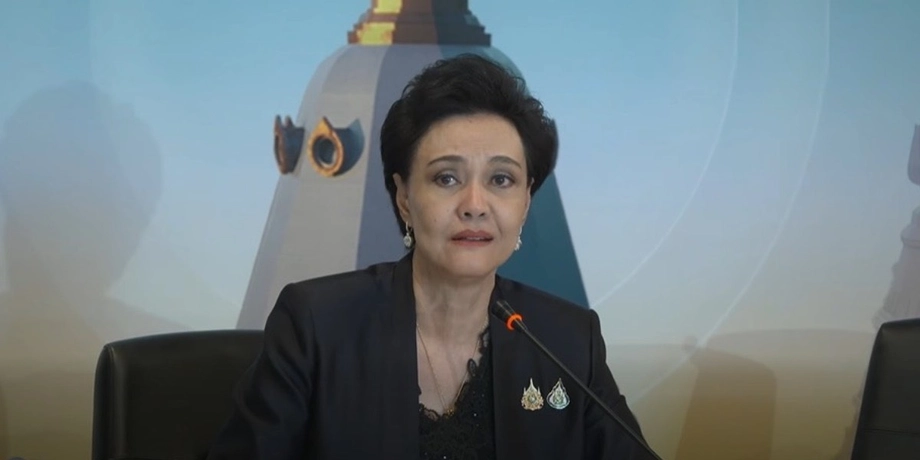
Deputy Prime Minister and Minister of Commerce Supajie Sutumpun explained the significance of the agreement during a press briefing on November 20, 2026, at Royal Thai Air Force Wing 6 in Bangkok. She emphasized that the signed framework is not yet a final, binding treaty, but rather a mutual understanding that allows Thailand to align its trade status with neighboring nations. The United States remains Thailand's largest export market, generating an export value of 2.37 trillion baht in the year 2025 and supporting approximately 1.25 million domestic jobs. Government officials stressed that securing favorable tariff treatment is essential for maintaining the competitiveness of Thai goods abroad, particularly as global trade policies continue to shift.
Understanding the Tariff Structure and Section 301 Negotiations
Under the newly established trade framework, the United States will maintain baseline reciprocal tariffs at 19 percent for originating goods from Thailand, as set forth in Executive Order 14257 of April 2, 2025. Additionally, certain qualifying products identified in Annex III of Executive Order 14346 of September 5, 2025, concerning potential tariff adjustments for aligned partners, are eligible for a zero percent reciprocal tariff rate. Thai trade negotiators are using this newly formalized status to address separate punitive tariffs imposed under Section 301 of U.S. trade law.
Before the joint statement was signed, Thai exports faced a 12.5 percent tariff rate under Section 301 investigations related to forced labor concerns. Meanwhile, regional neighbors such as Malaysia, Indonesia, and Cambodia secured a reduced rate of 10 percent after concluding their own trade frameworks with Washington. Supajie noted that even a small percentage difference carries enormous financial consequences when applied across Thailand's multi-trillion-export economy. Following the Manila meeting, Thai officials immediately initiated talks with U.S. representatives, including U.S. Trade Representative officials, to secure the same 10 percent rate for Thai goods and prevent local exporters from losing market share to regional competitors.
Market Opening Commitments and Commercial Purchases
The trade framework outlines reciprocal commitments from Thailand, including eliminating tariff barriers on approximately 99 percent of goods to cover a full range of U.S. industrial, food, and agricultural products. This market opening strategy follows terms initially negotiated in July 2025. Government representatives have clarified that opening the market does not mean consumers are forced to buy American goods, but rather provides a wider selection of alternatives for local industries and shoppers. Many of the imported items, such as animal feed ingredients, are goods that Thailand already imports to meet domestic demand.
Commercial commitments detailed in the joint statement by the White House include private sector purchases of agricultural products such as feed corn, soybean meal, and dried distiller grains with solubles, valued at an estimated 2.6 billion dollars per year. Furthermore, the agreement encompasses energy product purchases, including liquefied natural gas, crude oil, and ethane, estimated at 5.4 billion dollars annually, alongside the procurement of 80 U.S. aircraft totaling 18.8 billion dollars. Prime Minister Anutin addressed public concerns about these commercial volumes during a broadcast on National Broadcasting Services of Thailand, affirming that purchases are driven by genuine domestic necessity rather than unilateral mandates.
Timeline and Domestic Legal Requirements
The journey from a signed joint statement to a legally binding trade agreement involves multiple procedural hurdles within both nations. Legal teams from Thailand and the United States must spend approximately two months reviewing and refining the precise legal wording of the agreement. Because this drafting period coincides with the December holiday season in the United States, the final treaty text is expected to reach the Thai Cabinet for formal consideration in early 2027.
- Legal teams complete the drafting and harmonization of treaty text over a two-month period
- The Cabinet reviews the finalized agreement and grants official approval
- The government conducts public hearings and stakeholder consultations
- Parliament reviews the agreement for legislative consent before final enactment
Supajie outlined the strict domestic safeguards that protect sensitive domestic sectors throughout this legislative review. If imported products threaten to overwhelm local producers, the government retains the authority to implement protective quotas, import licenses, and regulatory oversight. These mechanisms are designed to balance international trade commitments with the immediate needs of Thai farmers, small and medium enterprises, and manufacturing workers.
Addressing Agricultural Concerns and Red Meat Standards
Public debate surrounding the trade framework has raised sharp concerns among domestic agricultural associations, particularly regarding potential changes to sanitary and phytosanitary rules. The National Swine Raisers Association issued a formal statement on November 19, 2026, expressing strong opposition to any proposal that would allow the importation of U.S. pork treated with ractopamine, a beta-agonist feed additive commonly known as a leanness-enhancing agent. The association highlighted that local pig farmers have endured three consecutive years of financial losses from 2023 through 2028 and face a fourth difficult year.
Government ministers moved quickly to address these anxieties by confirming that red meat containing growth promoters remains strictly barred from entering the Thai market. Supajie reiterated that domestic food safety regulations enforced by agricultural authorities take precedence over trade concessions. When discussing the issue, Supajie emphasized that health safeguards are non-negotiable for the administration:
News reports claiming that Thailand must accept meat containing growth promoters are completely false. I can assure you that I have never agreed to this, and I will never allow the Thai people to be exposed to such health risks.
The finalized text of the trade framework does not include provisions for admitting banned feed additives, ensuring that existing domestic protections remain fully intact as the regulatory review continues.
Regional Context and Broader Economic Strategy
Thailand's trade diplomacy occurs against the backdrop of shifting global supply chains and stringent technological export controls implemented by major economies. Recent U.S. export regulations concerning advanced computing chips require specific licensing for shipments to Thailand and several other nations to prevent unauthorized technological transfers. Ministry of Commerce evaluations indicate that these advanced semiconductor restrictions affect only about 0.7 percent of Thailand's total chip imports, keeping the immediate industrial impact limited.
At the same time, Thai trade officials are actively pursuing diversified economic partnerships to reduce reliance on any single export market. Earlier trade initiatives, such as negotiations with the European Union, remain active alongside efforts to expand commercial ties across Central Asia and Africa. These parallel efforts complement the primary objective of protecting the vital U.S. export corridor while ensuring that national sovereignty and economic stability are preserved through every phase of international engagement.
The Bottom Line
- Thailand and the United States signed a joint statement in Manila on November 17, 2026, to establish the framework for a reciprocal trade agreement.
- The framework sets a baseline reciprocal tariff rate of 19 percent while opening 99 percent of tariff lines to U.S. industrial and agricultural goods.
- Trade negotiators are actively working to reduce Section 301 forced labor tariffs on Thai exports from 12.5 percent down to 10 percent.
- The agreement must undergo legal drafting, Cabinet approval, public hearings, and parliamentary review before final implementation.
- Government officials confirmed that strict prohibitions against meat products containing growth promoters remain fully in place.