More suppliers, but little relief from rising costs
Thailand reduced the share of crude oil imports supplied by its three main partners from 74.4% to 54.7% as disruption around the Strait of Hormuz forced a search for alternatives. Yet its fuel import price index rose 45.7% in September 2026 compared with a year earlier, showing how securing supplies and keeping energy affordable have become two separate challenges.
Contents
- More suppliers, but little relief from rising costs
- What changed between January and October?
- Crude oil purchases spread beyond the original suppliers
- The United States leads gas supplies, while concentration persists
- Thailand buys more LNG as the global market tightens
- Shipping makes alternative supplies expensive too
- Factories and households absorb different parts of the shock
- Europe shows why changing suppliers cannot stop global price pressure
- Domestic gas offers another option, with a longer wait
- Officials track costs while keeping the inflation forecast
- Key Points
The Trade Policy and Strategy Office (TPSO), part of the Commerce Ministry, compared country import statistics for January and February 2026 with those for March through September. Its analysis found a broader spread of crude oil suppliers, while the United States replaced Qatar as Thailand's leading source of imported natural gas.
Nanthapong Jiralerdpong, the office's director, said purchasing from more countries helped reduce the risk of shortages. Prices still depended on global markets, shipping charges, exchange rates and purchasing terms. Those costs were reaching factories, transport operators and households, with headline inflation climbing to 3.90% in October.
What changed between January and October?
TPSO used country trade statistics from the Khitkha trade data website to examine crude oil and natural gas. The Thai calendar year 2569 used in the figures corresponds to 2026. The comparison covers two months before the disruption and seven months during it.
The main developments followed this sequence:
- January and February 2026: TPSO's baseline period, when three countries supplied 74.4% of Thailand's crude oil import value.
- 28 February: Disruption at the Strait of Hormuz began, affecting a major route for oil and liquefied natural gas.
- Mid March: Thailand's Energy Regulatory Commission directed electricity producers to increase coal use to contain costs and reduce gas consumption.
- 12 August: The Dee production well at the Sin Phu Hom gas project began operating.
- September: Thailand's fuel import price index recorded an annual increase of 45.7%.
- October: Producer prices rose 10.2% and consumer prices rose 3.90% from a year earlier.
Crude oil purchases spread beyond the original suppliers
The United Arab Emirates supplied 40.1% of Thailand's crude oil import value before the crisis, followed by Saudi Arabia at 18.1% and the United States at 16.2%. Together, the three accounted for nearly three quarters of the total.
Their combined share fell to 54.7% during March through September, a decline of 19.7 percentage points. Suppliers outside that group consequently increased their combined share from 25.6% to 45.3%, bringing them much closer to half of Thailand's crude oil import value.
Angola gained 4.0 percentage points, Brazil 3.1 points and Argentina 2.8 points. Their combined gain of 9.9 points accounted for about half of the shift away from the original three suppliers. Africa and Latin America therefore became more substantial parts of Thailand's purchasing network.
The figures measure shares of import value, meaning the money spent on crude oil. Physical quantities are measured separately, in barrels or tonnes. For purchasing officials, a wider supplier network provides more alternatives when a producing country or shipping route encounters trouble.
The United States leads gas supplies, while concentration persists
Thailand's gas purchases changed direction more than they changed concentration. Qatar, Myanmar and Australia supplied a combined 57.3% before the crisis. Disruption to maritime shipments from Qatar through Hormuz prompted Thailand to seek replacement supplies.
The United States became the leading supplier with 29.9%, followed by Australia at 17.2% and Myanmar at 11.2%. Those three countries together supplied 58.3%, one percentage point more than the leading group before the crisis.
Crude oil and gas therefore present different results. Oil purchases became less concentrated among the original suppliers. Gas purchases shifted towards different countries, but close to three fifths still came from just three partners. Thailand gained alternatives to Qatar while retaining considerable dependence on a small group.
Thailand buys more LNG as the global market tightens
Thailand's search for gas coincided with rising domestic consumption. Gas use increased 9%, or nearly 3 billion cubic metres, during the first eight months of 2026. Consumption for electricity generation rose 13%, while industrial use increased 3%.
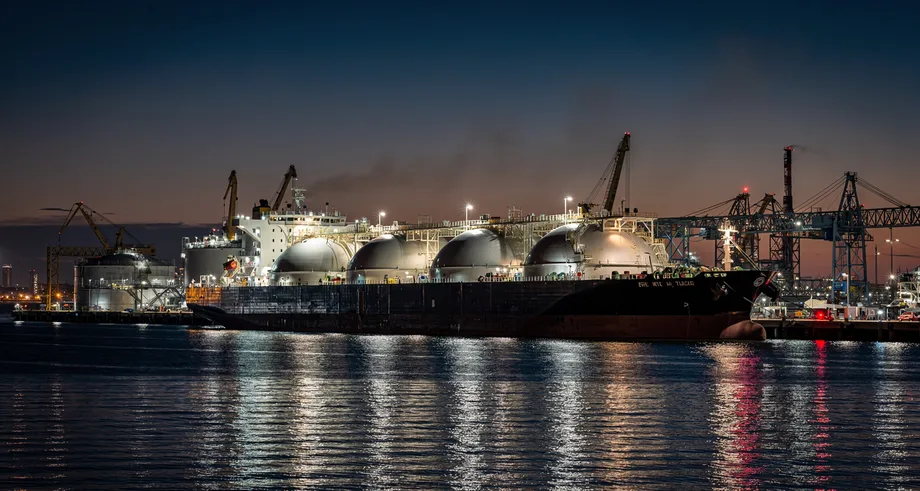
Imports of liquefied natural gas (LNG) rose 30%, equivalent to about 3.5 billion cubic metres, during the first three quarters. LNG is natural gas cooled into liquid so that ships can carry it between countries. It is converted back into gas before use.
Thailand's import growth was ten times the 3% increase in net LNG imports across Asia over the same period. This placed the country among buyers expanding purchases while supplies were under pressure.
The International Energy Agency's Global Gas Security Review 2026 forecast a 3% fall in global LNG supply, nearly 20 billion cubic metres, and a 1.5% decline in global gas demand, about 65 billion cubic metres. Disruption reduced LNG shipments from Qatar and the United Arab Emirates by more than 60 billion cubic metres between March and October, pushing Asian and European prices to their highest levels since the gas supply crisis of 2022 and 2023.
Indonesia and Malaysia faced less direct pressure because they produce substantial amounts of gas and have relatively limited import needs. Thailand, by contrast, was increasing purchases to support electricity generation. The March instruction to use more coal was an immediate response to that cost pressure.
Shipping makes alternative supplies expensive too
UN Trade and Development (UNCTAD), in its report Strait of Hormuz Disruptions: Soaring fuel prices and the burden of inflation, published on 29 October, described how longer voyages, reduced tanker availability and transfers between ships were raising transport costs.
By 19 October, the Baltic Exchange Dirty Tanker Index, which mainly tracks crude oil transport, reached 371 against a baseline of 100 on 27 February. The Clean Tanker Index, covering mainly refined products, reached 280. Those readings represent increases of 271% and 180% respectively.
Shipping fuel prices were 72% above their average during the six months before the conflict by 20 October. Diesel prices rose 81%, jet fuel 80% and gasoline 64% over the same comparison period. Crude oil averaged about $108 a barrel across four regional benchmarks on 19 October, compared with about $66 at the beginning of the chart period.
Pressure extended to routes far from Hormuz. Estimated daily earnings for very large crude carriers travelling from West Africa to China rose from about $55,000 in January to $720,000 in October. Earnings on the US Gulf Coast to China route increased from about $60,000 to $559,000.
UNCTAD also identified restrictions affecting up to 28% of global diesel exports, or 2.3 million barrels a day. Bahrain, Kuwait and Saudi Arabia exported 66% less fuel oil and 33% less diesel during March through June than a year earlier. Thailand's alternative suppliers therefore operated within a global transport and fuel market facing several pressures at once.
Factories and households absorb different parts of the shock
Thailand's September import price index stood at 130.7, up 12.3% from a year earlier. Its fuel component increased much faster, at 45.7%. An index tracks how prices change over time, while the annual percentage measures the movement from the same month a year earlier.
The October producer price index reached 117.7, up 10.2%. Mining products rose 37.8% and industrial products 8.9%, reflecting higher prices for crude oil, natural gas and raw materials. Producer prices track what producers receive for their output, helping officials follow price pressure before goods reach consumers.
Households experienced the shock through transport, food and other daily purchases. October fuel prices rose 29.18% and contributed about 56% of headline inflation. Applied to the 3.90% inflation rate, that amounts to roughly 2.18 percentage points.
Vehicles, transport and communications prices increased 10.93%. More expensive services included school transport, motorcycle taxis, buses, interprovincial vans and songthaews, the shared pickup taxis used in many Thai communities. Farmers and small businesses also faced higher costs for moving goods and operating equipment.
Food and nonalcoholic beverages rose 4.26%, with prepared meals up 4.06% and eggs and dairy products up 6.90%. Flooding in vegetable growing areas pushed some prices higher early in October, before conditions eased towards the end of the month. Electricity prices, some household goods and clothing became cheaper, while fresh fruit prices fell 0.15%.
Core inflation, which excludes fresh food and energy, was 1.58%. Consumer confidence stood at 46.5, below the survey's threshold of 50, reflecting concern about living costs and purchasing power. The different indicators show both the strength of the fuel shock and the uneven changes across household spending.
Europe shows why changing suppliers cannot stop global price pressure
A comparison with Europe helps explain Thailand's experience. An Intereconomics energy security study by Ugnė Keliauskaitė, Ben McWilliams, Thomas Mramor, Alexander Roth, Simone Tagliapietra and Georg Zachmann found that Qatar supplied just 4% of total EU gas imports and 8% of its LNG imports.
European buyers nevertheless faced higher gas prices because they competed with Asian purchasers for cargoes outside the disrupted region. The United States supplied about two thirds of EU LNG imports, making it a major source for both Europe and Thailand's changing supply network.
The authors calculated that a sustained increase in gas prices from €30 to €60 per megawatt hour would add about €100 billion to the EU's gas import bill over 12 months. That was a conditional estimate; the article described prices subsequently stabilising around €40. The EU's total gas import costs were €117 billion in 2025.
The study recommended targeted help for vulnerable households and sectors, coordinated gas storage, plans to reduce oil demand during emergencies and faster market data. It warned that broad fuel tax cuts can encourage consumption when supplies are scarce. Thailand faces the same practical tension: helping people meet essential costs while managing expensive imported energy.
Domestic gas offers another option, with a longer wait
Thailand is also pursuing production at home. Energy Minister Eknath Promphan visited the Dee production well at Sin Phu Hom in Udon Thani and announced exploration and production rights for blocks L1/66 and L3/66 for PTTEP International.
The Dee well began operating on 12 August 2026. Its gas travels by pipeline to processing facilities in Khon Kaen before supplying the Nam Phong power plant. The adjacent exploration blocks could connect to existing infrastructure if commercially viable gas is discovered, reducing the need for entirely new facilities.
Initial seismic surveys and exploration drilling are expected to take about three years. Seismic surveys use sound waves to help map rock formations underground. Commercial discoveries remain uncertain, so the proposed development operates on a much longer timetable than current fuel purchases.
The government estimated exploration investment of about 2 billion baht and potential state revenue exceeding 60 billion baht if resources across L1/66, L3/66 and Sin Phu Hom are successfully developed. The projected revenue would come through royalties and petroleum income taxes. The government also described potential gas supplies sufficient to support electricity generation in the northeast for another 25 years, subject to successful exploration and development.
Officials track costs while keeping the inflation forecast
The Commerce Ministry retained its forecast for average inflation in 2026 at 1.8% to 2.2%, with a midpoint of 2.0%. Average inflation during January through October was 1.77%. An annual average combines all months, allowing it to remain below October's individual reading of 3.90%.
Nanthapong expected inflation to remain positive in November, with global energy prices, prepared meals, transport charges and weather affecting agricultural output among the factors to monitor. No date was announced for a new package of relief linked to the import diversification analysis.
TPSO plans to connect country trade statistics with import, producer and consumer price indexes to follow costs through the economy and prepare policy recommendations. Nanthapong, the office's director, explained the purpose in a statement, translated from Thai:
Managing energy security is not just about securing sufficient energy, but must also cover dealing with cost volatility that may affect the economy and people's cost of living.
Thailand's immediate task is therefore to maintain access to fuel while limiting the damage from higher prices. Broader oil purchases, replacement gas suppliers, changes in power generation and domestic exploration address different parts of that task, each on its own timetable.
Key Points
- The original three crude oil suppliers' combined share fell from 74.4% to 54.7% of import value.
- The United States became Thailand's leading gas supplier, but three countries still accounted for 58.3% of gas imports.
- Fuel import prices rose 45.7% in September 2026, while October headline inflation reached 3.90%.
- Thailand's LNG imports increased 30% during the first three quarters, compared with 3% growth in net LNG imports across Asia.
- Higher shipping costs and competition for replacement cargoes kept alternative energy supplies expensive.
- Domestic gas exploration is expected to take about three years, with development dependent on commercial discoveries.
- The Commerce Ministry maintained its annual average inflation forecast at 1.8% to 2.2%.