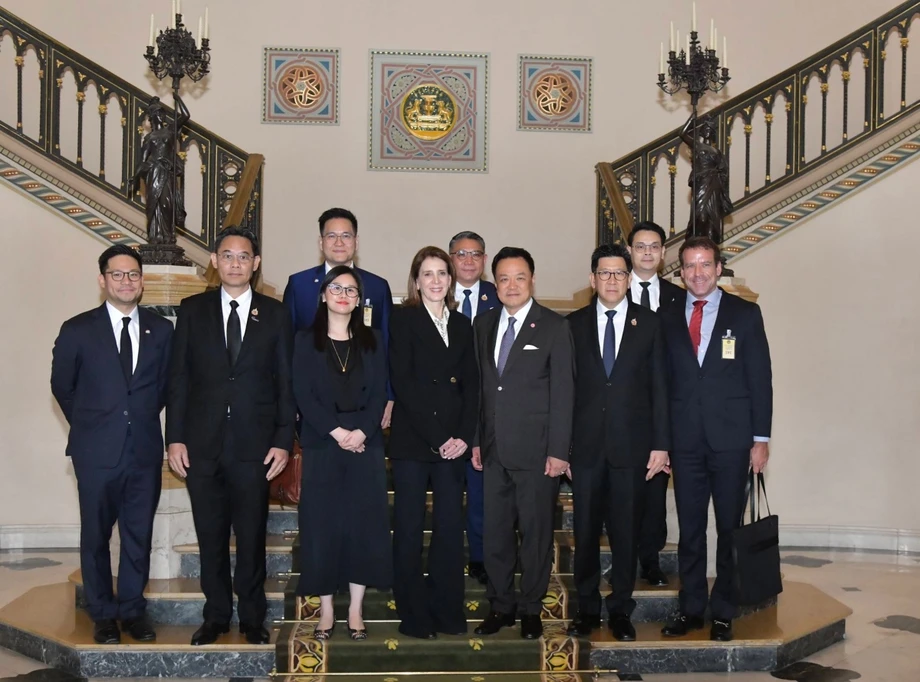
Retirement savings could become accessible before old age
Thailand's Cabinet approved a draft amendment to the Social Security Act on November 3, 2026, proposing three new ways for insured workers to use their retirement benefits: choose a pension or a single payment, withdraw part of their savings during a serious crisis, or use part as security for a bank loan.
Contents
- Retirement savings could become accessible before old age
- What would change when workers reach 55?
- How the existing pension calculation works
- Emergency withdrawals would require a serious crisis
- Borrowing would put retirement benefits behind a loan
- How much money could be accessible?
- Older workers could enrol up to age 65
- Continued coverage and wider family benefits
- The fund would need to prepare for earlier payments
- A revived bill faces parliamentary scrutiny
- Board changes have drawn a separate objection
- Key Points
The emergency withdrawal and borrowing options would require at least 60 months of contributions. Together, their use would be limited to 30% of retirement contributions and no more than twice the maximum wage base used to calculate contributions under Section 33. Both limits would apply, so the lower ceiling would control how much a worker could access.
The Ministry of Labour's bill would also raise the maximum age for enrolment under Section 33 from 60 to 65, extend child allowance after employment ends and increase income replacement for disabilities unrelated to work. The legislation would amend the Social Security Act B.E. 2533, enacted in 1990.
Deputy government spokesperson Captain Patdarasm Thongsaluaykorn outlined the retirement measures on November 8. Known in Thai as the "3 ขอ", they respond to workers seeking greater control over money reserved for retirement. Cabinet approval is one stage of the legislative process: workers must wait for the amended law and its implementing rules before using the proposed rights.
Patdarasm described the government's aim as making retirement savings useful during emergencies as well as in later life. In translation, she said:
Retirement savings should not merely provide security for the future, but should also have the flexibility to help sustain people's lives when they face a crisis.
What would change when workers reach 55?
The first measure, called "request a choice", would allow people with at least 180 months of contributions, equivalent to 15 years, to choose between a monthly pension and a single retirement payment once they satisfy the legal conditions concerning age or the end of insured status.
Government explanations refer to reaching age 55 or ending insured status. Under the existing rules, a person with at least 180 months of contributions receives a monthly pension after reaching 55 and ending insured status. Someone with fewer than 180 months receives a single payment under the applicable conditions.
The proposed change matters most to people who have crossed the 15 year contribution threshold. They would gain a choice over the form of payment rather than having that form determined by their contribution history.
A pension provides income each month for life. A single payment provides money immediately, which a worker might use to repay debt or start a small business, but the recipient must manage that money for the years ahead. Someone who lives for many years after retirement could receive more in total through a pension.
How the existing pension calculation works
The current pension formula for eligible people under Sections 33 and 39 starts at 20% of the average wage used to calculate contributions during the final 60 months. Each complete additional 12 months of contributions beyond the first 180 months adds 1.5 percentage points to the pension rate.
A worker with 240 contribution months, equivalent to 20 years, would therefore have five complete additional years. Under that formula, the rate would be 27.5% of the relevant average wage: the basic 20%, plus five increases of 1.5 percentage points.
The choice proposed in the bill would require workers to compare immediate needs with a continuing income. A household facing expensive debt may value cash now, while a person relying on the pension for everyday expenses may place greater value on monthly payments.
Emergency withdrawals would require a serious crisis
The second measure, "request a return", would allow insured people with at least 60 months of contributions, equivalent to five years, to receive part of their retirement money before age 55 when a severe disaster or qualifying crisis seriously affects their living conditions.
Government explanations focus on disasters affecting an area and circumstances that severely disrupt livelihoods. Access would depend on the situations and conditions defined in law. The measure is designed to help people meet immediate expenses during an exceptional event.
Workers would be using part of the money intended to support them later in life. An early withdrawal could help a family through an emergency, while reducing the retirement benefits available afterward. That exchange between present relief and future income is central to the proposal.
Borrowing would put retirement benefits behind a loan
The third measure, "request a loan", would allow people with at least 60 months of contributions to use part of their retirement benefits as collateral with a financial institution that has an agreement with the Social Security Office.
Collateral is something a lender can claim if a borrower fails to repay. In this proposal, part of the worker's retirement entitlement would provide that security. The money advanced to the worker would come through a loan, with repayment obligations.
Participating lenders would apply their own approval conditions. Access to retirement collateral would give workers another way to seek formal credit, including people who lack other assets to pledge.
A missed repayment could have consequences beyond the immediate debt. If a borrower defaults, the pledged retirement money could be used to settle the obligation, reducing the benefits available in retirement.
The withdrawal and loan measures would share one combined allowance. A worker could not withdraw 30% and then pledge another 30%. Both uses together would have to remain within the 30% limit and the ceiling linked to the maximum contribution wage base.
How much money could be accessible?
The wage base is the amount of monthly pay counted when calculating social security contributions. It has a ceiling, even when a person's actual salary is higher. The schedule raises that ceiling from 15,000 baht to 17,500 baht for 2026 to 2028, then to 20,000 baht for 2029 to 2031 and 23,000 baht from 2032.
Using the 17,500 baht ceiling for illustration, twice the wage base would be 35,000 baht. A worker with 100,000 baht in qualifying retirement contributions would reach the percentage limit first: 30% is 30,000 baht. A worker with 200,000 baht would reach the wage based ceiling first, because 30% would be 60,000 baht.
Manas Kosol, president of the Labour Development Council of Thailand and a leader of a workers' social security network, supported the reform, saying some workers had accumulated more than 200,000 baht but could not use the money when their families faced urgent needs.
The bill's precise calculation methods, application procedures, participating lenders and loan terms still require implementing rules. No application opening date or parliamentary vote date was announced. Those details will determine how the proposed access works in practice.
Older workers could enrol up to age 65
The proposed Section 33 change would raise the maximum age for entering the employee insurance system from 60 to 65. Niyada Senim anomai, deputy secretary general of the Social Security Office, explained that the relevant age is the person's age when starting employment and registering for insurance.
The change would help older people entering formal employment for the first time, as well as former members returning after a break. Niyada said existing restrictions can prevent someone returning after age 60 from registering under Section 33, even while that person is working.
A pension recipient who returns to employment and registers under Section 33 would have pension payments suspended during that period. Contributions made after returning to work could then be included when pension rights are calculated again later.
The enrolment ceiling and pension eligibility age serve different purposes. The bill would expand opportunities to register through age 65 while retaining age 55 in its pension provisions. For an older worker, returning to insured employment would therefore involve considering wages, insurance coverage and the temporary suspension of pension income together.
Continued coverage and wider family benefits
Pension recipients who leave employment would also be able to apply for continued insurance under the proposed Section 39/1. Coverage would include illness, disability and death, with the government contributing one part for every two parts paid by the insured person.
The arrangement would give retirees a route to keep social security medical protection while receiving a pension. The wider draft also proposes a requirement of at least 24 months of previous contributions for enrolment under Section 39.
For disabilities unrelated to work, income replacement would rise from 50% of wages to a maximum of 70%. The proposed maximum is 20 percentage points higher than the current rate. Child allowance would continue for six months after insured status ends, extending support beyond the loss of employment.
The maternity provisions still need adjustment. Broad government explanations describe bringing maternity compensation into line with labour protection law. Niyada said the text being advanced specifies 98 days, while the labour protection law now provides 120 days, a gap of 22 days.
Niyada said officials intended to seek that adjustment during parliamentary committee consideration. Keeping the existing draft moving, she explained, avoided withdrawing it and restarting the submission process.
The fund would need to prepare for earlier payments
The Social Security Fund held approximately 2.85 trillion baht at the end of 2025. During that year, contribution revenue and investment returns exceeded pension expenditure by about 130 billion baht. Those figures describe a large pool of assets alongside continuing demands for benefit payments.
Emergency withdrawals would create a practical cash management task. If many workers qualify at once during a disaster, the Social Security Office would need enough readily accessible money to pay them. Holding more money in investments that can be converted to cash quickly could reduce investment returns over time.
The Thailand Development Research Institute has projected that contributions could fall below pension expenditure in 2037, with fund depletion possible between 2052 and 2058. Those are forecasts, dependent on assumptions about contributions, investment returns and future pension payments.
The number receiving retirement benefits is projected to rise from about 760,000 in 2022 to 2.3 million in 2032, roughly three times as many. Population projections for 2023 to 2083 also show pressure on the contribution base: people aged 15 to 64 could fall from 46 million to 14 million, while those aged 65 and above could rise from 8 million to 18 million.
A revived bill faces parliamentary scrutiny
Niyada said the legislation began its journey in 2022, during the tenure of former labour minister Suchart Chomklin. Changes of government interrupted its progress, and the ministry reaffirmed the draft without changing its central provisions before it returned to the process in 2026.
The sequence explains both the renewed push and the maternity provision that needs updating:
- 2022: The Ministry of Labour first advanced the draft containing the three retirement options.
- November 3, 2026: The Cabinet approved the draft amendment.
- November 4, 2026: Niyada explained its history and the proposed maternity adjustment.
- November 8, 2026: Patdarasm outlined the three options and their limits.
- Next steps: Consideration by the House of Representatives Coordination Committee, followed by submission to the House.
The House would consider the bill through three readings, with detailed examination of provisions during the parliamentary process. The government's implementation plan calls for 18 pieces of subordinate legislation within 60 days after the amended law takes effect. These are the detailed rules needed to operate the new arrangements.
The draft would also replace criminal penalties for certain employer breaches, including failure to submit required returns on time, with regulatory fines under the Act on Imposition of Pinai Regulatory Fines B.E. 2565, enacted in 2022.
Board changes have drawn a separate objection
The draft includes changes to fund administration, accounting, auditing and the terms of the Social Security Board. Board members would serve terms of three years and could not serve consecutive terms. A transitional provision would count the term being served when the amendment takes effect as a term under the new law.
Associate Professor Sustarum Thammaboosadee, of the Progressive Social Security team, objected to that combination. He argued that, if the law took effect in 2027, it could prevent all 14 members of his team from contesting the 2028 election, including representatives serving their first term.
Sustarum's concern is that elected representatives would lose continuity while government officials serving by virtue of their positions would face no equivalent term restriction. Parliamentary examination will therefore cover both access to workers' money and the rules governing representation on the body overseeing it.
Key Points
- The Cabinet approved the social security amendment on November 3, 2026. The proposed rights still require legislation and operating rules.
- Workers with at least 180 contribution months would gain a choice between a pension and a single retirement payment, subject to eligibility conditions.
- Emergency withdrawals and loan collateral would require at least 60 contribution months and share two combined limits.
- Using retirement money early could reduce later benefits; loan default could put pledged benefits toward debt repayment.
- The bill would raise the Section 33 enrolment age ceiling from 60 to 65 and expand disability, child and retirement coverage.
- Parliament must examine maternity provisions, fund management and proposed restrictions on consecutive board terms.