A record month for factories, a weaker year for showrooms
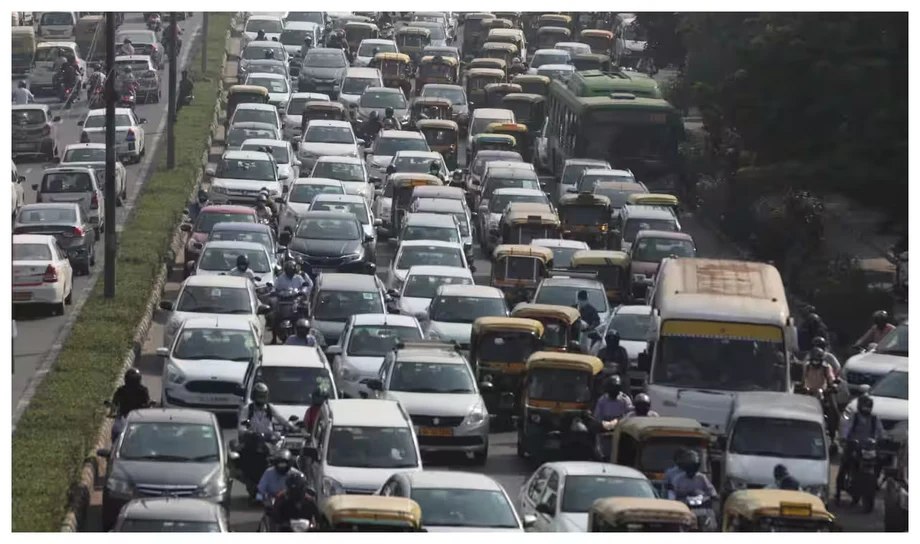
India's passenger vehicle manufacturers dispatched a record 524,226 vehicles to domestic dealers in October 2026, crossing half a million in a month for the first time. Maruti Suzuki supplied 212,384 passenger vehicles, while Tata Motors edged ahead of Mahindra by just 556 vehicles to take second place.
Contents
- A record month for factories, a weaker year for showrooms
- What the industry total measures
- Maruti accounts for most of the increase
- Why Maruti has several sales totals
- Tata takes second place as Mahindra sets an SUV record
- Hyundai and Kia reach new highs as Toyota falls
- Smaller manufacturers follow different courses
- Buyers shift toward CNG, hybrids and electric cars
- The festival calendar shapes the next test
- Key Points
The manufacturer dispatch tally rose 12.3% from October 2025 and 14.1% from September. Maruti Suzuki, Tata Motors, Mahindra, Hyundai and Kia each recorded their highest monthly domestic volumes, together accounting for almost 87% of the total.
Customers buying cars presented a different picture. The Federation of Automobile Dealers Associations, or FADA, recorded 507,768 passenger vehicle retail sales in October, down 14.23% from 592,032 a year earlier. Purchases nevertheless increased 18.86% from September, making it the third strongest October in FADA's records.
Wholesale dispatches count vehicles moving from manufacturers to dealers. Retail sales count vehicles reaching buyers. October's figures therefore show factories supplying a record number of vehicles while customer purchases remained below an unusually strong October 2025.
The festival calendar helps explain the contrast. Navratri and Diwali both fell in October last year, alongside demand following goods and services tax changes. Diwali falls in November in 2026, spreading the buying season across a different schedule.
For manufacturers and dealers, the immediate test is whether November purchases absorb the vehicles delivered during October. Maruti's large order book and low reported dealer stock suggest strong demand within its network, while FADA's figures show more uneven conditions across the wider market.
What the industry total measures
The manufacturer tally of 524,226 domestic passenger vehicles implies an increase of 57,412 vehicles from a year earlier, when the comparable total was 466,814. Early industry estimates instead put October 2026 dispatches at 525,000 to 530,000, with growth of about 14% to 15% against an October 2025 base of 460,739.
The differing comparison bases affect the reported growth rate. The manufacturer tally provides the basis for the brand rankings and market shares here; FADA's figures provide the measure of customer purchases.
Passenger vehicles include cars, sport utility vehicles and other vehicles used primarily to carry people. Company sales announcements sometimes also include commercial vehicles, exports or vehicles supplied to another automaker. Those broader totals need their own labels.
October dispatches exceeded FADA's retail total by 16,458 vehicles. The two datasets cover different company groupings and reporting measures, so a complete industry inventory figure requires more than subtracting one total from the other. No comparable industrywide figure for dealer stock was given.
Maruti accounts for most of the increase
Maruti Suzuki's domestic passenger vehicle dispatches rose from 176,318 in October 2025 to 212,384, an increase of 36,066 vehicles. That supplied approximately 63% of the industry's net gain of 57,412 vehicles.
Its share of the manufacturer tally reached about 40.5%, compared with roughly 37.8% a year earlier. Maruti's gain therefore came from expanding faster than the market, rather than simply matching a rising industry total.
Partho Banerjee, Maruti Suzuki India's senior executive officer for marketing and sales, described growth across small cars and SUVs:
In small cars, we have done 40,443 units, which is a growth of 38% over last year. At the same time, in SUV sales, we have done an all-time high of 73,058 units.
Maruti's broader utility vehicle category, which includes SUVs and vehicles such as the Ertiga, reached 97,787 units, up 26.1%. Combined mini, compact and midsize passenger car sales increased 18.4% to 100,877, while Eeco van sales rose 1.4% to 13,720.
The company's reported retail market share moved differently from its wholesale share. FADA recorded 211,996 Maruti retail sales and a 41.75% share, down from 42.15% a year earlier. Factory deliveries and customer purchases therefore produced different measures of its October position.
Why Maruti has several sales totals
Maruti's 212,384 domestic passenger vehicles formed part of a record company total of 276,120 vehicles, up 25% from 220,894 a year earlier. The larger figure includes commercial vehicles, supplies to other automakers and exports.
Adding 4,405 Super Carry light commercial vehicles to domestic passenger vehicles gives 216,789 domestic sales. That explains the higher domestic figure also used in company sales descriptions. Supplies of 9,459 vehicles to other automakers and exports of 49,872 complete the company total.
Exports rose 59.3% from 31,304 vehicles. Over the first seven months of the financial year, April through October, Maruti's total sales increased 27.4% to 1,655,498. Exports during that period rose 18.4% to 282,727, while supplies to other automakers fell 17.8% to 55,722.
Banerjee put pending bookings at about 245,000 vehicles and dealer inventory at 12 days. Inventory measured in days describes how long existing stock would last at the prevailing selling pace.
Banerjee also gave Maruti's own retail figure and described the stock position:
Our retail has been higher than the wholesales, to the tune of 2,44,000 units. Our network stock at the end of this month is just 12 days.
That company retail figure was higher than FADA's 211,996 for Maruti. Both indicate the need to keep company sales measures and the dealer association's retail series separately identified.
Tata takes second place as Mahindra sets an SUV record
Tata Motors dispatched 73,894 domestic passenger vehicles, up 20.9% from 61,134 a year earlier. Its increase of 12,760 vehicles carried it just ahead of Mahindra's record 73,338 domestic SUV dispatches.
Mahindra grew 2.4% from 71,624 vehicles in October 2025 and 14.4% from September. Its share of the wholesale tally fell from about 15.3% to 14.0% because the wider market expanded faster.
FADA's retail figures showed both companies gaining share. Tata sold 73,449 vehicles to customers, taking 14.47% of retail sales compared with 13.52% a year earlier. Mahindra recorded 64,982 retail sales and a 12.80% share, up from 12.46%.
Tata's international business added another source of growth. Exports increased from 161 to 1,532 vehicles, taking combined domestic and international passenger vehicle sales to 75,426, up 23%. Its figures include subsidiary Tata Passenger Electric Mobility.
Mahindra's SUV sales including exports reached 74,904. Dr. Velusamy R, president of its automotive business, attributed demand to the festive season and its refreshed vehicle range, and said its first CNG vehicle, the XUV 3XO ZNG, had attracted strong customer interest.
Hyundai and Kia reach new highs as Toyota falls
Hyundai dispatched 62,799 vehicles domestically, up 16.7% from 53,792 a year earlier. Venue dispatches reached a record 13,017, accounting for about one in five of Hyundai's domestic vehicles during the month.
Hyundai's combined domestic and export sales reached a record 82,299. Managing director and chief executive Tarun Garg described the drivers of the performance:
Strong festive demand, coupled with healthy momentum in both domestic and export markets, helped us set this new sales record.
Garg also identified the newly launched Hyundai Bayon as a prospective contributor to domestic growth and exports across more than 50 markets.
Kia recorded 33,462 domestic dispatches, up 13.2% from 29,556. It was the company's highest monthly volume since entering India in 2019. Senior vice president for sales and marketing Atul Sood cited established models, newer vehicles, CNG models and record monthly electric vehicle sales. Management also described an encouraging response to the Sorento.
Toyota moved in the opposite direction. Its 29,521 domestic dispatches were down 26.7% from 40,257 a year earlier, despite an 18.0% recovery from September. Its wholesale market share fell from about 8.6% to 5.6%, the largest loss among the major manufacturers.
Toyota's retail sales also declined, from 38,367 to 28,727. Its retail share fell from 6.48% to 5.66%, showing that its weaker annual performance extended to customer purchases.
Smaller manufacturers follow different courses
Nissan posted the fastest annual dispatch growth among manufacturers with comparable October 2025 figures, rising 37.4% to 3,594 vehicles. Honda increased 19.0% to 7,609 and recorded the largest monthly increase in the manufacturer tally, up 70.4% from September.
JSW MG Motor dispatched 8,013 vehicles, almost unchanged from September. Its stated year earlier volume of 6,397 produces growth of 25.3%, although the accompanying growth description also put the increase at 19%.
VinFast reached 3,023 dispatches, up 63.1% from September, with no annual comparison in the manufacturer tally. FADA recorded 2,571 VinFast retail sales, compared with 142 a year earlier.
Several brands improved from September while remaining below October 2025. Skoda dispatched 7,805 vehicles, down 5.4% annually but up 27.9% monthly. Renault's 4,577 vehicles represented a 2.0% annual decline and a 34.7% monthly rise.
Volkswagen dispatched 2,913 vehicles, down 28.0% annually and up 31.3% monthly. Citroen reached 1,008, down 29.3% annually, while Jeep fell 13.1% to 286. Both improved from September. The record industry total therefore sat alongside substantial annual declines at several manufacturers.
Buyers shift toward CNG, hybrids and electric cars
FADA's fuel figures show a change in what customers bought. CNG and liquefied petroleum gas vehicles, hybrids and electric vehicles together accounted for 41.83% of October retail sales, slightly ahead of petrol and ethanol vehicles at 41.60%.
CNG and LPG vehicles reached 24.59% of retail sales, compared with 23.20% a year earlier. Hybrids, which combine an engine with electric propulsion, increased their share from 6.96% to 9.94%. Diesel's share fell from 17.34% to 16.57%.
Electric vehicles accounted for 7.30%, up from 3.55% a year earlier, although below September's 8.45%. October's share represents approximately 37,000 electric cars, compared with about 21,000 a year earlier. FADA said electric car demand exceeded supply.
Tata's combined domestic and international electric vehicle sales rose 75% to 16,244 from 9,286. Electric vehicles represented about 21.5% of its 75,426 total passenger vehicle sales. The company's electric vehicle figures cover both India and international markets, while FADA measures domestic retail.
Maruti reported nearly 87,000 CNG vehicles during October, with Banerjee describing their contribution as almost 40%. He said CNG supply remained constrained and that the supply chain team was working to ease bottlenecks. Vehicle availability therefore mattered alongside buyer interest.
The festival calendar shapes the next test
FADA attributed much of October's annual retail decline to the unusually high comparison base in 2025. Urban purchases fell 15.30% annually and rural purchases fell 12.44%, although both increased from September.
Urban retail rose 20.10% monthly, while rural retail increased 16.90%. Urban markets accounted for 61.7% of October purchases. FADA described relatively strong demand for utility vehicles and weaker demand for entry level passenger cars.
The main dates show why a single month gives only part of the festive season picture:
- October 2025: Navratri and Diwali fell in the same month, alongside demand following GST rate cuts. FADA recorded 592,032 passenger vehicle retail sales.
- September 2026: FADA recorded 427,213 retail sales, the base for October's monthly recovery.
- October 2026: Manufacturer dispatches reached 524,226, while FADA recorded 507,768 retail sales.
- November 2026: Diwali falls in this month, shifting part of the festival buying period beyond October.
Across April through October, FADA recorded 3,068,353 passenger vehicle retail sales, up 16.41%. The financial year total therefore continued to grow despite October's annual decline.
Puneet Gupta, director for India and ASEAN at Mobility Global, warned that weakening economic indicators could affect showroom visits and customer enquiries after the festive period. November and December sales will show how much demand continues once festival purchases ease, while manufacturers balance production and dealer stock.
Key Points
- Domestic passenger vehicle dispatches reached a record 524,226 in October, up 12.3% annually.
- FADA recorded 507,768 retail sales, down 14.23% annually but up 18.86% from September.
- Maruti supplied 212,384 domestic passenger vehicles and contributed about 63% of the industry's net annual dispatch increase.
- Tata took second place with 73,894 dispatches, just 556 ahead of Mahindra.
- Hyundai and Kia set monthly domestic records, while Toyota's dispatches fell 26.7% annually.
- CNG/LPG vehicles, hybrids and electric vehicles together reached 41.83% of retail sales.
- Diwali's move to November changes the annual comparison, while retail sales for April through October remained up 16.41%.