Thailand seeks a bigger share of Google's expansion
Google is considering more investment in Thailand, Prime Minister Anutin Charnvirakul said on November 7, 2026, after talks with Ruth Porat, president and chief investment officer of Alphabet and Google. Anutin said company representatives had expressed readiness to invest in Thailand at a level no lower than in Malaysia, where Google has announced US$15 billion in spending for 2027 and 2028.
Contents
- Thailand seeks a bigger share of Google's expansion
- What Thailand's documented investment covers
- How the talks reached this point
- Why Malaysia is the comparison
- Water and electricity shape the negotiations
- Faster permits, with AI in the process
- What the employment forecasts mean
- AI training is part of the Thai plan
- Anutin links investment to wider reforms
- Key Points
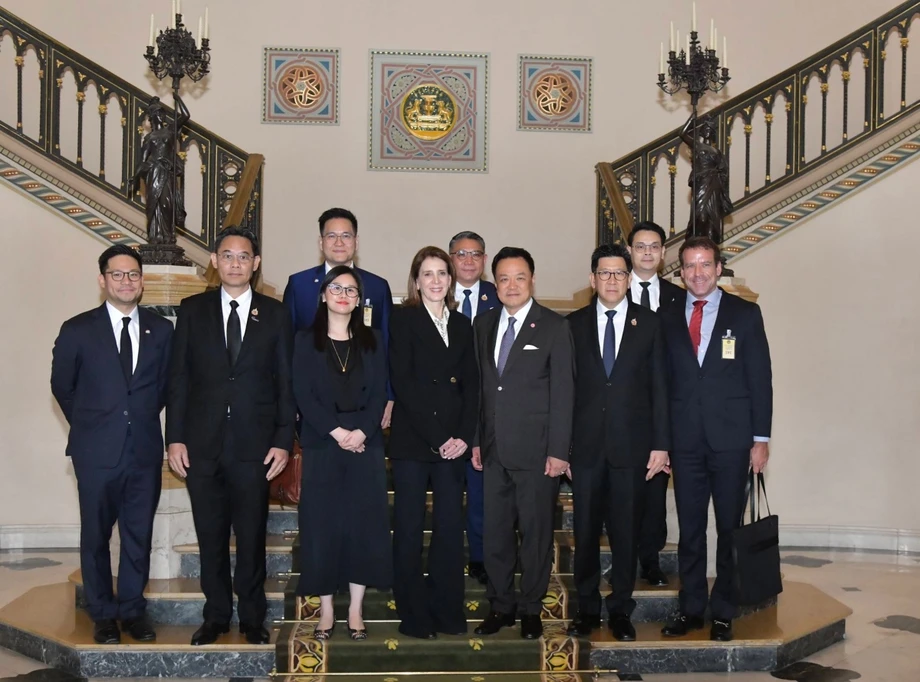
The Thai discussions cover more than building facilities. At their November 5 meeting at Government House in Bangkok, Anutin and Porat discussed water and electricity rules for data centres, a proposal to use artificial intelligence throughout permit applications, and training intended to help Thai people use AI at work and in daily life.
Anutin, who also serves as interior minister, put Google's existing investment in Thailand at approximately US$6 billion, or more than 200 billion baht. Thailand's Board of Investment (BOI), however, documented a US$1 billion infrastructure commitment in September 2024, and government spokesperson Ekkapob Pianpises referred to that same US$1 billion commitment after talks in September 2026.
The scope of Anutin's US$6 billion figure, its relationship to the documented US$1 billion project, and the amount and timetable of any additional Thai investment remain unspecified. Those details matter for businesses preparing to supply the projects, workers considering training and communities expecting new facilities.
Anutin presented the talks as evidence that Thailand could attract larger technology investments by combining infrastructure, workforce development and simpler government procedures. The practical negotiations now centre on how those ambitions would translate into projects, resource requirements and employment.
What Thailand's documented investment covers
The BOI's September 2024 announcement describes Google's US$1 billion investment in a data centre and cloud region. The agency expected the investment to support the creation of more than 14,000 jobs in digital businesses during 2025 to 2029 and help generate US$4 billion in economic value by 2029.
The projects comprise a data centre in Chonburi, within Thailand's Eastern Economic Corridor, and a Google Cloud region in Bangkok. A data centre houses the computers, storage and networking equipment that run digital services. A cloud region provides computing services from infrastructure in a particular geographical area, allowing organisations to run applications without owning all the equipment themselves.
The US$1 billion investment and the projected US$4 billion in economic value describe different things. The first is spending on the project. The second is an estimate of the economic activity it could help generate through businesses, suppliers and other effects.
The BOI also records that its secretary general, Narit Therdsteerasukdi, travelled to the United States in 2023 to discuss major investment opportunities with technology executives. Google's Thai infrastructure programme therefore follows several years of investment outreach, alongside the more recent meetings between Anutin and Porat.
How the talks reached this point
Anutin's latest comments followed two meetings with Porat within about six weeks. Government spokesperson Ekkapob said the November discussions continued talks held during the prime minister's visit to New York for the 81st session of the United Nations General Assembly.
The main steps connect the existing Thai project with Google's larger regional expansion:
- September 30, 2024: The BOI published details of Google's US$1 billion investment in Thai data centre and cloud infrastructure.
- September 23, 2026: Anutin met Porat at Google's Pier 57 office in New York, discussing sustainable data centres, resources and digital skills.
- November 4, 2026: Google announced US$15 billion in Malaysian investment for 2027 and 2028.
- November 5, 2026: Porat met Anutin at Government House to discuss Thai investment, permit procedures and AI training.
- November 7, 2026: Anutin discussed Google's expansion intentions on the programme Talk with PM Anutin.
Deputy Prime Minister and Finance Minister Ekniti Nitithanpraphat, Digital Economy and Society Minister Chaichanok Chidchob, and National Economic and Social Development Council secretary general Danucha Pichayanan also attended the November 5 meeting. Their participation brought finance, technology and national development responsibilities into the discussion.
Why Malaysia is the comparison
Google's Malaysia investment announcement, dated November 4, sets out US$15 billion in spending during 2027 and 2028. It includes data centre campuses in Selangor and Negeri Sembilan, more than one gigawatt of additional clean energy capacity, water projects and training for approximately 800,000 Malaysians by 2031.
The Malaysian package is 15 times the US$1 billion Thai commitment documented by the BOI. That comparison shows the scale of the investment Anutin is seeking, while the countries' published plans cover different periods and packages of activity.
Google's first Malaysian campus at Elmina Business Park in Selangor is already operational. New campuses and an upcoming Google Cloud region would expand computing capacity for business customers, locally developed AI applications and services including Search, Maps and Chrome. The Malaysia expansion plans also connect construction with electricity, water and workforce projects.
Porat, Alphabet and Google's president and chief investment officer, described the company's approach in the Malaysian announcement:
Google is committed to growing our presence responsibly, delivering lasting value for Malaysia's economy and people.
Malaysia's programme gives Thailand a concrete regional comparison: investment measured through facilities, suppliers, training, electricity generation and water management, alongside the headline spending figure.
Water and electricity shape the negotiations
Google offered suggestions at the November 5 meeting on changes to laws and regulations governing data centres, particularly their use of water and electricity. Anutin said policy should take account of all parties while supporting investment and responsible resource management.
Data centres need a steady electricity supply because their computers operate continuously. Those computers produce heat, so cooling is another essential requirement. Depending on the system and local conditions, cooling can involve substantial water use.
Google says water cooling can reduce a data centre's energy use by approximately 10% compared with air cooling. Its Malaysian announcement describes assessments of local river basins before choosing cooling systems, followed by projects to improve water quality, replenish supplies and strengthen storage.
In Malaysia, those commitments include work in the Sungai Buloh and Sungai Selangor river basins and storage tanks and rainwater systems at four schools. Google also says it will pay for all the electricity used by its campuses and the direct infrastructure costs of connecting them to the grid.
Anutin's September talks had already identified energy efficiency, systematic water management, environmental protection and the welfare of nearby communities as Thai priorities. The November meeting carried those concerns into the discussion of operating rules. For residents near future facilities, the concrete issues include the reliability of shared water supplies and how new electricity demand is accommodated.
Faster permits, with AI in the process
Anutin proposed a service through which data centre operators could apply for business permits in one place, using AI at every stage of the application process. Google expressed interest, said it already had similar AI projects and indicated a willingness to be among the first companies to serve as a model for other investors.
The proposal sits alongside the government's broader effort to coordinate investment procedures through the BOI. Anutin described an approach under which companies seeking to build or expand operations could use the agency as their central contact instead of dealing separately with multiple government offices.
The November 7 policy discussion used the name Thailand FastPass, while Anutin's investment remarks also described a Thailand Fast Track approach. The shared purpose is to reduce administrative obstacles and give investors a clearer route through government procedures.
Anutin said the process should be transparent and free from discriminatory treatment or demands for improper payments. For a company planning expensive infrastructure, the value of the proposed system would be a more predictable application process. For government agencies, applications would still need to address the electricity, water and environmental requirements being discussed with Google.
What the employment forecasts mean
Anutin said major foreign investors could each create between 20,000 and 30,000 jobs for Thai workers. The BOI's projection for Google's documented US$1 billion Thai investment is more than 14,000 jobs supported in digital businesses during 2025 to 2029. The prime minister's estimate concerns foreign investors more broadly, while the BOI figure is attached to a particular investment and period.
Google's Malaysian forecasts provide a more detailed breakdown of how data centre investment can support employment. The company expects construction during 2027 and 2028 to support more than 37,000 local jobs per year, including approximately 6,000 construction jobs. Once operational, the facilities are projected to sustain more than 9,000 local jobs annually.
The construction positions account for roughly 16% of the 37,000 jobs in that forecast, or about one in six. The wider total reflects work connected with suppliers and supporting businesses as well as the building sites themselves.
Google identifies more than 80 Malaysian suppliers across civil engineering, networking, power and cooling equipment, logistics, legal services, catering and waste management. Its operational employment forecast includes technicians, engineers, security managers, contractors and workers in businesses serving employees and their families.
These categories explain why the employment discussion extends beyond hiring people to work inside a data centre. In Thailand, opportunities would also depend on which goods and services are purchased locally and whether workers can obtain the skills required by operators and suppliers.
AI training is part of the Thai plan
The government wants to work with Google through AI for All Thais to build practical skills in local communities. The proposed cooperation covers agriculture, social affairs, healthcare and education, reaching farmers, employees, school pupils, university students and people working in medical and educational services.
Anutin connected investment promotion with protecting workers from disruption. During his November 7 programme, the prime minister described his approach to regulating AI:
We must control AI, not let AI control us.
The training discussion focuses on helping people use AI in everyday work and life, alongside developing the workforce needed for digital infrastructure. During the September meeting in New York, Porat also outlined plans for an institute described as Data Centre, intended to develop digital expertise and opportunities for Thai people and start-ups.
Malaysia's programme illustrates how Google is pairing infrastructure with more specific training routes. Its plans include classroom AI education, practical support for small businesses, training for local government staff and data centre institutes at selected polytechnics. Starting in 2027, the institutes would offer a curriculum lasting 10 weeks, including practical work with a physical data centre simulator.
Thailand's training ambitions cover both specialist technical work and much wider use of AI. That combination matters because the people affected by digital investment include future engineers and technicians, but also teachers, farmers and employees whose existing jobs will change as new tools become available.
Anutin links investment to wider reforms
Anutin cited Thailand's location, infrastructure, distribution networks, tax system, political stability and workforce potential as reasons for Google's interest. He said Thai education could provide a foundation for further skills development and presented the country as a base for regional growth.
The prime minister also linked investment promotion to Thailand's effort to join the Organisation for Economic Co-operation and Development (OECD). He said the government wanted to complete accession sooner than the original approximate five year timeframe and referred to good governance, accountability, fairness and fair competition as requirements.
According to Anutin, OECD Secretary-General Mathias Cormann had expressed confidence in Thailand's prospects during discussions around recent International Monetary Fund meetings, provided the country met the requirements and continued close cooperation. This places the BOI's administrative reforms within a broader government argument that predictable rules can help attract international capital.
For Thailand, the next practical steps are to turn the investment discussions into defined projects, settle resource and permit arrangements, and connect training with work that becomes available. Malaysia's spending programme runs through 2027 and 2028, its new training initiatives extend to 2031, and the BOI's existing Thai economic projections run to 2029. Those dates give a measure of the sustained work involved beyond the latest meetings.
Key Points
- Anutin said Google was ready to invest in Thailand at a level no lower than in Malaysia, following talks with Ruth Porat on November 5, 2026.
- The BOI documents a US$1 billion Thai infrastructure commitment; Anutin cited approximately US$6 billion in existing investment.
- Thailand's discussions cover data centres, water and electricity rules, AI assisted permits and workforce training.
- Google's Malaysia package commits US$15 billion for 2027 and 2028, alongside clean energy, water and skills programmes.
- The BOI expects the documented Thai investment to support more than 14,000 jobs during 2025 to 2029.
- AI for All Thais would develop practical skills across communities, agriculture, healthcare, education and everyday work.