China names the mission for a historic Pakistani flight
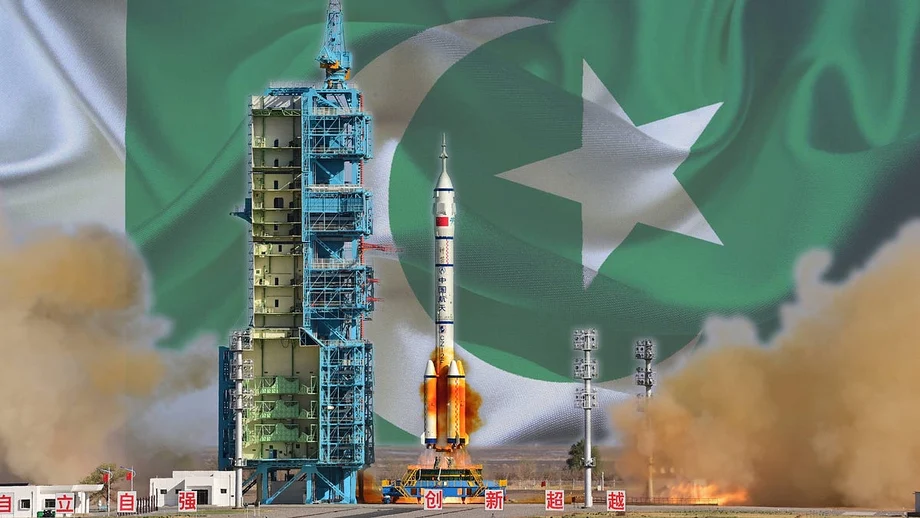
A Pakistani astronaut will travel to China's Tiangong space station aboard Shenzhou-24 and return to Earth aboard Shenzhou-23, the China Manned Space Agency announced on November 7, 2026. The visit will be the first by a foreign astronaut to the station and the first joint flight involving Chinese and foreign astronauts in China's human spaceflight program.
Contents
- China names the mission for a historic Pakistani flight
- Two candidates, one flight assignment
- Why the astronaut will use two spacecraft
- What Pakistan wants to study in orbit
- How the agreement became a mission
- A first foreign visitor for Tiangong
- Space cooperation extends an established partnership
- A mission emblem marks the next stage
- Key Points
The Pakistani crew member will serve as a payload specialist, a role focused on scientific experiments and equipment carried into space. The agency described the visit as a short stay in orbit. Earlier Pakistani planning anticipated about a week aboard the station, although the November announcement did not specify its length.
Two Pakistani candidates have been selected for the program. After completing training and passing assessments in China, one will receive the flight assignment and the other will serve as the backup. Pakistan's space agency has identified the trainees as pilots Muhammad Zeeshan Ali and Khurram Daud.
China has not announced the launch date or identified which candidate will fly. Earlier plans pointed to October or November 2026; the November 7 announcement confirmed the spacecraft assignment without giving a departure day.
For Pakistan, the mission creates an opportunity to send a person, alongside research developed at home, to an operating laboratory in orbit. For China, it extends a station that has hosted Chinese crews into a platform for a shared human spaceflight mission. The arrangement builds on an agreement signed in Islamabad in February 2025, moving cooperation from astronaut selection toward a specific flight.
Two candidates, one flight assignment
The China Manned Space Agency said the Pakistani candidates passed three stages of selection: preliminary screening, a second evaluation and final selection. The process produced two reserve astronauts who must complete training and evaluations before the flight assignment is settled.
Amjad Ali, deputy director of Pakistan's Space and Upper Atmosphere Research Commission, known as SUPARCO, described an earlier plan to nominate between five and 10 people for China to narrow to two. He said the pair would train in China for between six months and a year.
A February 7, 2026, statement issued through Pakistan's Inter-Services Public Relations on SUPARCO's behalf said the two candidates had undergone medical, psychological and aptitude assessments at the Astronauts Centre of China. It set out six months of advanced training before one candidate would be selected for the mission.
Medical checks assess whether a candidate can withstand the demands of launch, life in orbit and the return to Earth. Psychological and aptitude assessments examine how a person handles pressure, learns complex procedures and works with others in a confined environment.
The candidates' arrival for training was described in April, when both were preparing to learn the station and spacecraft systems. A Pakistani space agency official confirmed in September that Zeeshan Ali and Khurram Daud had spent months training in Beijing. Keeping a backup ready allows the mission to proceed if the person initially chosen becomes medically unavailable.
Why the astronaut will use two spacecraft
Shenzhou-24 will carry the Pakistani astronaut to Tiangong, while Shenzhou-23 will bring the visitor home. Those numbers identify different spacecraft missions, so the astronaut's journey will involve a change of vehicle at the station.
Space station visits can overlap with crew rotations. An arriving spacecraft docks, meaning it connects securely to the station so people and equipment can pass between them. During the overlap, astronauts can transfer from the vehicle that brought them into orbit to another spacecraft prepared for departure.
The Pakistani visit has been planned around that overlap rather than a full station expedition. Earlier mission planning linked the arrangement to a Chinese astronaut spending about a year in orbit. The November announcement itself confirmed the Pakistani astronaut's outbound and return spacecraft without detailing the wider crew rotation.
For the payload specialist, a short visit means the research schedule must fit into a limited period between arrival and departure. Training therefore has to cover both the experiments and the practical routines of working safely aboard the station.
What Pakistan wants to study in orbit
SUPARCO's plans call for the astronaut to carry out daily mission duties and experiments originating in Pakistan. Earlier preparations described research designed for a short stay, with experiments travelling to the station and returning alongside the visitor.
Amer Gilani, who oversees human spaceflight cooperation at SUPARCO, said during an earlier stage of planning that the experiments were still being selected. He described the intended work as having:
high scientific, industrial and social impact.
Research areas discussed during the training program included materials science, fluid physics, life sciences and biotechnology. These fields examine how substances behave, how liquids and gases move, how living systems function and how biological processes can be used for practical purposes.
Tiangong offers microgravity, the condition in which objects appear almost weightless because the station and everything inside it are falling around Earth together. Liquids, materials and living systems can behave differently there, giving researchers a way to study processes that are harder to isolate on the ground.
Pakistan's plans for orbital research have connected those fields with possible applications in climate resilience and food security. The November mission announcement did not publish a final experiment list. The immediate task is to prepare research that the selected astronaut can carry out within the short visit and return for further study.
How the agreement became a mission
China and Pakistan formally began the selection process in February 2025, when they signed an agreement in Islamabad covering astronaut selection, training and participation in Chinese space station missions. The agreement gave the two countries a framework for preparing a Pakistani crew member.
Subsequent announcements moved through candidate assessments, advanced training and the identification of a spacecraft. The main steps are:
- February 2025: China and Pakistan sign the astronaut cooperation agreement in Islamabad and formally launch selection.
- February 7, 2026: Pakistan announces that two candidates have passed assessments in China and will undertake six months of advanced training.
- April 2026: Zeeshan Ali and Khurram Daud are identified as trainees preparing for a possible flight later in the year.
- September 2026: A Pakistani space agency official confirms that the two pilots have spent months training in Beijing.
- November 7, 2026: China confirms that a Pakistani payload specialist will launch aboard Shenzhou-24 and return aboard Shenzhou-23.
The November announcement makes the transport plan more specific than the earlier training announcements. Both candidates remain part of the preparation process, while only one is due to take the available flight assignment.
A first foreign visitor for Tiangong
Tiangong began operating in 2021 and was fully assembled in 2022. It is one of the two operating space stations described in the mission coverage, alongside the International Space Station, which began with the launch of its first module in 1998.
China's station has so far hosted Chinese astronauts. Bringing a Pakistani payload specialist aboard adds a new form of cooperation: a foreign national working alongside a Chinese crew inside the country's orbital laboratory.
Quentin Parker, an astrophysicist and professor at the University of Hong Kong, described the planned visit as:
a significant step in the internationalization of the Chinese space station,
Parker also explained why he saw value in sharing access to the station:
When you internationalize things properly, you build something greater than the sum of the parts, and that's true in the internationalization of the space station,
Pakistan gains access to astronaut training, transport and a laboratory that would be difficult to provide through a national program alone. China gains experience preparing and flying a foreign participant, including coordinating research, training and duties across two national space organizations.
Space cooperation extends an established partnership
Pakistan's planned astronaut visit follows cooperation in satellites and lunar exploration. In 2024, Pakistan sent a satellite to the Moon aboard a Chinese lunar mission that also carried payloads associated with the European Space Agency, France and Italy.
The relationship also reaches into commercial technology. During an earlier meeting with Prime Minister Shehbaz Sharif, a delegation from Chinese company Galaxy Space expressed interest in investing in Pakistan's space technology industry and working with Pakistani institutions and private telecommunications companies, according to the prime minister's office.
Sharif described Pakistan's priorities at that meeting as:
looking to increase cooperation with China in the fields of space technology, space satellites and satellite internet.
The astronaut project sits within a broader partnership that includes the China-Pakistan Economic Corridor and cooperation under China's Belt and Road Initiative. Those ties already cover infrastructure and technology; the Tiangong mission adds a person conducting scientific work in orbit.
Amjad Ali, SUPARCO's deputy director, explained the importance Pakistan attached to being chosen for the first foreign visit:
It is very important for Pakistan, being the first foreign country whose astronauts are entertained by China and taken by the Chinese mission,
A mission emblem marks the next stage
China also released the Shenzhou-24 mission emblem on November 7. It carries the year 2026 and the designation SZ-24, linking the astronaut announcement to the mission's public identity.
The emblem depicts a Shenzhou spacecraft docking with the station against a view of Earth. Blue and red semicircles frame the scene, while a motif drawn from an ancient Chinese jade ornament connects the design with traditional culture.
The operational preparation now centers on completing assessments, selecting the flight astronaut and readying the research for a short stay. The announced journey has a defined route: launch with Shenzhou-24, work aboard Tiangong and return with Shenzhou-23.
Key Points
- A Pakistani payload specialist will become Tiangong's first foreign visitor and join China's first joint crewed flight with a foreign astronaut.
- The astronaut will launch aboard Shenzhou-24 and return aboard Shenzhou-23 after a short stay.
- Pilots Muhammad Zeeshan Ali and Khurram Daud have trained in China; one will fly and the other will be the backup.
- The program began with an agreement signed in Islamabad in February 2025.
- Pakistan plans scientific experiments for the visit. China has not announced the launch date or the selected astronaut.