A growing car market leaves pickup factories behind
Thailand sold 521,266 vehicles in the first nine months of 2026, up 16.35% from 447,969 a year earlier. Yet pickup sales continued to fall, putting pressure on an automotive supply network that the Federation of Thai Industries (FTI) says includes more than 2,500 businesses and employs over 800,000 people.
Contents
- A growing car market leaves pickup factories behind
- How far have pickup sales fallen?
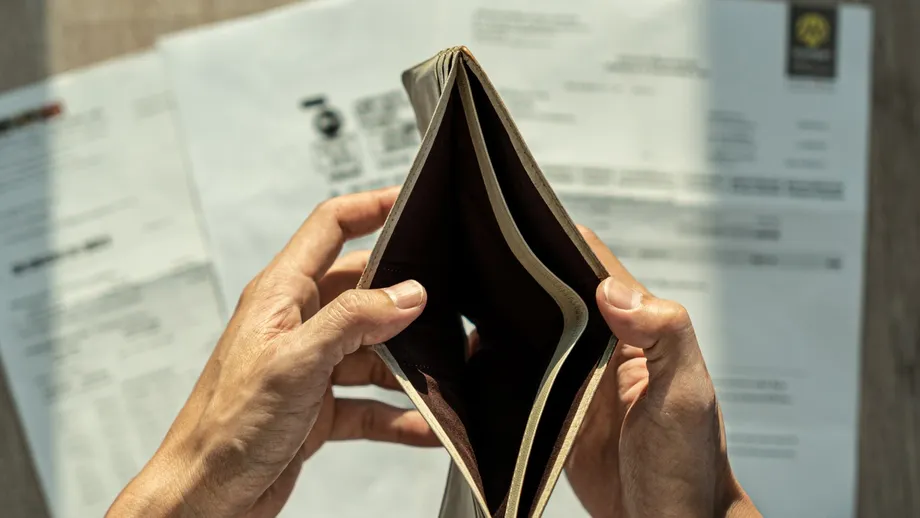
- Why buyers are struggling to get loans
- Why a missing pickup order reaches so many businesses
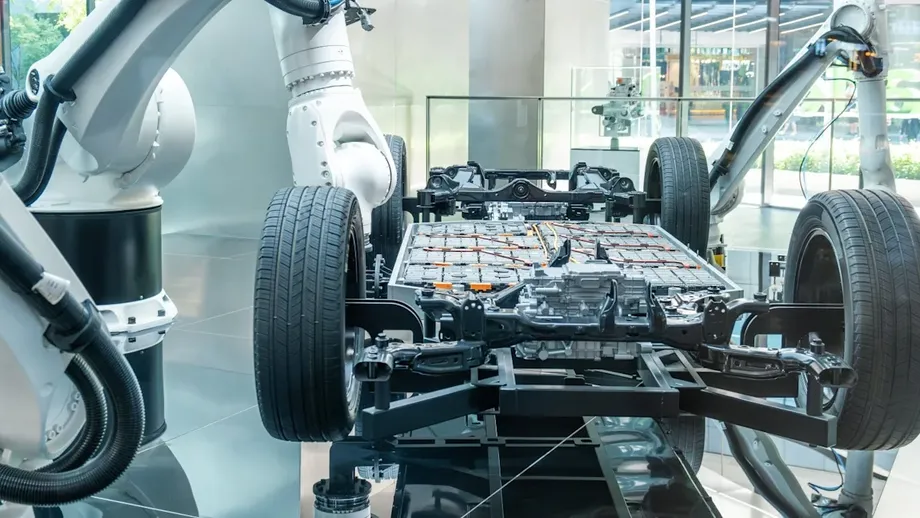
- Electric cars lift sales, with different effects on factories
- Middle East disruption removes another source of demand
- Flooding exposed the dependence between factories
- What the FTI wants the government to decide
- What reaching the annual target requires
- Key Points
September pickup sales dropped 7.11% to 10,315 vehicles, even as total domestic vehicle sales rose 14.28% to 55,255. Electric cars drove much of the growth. Pickups, which carry a much larger share of locally made parts, remained squeezed by strict lending, weak business incomes and falling exports to the Middle East.
The FTI is asking the government to make pickup financing more accessible and clarify proposed excise tax changes for imported vehicles. Its central concern is where the benefits of rising vehicle demand go: a sale can support a Thai factory and its suppliers, or bring a finished vehicle into the country from abroad.
Flooding added another disruption in late September, forcing some assembly plants to stop temporarily when components could not reach them. By mid-October, affected factories had resumed normal production, according to the federation. The FTI retained its annual production target of 1.45 million vehicles.
For farmers, traders and small businesses, the immediate problem is buying a vehicle used to earn a living. For manufacturers, it is keeping enough orders flowing to sustain production, supplier income and employment while the market changes around them.
How far have pickup sales fallen?
Thailand's pickup market has contracted for several years. Annual sales fell from about 388,000 in 2022 to 265,000 in 2023, then to 163,000 in 2024 and 144,000 in 2025. The latest industry expectation is roughly 140,000 for 2026.
A result of 140,000 would be about 64% below the 2022 figure. Pickups accounted for approximately 46% of Thailand's vehicle market in 2022, compared with about 20% during the first nine months of 2026, when cumulative pickup sales were around 100,000.
Passenger cars now dominate domestic demand. Their sales reached 366,910 in January through September, representing just over 70% of the total market.
September's figures show pressure across pickup categories. The FTI recorded 5,003 sales in its one-tonne pickup category, down 11.50% from a year earlier, while double-cab sales fell 4.95%. Across the first seven months, one-tonne pickup sales had already dropped 17.38% to 37,369.
Surapong Paisitpatanapong, adviser and spokesman for the FTI's Automotive Industry Club, described the scale of the monthly decline in August:
"The pickup segment recorded sales of just over 10,000 units in July, compared with an average of 30,000 units per month previously," Mr Surapong said.
Why buyers are struggling to get loans
Banks have tightened vehicle lending as economic growth slows and household debt remains high, according to the FTI. Thailand's economy grew 1.9% in the second quarter of 2026, down from 2.8% in the first quarter. The federation also cited weak earnings among small and medium-sized enterprises and higher living costs.
A pickup is often a business tool rather than simply personal transport. Farmers use it to move crops and supplies. Traders carry goods to markets. Small contractors transport workers and equipment. These buyers may need the vehicle to generate income while also needing a loan to buy it.
Lenders assess whether borrowers can keep making repayments. When business income is uncertain and existing debts are high, approval becomes harder. The FTI wants the government to encourage financial institutions to ease access to pickup credit so that domestic demand can support factory output.
A government loan guarantee fund worth 5 billion baht had attracted only about 2,000 participants by August, according to Surapong. A guarantee gives lenders some protection if an eligible borrower cannot repay. Industry leaders said participation had been too limited to revive pickup demand.
Deputy Finance Minister Paopoom Rojanasakul launched the scheme, known as "กระบะพี่ มีคลังค้ำ", on March 21, 2025, through the Thai Credit Guarantee Corporation. Its initial 5-billion-baht guarantee allocation came from the PGS 11 programme, with a maximum guarantee of 1.5 million baht per borrower. Applications were accepted from April 1 to December 30, 2025, for guarantees lasting up to seven years, or 84 instalments.
The government covered guarantee fees for the first three years and subsidised them in years four to seven, leaving a fee of 1.5% a year during those later years. Under the scheme's conditions, the corporation would cover the difference between the outstanding debt and the vehicle's auction sale price. The measure was intended to help businesses buy new pickups for work as lenders faced concerns over SME repayments and falling used-vehicle prices.
At launch, the scheme was expected to support purchases of more than 6,250 new pickups and generate more than 5 billion baht in new lending, with economic benefits of at least 21 billion baht. Those figures were forecasts for the scheme, rather than a count of borrowers who had taken part.
Why a missing pickup order reaches so many businesses
Combustion engine pickups use up to 90% locally sourced components, according to the FTI. An order for a pickup can therefore generate work for Thai producers of radiators, exhaust systems, seats, air conditioning, glass, steel and petrochemical products.
The federation said production of pickup components had fallen by more than 300,000 pieces. Suppliers had reduced output, workers were receiving less income, and the effects were reaching showrooms, sales staff, financial institutions and government tax revenue.
The industry's exposure extends across more than 2,500 businesses and over 800,000 workers in vehicle manufacturing, components, raw materials, supporting industries and related services. The FTI wants stronger pickup demand to help those businesses maintain production and employment.
By August, some parts suppliers had already closed or moved investment overseas, according to the industry account. Factory capacity utilisation was below 60%, meaning more than two fifths of the measured production capacity was unused. Thailand's Manufacturing Production Index, which tracks factory output, had also fallen or recorded weak growth in some months.
Lower orders can spread through the chain quickly. An assembler needs fewer seats and radiators; component makers then buy less steel, glass and chemicals. The FTI's proposed credit support is intended to interrupt that sequence by helping more domestic buyers complete purchases.
Electric cars lift sales, with different effects on factories
Battery electric passenger cars recorded 16,404 sales in September, up 80.13% from a year earlier. Their sales reached 161,532 during January through September, an increase of 98.56%. These vehicles run on electricity stored in a battery rather than burning fuel in an engine.
The FTI also cited a September BEV sales total of 16,626, up 81.61%, alongside the passenger car figure. Hybrid passenger car sales reached 14,113, up 10.78%, while plug-in hybrids reached 1,497, up 137.24%. Hybrids combine an engine with an electric motor; plug-in versions can also charge their batteries from an external power supply.
Combustion engine passenger cars moved in the opposite direction. September sales fell 14.50% to 7,776, and sales over the first nine months dropped 20.20% to 77,837.
Thailand is also producing more electric vehicles. Domestic BEV production rose 73% to 47,452 during January through July, according to the industry figures. A passenger vehicle series put electric passenger car production at 46,924 over that period.
The FTI nevertheless argues that the growing electric market needs to deliver more work to manufacturers inside Thailand. Its January through July passenger EV figures put sales at 125,411 and domestic production at 46,924. The federation cited an imported share of 62.58% and used that figure to press for changes to vehicle taxation.
The practical issue for suppliers is the mix of vehicles being bought and where they are assembled. An imported finished car brings business to sales and service operations. A vehicle manufactured in Thailand also creates assembly work and orders for the components used locally.
Middle East disruption removes another source of demand
Pickup exports to the Middle East fell by 33,118 vehicles, or 37.73%, during January through September, according to the FTI. The federation attributed the decline to the US-Iran conflict and the closure of the Strait of Hormuz, a major shipping route connecting the Gulf with international markets.
The FTI also cited a regional vehicle export figure of 14,419, down 30.60%, although the period attached to that figure was not consistently specified. Its repeated measure of the pickup shortfall was the decline of 33,118 over the first nine months.
Thailand had exported more than 100,000 pickups to the Middle East during the previous full year. Losing orders from that market adds to the pressure from weak domestic purchases, leaving producers with fewer opportunities to compensate for the slump at home.
The conflict had already prompted emergency price relief in Thailand as fuel, food and farming costs rose. The pickup industry now faces pressure from both directions: households and businesses have less spending room, while disruption abroad has reduced export demand.
Other destinations helped September vehicle exports rise 4.55% to 89,972. Shipments to Asian markets increased 27.16%, accounting for 28.61% of exports, just behind Australia and Oceania at 29.30%. Across January through September, however, total finished vehicle exports still fell 4.94% to 655,009.
Flooding exposed the dependence between factories
Flooding around Amata City Industrial Estate in Chonburi directly affected parts manufacturers in late September. Some vehicle assembly plants stopped even though their own premises were dry because suppliers could not deliver components, transport routes were disrupted and employees could not reach work.
Suwat Supakarndechakul, chairman of the FTI's Automotive Industry Club, said affected factories had returned to normal production by mid-October. Member automakers also introduced assistance campaigns that included reduced labour charges, spare parts discounts, discounts on new vehicles and repayment holidays.
The recent sequence shows how weak demand and disrupted production overlapped:
- July 2026: Monthly pickup sales remained just above 10,000, against a previous average of about 30,000.
- August 2026: Industry leaders warned about supplier closures and limited participation in the loan guarantee programme.
- Late September 2026: Flooding interrupted component deliveries and temporarily halted some assembly lines.
- Mid-October 2026: Affected factories resumed normal production, according to the FTI.
- October 27 and 28, 2026: Industry updates retained the annual production target and renewed calls for credit and tax measures.
September vehicle production fell 6.08% to 120,319. Cumulative output for the first nine months was still slightly higher than a year earlier, rising 0.39% to 1,080,030.
What the FTI wants the government to decide
The FTI's requests centre on pickup credit, a proposed vehicle trade-in scheme and excise taxation. Industry leaders want pickups included in any trade-in programme so that businesses replacing older vehicles can benefit.
By August, the government had yet to clarify the proposed scheme's subsidy amounts, vehicle age limits or eligible models. In late October, the federation was also awaiting a formal announcement on revised excise treatment for completely built-up vehicles, meaning vehicles imported already assembled. No firm implementation date was given for those decisions.
Excise duty is a tax charged on particular goods, including vehicles. Changing the structure can change the relative cost of importing a finished vehicle or producing one domestically. The FTI wants fair treatment for companies investing in Thai factories, whether they make combustion engine vehicles or electric vehicles.
The federation expressed its position on tax changes in a statement:
"Clear changes to the excise tax structure would signal that Thailand values long-term investment and domestic value creation, helping protect and support the Thai automotive industry as a major, sustainable global production and export base," the FTI said.
The common aim behind the requests is to retain manufacturing activity in Thailand. Easier pickup financing would support immediate orders, while tax rules would shape the incentives for companies deciding where to manufacture future vehicles.
What reaching the annual target requires
Thailand needs to produce another 369,970 vehicles in the final three months of 2026 to reach the FTI's target of 1.45 million. That works out to about 123,323 a month, roughly 2.5% above September's output of 120,319.
The target comprises 900,000 vehicles manufactured for export and 550,000 for domestic sale. During January through September, factories produced 686,647 vehicles for export and 393,383 for the domestic market.
Meeting those production goals would require another 213,353 vehicles for export and 156,617 for domestic sale during the final quarter. The FTI said factories were planning to recover production lost during the floods.
The broader business value remains substantial. September exports of vehicles, engines, components and spare parts totalled about 82.65 billion baht, up 8.15%. Across the first nine months, their value was about 638.08 billion baht, down 2.99%.
Restored factory operations give manufacturers the ability to produce again. The unresolved commercial task is securing enough orders, particularly for pickups whose locally sourced components spread income through a large network of Thai businesses.
Key Points
- Thailand's vehicle sales rose 16.35% to 521,266 in January through September 2026, while pickup demand continued to shrink.
- September pickup sales fell 7.11% to 10,315, despite strong growth in electric car sales.
- The FTI wants easier pickup financing and tax treatment that supports companies manufacturing vehicles in Thailand.
- The automotive supply network includes more than 2,500 businesses and employs over 800,000 people, according to the federation.
- Pickup exports to the Middle East fell by 33,118 vehicles during the first nine months.
- Factories affected by flooding resumed normal production by mid-October.
- The FTI retained its annual production target of 1.45 million vehicles, requiring another 369,970 in the final quarter.