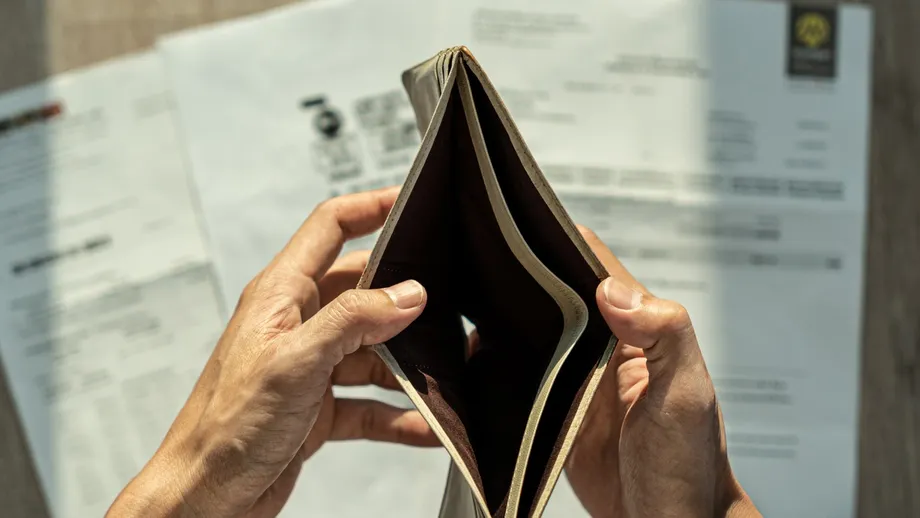
Nearly Half of Poorer Families With Debt Payments Face a Cash Deficit
Thailand's household debt stands at about 16.4 trillion baht, yet the sharper warning comes from monthly family budgets: 48.8% of households earning no more than 15,000 baht a month and making debt payments have cash expenses greater than cash income. A simulation suggests that a 10% increase in expenses could push another 1.2 million households into the same position, mostly families with monthly incomes between 15,000 and 50,000 baht.
Contents
- Nearly Half of Poorer Families With Debt Payments Face a Cash Deficit
- Why a Falling Debt Ratio Does Not Mean Debt Has Disappeared
- What the Surveys Show Across Different Periods
- National Averages Conceal Tight Monthly Budgets
- Debt Payments Take 40 Baht From Every 100 Baht Earned
- A Modest Expense Shock Could Reach Middle Income Families
- Who Can Still Borrow, and Where the Money Goes
- Small Informal Balances Can Still Affect Many Families
- Regional Debt and Household Assets Tell Different Stories
- Relief Depends on Income as Well as Loan Restructuring
- Key Points
These findings sit alongside an apparently improving national indicator. Kasikorn Research Center expects household debt to fall to 84.0% of gross domestic product (GDP) by the end of 2026, against the 86.8% figure it uses for the end of 2025. Its assessment, attributed to research executive Dr. Kanchana Chokpaisalsilp, warns that slower borrowing can reflect weak incomes and restricted access to credit rather than stronger household finances.
The National Statistical Office's 2025 household survey provides the foundation for examining that gap. It estimates that 10,443,678 households, or 42.1% of the national total, have outstanding debt. Average monthly household income was 28,308 baht, expenditure was 22,420 baht, and debt averaged 153,038 baht across all households, including those without debt.
The central distinction is between the size of debt and the ability to carry it. A national debt ratio can decline while individual families still struggle to pay for food, transport, utilities and existing loans. The cash deficit figures identify pressure within the group making debt payments, not among every household in Thailand.
Why a Falling Debt Ratio Does Not Mean Debt Has Disappeared
The reported figures for the second quarter of 2026 put household debt at 85.2% of GDP, down from 86.0% in the preceding quarter. Outstanding debt nevertheless increased by 0.6% compared with a year earlier, remaining near 16.4 trillion baht. The ratio therefore fell without a comparable fall in the amount owed.
GDP measures the value of economic production. When GDP in money terms grows faster than household borrowing, debt becomes a smaller percentage of GDP even if borrowers owe more baht. That arithmetic helps explain the forecast decline to 84.0%, but says little by itself about whether families have more money left after paying their bills.
A separate comparison with disposable income, the income available for spending and saving, points to a persistent burden. Household debt has averaged about 1.5 times disposable income since 2023. That is below the roughly 1.6 times recorded during the pandemic, but above the 1.4 times average for 2017 through 2019.
This measure should not be confused with the survey's finding that average debt equals 5.4 times average monthly household income. The two calculations use different income measures and time bases. Neither is the proportion of monthly income devoted to repayments, which requires a separate calculation.
What the Surveys Show Across Different Periods
The National Statistical Office's first six months report estimated 9,908,891 indebted households in 2025, or 40.7% of all households. Average debt across all households was 144,871 baht. The annual survey subsequently recorded 42.1% and 153,038 baht. These are estimates covering different periods, not competing counts for the same observation date.
The sequence also shows why a single comparison can be misleading:
- 2023: Average household debt was 197,255 baht, and 47.9% of households had debt.
- January through June 2025: Average debt was 144,871 baht, with 40.7% of households indebted.
- January through December 2025: Average debt was 153,038 baht, with 42.1% indebted.
- Second quarter of 2026: Reported aggregate household debt was about 16.4 trillion baht, equivalent to 85.2% of GDP.
- End of 2026: Kasikorn Research Center forecasts a debt ratio of 84.0%.
Average survey debt fell by 44,217 baht, or about 22.4%, between 2023 and 2025. The share of indebted households fell by 5.8 percentage points. Those improvements are real survey findings, but they do not establish that every income group experienced the same relief.
National Averages Conceal Tight Monthly Budgets
The annual survey used a sample of 57,600 households in 3,600 enumeration areas across all provinces, covering municipal and nonmunicipal areas. Interviews took place between the seventh and twentieth of each month from January through December 2025. It is a national sample survey, not a count based solely on bank loan records.
Its debt definition includes outstanding borrowing from financial institutions and people outside the household, as well as instalment purchases, purchases on credit, pawn loans, mortgages and obligations from rotating savings arrangements. Survey estimates and aggregate lending statistics therefore have different collection methods and coverage. They should not be treated as interchangeable totals.
Average income exceeded average expenditure by 5,888 baht a month in 2025. That gap cannot be read as the cash savings of a typical indebted family. Income and expenditure include items received in kind, while the debt repayment analysis focuses on money coming in and going out among households making payments.
Income also weakened compared with 2023. Average monthly household income fell from 29,030 to 28,308 baht, while expenditure fell from 23,695 to 22,420 baht. Lower spending alongside lower income is not the same as a recovery supported by stronger earnings.
The distribution of income did improve on some measures. Average monthly current income per person in the lowest household income group rose from 3,556 baht in 2023 to 4,169 baht in 2025. Its share of household current income increased from 8.7% to 9.9%, while the highest group's share fell from 40.0% to 38.0%. Those gains can coexist with a cash shortage among poorer families carrying debt.
Debt Payments Take 40 Baht From Every 100 Baht Earned
Kasikorn Research Center analyzed approximately 9.9 million households with debt repayment obligations within the larger population of about 10.4 million indebted households. Their average debt service ratio was 26.3%. This ratio measures debt payments as a proportion of income, rather than the total outstanding loan balance.
For households earning no more than 15,000 baht a month, the average ratio reached 40.1%, compared with roughly 22% to 24% in other income groups. At an illustrative income of 15,000 baht, a household paying the group average would spend 6,015 baht on debt and have 8,985 baht left before other expenses.
The pressure is not uniform even within income groups. Among all households making debt payments, 15.3% devoted more than 40% of income to those payments. Among the group earning no more than 15,000 baht, that share was 23.4%. A group average and the percentage exceeding a threshold describe different aspects of the burden.
Cash margin measures the difference between cash income and cash outgoings. It was negative for 23.8% of households making debt payments. The share rose to 48.8% among those earning no more than 15,000 baht, compared with 25.0% among households earning more than 15,000 and up to 30,000 baht, and 7.1% among those earning more than 50,000 baht.
A negative cash margin does not automatically mean a borrower has missed a payment. Families may cover a shortfall by drawing down savings, cutting spending, obtaining help or borrowing elsewhere. It does mean that current cash income is insufficient to cover current outgoings, leaving less room for medical bills, repairs or other emergencies.
A Modest Expense Shock Could Reach Middle Income Families
The spending simulation holds income and other factors constant while increasing cash expenditure by 10%. Under that assumption, the share of households making debt payments with a negative cash margin rises from 23.8% to 36.0%, an increase of 12.2 percentage points.
Applied to approximately 9.9 million households, that change produces about 1.2 million additional families with insufficient cash income. Roughly 73% of the additional group, or about 880,000 households, earn between 15,000 and 50,000 baht a month. The result shows that financial pressure can spread beyond the poorest borrowers.
A 20% increase in cash expenditure produces around 2.5 million additional households whose cash margin turns negative. Neither exercise forecasts that expenses will rise by those amounts in 2026. They are sensitivity tests showing how budgets respond under specified assumptions, not estimates of the probability of a shock.
Flood damage requiring repairs to homes and possessions is one possible trigger, alongside energy costs, medical treatment and other unexpected bills. Separate estimates attributed to the University of the Thai Chamber of Commerce put flood damage at 22 billion to 30 billion baht. That economic damage estimate is not an input that can simply be substituted for the household simulation's assumed expense increase.
Who Can Still Borrow, and Where the Money Goes
The lending picture is divided. Households with steady income, manageable existing debt or assets to pledge can still obtain credit. Those earning more than 50,000 baht a month continue borrowing for housing, including existing homes and condominiums. Other borrowers use property as security or turn to savings cooperatives and pawnshops.
Meanwhile, borrowing for vehicle instalments, occupations, education and several categories of credit without collateral has contracted compared with a year earlier. This divergence is often described as a K pattern: different groups move in opposite directions rather than sharing a broad recovery.
Reported figures for the fourth quarter of 2025 put aggregate household debt at 16.443669 trillion baht, up 113.823 billion baht from the third quarter. Savings cooperative debt increased by about 48.8 billion baht to 2.534882 trillion baht, while pawnshop debt rose by about 5.2 billion baht to 121.339 billion baht.
Those figures put the unadjusted debt ratio at 86.7%, against Kasikorn Research Center's 86.8% baseline for the end of 2025. Reports differ by 0.1 percentage point, and the reason is not established. The fourth quarter account also gives a seasonally adjusted ratio of 86.3%, down from 86.6%. Seasonal adjustment removes recurring calendar effects, so that series should be kept separate from the unadjusted comparison.
Personal consumption debt was about 12.72 trillion baht, roughly 77% of the aggregate total, while debt for occupations or income generation was about 2.90 trillion baht. The consumption category includes housing and other purchases, so it cannot all be described as borrowing to pay everyday bills.
Small Informal Balances Can Still Affect Many Families
The annual survey found that 93.4% of indebted households borrowed only from formal sources, 4.6% only from informal sources and 2.0% from both. The latter two categories together represented 691,667 households. Average informal debt across all households was 2,272 baht, compared with 150,766 baht in formal debt.
A small share of debt value does not make informal borrowing irrelevant to the families using it. The institutional analysis by Krungsri Research identifies limited access to assistance, difficulty reaching borrowers and weak enforcement against illegal lending as obstacles to debt resolution.
Other reported credit figures point to the limits of further borrowing. Only about 5 million of Thailand's 27 million borrowers were assessed as financially healthy enough to obtain additional credit, approximately 19%. These are borrower counts, not household counts, and cannot be directly compared with the survey's 10.4 million indebted households.
Accounts for services that allow purchases now and payment later increased from 620,000 in 2021 to 6.3 million in 2025, about ten times the earlier number. Outstanding loans reached 40.7 billion baht. Account growth does not establish an equivalent rise in the number of individual users, because one person can hold multiple accounts.
Regional Debt and Household Assets Tell Different Stories
The survey covering the first six months of 2025 recorded the highest regional average debt in the Northeast, at 162,607 baht per household, against a national average of 144,871 baht. Average monthly income there was 22,980 baht, below the national 28,151 baht.
Occupation also changes the picture. Agricultural, forestry and fishery workers spent 86.3% of income on surveyed expenditure, compared with 78.1% nationally. Their average debt was 55,537 baht, much lower than the 386,470 baht recorded for managers and professionals. A smaller debt balance can therefore coexist with a tighter budget.
Asset holdings help explain why some borrowers can cope better than others. Krungsri Research's household wealth analysis, published on October 1, 2025, by Thansin Klinthanom, examined survey data from 2021 through 2023. Liquid assets, which include deposits and other assets available to meet financial needs, increased by an average of 8,218 baht per household per year.
For households earning below 20,000 baht a month, that increase was less than 2,000 baht a year. Among those earning below 10,000 baht, the value of property and vehicles fell by an average of 82,294 baht per household per year. These figures concern earlier years, but identify a weakness that the later cash margin analysis also captures: limited reserves when expenses rise.
The same analysis found that workers' income after inflation in 2024 was 3.2% above its level before the pandemic. For workers earning below 7,800 baht a month, it was 18.5% lower. Its deposit figures also concern accounts rather than people: 134,097,089 accounts, or 97.4% of the total, held less than 500,000 baht, and this group's surplus savings were declining.
Relief Depends on Income as Well as Loan Restructuring
Krungsri Research argues that restructuring debt and reducing interest burdens can provide relief without resolving weak earnings or unstable employment. Its analysis warns that payment pauses may leave interest accumulating, while some assistance programs may miss borrowers whose repayment record remains good even as their income deteriorates.
Thansin Klinthanom, the author of the institutional analysis, connects those financial pressures directly to the recovery of spending:
Domestic economic activity and household spending cannot fully recover if most households remain financially vulnerable.
The proposed response includes more stable employment, workforce skills, support for businesses that create jobs, stronger welfare protection and debt restructuring based on repayment capacity. These are recommendations, not newly enacted measures or announced commitments.
The wider economic concern is measurable. The Bank of Thailand has been reported as warning that household debt could prevent growth from returning to its estimated potential rate of 2.7%. The University of the Thai Chamber of Commerce's cited 2026 forecast is 2.2% to 2.5%. Neither figure establishes how much of the growth shortfall is attributable to debt alone.
The next stated benchmark is the end of 2026, when the 84.0% debt ratio forecast can be assessed. No new hearing, policy vote or assistance deadline is specified. Whether household finances improve will require evidence of stronger income, more manageable repayments and better cash reserves, rather than a lower national ratio alone.
Key Points
- Reported household debt was about 16.4 trillion baht in the second quarter of 2026, or 85.2% of GDP.
- The 2025 annual survey estimated 10,443,678 indebted households, representing 42.1% of all households.
- Among households making debt payments and earning no more than 15,000 baht monthly, 48.8% had a negative cash margin.
- A simulated 10% expense increase would push about 1.2 million additional households into a cash deficit, mostly in middle income groups.
- Average survey debt fell between 2023 and 2025, but income, credit access and financial reserves remain uneven.
- The forecast debt ratio of 84.0% at the end of 2026 does not by itself establish a recovery in family finances.