Discounts and subsidies face a widening economic shock
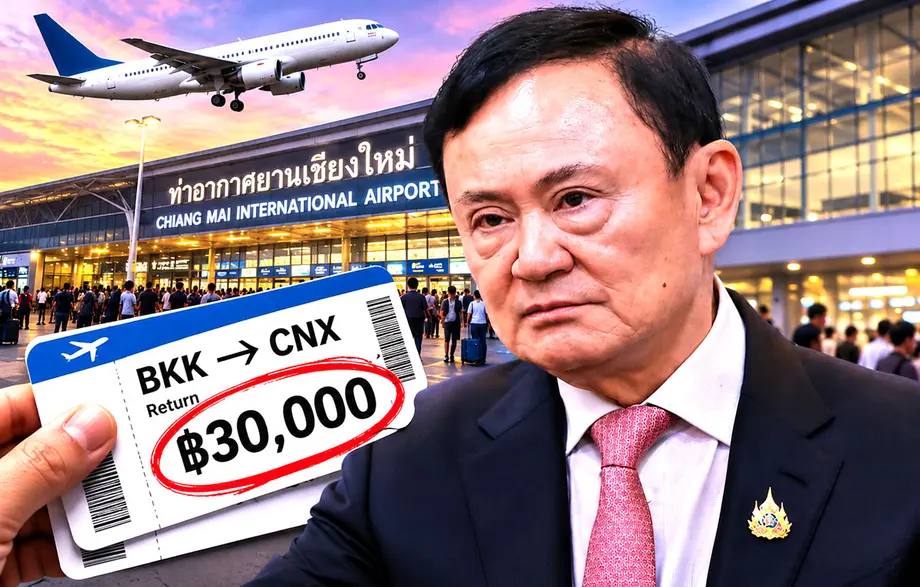
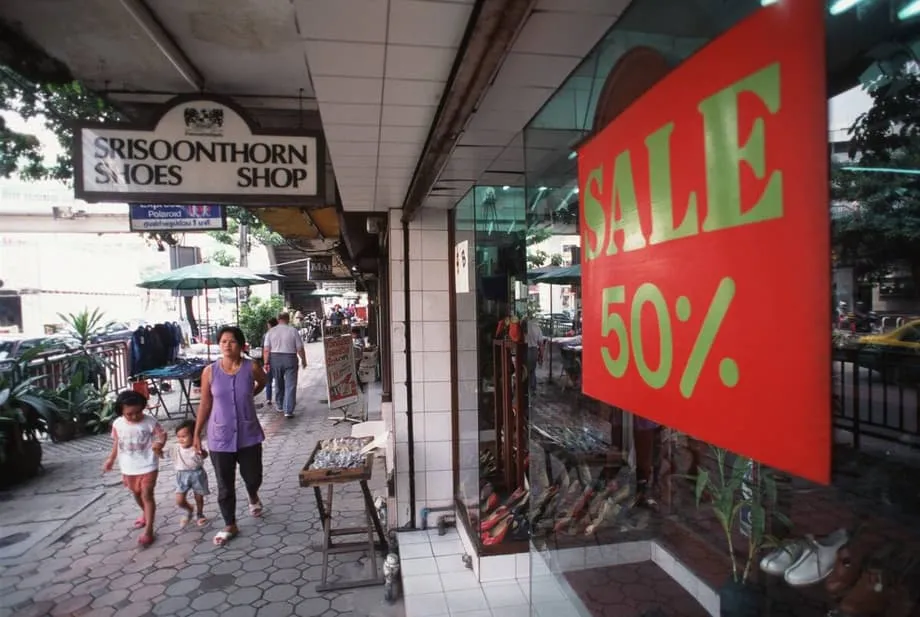
Thailand's Commerce Ministry has announced discounts of up to 50% on more than 1,000 products, expanded access to cheaper essential goods and new fertilizer assistance as the war in the Middle East drives up household and farming costs. By April 12, 2026, the government's response had also included a costly effort to hold down diesel prices, followed by changes to fuel subsidies after panic buying and shortages.
Contents
- Discounts and subsidies face a widening economic shock
- Why the Strait of Hormuz matters to Thailand
- Cooking oil, bottled water and meals come under pressure
- How the diesel cap became too costly
- Anutin apologizes and shifts support toward vulnerable groups
- Fertilizer assistance targets the next food price risk
- Other Asian governments face the same subsidy squeeze
- Chip production and medicine face disrupted supplies
- Fishing and tourism add to Thailand's economic strain
- At a Glance
Department of Internal Trade deputy director-general Chanthapat Panjamanond announced the emergency measures. Their centerpiece, the Thai Help Thai scheme, was scheduled to launch on April 1 through partnerships with major retailers and manufacturers. It offers cheaper products from alternative brands, giving shoppers more affordable choices as familiar goods become more expensive.
The ministry is also expanding its Blue Flag program to more than 500 locations nationwide and sending mobile trucks to remote communities. Together, the initiatives represent Bangkok's most aggressive domestic intervention since the conflict began on February 28, with officials trying to keep rising costs from turning into widespread social disruption.
The pressure starts with energy. The US-Israel war with Iran has left the Strait of Hormuz effectively blockaded, choking off approximately 20% of global oil shipments. Global oil prices have surged above $100 a barrel, while Dubai crude reached $158 a barrel, an increase of 122% since early March.
Thailand's emergency response now stretches from supermarket shelves to farms, fishing boats and hotels. The government is trying to contain prices while managing a subsidy bill that reached 20 billion baht in the first three weeks of the crisis.
Why the Strait of Hormuz matters to Thailand
The Strait of Hormuz is a narrow waterway through which roughly 80% of crude and liquefied natural gas bound for Asia normally travels. Its disruption has restricted access to the energy supplies that importing economies need for transport, industry and electricity.
Before the war, approximately 80% of the crude passing through the strait headed to Asian refineries. Japan sourced more than 90% of its oil imports from the Gulf, while South Korea obtained more than 70%. China and India still depended on the Middle East for roughly half their crude supplies despite diversifying toward Russian and US sources.
Thailand faces the same basic chain of rising costs: more expensive oil makes moving goods more expensive, and those transport bills feed into the prices paid by consumers and businesses. The disruption also reaches materials used to make everyday products, including the plastic needed for bottled water.
The Commerce Ministry is coordinating with the Foreign Ministry to get stranded Thai vessels carrying raw materials out of the Strait of Hormuz. It is also seeking new fertilizer sources to protect agricultural supplies as existing shipping routes become harder to use.
Cooking oil, bottled water and meals come under pressure
Bottled palm oil prices have risen 17% to 53 baht, or $1.62, per liter. Wholesale prices for budget packs of bottled water in 500 milliliter bottles have increased from 20 baht to 25 baht as plastic resin and transport costs rise. That is an increase of one quarter from the earlier wholesale price.
Five major manufacturers, including Unilever, Nestle and Saha Pathanapibul, the maker of Mama instant noodles, have formally warned trade partners to expect price increases from April. They cited higher raw material and logistics costs.
The Commerce Ministry is monitoring 59 controlled items and has secured agreements with nine major producers, including Procter & Gamble, to keep consumer goods prices steady through at least April. April is the stated period for those commitments; no later end date was given.
Food vendors are receiving another form of support. Officials are arranging supplies of rice, cooking oil, eggs and sugar directly from their sources to help prevent unreasonable increases in the prices of prepared meals. The approach targets the ingredients vendors buy before those costs reach customers.
Consumers can report suspected price gouging through the ministry's hotline, 1569, which operates 24 hours a day, or through the Line account @mr.DIT. These channels allow officials to investigate complaints about excessive prices while the wider discount programs are being rolled out.
How the diesel cap became too costly
The government initially capped diesel at 29.94 baht per liter using the state Oil Fuel Fund. The fund pays part of the cost of fuel so that customers pay less at the pump, but the gap becomes more expensive to cover when international prices rise.
The fund was losing more than 1 billion baht, or $32 million, a day. Within two weeks, it moved from a surplus of 2.5 billion baht to a deficit exceeding 12 billion baht. The subsidy bill reached 20 billion baht in the first three weeks, with daily spending eventually hitting 2 billion baht before the government abandoned the strict cap.
On March 18, the diesel ceiling was raised to 33 baht per liter. Panic buying followed, pushing daily fuel consumption from 67 million liters to 84 million liters. National production capacity was 77 million liters a day, leaving demand 7 million liters above that capacity during the buying surge. Shortages affected northern provinces.
The main dates in the response show how quickly the pressure spread:
- February 28: The Middle East conflict began.
- Early March: The starting point for the reported 122% rise in Dubai crude prices.
- March 18: Thailand raised the diesel price ceiling to 33 baht per liter, followed by panic buying.
- April 1: The scheduled launch date for Thai Help Thai.
- Through at least April: Nine major producers agreed to hold consumer goods prices steady.
- Late April: Green Flag Plus is scheduled to begin in Kamphaeng Phet before wider expansion.
Anutin apologizes and shifts support toward vulnerable groups
Prime Minister Anutin Charnvirakul acknowledged that the government's expectation of a short war had been wrong. He apologized for the disruption caused by the handling of fuel supplies and said the response would focus on people and businesses most exposed to higher prices.
I apologize to people for the chaos caused by the management of the fuel situation. Now the situation has changed and is unlikely to end soon, so the government has adjusted its measures, focusing on vulnerable groups such as low-income workers, farmers and transport operators.
Anutin said ending the strict price cap did not mean allowing prices to float fully with the market. Instead, the government was reducing the subsidy from 24 baht per liter to 16 baht per liter to reflect global conditions more closely and discourage smuggling to neighboring countries where fuel prices were higher.
Thailand ranked sixth in ASEAN for petrol prices and eighth for diesel prices, with fuel still substantially cheaper than in Malaysia, Vietnam and Laos. Those price gaps added another concern for a government already spending heavily to keep domestic fuel affordable.
The government has also asked Thailand's 10 million households to reduce fuel consumption by one liter a day. Its stated calculation is that this could cut imports by 10 million liters daily, save households 400 million baht in expenses and reduce the Oil Fuel Fund's daily burden by 200 million baht.
Other energy measures include changing the biodiesel blend from B5 to B7 and setting Gasohol E20 prices 5 baht per liter below E10. These measures are intended to encourage greater use of alternative energy as the country manages its fuel bill.
Fertilizer assistance targets the next food price risk
Farmers are being squeezed by both higher fuel costs and more expensive fertilizer. The Commerce Ministry's Green Flag Plus project is intended to supplement existing support so that rising production costs do not add another layer of pressure to food prices.
Eligible farmers include holders of Din Dee cards issued by the Land Development Department, farmers certified under Good Agricultural Practices standards and members of community soil and fertilizer management centers. They will receive an additional 200 baht, listed as $7.80, in benefits and a separate coupon worth 200 baht for organic fertilizer purchases.
Combined with existing assistance, each farmer could receive up to 1,400 baht in total support. Green Flag Plus will initially cover 50 provinces, starting in Kamphaeng Phet in late April before expanding nationwide.
Authorities aim to distribute one million sacks of subsidized fertilizer. They are also coordinating with 26 manufacturers to sell discounted products directly from factories, with combined volumes exceeding 10 million sacks. The direct sales effort and the subsidized distribution target both seek to make farm inputs more affordable.
Price enforcement is running alongside that assistance. After farmers complained of excessive prices, officials raided a major chemical fertilizer retailer in Ayutthaya, summoned the operator to explain and expanded their investigation to examine documents showing purchase costs.
Thailand's focus on fertilizer reflects the connection between farm spending and household food bills. Keeping agricultural supplies available and affordable is part of the effort to prevent food inflation from compounding the energy shock.
Other Asian governments face the same subsidy squeeze
Wood Mackenzie's analysis estimates that eight Asian countries, including Thailand, Indonesia, Vietnam and India, would need more than $80 billion in combined subsidies if oil stayed at $100 a barrel for four months. Thailand's Oil Fuel Fund deficit is one part of that regional financial pressure.
The Philippines has introduced a workweek of four days for government employees and is rushing legislation to suspend fuel excise taxes. Vietnam has depleted its fuel stabilization fund through six consecutive drawdowns and encouraged arrangements that allow people to work from home.
Malaysia is spending an estimated RM3.2 billion, or $810 million, each month to maintain subsidized gasoline at RM1.99 per liter. Meanwhile, diesel sold without subsidies has reached record prices.
Sri Lanka has introduced weekly fuel quotas of 15 liters for cars and 5 liters for motorbikes. Indonesia risks exceeding its legal fiscal deficit ceiling of 3% as it maintains subsidies through the Eid al-Fitr holiday period. A fiscal deficit occurs when government spending exceeds its revenue, making prolonged subsidies a wider budget issue.
Singapore has a different exposure: natural gas generates 92.2% of its electricity. Qatar, whose supplies have been disrupted by the war, provides 14.6% of Singapore's natural gas imports. The figures show how the crisis can affect electricity supplies as well as vehicle fuel.
Chip production and medicine face disrupted supplies
Qatar's closure of major liquefied natural gas and helium plants has disrupted the global helium supply. That has raised concerns for Taiwan's semiconductor sector and South Korea's chip manufacturing industry, both of which use helium to cool and clean chips during production.
Helium presents a different supply problem from oil. It forms over billions of years in specific natural gas fields and cannot be produced quickly to fill a sudden gap. The disruption therefore reaches industries far beyond the fuel market.
Healthcare supply chains are also under pressure. Air cargo through Gulf airports has fallen by 80%, while shipping routes diverted around the Cape of Good Hope add 14 days and $750,000 in fuel costs per voyage.
Those transport disruptions threaten supplies ranging from generic medicines to cancer treatments across Asian healthcare systems. Longer journeys and more expensive shipping add pressure to medical supply chains already dealing with reduced air freight capacity.
Fishing and tourism add to Thailand's economic strain
Thailand's fishing industry is nearing a standstill as diesel prices surge. Fuel is central to the operation of fishing vessels, putting the sector directly in the path of the energy shock even as the government tries to protect consumers and farmers.
Tourism, a major contributor to Thailand's economy, has also weakened. Arrivals have fallen 9% compared with a year earlier as international travelers cancel trips. Luxury hotels have responded with discounts of up to 70% to attract domestic tourists.
The tourism decline adds a separate pressure on businesses and workers at the same time that household costs are rising. Hotels are trying to replace lost international demand with local guests, while fishing operators face a sharp increase in the cost of getting their boats to sea.
Thailand's response combines cheaper goods, agricultural assistance, price investigations, fuel subsidies and conservation. Each measure addresses a different part of the same disruption: expensive energy and interrupted transport are reaching the prices of food, farm inputs and essential supplies, while also reducing activity in important industries.
Late April brings the planned Green Flag Plus launch in Kamphaeng Phet. The immediate task is to deliver the announced relief while keeping essential goods moving and limiting the growing financial burden of fuel support.
At a Glance
- Thai Help Thai was scheduled for April 1, with discounts of up to 50% on more than 1,000 alternative brand products.
- Blue Flag is expanding to more than 500 locations, with mobile trucks serving remote communities.
- The Commerce Ministry is monitoring 59 controlled items, while nine producers have agreed to hold prices steady through at least April.
- Dubai crude reached $158 a barrel, up 122% since early March, as the Strait of Hormuz blockade disrupted energy shipments.
- Thailand spent 20 billion baht on fuel subsidies in three weeks, and the Oil Fuel Fund's deficit exceeded 12 billion baht.
- Panic buying pushed daily fuel consumption to 84 million liters, above production capacity of 77 million liters, with shortages in northern provinces.
- Prime Minister Anutin Charnvirakul apologized for fuel management problems and shifted attention toward vulnerable workers, farmers and transport operators.
- Green Flag Plus will start in Kamphaeng Phet in late April, with combined farmer assistance potentially reaching 1,400 baht per person.
- Eight Asian countries could require more than $80 billion in subsidies if oil remains at $100 a barrel for four months, according to Wood Mackenzie's analysis.
- Thailand's tourism arrivals fell 9% compared with a year earlier, while luxury hotels offered discounts of up to 70%.