A Deadline Passes and Five Stocks Stop Trading
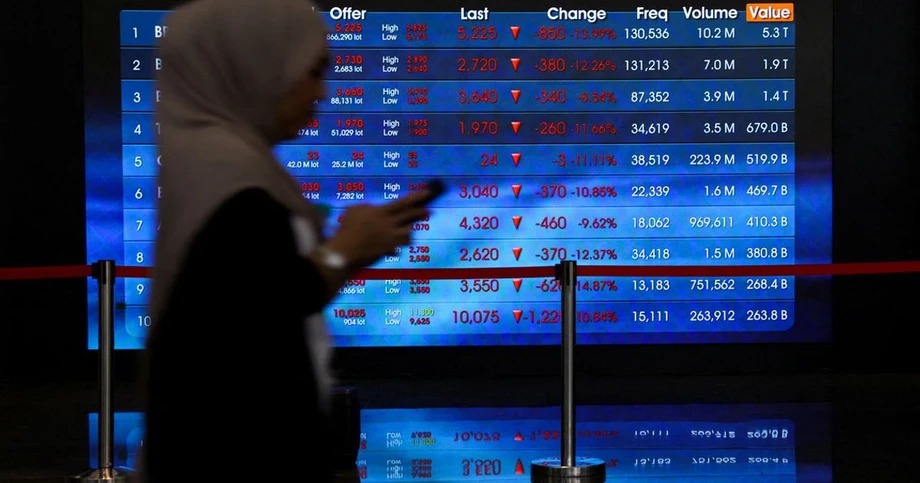
The Indonesia Stock Exchange (IDX), known locally as BEI, suspended trading in five listed companies on 27 November 2026 after they failed to clarify or correct discrepancies in their free float share data. The suspension covers AKKU, BAJA, FIRE, KING and KPIG in the Regular and Cash markets. It will remain in force until the exchange makes a further announcement.
Contents
- A Deadline Passes and Five Stocks Stop Trading
- The Five Companies and When Trading Stopped
- How the Exchange Found the Mismatched Data
- The Rules Behind the Suspensions
- From the Reporting Period to the Trading Halt
- Why a Free Float Figure Matters
- A Wider Warning About Indonesia's Capital Market
- Reforms Reach Ownership Disclosure and Exchange Governance
- Legal Gaps and the Next Market Decisions
- What to Know
The immediate problem concerned information about controlling shareholders and their affiliates in the Monthly Share Ownership Registration Activity Report, or LBRE, for the period ending 30 September 2026. The companies had until 26 November to submit corrections, following reminders on 9 and 16 November. The exchange said none of the five had provided the required clarification or correction by that deadline.
The action was set out in IDX Announcement No. Peng-S-00039/BEI.PLP/11-2026 and supported by press release No. 114/BEI.SPR/11-2026. Bima Ruditya Surya, acting head of the exchange's Listed Company Regulation and Services Division, explained what the review of reports submitted through 26 November had found.
Based on the exchange's monitoring of Monthly Share Ownership Registration Activity Reports for the period of 30 September 2026, five listed companies submitted reports that did not comply with exchange regulations.
The Five Companies and When Trading Stopped
Four stocks were suspended before the opening session on 27 November. Trading in KING stopped from the first trading session. All five shares had active trading status before the measure took effect, and their listings span three different boards.
- PT Anugerah Kagum Karya Utama Tbk (AKKU), listed on the Development Board, was suspended before the opening session.
- PT Saranacentral Bajatama Tbk (BAJA), also on the Development Board, was suspended before the opening session.
- PT Alfa Energi Investama Tbk (FIRE), another Development Board company, was suspended before the opening session.
- PT Hoffmen Cleanindo Tbk (KING), listed on the Acceleration Board, was suspended from the first trading session.
- PT MNC Tourism Indonesia Tbk (KPIG), listed on the Main Board, was suspended before the opening session.
Investors cannot buy or sell the suspended shares in the Regular and Cash markets while the measure is active. Existing shareholders still own their stock, but must wait for the exchange to lift the suspension before trading resumes in those markets. No resumption date was given.
How the Exchange Found the Mismatched Data
Free float means the portion of a company's shares held by public investors and available for trading, excluding holdings that exchange rules say cannot be counted, such as shares held by controlling parties and their affiliates. The figure helps investors understand how much stock can genuinely change hands, rather than simply how many shares exist.
Every listed company submits ownership information through its LBRE. For this review, the IDX compared the companies' free float calculations with records from the Indonesian Central Securities Depository, known as KSEI, covering shareholdings above 1 percent. KSEI maintains central electronic records of securities ownership. The exchange also used information supplied by each company to identify controlling shareholders and their affiliates.
That comparison revealed inconsistencies in the calculation and reporting of free float at several companies. The IDX asked the businesses concerned to check their records again and submit corrections within a set period. The five suspended companies were those still without a clarification or correction when the final deadline passed.
The public announcements do not provide the original and corrected free float percentages for each company, the size of each discrepancy, or separate explanations from the five issuers. They identify the reporting problem and the missed correction process, rather than publishing a company by company breakdown of the disputed holdings.
The Rules Behind the Suspensions
Three exchange regulations form the legal basis of the action. Regulation No. I-A covers the listing of shares and other equity securities issued by listed companies. Regulation No. I-E concerns obligations to submit information, with provision III.1.4 covering LBRE reporting. The suspension decision also cites the disclosure obligations in provisions II.2 and II.3. Regulation No. I-H concerns sanctions, with provision II.1 providing the basis for penalties when the relevant requirements are not met.
The rules also govern which shareholdings cannot be included in free float. This detail matters because describing a controller's shares, or shares held by an affiliate, as part of the public trading pool would give investors a different picture of ownership and liquidity.
Elsierra Putri Yosita, the exchange's corporate secretary, connected the sanctions to the quality of information available to the public. In her written statement, she described the purpose of the enforcement action.
The imposition of these sanctions is a form of IDX's commitment to strengthening the implementation of information disclosure principles and ensuring that share ownership data published to the public reflects actual conditions.
Elsierra also urged listed companies to check the accuracy of their submissions and apply prudence before publishing disclosures. The exchange wants ownership data to be timely, accurate and reliable so that domestic and international investors can depend on it.
From the Reporting Period to the Trading Halt
The enforcement process stretched across almost two months, from the reporting reference date to the market suspension. The exchange issued warnings and allowed a correction period before stopping trading.
- 30 September 2026: The reference date for the LBRE ownership and free float calculations examined by the exchange.
- 9 November 2026: The IDX sent the first reminder asking the companies concerned to review and correct their information.
- 16 November 2026: A second reminder was sent.
- 26 November 2026: The final deadline for LBRE corrections passed without clarification or correction from the five companies.
- 27 November 2026: The exchange announced the sanctions and suspended the five stocks in the Regular and Cash markets.
The dates show that the suspensions followed repeated opportunities to respond. Any decision to resume trading will require another exchange announcement and will take account of the applicable regulations.
Why a Free Float Figure Matters
A company can have a large total market value while offering only a small pool of shares for everyday trading. When that pool is limited, investors may find it harder to enter or leave a position without moving the price. Ownership concentration can also mean that a relatively small number of shareholders have considerable influence over the available supply of stock.
An error in either direction can distort that picture. Reporting too many shares as freely tradable can make a stock appear more liquid than its ownership records support. Reporting too few can understate the public market. Reliable figures are therefore part of price formation, which is the process through which buying and selling establish a market price.
Free float information also matters to index providers when they assess markets and construct equity benchmarks. The issue consequently reaches beyond five company reports. It concerns whether investors can compare companies, assess ownership concentration and rely on published market data.
For other listed businesses, the practical lesson is direct: ownership classifications must be checked before submission, and an exchange request for clarification requires a response within the stated period. For investors in the five companies, the immediate effect is simpler, trading in the named markets remains stopped while they await further disclosures.
A Wider Warning About Indonesia's Capital Market
The suspensions came during broader international scrutiny of Indonesian equities. The OECD Economic Surveys: Indonesia 2026 report describes the country's capital market as relatively shallow compared with many other developing economies. It points to weaknesses in transparency and market governance, together with a limited base of domestic institutional investors.
The Organisation for Economic Co-operation and Development said concerns became more visible in early 2026 over concentrated share ownership and limited free float at some large companies. Those conditions raised questions about the reliability of valuations and the way market prices were formed.
MSCI, a global provider of investment indices, subsequently warned that Indonesia could be moved from emerging market to frontier market status if market accessibility problems were not addressed. A frontier classification generally indicates a market with greater accessibility and development constraints than an emerging market.
In October 2026, MSCI went further by opening a consultation on whether Indonesia should move directly from emerging market status to standalone market classification. A final decision is scheduled for June 2027. MSCI highlighted opaque ownership structures, limited information about effective free float and indications of coordinated trading that could reduce investors' ability to rely on market prices.
The OECD report links the warning to a sharp market correction and foreign capital leaving Indonesian equities. By the end of October 2026, the Jakarta Composite Index had fallen by about 40 percent since the start of the year, according to the figures cited in the report.
Reforms Reach Ownership Disclosure and Exchange Governance
Indonesian authorities have begun a series of changes in response to the concerns. One measure lowers the threshold for public reporting of share ownership from 5 percent to 1 percent. The new trigger is one fifth of the old level, bringing smaller substantial holdings into the disclosure system. Authorities are also introducing disclosure of high ownership concentration as an early warning about possible liquidity risks.
A separate roadmap sets a goal of raising the minimum free float requirement to 15 percent. The purpose is to increase the supply of shares available for trading, improve liquidity and support more credible price formation. No single date for every company to reach that level was given in the account of the roadmap.
The Financial Services Authority, or OJK, has also strengthened enforcement by opening investigations into coordinated trading and insider trading. Insider trading generally involves dealing in securities using material information that is not available to the wider market. Coordinated trading can involve parties acting together in ways that distort the apparent operation of supply and demand.
The government and regulators have also prepared a legal and regulatory basis for demutualizing the IDX. Demutualization would open the exchange's ownership beyond its member firms, allowing other parties to become shareholders. The change is intended to improve governance, although its design will determine how conflicts of interest are managed.
The OECD says the effectiveness of these reforms over time will depend on consistent implementation, enforcement and periodic evaluation. The five suspensions provide a concrete example of enforcement through an ownership data comparison, formal reminders and a fixed correction deadline.
Legal Gaps and the Next Market Decisions
Law No. 8 of 1995 on Capital Markets remains a structural challenge, according to the OECD. Its legal definition of an insider is relatively narrow, which can restrict enforcement against some forms of insider trading that have developed since the law was enacted. The OECD recommends expanding the range of people and conduct covered by the law and strengthening enforcement against market manipulation.
Exchange demutualization presents a separate governance test. The OECD calls for clear organizational and operational separation among exchange management, shareholders, regulatory functions and market participants. Independent directors, transparent ownership and voting rights, strict conflict of interest rules and equal treatment of private and state affiliated organizations are among the safeguards it identifies.
Those safeguards would become especially important if Danantara or another state institution became an IDX shareholder, because such institutions can also hold substantial interests in listed enterprises owned by the state. The exchange would need to preserve its role as a neutral and credible marketplace while managing those overlapping interests.
Two schedules now matter. For the five companies, there is no published date for the suspensions to end, so investors must watch for company disclosures and a further IDX announcement. For the national market, MSCI has been assessing the effectiveness of free float reforms through its November 2026 index review, with the final classification decision scheduled for June 2027.
What to Know
- The IDX suspended AKKU, BAJA, FIRE, KING and KPIG on 27 November 2026 in the Regular and Cash markets.
- The companies failed to clarify or correct controller and affiliate ownership information affecting free float reports for the period ending 30 September.
- Reminders were sent on 9 and 16 November, followed by a final correction deadline on 26 November.
- The exchange compared company LBRE submissions with KSEI records of shareholdings above 1 percent.
- AKKU, BAJA and FIRE are on the Development Board, KING is on the Acceleration Board and KPIG is on the Main Board.
- The OECD has raised concerns about market transparency, ownership concentration and limited free float, while the Jakarta Composite Index was about 40 percent lower at the end of October than at the start of 2026.
- Reforms include lowering the ownership disclosure threshold from 5 percent to 1 percent and creating a roadmap toward a 15 percent minimum free float.
- MSCI is scheduled to make its final decision on Indonesia's market classification in June 2027; the exchange has given no date for lifting the five suspensions.