A Signed Deal, and a Rate Jakarta Says Will Not Move
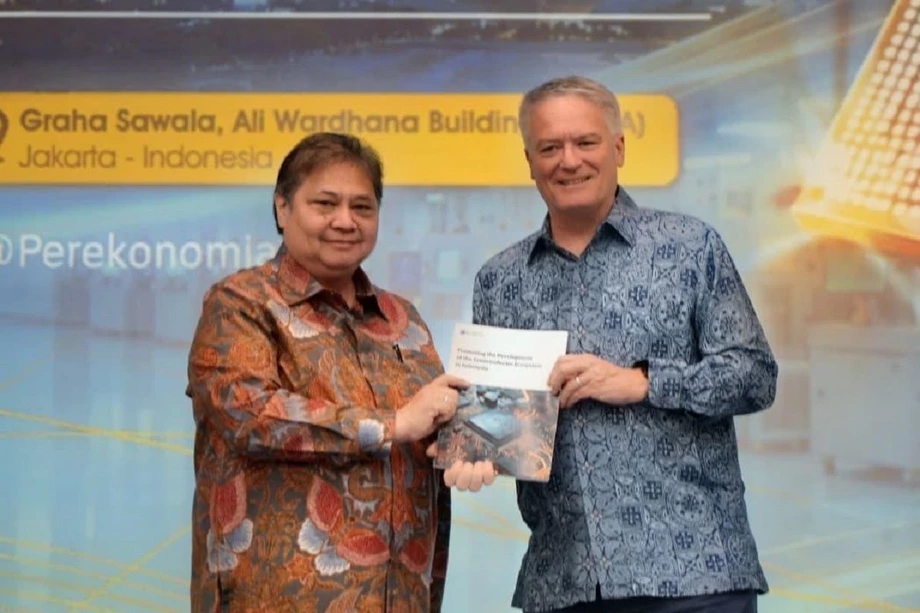
Airlangga Hartarto, Indonesia's coordinating minister for economic affairs, met reporters at his ministry in Central Jakarta on Wednesday, November 25, 2026, while Washington was preparing to publish the results of an investigation into industrial overcapacity across 16 of its main trading partners. His message was that the legal paperwork changing in the United States would not change what Indonesian exporters pay at American ports.
Contents
- A Signed Deal, and a Rate Jakarta Says Will Not Move
- What the Trade Representative Proposed for 14 Economies
- How a Court Ruling in February Led Here
- The Arithmetic Behind Indonesia's 10 Percent
- China, Transshipment and the Truce That Expires in January
- What Excess Capacity Means in Practice
- When the New Rates Would Land
- Key Points
Indonesia is safe. We have already signed the Agreement on Reciprocal Trade. The result is in line with that.
The Agreement on Reciprocal Trade is the bilateral package Jakarta signed in exchange for market access and purchase and investment commitments. Nineteen trading partners concluded such agreements over the past year, according to Steptoe's analysis. Indonesia's reciprocal rate was set at 19 percent, trimmed to 18 percent, before the US Supreme Court struck down the policy that underpinned it in February.
Airlangga described the overcapacity investigation as a change of legal instrument rather than a new levy. His argument runs like this: the earlier global tariff framework was annulled, so the administration of President Donald Trump rebuilt it through Section 301 of the Trade Act of 1974, and the resulting rate for Indonesia matches what came before.
Yes, this is the replacement, the excess capacity section. Legally, what was cancelled by SCOTUS is replaced by the investigation on excess capacity. But the tariff is the same.
What the Trade Representative Proposed for 14 Economies
United States Trade Representative Jamieson Greer signed the findings on November 25, 2026, after an inquiry that opened in March. The determinations and proposed actions hold that the acts, policies and practices of 14 economies relating to structural excess capacity and production in manufacturing are unreasonable and burden or restrict US commerce, making them actionable under Section 301(b) of the Trade Act of 1974. Reports for each economy were published alongside the finding.
The 14 are China, the European Union, Singapore, Switzerland, Indonesia, Malaysia, Cambodia, Thailand, Korea, Vietnam, Taiwan, Bangladesh, Japan and India. Two of the 16 economies named when the inquiry opened received no determination: Mexico and Norway.
Proposed rates differ sharply by country. Indonesia faces duties of up to 18 percent, net of existing Section 301 tariffs, with exemptions for certain goods. Bangladesh and Cambodia face up to 18 percent, China up to 20 percent, the European Union 15 percent, and Vietnam up to 35 percent, the highest figure in the package.
Greer framed the action as a correction of decades of industrial policy abroad.
For decades, many of our trading partners have adopted industrial strategies built on targeting manufacturing, wage and labor suppression, financial and other support, non-market economy inputs, and other market distorting practices that tilt the trade balance in their favor while eroding America's manufacturing base.
How a Court Ruling in February Led Here
The chain starts with the Supreme Court. On February 20, 2026, the court ruled that the International Emergency Economic Powers Act did not authorize the president to impose tariffs, wiping out the near universal duties Trump had announced the year before. Within hours the White House turned to Section 122 of the Trade Act of 1974 for a temporary 10 percent tariff on most imports, a measure with a fixed life.
The March 11 notices opened two tracks covering 60 trading partners. One examined structural excess capacity in 16 economies, the other whether partners fail to enforce a ban on imports made with forced labor across 59 countries and the European Union. Written comments were due April 15, 2026, and hearings began on May 5.
Key dates in the rebuild of the tariff system:
- February 20, 2026: the Supreme Court strikes down the emergency tariffs.
- March 11 and 12, 2026: USTR opens investigations into 60 partners.
- July 2026: duties of 10 percent or 12.5 percent take effect on goods from those partners under the forced labor track, covering 99.4 percent of US imports.
- July 24, 2026: the temporary 10 percent tariff under Section 122 expires.
- November 25, 2026: determinations are issued for 14 economies, with proposed tariffs opened for public comment.
Washington has kept adding to the list. Officials were preparing another Section 301 inquiry into digital trade rules in South Korea, the European Union and Australia, a third such action aimed at Seoul this year.
The Arithmetic Behind Indonesia's 10 Percent
Two numbers carry most of the weight for Jakarta. Goods from industries that employ large numbers of workers sit at 10 percent, while palm oil, cocoa and coffee enter the United States at zero. Airlangga volunteered the figures himself, hours before the official release.
We are leaking this as well: for labor intensive goods we are at 10 percent. Then for palm oil and the others we are at 0 percent.
Indonesia's rate under the forced labor track is 10 percent, below the 12.5 percent applied to other countries in that group. Rates apply by product line rather than to a country as a whole. "There are various HS codes," Airlangga said, referring to the Harmonized System, the international numbering system that classifies traded goods and determines which duty line a shipment falls under.
Work on exemptions began long before the announcement. In June 2026 the government asked Washington to exempt 18 commodities and manufactured products, from palm oil and natural rubber to spices and garments, and put forward about 1,700 more product lines for more competitive treatment. Officials estimated at the time that the rate after the overcapacity inquiry would land at 18 percent, against an earlier American proposal of up to 32 percent.
China, Transshipment and the Truce That Expires in January
The US report on Indonesia names five problem areas: industrial policies that promote production and exports, labor laws and enforcement it calls inadequate, failure to address excess capacity arriving through imports and investment from non-market economies, financial repression, and sector policies including downstreaming. Downstreaming is Indonesia's strategy of processing nickel, bauxite and other raw materials at home instead of shipping ore abroad. The report says the burden falls hardest on textiles and apparel, mining and metals, and renewable energy.
Chinese investment runs through the case. The inquiry looked at whether Chinese firms have built plants in Indonesia, Vietnam, Cambodia and elsewhere to make goods for the US market and sidestep duties on Chinese products. China's own exposure is the largest of the 14: a 20 percent rate on top of roughly 25 percent in duties dating from Trump's first term, taking the total to about 45 percent. The average US tariff on Chinese goods was about 36.5 percent in July, according to the Congressional Research Service.
Beijing rejects the premise. China's foreign ministry said before the reports were published that "the so-called overcapacity does not really exist".
A truce between the two economies caps additional second term tariffs on Chinese goods at 20 percent and runs to January 10, 2027, leaving 7.5 percentage points of headroom. The two sides are also discussing a Board of Trade mechanism to cut duties on US$30 billion of non-strategic imports each.
What Excess Capacity Means in Practice
Excess capacity describes factories able to make more goods than buyers want, often kept running with state support. When that surplus is sold abroad cheaply, producers in importing countries lose sales and investment. The March notices pointed to economies showing large or persistent trade surpluses or unused plant, and listed aluminum, automobiles, batteries, chemicals, electronics, energy goods, machinery, robotics, semiconductors, ships, solar modules, steel and transportation equipment among the sectors affected.
The United States will no longer sacrifice its industrial base to other countries that may be exporting their problems with excess capacity and production to us.
Greer said that when the investigations opened. Several of the sectors listed already carry duties imposed on national security grounds under Section 232 of the Trade Expansion Act of 1962, which is why the trade representative describes the new rates as net of measures already in place. For Indonesia, the proposed 18 percent ceiling is a number to be negotiated product by product, not a single switch.
When the New Rates Would Land
Nothing changes on announcement day. The notices are proposals open for public comment, and Greer told CNBC that the rates mostly fall between 15 and 20 percent and are not additive in the usual sense.
In effect, it'll look more like a top up. When it all nets out, it really will just top up a few percentage points.
Timing is loose. Greer said a lot of the plan is baked in for trading partners and that none of the measures would take effect earlier than a couple of months. No final rate schedule, no exemption list and no effective date has been published, and the office of the trade representative has not said how long the comment period will run.
Airlangga declined to get ahead of Washington. "They will announce this week. But we should not announce first," he said on Wednesday, before the determinations appeared. Public opinion in the United States has shifted against the duties: a Reuters/Ipsos survey after the November midterms found 62 percent of respondents backed removing the import tariffs.
Key Points
- Coordinating Minister Airlangga Hartarto said Indonesia is safe because it signed the Agreement on Reciprocal Trade, and that the tariff rate itself does not change.
- USTR determined on November 25, 2026 that practices in 14 economies, Indonesia included, are unreasonable and actionable under Section 301(b) of the Trade Act of 1974.
- Proposed duties go up to 18 percent for Indonesia, 15 percent for the European Union, 20 percent for China and 35 percent for Vietnam, net of existing measures.
- No determinations were made for Mexico and Norway, two of the 16 economies named when the inquiry opened in March.
- Palm oil, cocoa and coffee face zero duty and goods from industries employing large workforces face 10 percent, applied by HS product code.
- The investigation was built after the Supreme Court struck down the emergency tariffs on February 20, 2026 and a 10 percent levy under Section 122 expired on July 24, 2026.
- The US report on Indonesia cites downstreaming, labor enforcement and investment from non-market economies among its concerns.
- Greer said the duties would not take effect for at least a couple of months, with public comment still to come.