What Washington Proposed for Thai Goods
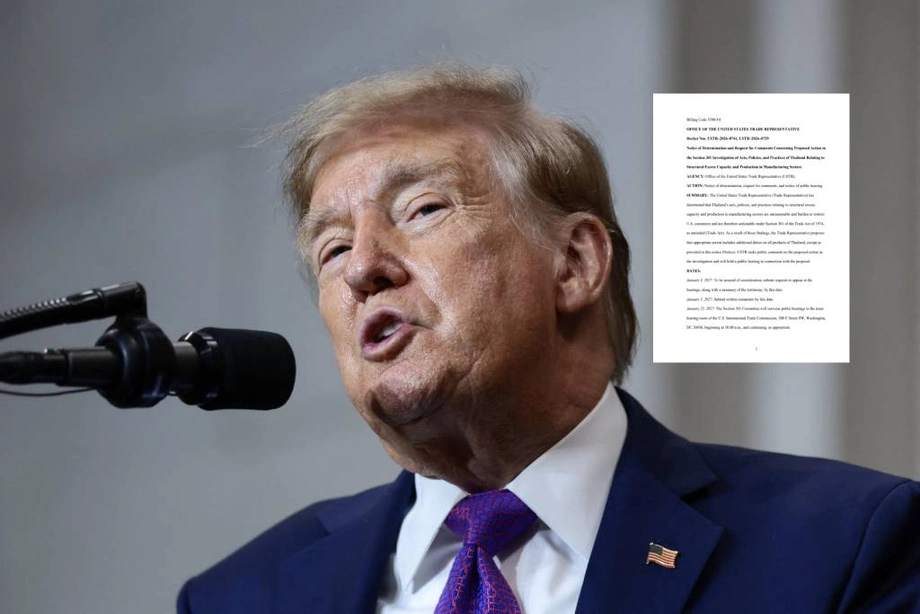
The United States has put Thailand on a list of 14 economies facing new import taxes under Section 301 of the Trade Act of 1974. On November 25, 2026, the Office of the United States Trade Representative published the USTR announcement saying those economies had acts, policies and practices tied to structural excess capacity in manufacturing that were unreasonable and burdened or restricted American commerce. For Thailand, USTR proposed a maximum tariff of 18% on goods from Thailand, with exceptions, and floated 25% if talks and existing commitments are judged unsatisfactory.
Contents
- What Washington Proposed for Thai Goods
- Why Washington Says It Acted
- What Section 301 Actually Does
- Why Thailand Was Named
- The China Factor in Thai Supply Chains
- What Thai Exporters Would Actually Pay
- Which Goods Could Be Spared
- Why the United States Market Matters to Thailand
- How Thailand's Neighbours Compare
- Thailand's Plan to Push Back
- Political Pressure in Washington
- Markets, China and Other Trade Fights
- The Dates That Will Decide the Tariff
- Key Points
A tariff is a tax charged when goods enter a country. Importers usually pay it first, then prices can shift along the supply chain. The 18% figure is a ceiling, not an automatic bill on every Thai shipment. USTR said the rate would be calculated after existing Section 301 duties are counted, and certain products would be spared. Thai goods that do not receive an exemption would move to the new ceiling only if the proposal becomes final.
The proposal is not in force. USTR put the tariff plan in a notice published before official release, a step that lets the public inspect and comment on draft government text before a final decision. Written comments are due January 5, 2027, and a public hearing is set for January 25, 2027. USTR's announcement did not state an effective date; Thailand's Commerce Ministry expects a final decision by March 11, 2027.
Why Washington Says It Acted
USTR's case rests on a simple idea: when factories can produce far more than customers buy, companies may push the extra output into other markets at low prices. That can hurt producers in the importing country. Washington calls this structural excess capacity and production, meaning the problem comes from the way industries are planned, financed and protected, not from a short burst of overproduction.
Jamieson Greer, the United States Trade Representative, said many trading partners have used industrial strategies that favour their own manufacturers. He said earlier statements at the G7, G20 and World Trade Organization had not brought change, and that President Donald Trump was proposing action.
'For decades, many of our trading partners have adopted industrial strategies built on targeting manufacturing, wage and labor suppression, financial and other support, non-market economy inputs, and other market distorting practices that tilt the trade balance in their favor while eroding America's manufacturing base,' Greer said.
The administration turned to Section 301 after the Supreme Court struck down worldwide tariffs imposed under emergency powers in February 2026. That gave the trade fight a different legal base. The law has been tested in court, and both major parties in Congress have supported action against foreign subsidies and industrial policies, which makes it stronger politically than a sudden emergency measure.
What Section 301 Actually Does
Section 301 of the Trade Act of 1974 gives the executive branch authority to respond when it finds a foreign country's trade practices unreasonable or harmful to United States commerce. USTR made what the law calls actionable determinations under Section 301(b). In plain language, USTR decided the practices could be answered with trade measures such as tariffs, without waiting for Congress to pass a new law.
The investigation began March 11, 2026 and covered 16 economies. USTR received testimony from nearly 140 witnesses and 1,070 written comments before reaching determinations for 14 economies: China, the European Union, Singapore, Switzerland, Indonesia, Malaysia, Cambodia, Thailand, Korea, Vietnam, Taiwan, Bangladesh, Japan and India. Greer said Mexico and Norway were left out because their practices remain under investigation.
USTR published economy specific reports to support the findings and proposed actions in each case. USTR's Thailand report ran 171 pages. The document identified four Thai industries as especially exposed: electronics, automobiles, machinery and electrical equipment.
Why Thailand Was Named
USTR listed five Thai policies and practices it considers unreasonable. First, Thai industrial and economic plans target manufacturing and exports, including Thailand 4.0. Second, Washington says Thailand keeps barriers that make it harder for American goods to enter. Third, USTR points to preferential lending and other government support, including support for the automotive sector.
Fourth, USTR says labor protections are inadequate, which it argues keeps wage costs lower than they would otherwise be. Fifth, USTR says Thailand has failed to deal with global excess capacity, including imports and investment from economies that do not use market mechanisms. The United States argues these practices reduce opportunities for American producers in Thailand and third country markets, hurt United States manufacturing output, exports, jobs and investment, and raise economic security risks.
Thai exporters are most exposed in electronics, automobiles, machinery and electrical equipment. Those sectors include products that compete directly with American factories, such as computers, printers, telecommunications gear, auto parts, power supply equipment, semiconductors and machinery parts. USTR also flagged the concentration of hard disk drive production in Thailand as a supply chain weak point because a natural disaster or other shock could halt output.
The China Factor in Thai Supply Chains
USTR's Thailand report puts heavy weight on China's role. It says Thai imports from China rose sharply between 2017 and 2025. Intermediate goods used in further production, including electronic parts, chemicals and steel, increased 155% to $39 billion. Capital goods such as machinery and equipment increased 119%, and finished consumer goods increased 137%.
Chinese foreign direct investment in Thailand reached a cumulative $22.5 billion, concentrated in automobiles, financial and business services, and basic materials. Washington's concern is that Thai factories can use Chinese inputs, Chinese machinery and Chinese capital to expand output, then sell the finished goods into the United States. USTR describes this as Thailand helping absorb excess production from an economy that does not use market mechanisms.
USTR also estimated that 10.7% of the value added in Thailand's manufacturing exports in 2024 came from China. Value added means the part of a product's final value created at a particular stage or place. USTR points to specific Thai industrial programs as well. EV 3.0 and EV 3.5 subsidies for electric vehicles included buyer support, tax cuts and rules requiring local production to offset imports. Under EV 3.5, manufacturers had to produce two cars in Thailand for each imported car in 2026 and three for each imported car in 2027. USTR also cited 24 billion baht in support for domestic battery cell makers in 2023, covering up to half of factory construction costs.
What Thai Exporters Would Actually Pay
Thailand's current tariff burden comes from a separate Section 301 investigation into forced labor enforcement. Thai goods that are not exempt currently pay 12.5% under that measure. If the new excess capacity tariff becomes final at 18%, the relevant rate would rise to 18%, an increase of 5.5 percentage points, not 12.5% plus 18%. The Thai Chamber of Commerce made the same calculation and added that some goods already covered by Section 232 industry tariffs would be proposed for exemption from a second charge.
Before Trump returned to office, ordinary American duties averaged about 3% to 5%. Thai goods later faced a reciprocal rate as high as 36%, then 19%, before the Supreme Court ruling. A 10% measure under Section 122 followed for 150 days, then the separate Section 301 actions.
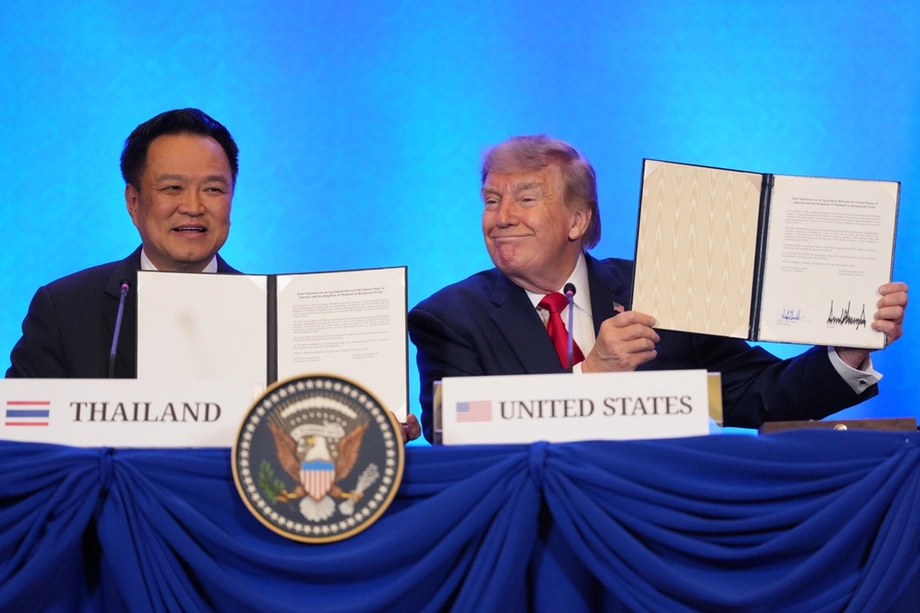
Deputy Prime Minister and Commerce Minister Suphajee Suthumpun said the 18% rate was expected and reflected Thailand's signing of a Joint Statement with the United States. Prime Minister Anutin Charnvirakul and President Donald Trump signed that statement in Manila on November 17, 2026, confirming the main terms of a proposed Agreement on Reciprocal Trade before a full text is completed. The government spokesperson, Ekkapob Pianpises, said the 18% figure was lower than the earlier 19% rate and came from the Joint Statement.
Suphajee said Thailand would argue that the rate should be below 18% and ideally zero, while accepting that zero would be difficult. Her ministry wants to show that Thai subsidies and regulations do not distort competition, that the 18% ceiling is not justified, and that the Joint Statement should ease trade pressure. USTR's draft text says 25% remains possible if ongoing talks and existing commitments are not satisfactory. That would be 7 percentage points above the 18% ceiling.
Which Goods Could Be Spared
Exemptions will decide how much Thai exporters truly pay. USTR proposed excluding goods already subject to Section 232 tariffs, which cover aluminum, steel, copper, passenger cars and light trucks, medium and heavy trucks, wood products, patented pharmaceutical products and semiconductors. The draft also exempts informational materials, books, donations and personal baggage of travelers.
The annexes in the notice list additional products. USTR said it could spare raw materials that might face supply shortages in the United States, goods whose tariffs could damage the wider economy, products the United States cannot grow or make in sufficient quantities, and goods where an extra tariff would not do much to address the practices under investigation. Certain iron ore and iron ore concentrate products that have been agglomerated are also included in the proposed exemptions.
Thailand already has 2,121 exempt tariff lines under the forced labor Section 301 action, covering about half of its exports to the United States, according to the Department of Foreign Trade. Arda Fenngthong, the department's director general, said those exemptions remain unchanged and include beef, vegetables, durian, mango, papaya, spices, coffee, pineapple, minerals, upstream metals, petroleum products, fertilizers, basic chemicals, cast iron, semiconductors, circuit boards, computers and electronic parts, including artificial intelligence and data centre electronics such as hard disks and storage devices.
Thailand wants more. The Commerce Ministry plans to request exemptions in about 15 categories, including rice, fish and seafood, cassava starch and cassava products, beverages, pet food and rubber gloves. Dr. Phorn Aramwattananont, president of the Thai Chamber of Commerce and the Federation of Thai Industries, said food and farm products need attention because many are still in the tariff net and are linked to small exporters and farm income. More than half of Thai export value to the United States sits in proposed exempt categories, so the average added burden could be below 5.5 points, although farm and food exporters would not share evenly.
Why the United States Market Matters to Thailand
Thailand sends more goods to the United States than to any other single market. Thai officials put that trade at 2.37 trillion baht in 2025, about a quarter of total exports, with a forecast of 3 trillion baht in 2026. The market supports 1.25 million jobs in Thailand and protects agricultural exports worth 170 billion baht, before adding rubber and rubber products worth another 160 billion baht.
The trade imbalance is central to the dispute. USTR said Thailand's goods surplus with the United States rose from $34.5 billion in 2021 to $71.2 billion in 2025, more than doubling in five years. At the same time, Thailand ran a goods trade deficit of $11 billion to $12 billion a year from 2023 to 2025. Washington sees the American surplus in Thai trade as evidence that the arrangement is skewed.
USTR also cites factory data. Manufacturing made up an average 25.4% of Thailand's gross domestic product, about 2.5 times the United States share and nearly twice the OECD average. Thai factory capacity use stood at 60%, below its average since 2023. In simple terms, Thai factories had enough machines and workers to make far more than buyers wanted, and Washington says that extra output found its way to the United States.
How Thailand's Neighbours Compare
USTR proposed different ceilings for the 14 economies. Vietnam faces 35% if negotiations fail and 20% if it reaches a reciprocal trade deal. India faces 25%, or 17% after a deal. China and Singapore were listed with 20% ceilings, with Singapore's ceiling also described as 10%, or 20% falling to 10% if talks succeed. Thailand, Bangladesh, Cambodia, Indonesia and Malaysia share an 18% ceiling. Japan, Korea, Taiwan, Switzerland and the European Union face 15%, with ordinary duty rates counted toward that ceiling in several cases.
China's case has extra conditions. The proposed 20% duty would sit on top of roughly 25% tariffs from Trump's first term and reflects a truce due to expire January 10, 2027. If that truce ends, the new duty would rise to 40%. Greer said about $30 billion of Chinese imports could be exempt through a list being considered by the United States and China Board of Trade. China's embassy in Washington denied that China was a source of excess capacity and made no threat of retaliation, urging both sides to honour agreements reached by Trump and Chinese President Xi Jinping.
Thailand's 18% ceiling puts it in the same group as Malaysia, Indonesia and Cambodia, all of which have signed reciprocal trade arrangements with Washington. Dr. Phorn said that comparison matters more than the headline number, because buyers often choose between suppliers in nearby countries. He also warned that Thailand must watch China's final rate, since China is a trading partner, competitor and investor. A narrowing tariff gap could change where companies put new factories.
Thailand's Plan to Push Back
Thailand's Commerce Ministry will file written objections by January 5, 2027. The submission will answer USTR's reasoning, challenge the suitability of the 18% ceiling and explain how the Joint Statement reduces trade tension. Officials will seek a lower rate at the January 25 hearing and ask for more exempt products.
The government also has work at home. Officials plan a legal review called a legal scrub, then cabinet approval, public consultation and a vote in parliament before the reciprocal trade agreement can take effect. Suphajee said the signed statement gives Thailand some assurance that the final tariff will not exceed 18%, but the final number will depend on the hearing and negotiations.
Associate Professor Art Phisalvanich, an economist at Rangsit University, said the 18% proposal is not the end of the risk. He pointed to Malaysia, Indonesia and Cambodia, which have clearer trading conditions after signing reciprocal trade agreements. Thailand still has to turn the Joint Statement into a binding arrangement and win exemptions for sensitive products. Dr. Phorn urged stronger checks on product origin, more local content, technology transfer and faster free trade talks with the European Union, United Kingdom, Canada and Eurasian countries to reduce reliance on one market.
Political Pressure in Washington
The tariff plan arrives after a difficult election for Trump. Tariffs and their effect on living costs became a major issue as Democrats swept to victory in the midterms. A poll found 62% of respondents supported Democratic efforts to repeal the duties. Senator Ron Wyden, an Oregon Democrat due to chair the Senate Finance Committee in January, said he would try to end the tariffs.
'Not even a month after voters rejected his disastrous trade agenda, Trump has decided to yet again increase prices for Americans. As Finance Committee Chair, I will use every tool at my disposal to end Trump's disastrous tariffs,' Wyden said.
Repeal will not be easy. Nathaniel Halvorson, a former USTR official and now a trade partner at Baker McKenzie, said both parties in Congress favour action on excess capacity, much of it centered on China, and that ending the duties could unravel trade deals. Democrats would need to decide whether to undo a settlement that may serve some American interests, he said.
Analysts at ING wrote that the repeated changes in legal reasoning showed a larger trend.
It is another reminder that while the legal justification for tariffs keeps changing, US protectionism is becoming increasingly difficult to unwind.
Greer said the proposed ceilings mostly match deals reached over the past year. He said the deals also made it easier to sell American goods abroad.
'We're sticking to that in terms of our proposals because we think a lot of these deals we made actually solve a lot of the problems we see in excess capacity or can go toward it,' Greer said.
Markets, China and Other Trade Fights
Investors reacted quickly to the announcement. The main United States stock indexes fell more than 1% at the start of trading, and the Nasdaq Composite, which is heavily weighted toward technology shares, fell more than 3%. A global stock measure fell 0.5%. The selloff showed how tariffs can move markets before any tax is collected, because investors expect higher costs and slower trade.
Greer also described a separate dispute with Brazil. He said USTR sought higher duties after months of talks made no meaningful progress. The proposal includes a 10% duty on finished Embraer commercial aircraft from Brazil and higher duties on sugar imports above quota. Both products had been exempt from the 25% tariff Trump imposed on Brazilian goods in July after another Section 301 inquiry.
Trump and Xi are due to meet again at the G20 in Miami the following month. That meeting could shape the truce expiring January 10, 2027. For Thailand, the meeting matters because Chinese investment and Chinese inputs are at the centre of Washington's case against Thai factories.
The Dates That Will Decide the Tariff
The process now moves from evidence to argument. USTR will collect written comments until January 5, 2027. The public hearing follows on January 25, 2027. Thai officials expect the final decision by March 11, 2027, though USTR's November announcement did not set an effective date.
- March 11, 2026: USTR opened the investigation covering 16 economies.
- November 17, 2026: Thai Prime Minister Anutin Charnvirakul and President Trump signed the Joint Statement in Manila.
- November 25, 2026: USTR made the Section 301 determinations and proposed tariffs.
- January 5, 2027: written comments are due.
- January 10, 2027: the United States and China truce is due to expire.
- January 25, 2027: USTR will hold the public hearing.
- March 11, 2027: Thailand's Commerce Ministry expects a final decision.
Key Points
- USTR proposed an 18% maximum tariff on goods from Thailand, with a possible 25% if talks are unsatisfactory.
- The rate is a ceiling that counts existing Section 301 duties and excludes certain goods.
- Thai exporters still pay the existing 12.5% tariff until a final decision is made.
- Thailand will seek a lower rate and more exemptions, especially for rice, seafood, cassava products, beverages, pet food and rubber gloves.
- The United States was Thailand's top export market in 2025 at 2.37 trillion baht, and the Thai goods surplus with the United States rose from $34.5 billion in 2021 to $71.2 billion in 2025.
- Thailand shares the 18% ceiling with Malaysia, Indonesia, Cambodia and Bangladesh, while Vietnam faces 35% if talks fail.
- Written comments are due January 5, 2027, the public hearing is January 25, 2027, and Thailand expects a final decision by March 11, 2027.