Easy instalments meet a growing household cash shortage
A survey of 1,406 people across Thailand's 17 northern provinces has exposed the financial pressure behind the Bank of Thailand's push to regulate Buy Now, Pay Later lending: about 40% of households in the North have income below their expenses, compared with roughly 32% nationwide.
Contents
- Easy instalments meet a growing household cash shortage
- What the proposed rules would change
- Accounts grew more than eightfold in three years
- Young borrowers are entering debt early
- Why northern families face greater pressure
- Farmers and small businesses have thin reserves
- Regular salaries do not remove debt strain
- Schools, employers and shopping platforms have roles
- Debt assistance must accompany the new rules
- Key Points
The findings were presented at the central bank's northern office in Chiang Mai during a financial wellbeing seminar on November 16, 2026. They show a region where household income has fallen faster than the national average, working people carry heavy responsibilities for dependants, and many families have little money available for emergencies.
Governor Vitai Ratanakorn linked those pressures to an uneven economy in which growth benefits some groups much more than others. The central bank is pursuing tighter oversight of instalment credit alongside financial education, debt assistance and support for small businesses.
A proposed regulatory framework would restrict Buy Now, Pay Later services to users aged at least 20, set a maximum credit limit of 20,000 baht per person and cap annual borrowing costs at an effective rate of 15%. Each purchase would have to be repaid within six months.
The proposal remains a draft. Public statements describe different schedules, including an October 16 to November 15 consultation and an announcement expected within one to two months. No confirmed commencement date is given. For borrowers, the immediate concern is the combination of easy access to credit and household budgets already stretched beyond their limits.
Buy Now, Pay Later, often shortened to BNPL, lets someone receive a purchase immediately and pay for it later or through instalments. Each payment can look manageable on its own. Several purchases running together can leave much less money for food, rent and existing debts.
What the proposed rules would change
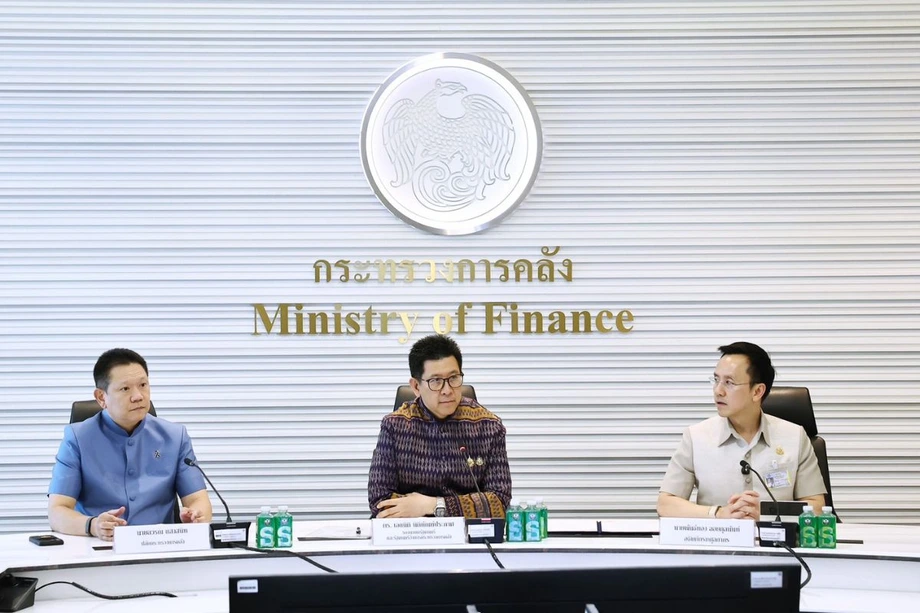
Deputy government spokeswoman Lalida Pervatavis described the draft as a joint initiative by the Finance Ministry, under Finance Minister Ekniti Nitithanprapas, and the Bank of Thailand. Its proposed protections reach beyond the advertised interest rate.
- Borrowers would have to be at least 20 years old.
- The maximum credit limit would be 20,000 baht per person.
- Total borrowing charges would be capped at an effective annual rate of 15%.
- Repayment for each purchase would last no longer than six months.
- Lenders would assess repayment ability and disclose interest, fees and payment schedules.
- Providers would separate the decision to buy an item from the application for credit and follow fair debt collection practices.
The proposed cost calculation would include fees and price increases applied when a customer chooses instalments. This matters because a purchase can become more expensive through a higher instalment price, even when the advertised interest charge appears low. An effective annual rate expresses the borrowing cost on a yearly basis, accounting for how repayments are structured.
Lalida explained the government's position on convenient digital credit:
"The government wants people to have access to convenient and fair financial services, but they must understand the costs and debt obligations before choosing to pay in instalments," Ms Lalida said.
Separating shopping from credit approval would create a distinct decision about borrowing, rather than allowing the loan to disappear into the checkout process. Repayment checks would require lenders to consider whether customers can meet their obligations, alongside the appeal of the purchase itself.
Accounts grew more than eightfold in three years
Bank of Thailand data covering eight major BNPL operators show accounts rising from 600,000 in 2021 to 4.91 million at the end of 2024. That is an increase of 4.31 million accounts, or about 8.2 times the starting total. Transaction value grew by an average of 38% annually.
The expansion has brought instalment borrowing into ordinary purchases. Vitai cited examples of a 106 baht bubble tea and a 50 baht chicken rice meal paid over four months. Some BNPL interest rates reached 16% to 18%, according to his account.
The figures and announcements trace a rapid expansion followed by a push for more specific protections:
- 2021: Eight major operators recorded about 600,000 BNPL accounts.
- End of 2024: Their account total reached 4.91 million.
- October 16 to November 15: Authorities described a public consultation window for draft rules, without specifying the year in that announcement.
- November 16, 2026: The Chiang Mai seminar presented northern financial wellbeing findings and discussed tighter BNPL oversight.
The central bank has described its intended focus as the companies supplying credit through shopping services. Existing businesses operate under different legal arrangements: licensed digital lenders can offer loans of up to 20,000 baht at interest rates of up to 25%, while another lending model allows larger loans with interest capped at 15%. The draft would introduce protections aimed specifically at BNPL borrowing.
Young borrowers are entering debt early
Vitai said Thailand has about 25 million people carrying debt. Among people aged 20 to 35, he gave a figure of 52.7% with debt and said 27% of that age group's debt was classified as nonperforming. The seminar account described roughly half of young adults as indebted and one in five indebted young people as having bad debt.
The figures describe different measures of distress: the share of money classified as bad debt and the share of borrowers affected. A nonperforming loan, or NPL, is credit on which repayments have fallen seriously behind.
The central bank's concern is that borrowing trouble can begin before a young adult has built stable earnings or savings. Instalments for several purchases can overlap with transport, housing and education costs. Once payments fall behind, the next month's income must cover both current expenses and overdue obligations.
Lalida described that accumulation of payments when explaining the proposed safeguards:
Even if each instalment is relatively small, having several purchases at the same time can create a financial burden beyond what they can afford. This regulatory initiative therefore aims to promote transparency and prevent long-term household debt problems.
Vitai's position was that BNPL services should remain available with suitable protections. The measures under consideration include restrictions on eligible products as well as age requirements and checks on repayment capacity.
Why northern families face greater pressure
Northern household income fell 5.5%, compared with a national decline of 2.5%, according to the figures presented with the regional findings. The northern decline was 3 percentage points deeper. About 40% of households in the region had insufficient income, roughly 8 percentage points above the national figure of 32%.
The North also had the country's highest dependency ratio, at 67%. This ratio compares children and older people with the population of working age. A higher ratio means a smaller working population must support more dependants, increasing pressure on family earnings.
Nat Lumpikanon, director of the Bank of Thailand's northern office, presented the survey of 1,406 people. It found different weaknesses across occupations: irregular earnings among farmers, inadequate emergency savings among business owners, consumer debt among private employees and heavy borrowing among public employees.
The average financial skills score was 72.1. Alongside the income and savings figures, that score helps explain why the central bank is combining education with changes to financial routines. Knowing how to budget and having enough income to cover essential spending are separate parts of the same household problem.
Vitai described the wider economy as growing by 2.4% in the seminar account, while stressing that the benefits were uneven. This is the pattern often called a K-shaped economy: some households and businesses move upward while others fall behind.
Farmers and small businesses have thin reserves
Among farmers surveyed in the North, 44% did not have enough money to cover spending. Average money left to save was just 643 baht a month, and 73% had reserves covering less than six months of expenses.
Farm income often arrives around harvests while household bills continue throughout the year. The northern office proposed separating accounts according to income cycles, helping families spread money received at one point across the months before the next payment.
Small business owners faced a similar shortage of protection against disruption. Some 39% had insufficient money for expenses, and 74% lacked adequate emergency reserves. Suggested measures included reminders to review business finances and setting aside money specifically for unexpected costs.
The pressure extends to access to borrowing. Vitai said lending to small and medium sized enterprises had contracted for 15 consecutive quarters. He also described 80 billion baht in lending support for SMEs without relying on government budget funding. The account did not provide the programme's eligibility rules or detailed terms.
SME bad debt was put at 9.7%. For a business struggling to obtain credit, a weak sales month can quickly become a problem paying wages, suppliers or existing loans. Financial routines can help an owner manage available cash, while the central bank's credit measures address access to funds.
Regular salaries do not remove debt strain
Private employees in the northern survey also faced tight budgets: 33% reported insufficient money, 71% felt heavily burdened by debt and 87% worried about having enough money in the future.
The northern office proposed automatic saving when salaries arrive. Moving an amount into savings at payday makes it a regular part of the monthly budget rather than depending on what remains after spending.
Government and state enterprise employees had more stable income but substantial debt exposure. Some 64% had debt, while 61% felt their debt burden was heavy. The proposed response included showing debt obligations on salary slips so workers could see how much income was already committed.
Older people face another form of dependence. National figures cited by the central bank put average debt among people aged 60 and above at nearly 500,000 baht per person. In the northern survey, 60% of older respondents relied on money from children or grandchildren, and 55% had reserves covering less than three months.
The northern office suggested arranging lump sums to provide monthly income. Predictable payments could help retirees budget for regular expenses. The survey also found older respondents more satisfied with their finances than other groups, despite their limited income and dependence on family support.
Schools, employers and shopping platforms have roles
About 200 people from businesses, educational institutions, government agencies, financial institutions and the public attended the Chiang Mai seminar. The central bank opened Satang SPACE at its northern office as a place for learning about economics and personal finance, alongside free planning tools available through Satang Story.
Wachira Samkongam, a teacher at Satriwithaya School, described a financial classroom developed after seeing people close to him struggle during COVID-19. Students learn to record income and expenses, separate needs from wants, calculate taxes and plan education costs. Parents take part in planning university spending, and teacher training in the North is intended to extend the approach.
At Mae Fah Luang University, vice president Romyen Kosaikanont described financial education for students and staff, including people managing debt and preparing for retirement. The university's approach includes a web application for assessing financial readiness, support from human resources teams and activities designed with students.
Choice Mini Store executive Watanyu Tantranon described employer cooperation with the central bank, financial institutions, the Debt Clinic by SAM and financial platforms. The work combines personal finance education with help for employees seeking suitable debt solutions.
Shopping platforms also describe existing screening. Lazada Thailand chief executive Varitha Kiatpinyochai said LazPayLater uses artificial intelligence, spending behaviour and repayment history to assess credit limits. She acknowledged that instalments help increase orders and spending, particularly on expensive goods and appliances, while requiring careful management of household debt risks.
Debt assistance must accompany the new rules
The central bank put household debt at 86% of gross domestic product in the initial account of its concerns; the Chiang Mai seminar account gave 80%. GDP measures the value of goods and services produced in an economy, so the ratio compares household borrowing with the size of annual economic output. Nearly 10% of household debt was described as nonperforming.
Vitai outlined four areas of work: household debt, SME access to credit, fair financial services and illicit financial flows. Financial education would provide prevention through schools and other institutions, while the debt doctor network would help people already in difficulty.
The northern proposals use what the central bank calls behavioural nudges, practical changes that make a financial action easier to carry out. Automatic saving, account separation and visible debt deductions turn a lesson into a repeated routine suited to a person's income pattern.
BNPL rules would address the point at which new borrowing begins. Debt assistance addresses existing obligations, while business support and household income determine how much people can realistically repay. Northern families facing a monthly shortfall need those efforts to work together.
Key Points
- About 40% of northern households have income below expenses, compared with roughly 32% nationwide.
- A survey of 1,406 people across 17 northern provinces found limited emergency reserves across several occupational groups.
- Draft BNPL rules propose a minimum age of 20, a 20,000 baht credit limit, a 15% effective annual cost cap and repayment within six months.
- BNPL accounts at eight major operators rose from 600,000 in 2021 to 4.91 million at the end of 2024.
- The central bank is combining lending oversight with debt assistance, targeted financial education and practical saving routines.
- The proposed BNPL framework has no confirmed commencement date.