A 4 Million Won Incentive Moves Into Tax Talks
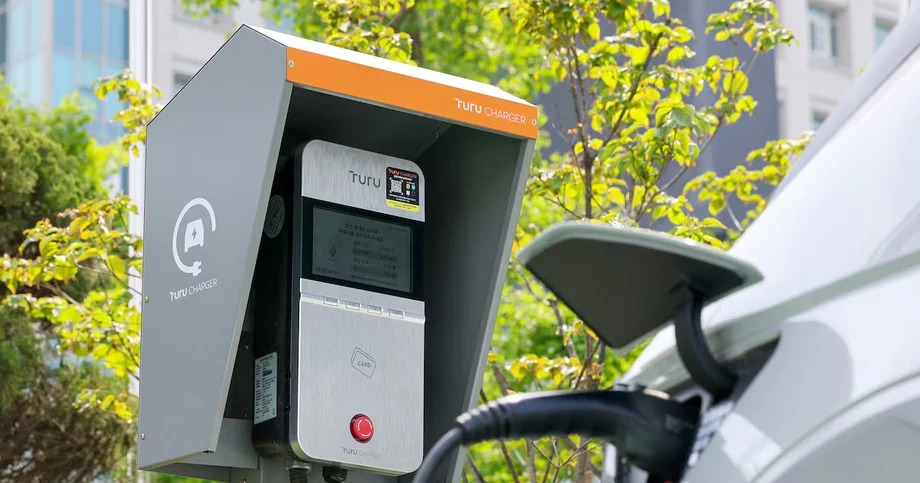
South Korea is considering tax relief of about 4 million won for each qualifying electric vehicle produced domestically, as Chinese imports gain market share and lawmakers press to protect local factories. Four amendments focused on adding electric vehicles to the Restriction of Special Taxation Act are under discussion, with more than 50 lawmakers listed as sponsors.
Contents
- A 4 Million Won Incentive Moves Into Tax Talks
- What Would the Tax Credit Actually Do?
- Chinese Imports Narrow the Market Gap
- Four Bills Offer Different Answers
- How Much Could the Support Cost?
- The Goal Is to Keep Factories Producing
- Investment and Jobs Could Become Conditions
- Trade Risks Remain Part of the Design
- The Decisions Ahead in Parliament
- Key Points
The proposal comes after domestically produced passenger electric vehicles accounted for 48.7% of new registrations in January through September 2026, down 6.2 percentage points from a year earlier. Chinese manufactured passenger electric vehicles reached 43.5%, according to figures from the Korea Automobile and Mobility Association and the Korea Automobile Importers and Distributors Association.
The government has moved toward conditionally including finished electric vehicles in a production tax credit that initially covered batteries and five other strategic industries. Officials are considering commitments from automakers, including investment in advanced battery production and discounts for buyers, alongside the tax support.
Parliament must still settle eligibility, the credit amount, spending limits and whether vehicles exported from South Korea would qualify. Tax subcommittee deliberations are expected in November, ahead of a possible December vote. Detailed support levels could follow through an enforcement decree as early as January 2027.
What Would the Tax Credit Actually Do?
The proposed credit would reduce the tax bill of a company that makes qualifying products in South Korea and sells them under the program's rules. For electric vehicles, the central proposal discussed so far would connect the benefit to the number of eligible cars produced and sold domestically.
A tax credit reduces the amount of tax a business owes. It differs from a purchase subsidy, which helps a customer pay for a vehicle, and from an investment credit, which rewards spending on factories or equipment. This proposal would reward actual production or sales, subject to investment limits and requirements for domestic spending.
The August tax reform proposal covered solar power, wind power, rechargeable batteries, semiconductors, critical materials and artificial intelligence robot components. Finished electric vehicles were excluded because the government considered battery support an indirect benefit for automakers and pointed to existing purchase subsidies and vehicle tax reductions.
Automakers argue that support for battery suppliers reaches vehicle manufacturers only if suppliers pass some of the savings through lower prices. A credit for finished vehicles would give manufacturers such as Hyundai Motor and Kia a more direct benefit from keeping production in South Korea.
Chinese Imports Narrow the Market Gap
Chinese manufactured passenger electric vehicle registrations reached 112,417 in January through September, about 2.2 times the roughly 51,500 recorded a year earlier. Their market share rose 8.4 percentage points to 43.5%, while the domestic share fell to 48.7%.
The associations' figures put the gap between domestic and Chinese manufactured passenger electric vehicles at just 5.2 percentage points. A year earlier, the corresponding shares were 54.9% and 35.1%, a gap of 19.8 points. Domestic vehicles fell below half of the market for the first time since electric vehicle adoption began gathering pace in 2022.
Competition is also expanding through new entrants. BYD entered South Korea in 2025, and Zeekr began local sales in 2026. Xpeng appointed former Volvo Car Korea executive Lee Man-sik to lead its Korean business from December 1. Chery and Great Wall Motor are reportedly preparing to enter in 2027.
The registration figures measure where vehicles were manufactured. The policy debate likewise centers on production location, because the proposed incentive is intended to sustain activity at Korean factories and their suppliers.
Four Bills Offer Different Answers
Lawmakers broadly support adding electric vehicles, but their proposals differ on how much assistance companies should receive and which sales should count. Four focused amendments have been introduced by Yun Young-seok, Ahn Sang-hoon, Lee Eon-ju, and jointly by Yun Hoo-deok and Yun Han-hong.
Lee Eon-ju's proposal would include exports as well as domestic sales and calculate the credit using 4 million won per vehicle. Including exports would extend the incentive beyond cars purchased by Korean consumers to a wider portion of domestic factory output.
The joint Yun Hoo-deok and Yun Han-hong proposal would raise the credit ceiling from 50% to 100% of cumulative investment in tangible business assets directly used in production. That would double the investment base used to calculate the ceiling, allowing a larger potential credit while retaining a connection to spending on production assets.
Yun Young-seok's proposal would offer a higher base credit rate for production outside the Seoul metropolitan area. The regional preference is intended to encourage investment and jobs elsewhere, making factory location another factor in the size of the benefit.
A broader count identifies 24 amendments seeking support for electric vehicles and other future mobility products, including 11 led by members of the parliamentary committee responsible for tax policy. The four focused proposals form part of that wider legislative effort. The joint amendment was introduced on October 16 by 19 lawmakers from both major parties.
How Much Could the Support Cost?
The industry ministry estimates that Korean manufacturers face a production cost gap of roughly 10 million won per vehicle compared with China. Support of 4 million won would cover about 40% of that estimated gap, leaving manufacturers to address the rest through pricing, purchasing, technology or production changes.
The initial domestic sales estimate starts with roughly 220,000 electric vehicles sold in South Korea in the previous year. About 55% could qualify under domestic production and sales requirements, equivalent to approximately 121,000 vehicles.
The proposal has been described as costing around 400 billion won. Applying the full 4 million won credit to all 121,000 potentially eligible vehicles produces a higher illustrative total of 484 billion won. The final fiscal cost will depend on the adopted rate, qualifying sales, company eligibility and credit ceilings.
Consumers would receive any benefit through manufacturers' decisions on vehicle prices. The government is considering industry commitments to discount electric vehicles, alongside investment commitments, as conditions for support. A producer tax credit and a reduction in the showroom price are separate steps in that process.
The Goal Is to Keep Factories Producing
The Ministry of Trade, Industry and Energy wants South Korea to preserve annual vehicle production of at least four million units. That target covers the automotive industry as a whole, reflecting concern that falling output could affect suppliers of materials and components as well as vehicle assembly plants.
South Korea produced 4.55 million vehicles in 2015. Annual output has been around 4.1 million to 4.2 million since 2023, approximately 350,000 to 450,000 fewer vehicles than in 2015. Production in the first ten months of 2026 was about 3.4 million, up only 0.3% from the same period a year earlier.
China's share of global vehicle production rose from 26.4% in 2015 to 36.2% in 2025. Over the same period, South Korea's share fell from 5.0% to 4.3%, while Japan's declined from 10.2% to 8.8%. Those figures help explain why Korean policymakers are looking beyond sales incentives to support the factories that make vehicles.
Industry groups and labor representatives had pressed for action before the August tax plan. In April, the Korea Automobile and Mobility Association joined supplier and labor organizations in calling for a tax incentive to encourage domestic electric vehicle production. Oh Moon-sung, president of the Korean Tax Policy Association, proposed credits linked to production volumes for electric and hydrogen vehicles at a tax policy seminar in May.
Investment and Jobs Could Become Conditions
The government is considering requiring automakers to contribute their own competitiveness measures in exchange for tax relief. Companies are preparing plans for greater domestic investment in next generation battery production lines, including solid state batteries, as well as electric vehicle discounts.
Solid state batteries use a solid electrolyte, the material that carries charged particles inside a battery, rather than the liquid commonly used today. Their inclusion in the discussions connects immediate support for vehicle production with investment in future battery technology.
The policy debate also includes linking credits to new investment, increased production, domestic component purchases and employment retention. Support for suppliers could include helping businesses that make combustion engine parts change their products and retrain workers for electric vehicles.
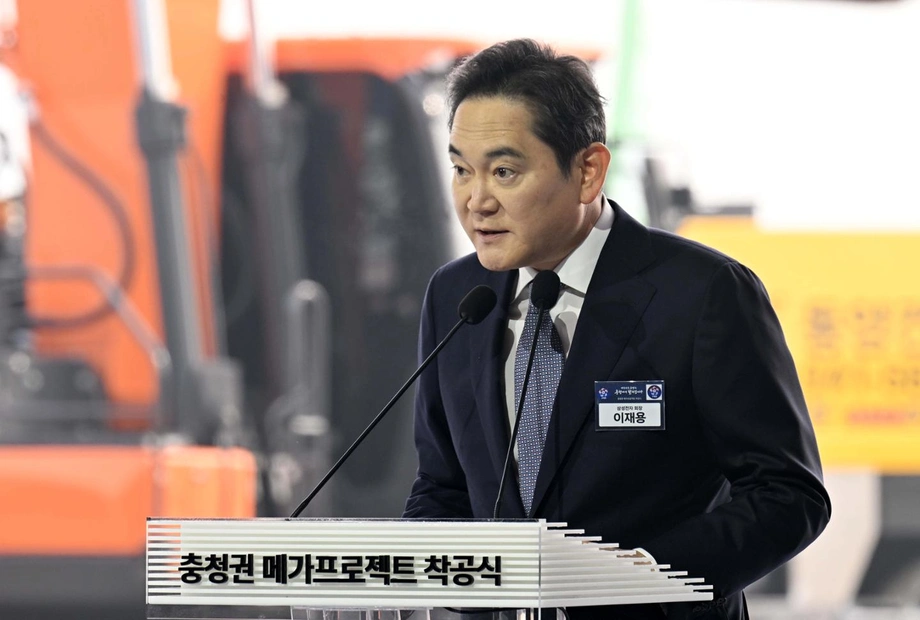
Finance Minister Lee Hyoung-il discussed automotive support with Hyundai Motor Group Executive Chair Chung Euisun at the group's Namyang research center in Hwaseong on November 2. He also said the government planned to announce an electric vehicle competitiveness package during November, covering industry feedback, autonomous driving technology and research into key components.
Lee described the government's position on the production credit after meeting industry executives:
Regarding support through electric vehicle production tax credits, the government will actively participate in parliamentary discussions and engage in in-depth discussions on the matter.
Trade Risks Remain Part of the Design
Finance and industry officials have held a closed meeting to examine possible World Trade Organization challenges and countervailing tariffs. Countervailing tariffs are extra import duties that a country can impose after determining that foreign subsidies have injured its domestic producers.
The industry ministry considers production tax credits less likely to generate trade disputes than direct company subsidies. Officials have also pointed to support programs elsewhere. The interministerial review focused on identifying risks rather than agreeing on specific countermeasures.
Japan provides a useful comparison because it offers corporate tax credits of 400,000 yen per finished electric or hydrogen vehicle and 200,000 yen per small kei electric vehicle or plug in hybrid. A Korean official also highlighted a difference in the trading environment: Japan has a zero tariff on imported cars, while South Korea's standard car import tariff is 8%, subject to applicable trade agreements.
Existing Korean purchase subsidies use criteria such as price, driving range, energy efficiency and aftersales service capability. Domestic manufacture is not an eligibility requirement, so qualifying imported vehicles can receive support. The proposed production credit would add a different policy tool, directed at manufacturing activity inside South Korea.
The Decisions Ahead in Parliament
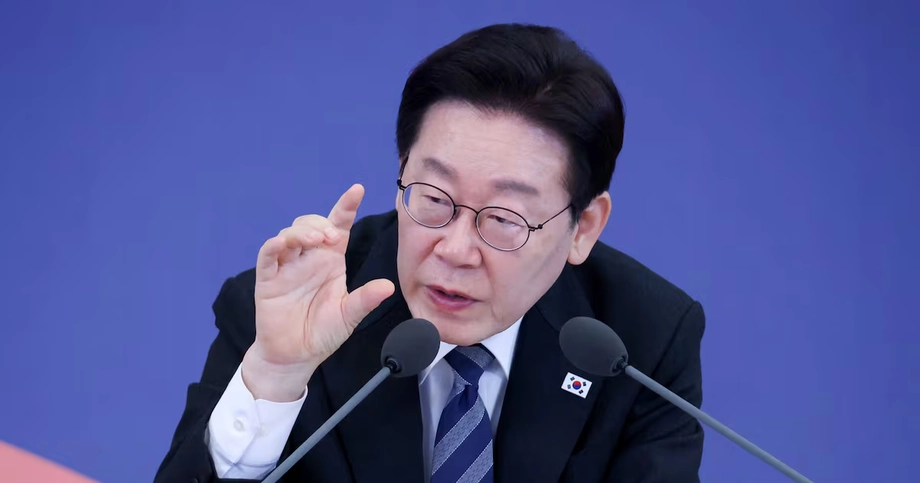
President Lee Jae Myung called on November 12 for active and bold measures to secure competitiveness in electric and autonomous vehicles. The government has since moved toward conditional inclusion of electric vehicles, while lawmakers work through differences over exports, regional preferences, investment ceilings and public spending.
The main steps in the debate are:
- April and May 2026: Industry, labor representatives and a tax policy specialist called for incentives linked to domestic production.
- August 2026: The government's tax reform proposal included six strategic sectors but excluded finished electric vehicles.
- October 16 and 22, 2026: A joint amendment was introduced, and the finance minister told a parliamentary audit that support for finished vehicles was under review.
- November 2026: Tax subcommittee deliberations and an industry competitiveness package are expected.
- December 2026 and January 2027: A parliamentary floor vote is possible in December, with detailed support levels potentially set by decree in January.
Lawmakers must also decide how the production credit interacts with existing investment incentives and whether other industries, including steel, should join the program. Those choices will determine how broadly support is spread and how much the government gives up in tax revenue.
Key Points
- South Korea is considering about 4 million won in tax relief per qualifying domestically produced electric vehicle.
- Domestic passenger electric vehicles held 48.7% of new registrations in January through September 2026, compared with 43.5% for vehicles manufactured in China.
- Four focused bills differ on export eligibility, regional preferences and investment based credit ceilings.
- The government is considering industry investment and vehicle discounts as conditions for support.
- The industry ministry wants national vehicle production to stay at or above four million units annually.
- A possible December vote could be followed by detailed rules in January 2027.