Lee presses for changes as market confidence weakens
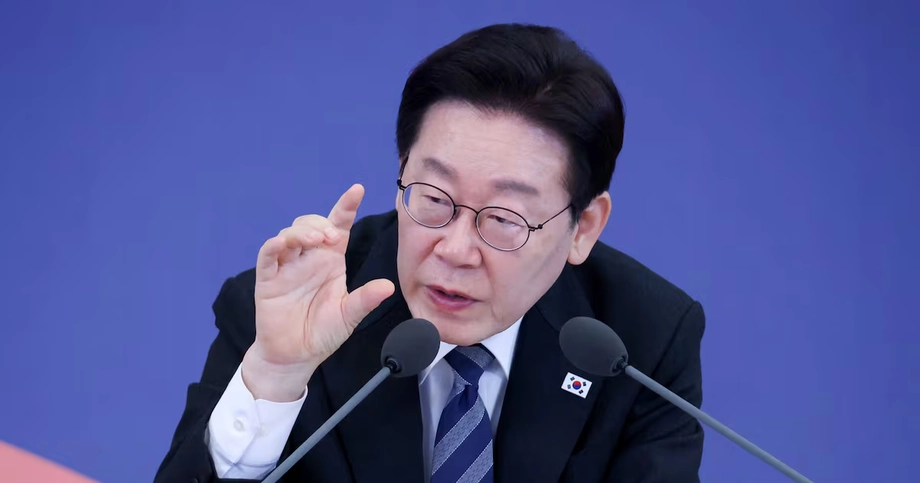
South Korea's stock exchange is considering requiring listed companies to hold an investor briefing at least once a year, following a November 13, 2026, policy meeting at which President Lee Jae Myung challenged companies that raise money from shareholders but then avoid explaining their businesses.
Contents
- Lee presses for changes as market confidence weakens
- Why Lee puts shareholder trust at the center
- An annual briefing could become a listing condition
- The figures behind the communication gap
- KOSDAQ reform reaches beyond removing weak companies
- Alteogen shows what is at stake for growing businesses
- Takeover protection meets the need for business buyers
- Longer investment needs more than new accounts
- Enforcement and exchange rules offer different routes to action
- Key Points
The proposal emerged at the Korea Exchange in Seoul's Yeouido district as Lee renewed his commitment to shareholder protection, tougher action against market manipulation and changes to the KOSDAQ market. The benchmark KOSPI was trading in the middle of the 5,000s that day, after reaching a record closing level of 9,114.55 in late June.
About 50 participants from government, parliament, financial institutions and businesses were expected at the meeting, scheduled from 9:30 a.m. to 11:10 a.m. and broadcast through KTV and YouTube. Its agenda connected immediate investor anxiety with longer standing concerns about how companies treat shareholders, communicate their results and remain eligible for a stock market listing.
Lee, South Korea's president, described the government's commitment in direct terms:
Normalizing the capital market is our government's unwavering policy direction and commitment,
The discussion covered several different routes to that goal: protecting ordinary shareholders during takeovers, removing troubled companies from the market more quickly, creating clearer divisions within KOSDAQ and encouraging savings to remain invested for longer. The practical challenge is to make those measures work together. Investors need protection, while growing businesses still need access to money and buyers.
The sharp market retreat has made those questions more urgent. Uncertainty about artificial intelligence and semiconductor businesses, interest rates and tensions in the Middle East formed the backdrop to a meeting focused on the market's rules and institutions.
Why Lee puts shareholder trust at the center
Lee argued that South Korean companies should not receive lower valuations simply because they are listed domestically, describing that situation as an "unreasonable abnormality." His argument linked the country's technological strength and business competitiveness to the need for a market investors regard as predictable and fair.
A company's valuation is the price investors are willing to pay for its shares. Profits and growth prospects matter, but so does confidence that shareholders will receive fair treatment. At the meeting, Lee pointed to distrust of companies that treat shareholders as a source of money while allowing controlling owners to use their power for their own benefit.
Lee also singled out the practice of keeping share prices artificially low in connection with inheritance or gifts of ownership. A lower share price can reduce the assessed value of a stake being transferred, creating a conflict between the interests of a controlling family and investors who want their holdings to grow in value.
The president said restoring confidence was central to a sound capital market. His comments placed corporate conduct alongside external economic and security risks: the government wants investors to have greater confidence in the rules governing their money even when world events remain unsettled.
An annual briefing could become a listing condition
Korea Exchange Chairman Jeong Eun Bo said the exchange was examining a requirement for companies to conduct investor relations activities at least once a year throughout their time on the market. He explained that investor relations obligations currently apply when companies list, and that the proposed change would be reflected in rules governing continued listing.
Investor relations, often shortened to IR, means explaining a company's financial results, operations and plans to investors. Briefings give shareholders and researchers a chance to understand how a business is performing and to question its management.
Lee urged the exchange to move quickly after hearing that some listed companies refuse research visits or avoid investor briefings. He suggested that exchange operating rules could provide a route to change without requiring a new act of parliament. Jeong said the exchange was actively considering the measure. No implementation date was announced.
The figures behind the communication gap
Lee Geon Jae, head of KOSDAQ research at IBK Investment & Securities, presented figures showing how limited formal investor communication had become. His review of Bloomberg terminal information and electronic disclosures found that about 33% of KOSPI companies and 26% of KOSDAQ companies disclosed plans to hold investor relations events in the previous year.
KOSDAQ's figure was seven percentage points below KOSPI's. Lee also said about 80% of US companies conducted earnings calls or similar discussions about their results. The Korean figures measured disclosed event plans, while the US figure concerned earnings communication, so the measures describe different aspects of investor contact.
Lee said his research team struggled because many KOSDAQ companies would neither accept visits nor hold briefings. He described investor frustration with businesses that communicate actively when they need funding, then become less willing to explain themselves once they start making money.
His proposal went further than the exchange's annual minimum: companies should explain their results and future management strategy at least once every three months, supported by regulatory requirements or guidance. That would give investors four regular opportunities a year to hear from management, compared with the single annual event under consideration at the exchange.
KOSDAQ reform reaches beyond removing weak companies
KOSDAQ's entry and exit rules were another major subject. The agenda included faster removal of troubled businesses, tougher delisting standards and changes to the way companies are assessed when entering or remaining on the market. Delisting means removing a company's shares from trading on an exchange.
The proposals address two connected concerns. A market needs ways to attract promising businesses, while investors also need rules for dealing with companies that repeatedly fail to meet its standards. Lee identified improvements to KOSDAQ's admission and removal assessment systems as a priority.
Participants also discussed dividing KOSDAQ into distinct segments. The idea presented at the meeting was to give stronger innovative companies a clearer place within the market, making it easier for investors to identify businesses suited to their needs. Specific eligibility tests and the final structure were not set out.
That discussion brought together demands for stricter standards and requests for more investment. Removing weak companies and making strong companies easier to identify are intended to address different parts of the same confidence problem.
Alteogen shows what is at stake for growing businesses
Alteogen Vice President Kim Hyang Yeon urged faster action on KOSDAQ segmentation, linking the proposal to her company's decision to pause a move to KOSPI. She said Alteogen had maintained a market value above 20 trillion won during the second half of the previous year, when shareholders pressed for a transfer.
Shareholders approved the move at an extraordinary meeting in December 2025. The company later considered expected policies to revive KOSDAQ and announced on July 16, 2026, that the transfer would be temporarily put on hold. Kim said that pause remained in effect at the November meeting.
The sequence connects the debate over market design to a concrete company decision:
- December 2025: Alteogen shareholders approved a transfer from KOSDAQ to KOSPI.
- Late June 2026: KOSPI reached a record closing high of 9,114.55.
- July 16, 2026: Alteogen disclosed that its proposed transfer was temporarily on hold.
- November 13, 2026: Lee convened the capital market meeting, with KOSPI trading in the middle of the 5,000s.
Kim argued that KOSDAQ should grow through the success of strong innovative businesses. She also called for greater participation by large pension funds, including the National Pension Service. In her view, dividing the market into appropriate segments would help those funds identify suitable investments while meeting their need for stability.
Takeover protection meets the need for business buyers
Mandatory tender offers were another central issue. Such a rule would require a buyer acquiring control of a company to offer ordinary shareholders an opportunity to sell their shares under specified terms. The aim is to give smaller investors a route to sell when ownership and control change.
Lee said policymakers needed to consider both shareholder protection and the possibility that additional purchase obligations could weaken the mergers and acquisitions market. Requiring a buyer to purchase more shares can increase the money needed to complete a takeover.
The meeting's agenda also called for more acquisitions of businesses performing poorly and more ways for venture investors to recover their money. Venture investors provide funding to developing companies and later seek to sell their stakes. An initial public offering, or IPO, allows a company to list its shares on an exchange; a sale to another business offers a different route.
Expanding acquisitions would give venture businesses and their investors another option beyond an IPO. The policy choices therefore overlap: takeover rules must address how ordinary shareholders are treated while preserving a workable market for buying and selling companies.
Longer investment needs more than new accounts
The agenda included better dividends, stronger involvement by institutional shareholders and measures to bring more lasting investment into the market through individual savings accounts, known as ISAs, and funds offered to the public.
Dividends distribute part of a company's earnings to shareholders. More dependable payments can give investors a reason to keep a stake rather than rely entirely on selling it at a higher price. ISA accounts and investment funds provide ways to hold savings in investments over time, although the meeting agenda did not specify new tax rates, contribution limits or product rules.
Institutional shareholder engagement means large investors taking a more active interest in how companies are managed, including through voting and discussions with boards. The proposals linked that role to stronger governance and more attention to the interests of shareholders outside the controlling group.
These measures connect household savings with corporate behavior. Asking individuals to invest for longer places greater weight on whether companies explain their decisions, share returns and treat investors fairly. The annual briefing proposal, dividend discussion and shareholder protection agenda each address part of that relationship.
Enforcement and exchange rules offer different routes to action
Lee said he had directed the Serious Crimes Investigation Agency to crack down on unfair trading practices. He also described action against stock price manipulation as a task involving the government more broadly.
The president said his administration had introduced institutional reforms addressing unfair trading and abuses by major shareholders, while acknowledging that more work was needed. Enforcement targets misconduct such as manipulation; changes to listing rules, takeover protections and investor communication would govern how the market operates day to day.
The exchange's proposed annual briefing requirement was one of the meeting's clearest possible next steps because Jeong identified the rulebook through which it could be introduced. Other subjects, including mandatory tender offers, KOSDAQ segmentation and stronger delisting criteria, remained matters for policy development and discussion.
The Financial Services Commission planned to reflect views from the meeting in future capital market policy and collect further written proposals. For listed companies, investors and potential buyers, the next decisions concern the actual requirements: who must communicate, which companies qualify to remain listed, and how shareholders are treated when control changes.
Key Points
- President Lee Jae Myung renewed his capital market reform commitment at the Korea Exchange on November 13, 2026.
- KOSPI was trading in the middle of the 5,000s after a record close of 9,114.55 in late June.
- The exchange is considering requiring listed companies to hold an investor briefing at least annually, with no start date announced.
- An IBK securities researcher found that about 26% of KOSDAQ companies and 33% of KOSPI companies disclosed investor briefing plans in the previous year.
- Discussions covered KOSDAQ segmentation, tougher delisting standards, takeover protection and more lasting investment.
- Alteogen urged KOSDAQ changes after putting its proposed move to KOSPI on hold on July 16.
- The Financial Services Commission plans to use meeting feedback and further written submissions in developing policy.