Yamamoto and Skubal Take the Dodgers' Two Places
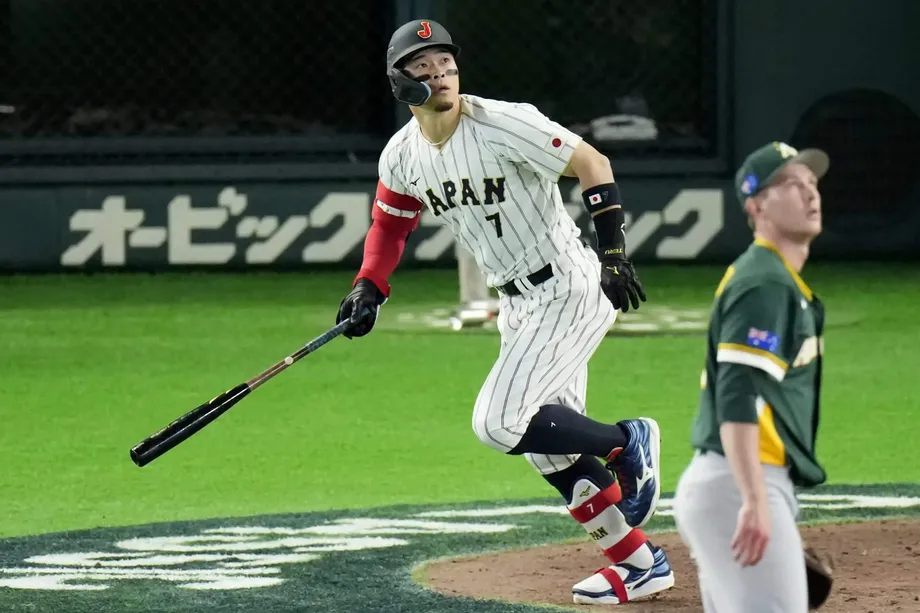
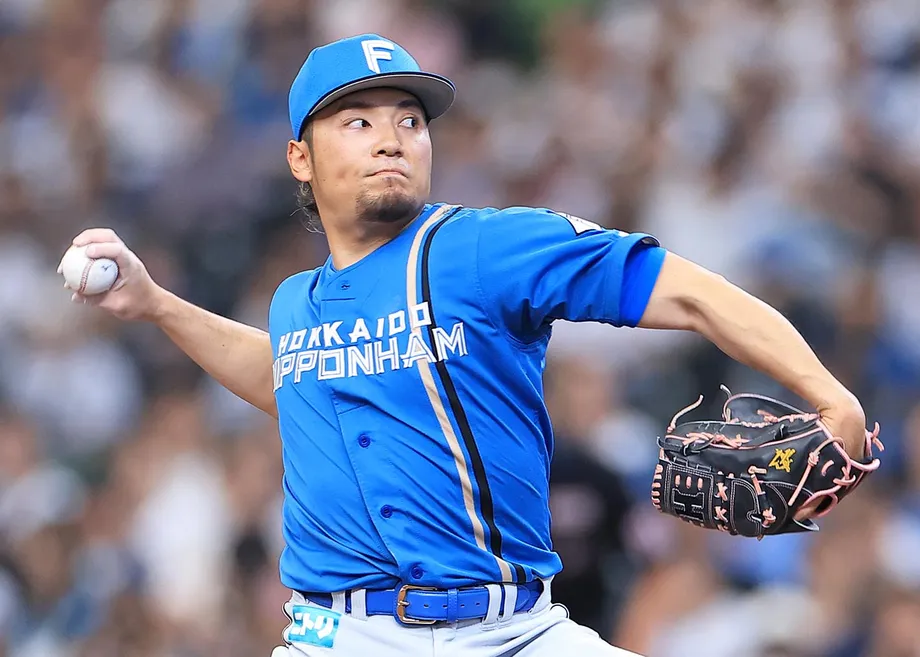
Yoshinobu Yamamoto earned a place on the 2026 All-MLB Second Team after delivering a 2.53 earned run average across 185 innings for the Los Angeles Dodgers. The selections, announced November 12 at The Cosmopolitan in Las Vegas, recognized a season in which the Japanese starter combined strong results with the dependable workload an injury troubled rotation needed.
Contents
- Yamamoto and Skubal Take the Dodgers' Two Places
- What Yamamoto's Numbers Mean
- Why His Innings Mattered to Los Angeles
- How All-MLB Selection Works
- A Fourth Place Finish in Cy Young Voting
- Skubal's Selection Comes With a Contract Decision
- Ohtani Misses Out as the DH Places Go Elsewhere
- Milwaukee Leads a Field With 15 New Selections
- Key Points
Yamamoto finished 14-9 in 28 starts, struck out 182 batters and did not miss a scheduled start. He received his second consecutive All-MLB honor, following a First Team selection in 2025. Fellow Dodgers starter Tarik Skubal joined him on the Second Team, giving Los Angeles its only two selections among the 32 places awarded.
Shohei Ohtani missed both teams, ending the run of selections described as stretching across the previous five years. Houston's Yordan Alvarez took the First Team designated hitter position, while the New York Yankees' Ben Rice received the Second Team place.
The results put the focus on two different parts of the Dodgers' season: Yamamoto's sustained performance at the front of the rotation and a roster whose six other nominees finished outside the selections. Freddie Freeman, Mookie Betts, Max Muncy, Andy Pages and Tanner Scott were also on the ballot alongside Ohtani.
What Yamamoto's Numbers Mean
Yamamoto's 2.53 ERA ranked third in the National League. ERA measures how many earned runs a pitcher allows per nine innings, making it a familiar way to compare pitchers who have worked different amounts. A lower figure means fewer runs allowed.
His ability to keep runners off base was even more striking. Yamamoto recorded a 0.87 WHIP, the number of walks and hits allowed per inning pitched. Among qualifying starters, only Milwaukee's Jacob Misiorowski finished lower, at 0.80. Yamamoto therefore allowed fewer than one runner per inning through hits and walks on average.
Opponents batted .182 against Yamamoto, the third lowest figure in the majors behind Misiorowski's .157 and Toronto starter Dylan Cease's .180. Put simply, hitters managed about 18 hits for every 100 official at bats against him. That made producing even the first step toward scoring unusually difficult.
Yamamoto also accumulated 4.7 wins above replacement, or WAR. The statistic estimates a player's value compared with a readily available replacement, combining performance into a measure expressed in wins. His total adds another view of his contribution alongside his run prevention and workload.
Why His Innings Mattered to Los Angeles
Yamamoto averaged 6.61 innings per start, the highest figure in the majors. Because a regulation game lasts nine innings, that average meant he typically carried the Dodgers well into the seventh before the remaining outs fell to relief pitchers.
His 185 innings across 28 starts gave Los Angeles continuity while other members of the rotation dealt with injuries. For a team managing absences, a starter who keeps taking his turn also makes planning easier: fewer innings need to be redistributed to the bullpen or to replacements.
Yamamoto's workload exceeded Skubal's 158 2/3 innings by 26 1/3 innings. The comparison helps explain their different seasons. Yamamoto supplied uninterrupted availability, while Skubal produced strong results despite losing six weeks following surgery to remove a loose body from his left elbow.
Yamamoto's expected ERA was 2.94, compared with his actual 2.53. Expected ERA uses information about strikeouts, walks and the quality of contact allowed to estimate run prevention. He ranked fourth in the National League by that measure, giving another statistical perspective on a season already distinguished by few hits and few runs.
How All-MLB Selection Works
Major League Baseball introduced the All-MLB teams in 2019 to recognize performance across an entire regular season. The 2026 edition was the eighth. Unlike All-Star selections made during the season, these awards allow voters to consider the complete regular season.
Fans supplied 50% of the vote, with the remaining 50% coming from a panel that included media members, broadcasters, former players and other baseball officials. Voters were instructed to judge regular season performance, keeping the assessment focused on the months before the postseason.
Each team contains 16 selections: a catcher, a first baseman, a second baseman, a shortstop, a third baseman, a designated hitter, three outfielders, five starting pitchers and two relievers. Outfielders are selected without separate places for left, center and right field.
Yamamoto therefore earned one of 10 starting pitcher positions across both teams. The First Team included Misiorowski, Cease, Yankees starter Cam Schlittler, Atlanta's Chris Sale and Philadelphia's Cristopher Sanchez. Yamamoto and Skubal joined Boston's Sonny Gray, Philadelphia's Jesus Luzardo and Tampa Bay's Drew Rasmussen on the Second Team.
A Fourth Place Finish in Cy Young Voting
Yamamoto also finished fourth in National League Cy Young Award voting, appearing on 29 of the 30 ballots. The award recognizes the league's leading pitcher through a separate voting process from the All-MLB selections.
Members of the Baseball Writers' Association of America voted on the award, with two writers in every city submitting ballots for the league they covered. Ballots were submitted before the start of the postseason. The scoring system awarded seven points for first place, four for second, three for third, two for fourth and one for fifth.
He received two votes for second place, seven for third, 14 for fourth and six for fifth. With four points awarded for second, three for third, two for fourth and one for fifth, those votes produced 63 points.
Misiorowski won unanimously with all 30 votes for first place and 210 points. Sanchez finished second with 99 points, just ahead of Sale on 98. Misiorowski's season included a 1.80 ERA and 252 strikeouts, providing the leading benchmark in a strong National League pitching field.
Cristopher Sánchez received 17 second-place votes. Sale received 11 third-place votes and 16 fourth-place votes. Philadelphia's Jesús Luzardo finished fifth with 34 points, including 17 fifth-place votes.
Yamamoto had finished third in 2025 with 72 points, also appearing on 29 ballots. His 2026 total was nine points lower, even though he received votes for second place this time and none the previous year. Award totals depend on how voters distribute their choices across the entire field, so the placing and the individual season statistics answer different questions.
Skubal's Selection Comes With a Contract Decision
Skubal earned his third consecutive All-MLB selection after First Team honors in 2024 and 2025. His 2026 season covered 26 starts for Detroit and Los Angeles, with a 12-7 record, a 2.72 ERA and 186 strikeouts.
The left handed starter walked only 27 batters in 158 2/3 innings. That works out to approximately 6.9 strikeouts for every walk, a useful illustration of how often he retired hitters on strikes compared with how often he gave them a free trip to first base.
Skubal arrived in Los Angeles at the trade deadline after winning consecutive American League Cy Young Awards. His presence gave the Dodgers another decorated starter alongside Yamamoto, even in a season interrupted by elbow surgery.
Skubal now enters free agency, the process through which an eligible player can negotiate a contract with other clubs. Whether he returns to Los Angeles has not been decided. For the Dodgers, that makes retaining their two All-MLB starters together a matter of winter negotiations rather than an established plan.
Ohtani Misses Out as the DH Places Go Elsewhere
Ohtani was nominated at designated hitter, the position reserved for a player who bats without taking a defensive position in the lineup. Only two All-MLB places were available at DH, one on each team.
Alvarez took the First Team honor after leading qualifying hitters with a .316 batting average, a .432 on base percentage, a .601 slugging percentage and a 1.033 OPS. OPS combines on base percentage and slugging percentage, bringing together how often a player reaches base and how much power he produces.
Alvarez also posted 6.8 WAR and won the Edgar Martinez Award as baseball's leading designated hitter. Rice received the Second Team selection. No voting totals or specific explanation for Ohtani's omission were announced with these results, leaving his absence as an outcome of the selection process rather than a decision accompanied by a stated reason.
The Dodgers had eight nominees but two selections, meaning one quarter of their candidates earned a place. Both selected players were starters, while none of the club's nominated hitters or its nominated reliever made either team.
Milwaukee Leads a Field With 15 New Selections
Milwaukee led all clubs with four All-MLB selections: Misiorowski, second baseman Brice Turang and outfielder Jackson Chourio on the First Team, plus catcher William Contreras on the Second Team. Tampa Bay followed with three, represented by third baseman Junior Caminero, Rasmussen and reliever Bryan Baker.
Los Angeles was one of seven clubs with two selections, alongside Toronto, the Chicago Cubs, San Diego, Philadelphia, Boston and the Yankees. Fifteen of the 32 selections were players receiving the honor for the first time, with five newcomers on the First Team and 10 on the Second Team.
Yamamoto and Skubal belonged to the returning group. Their recent awards trace a short sequence of sustained recognition:
- 2019: MLB introduced the All-MLB First and Second Teams.
- 2024: Skubal earned an All-MLB First Team selection.
- 2025: Yamamoto and Skubal both made the First Team; Yamamoto finished third in National League Cy Young voting.
- November 12, 2026: Both pitchers received Second Team honors, while Yamamoto finished fourth in the National League Cy Young results.
Key Points
- Yamamoto earned his second All-MLB selection after a 14-9 season with a 2.53 ERA and 182 strikeouts in 185 innings.
- His 0.87 WHIP ranked second among qualifying starters, and his 6.61 innings per start led the majors.
- Skubal joined Yamamoto on the Second Team as the only other Dodgers selection.
- Ohtani missed both teams, with Alvarez and Rice taking the designated hitter places.
- Yamamoto finished fourth in National League Cy Young voting with 63 points.
- Milwaukee led with four All-MLB selections, followed by Tampa Bay with three.