More than 80,000 apartments on the market, fewer buyers closing deals
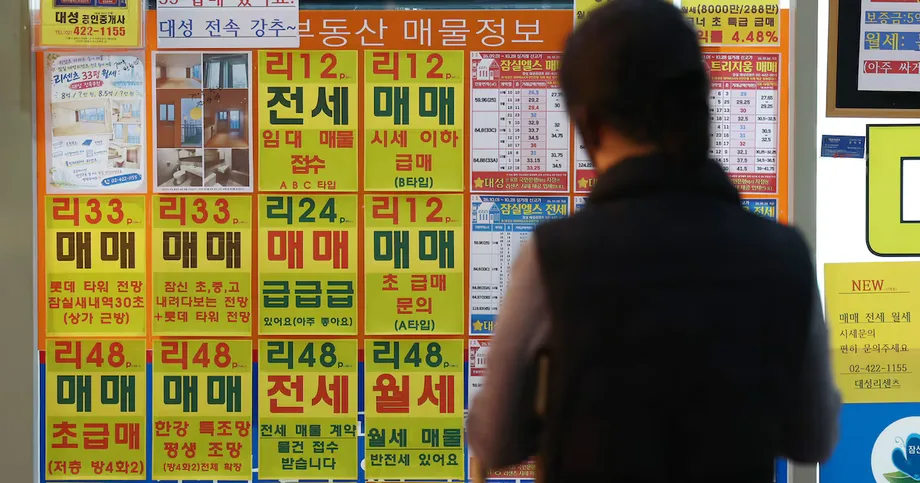
Seoul had 80,528 apartment sale listings on November 7, 2026, an increase of 20,119, or 33.3%, since the government announced its August 3 tax reform proposal. Yet September apartment transactions fell to 3,915, down 42.4% from 6,796 a year earlier, according to the Korea Real Estate Board.
Contents
- More than 80,000 apartments on the market, fewer buyers closing deals
- Official figures show prices rising beyond the weekly headlines
- Sales have fallen every month since May
- Listings are spreading across the capital
- Gangnam falls while the rest of Seoul keeps rising
- What happened before the 2021 tax deadline?
- Why early 2027 matters for sellers
- Tenants face rising deposits alongside a slower sales market
- Housing delivery is another test of confidence
- Key Points
The increase in properties for sale reached all 25 districts of the South Korean capital. Gangnam, Seocho and Songpa accounted for 38% of the additional listings, while the other 22 districts contributed 62%, according to property data platform Asil.
Prices are moving in different directions. In the Korea Real Estate Board's weekly survey dated November 2, apartment prices fell 0.39% in Gangnam, 0.37% in Seocho and 0.17% in Songpa. Every other Seoul district recorded an increase, leaving the citywide index up 0.07%.
For sellers, the market means more competing properties and fewer completed transactions. For buyers, it means more choice, but with prices still rising across much of the city. Tenants face another pressure: Seoul apartment jeonse prices, the large deposits paid under a common Korean rental arrangement, also continue to climb.
The next critical period may be early 2027. Owners weighing their tax bills must allow time to find a buyer and complete payment before the June 1 ownership assessment date. A similar calendar in 2021 brought an increase in listings followed by withdrawals, while apartment price growth accelerated again.
Official figures show prices rising beyond the weekly headlines
The Korea Real Estate Board's September housing statistics show Seoul apartment sale prices rising 0.74% in September 2026, compared with a national increase of 0.35%. Gyeonggi, the province surrounding Seoul, recorded a larger increase of 0.82%.
Seoul's monthly increase was more than twice the national rate, a gap of 0.39 percentage points. Elsewhere, the figures ranged from a 0.22% decline in Sejong to a 0.29% decline in Jeju. The geographic split extends beyond the capital.
The same official portal recorded 37,912 apartment sale transactions nationwide in September. Seoul's 3,915 transactions represented about 10.3% of that total. The capital therefore combined a relatively strong monthly price increase with a sharp annual fall in transactions.
A price index tracks changes across a surveyed market, while a transaction count measures how many sales were recorded. Listings measure properties being offered for sale. Reading the three together gives a practical picture: more owners are seeking buyers, fewer sales are being registered, and prices are adjusting unevenly.
Sales have fallen every month since May
Seoul's September transaction total was the lowest of 2026 through that month. Sales had climbed to 7,521 in April and 8,946 in May before falling to 7,742 in June, 6,564 in July, 4,589 in August and 3,915 in September.
September's total was 56.2% below May's peak and 14.7% below August. The figures are counted by the date a transaction was reported, so the monthly series follows registrations rather than the precise day every buyer and seller agreed to a deal.
The spring increase came as owners of multiple homes faced the May 9 resumption of heavier capital gains taxation, alongside seasonal demand for moving. Capital gains tax is charged on the profit from selling a property. A higher bill can encourage an owner to complete a sale before a deadline.
Seongdong experienced the steepest annual transaction decline among Seoul's districts in September, with just 60 apartment sales, down 85.9%. Transactions fell 71.4% in Gwangjin, 68% in Jung, 66.1% in Dongdaemun and 64.3% in Mapo.
Several affected districts had experienced large price increases in 2025. Apartment prices rose 19.1% in Seongdong, 14.3% in Mapo and 13.2% in Yongsan that year. Higher purchase prices, together with lending restrictions, have made financing a home more demanding for buyers.
Listings are spreading across the capital
Asil's figures show a market that has accumulated properties for sale in several stages. Listings stood at 80,080 on March 21, fell back after the spring selling period, and reached 79,919 on October 28. By November 7, the total had exceeded the March level by 448.
Gangnam, Seocho and Songpa remain a large part of the increase. Their combined listings rose from 22,182 on August 3 to 29,802 on November 4, an increase of about 34.4%.
Other districts recorded substantial growth over the same period through November 4. Seongbuk's listings increased 61.1%, Gangseo's 40.2% and Nowon's 32%. The accumulation therefore includes districts outside the three prominent southern areas.
For a household searching in Seongbuk or Gangseo, more listings can mean a wider selection of buildings, locations and asking prices. Whether that choice produces a cheaper purchase depends on the prices sellers accept and the money buyers can raise. A listing stays on the market until an agreement is completed or the owner withdraws it.
Gangnam falls while the rest of Seoul keeps rising
Seoul's weekly apartment price increase slowed from 0.16% on October 12 to 0.13% on October 19, 0.09% on October 26 and 0.07% on November 2. The city nevertheless recorded its 91st consecutive week of increases.
The November 2 survey showed Seodaemun rising 0.31%, Seongbuk and Geumcheon each gaining 0.30%, Jungnang increasing 0.28%, Gangbuk 0.26% and Mapo 0.25%. These gains continued while Gangnam, Seocho and Songpa declined.
Seoul apartment prices had risen 8.80% from the start of 2026 through that survey, compared with 7.08% over the corresponding period of 2025. Seongbuk's cumulative increase reached 16.90%, while Gangnam recorded a 2.02% decline and Seocho a 0.23% decline.
President Lee Jae-myung discussed rising listings, falling transactions and lower actual sale prices in major areas at a cabinet meeting on November 3. On November 4, he clarified that his remarks about falling prices concerned Gangnam, Seocho and Songpa.
Property commentator Yoon Ji-hae said a broader decline would require falling prices across other parts of the market as well. For buyers, the immediate picture is local: the direction of prices in one district can be quite different from the city average.
What happened before the 2021 tax deadline?
The closest comparison in the current debate is the tax change announced by President Moon Jae-in's administration on July 10, 2020. Those measures raised the top comprehensive real estate tax rate for owners of multiple homes from 3.2% to 6% and increased capital gains tax surcharges.
The higher comprehensive real estate tax rates applied from the 2021 tax year. The stronger capital gains tax surcharges took effect on June 1, 2021, allowing owners time to sell beforehand. The comprehensive real estate tax is an annual tax on qualifying property holdings, separate from the tax charged on a sale profit.
Asil's figures show how quickly selling activity changed as that deadline approached:
- March 1, 2021: Seoul had 40,653 apartment sale listings.
- May 1: Listings reached 48,152, an increase of 18.4% in two months.
- May 9: Listings fell to 47,410, down 1.5% from May 1.
- June 1: The stronger capital gains tax surcharges took effect, alongside the annual property ownership assessment date.
- August 25: Listings stood at 39,084, down 18.8% from May 1.
Some owners withdrew properties as the remaining time to arrange a sale and receive final payment became too short. Owners who chose to keep their homes reduced the stock of properties available to buyers.
Seoul's monthly apartment price growth had slowed from 0.67% in February 2021 to 0.49% in March and 0.43% in April. It then increased to 0.48% in May and 0.98% in June. The historical concern is concrete: the earlier burst of listings was temporary, and price growth strengthened as properties were withdrawn.
Why early 2027 matters for sellers
June 1 is the annual date used to assess property ownership for the comprehensive real estate tax. The payment period is December 1 to 15. An owner seeking to change their tax position through a sale must therefore plan around the ownership assessment date, months before payment is due.
Park Hap-soo, an adjunct professor at Konkuk University's Graduate School of Real Estate, expects some owners to consider selling between January and March 2027 if the tax reform is finalized. A clearer tax bill could help owners decide whether to sell or retain a property.
Park said the time needed between signing a contract and receiving final payment could then change owners' decisions as June approaches. He described the possible shift in April:
In April, properties could instead be withdrawn or prices could rise.
The final provisions and implementation schedule of the August 3 proposal remain unspecified. Individual tax burdens also depend on factors including assessed property value, ownership arrangements, location and how a home was acquired.
Kim Hyo-sun, chief real estate specialist at KB Kookmin Bank, expects falling transactions and rising listings to continue for a time. She said more expensive homes could come onto the market as tax policies become more specific. Her assessment and Park's identify different stages of the same decision: owners may first try to sell, then reconsider as the completion window narrows.
Tenants face rising deposits alongside a slower sales market
Seoul apartment jeonse prices rose 0.17% in the week covered by the November 2 survey. Their cumulative increase for 2026 reached 9.10%, compared with 2.47% over the corresponding period in 2025.
Under jeonse, a tenant usually pays a large refundable deposit instead of conventional monthly rent. A rising jeonse price means a household needs more money for that deposit when arranging a new tenancy or a renewal at a higher price.
The official September figures also showed apartment jeonse prices increasing 0.42% nationwide. Rental pressure is therefore another part of the housing picture, alongside the increase in sale listings.
Kim said rising jeonse deposits and monthly rents were bringing some households into the purchase market, although lending restrictions limited how much demand could expand. She also described some existing rental properties being put up for sale because of owners' tax burdens.
For tenants, a property moving from the rental market to the sale market can mean less choice when looking for a home to rent. For households considering buying instead, the decision brings together two pressures: the cost of another rental contract and the amount they can borrow for a purchase.
Housing delivery is another test of confidence
The policy debate extends beyond whether existing owners sell before June. Market participants have called for regular publication of progress at public housing sites, including land compensation, construction starts and plans for sales before completion.
Those stages tell prospective buyers how far a project has advanced. Land compensation allows a site to be assembled, construction starts show building work is under way, and sales schedules give households a date to plan around.
Publishing locations and schedules could help households decide whether to buy an existing apartment now or wait to apply for a new one. The practical issue is whether promised homes will be available in a place and at a time that meets their needs.
Seoul's immediate test is whether the additional listings produce completed sales at lower prices across more districts. The next tax assessment date is June 1, 2027, with Park identifying January through March as a possible selling period and April as a possible point when owners begin withdrawing properties.
Key Points
- Seoul apartment sale listings reached 80,528 on November 7, 2026, up 33.3% from August 3.
- September transactions totaled 3,915, down 42.4% from a year earlier and 56.2% from May.
- Gangnam, Seocho and Songpa prices fell in the November 2 weekly survey, while all other Seoul districts rose.
- Official September data showed Seoul apartment prices increasing 0.74%, compared with 0.35% nationwide.
- In 2021, listings rose before a tax deadline, then declined as monthly price growth accelerated.
- Early 2027 selling decisions will depend partly on tax details and the time needed to complete sales before June 1.
- Seoul jeonse prices continue to rise, adding pressure on tenants even as apartment sales slow.