Prices that stay high come under scrutiny
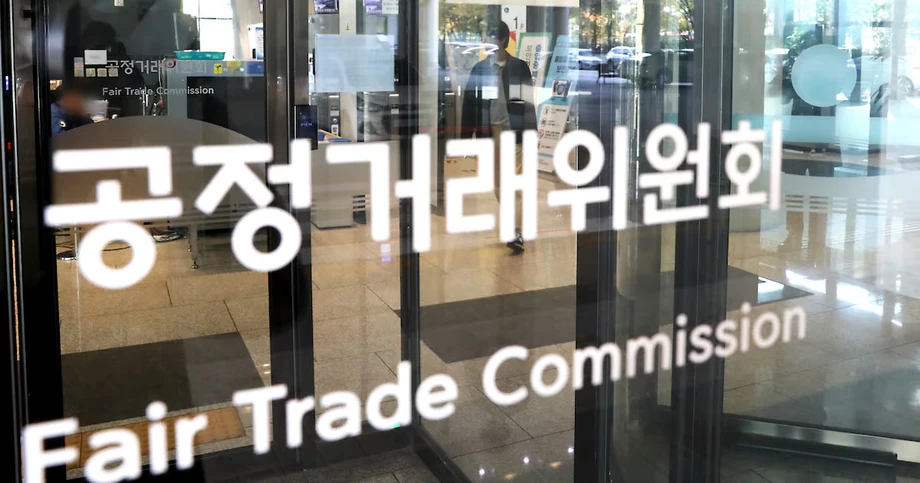
South Korea's Fair Trade Commission plans to widen its powers against dominant companies that keep prices high after costs fall or set domestic prices unjustifiably above those in other markets. The proposed changes would also address unfair trading conditions, declining product quality and restrictions on customers buying directly from sellers.
Contents
- Prices that stay high come under scrutiny
- Why the existing price rules fall short
- Two comparisons for an excessive starting price
- A sanitary product investigation shows the gap
- Enforcement experience drives a legal reshuffle
- Protection expands beyond factory inputs
- Bundling, private information and direct sales
- Consumer harm would get its own detailed categories
- Consultation and the next steps
- Key Points
The commission opened public consultation on November 6, 2026, for amendments to the Enforcement Decree of the Monopoly Regulation and Fair Trade Act. Comments are due by December 16. The regulator aims to complete the changes in the first half of 2027, with implementation scheduled for six months after completion.
The revision would be the first since 2001 to the decree's provisions on abuse of market dominance. Its central purpose is to bring detailed enforcement rules into line with the broader conduct already prohibited by the law: unfairly setting, maintaining or changing prices.
For households, the proposal addresses a familiar frustration: prices rise quickly when business costs increase, then fall slowly or remain unchanged when those costs decline. For smaller businesses, it would provide more explicit protection against dominant firms obstructing access to goods, services, customers or commercially sensitive information.
Market dominance means a business has enough power in a market to exert substantial influence over prices or trading conditions. The proposal focuses on abuse of that power. Companies found to have abused their dominant position can face financial penalties of up to 6% of relevant sales.
Why the existing price rules fall short
Article 9 of the enforcement decree supplies the detailed categories used to apply the law's ban on abuse of market dominance. Its current pricing provisions concentrate on price changes, leaving the commission with limited tools for addressing an unfair starting price or the continued maintenance of a high price.
A product introduced at an excessive price presents a different enforcement problem from an existing product whose price suddenly rises. Under the proposed Article 9(1), the commission would have explicit criteria for examining the initial decision as well as later increases, small reductions and unchanged prices.
The commission says the current requirement to demonstrate a pronounced price increase has been so difficult to satisfy that the pricing provision has effectively fallen out of use. According to the regulator, the provision has been applied in only two cases.
The amendment would replace the existing Korean standard of a "marked" increase with a "substantial" increase. This change is intended to lower the evidentiary threshold while retaining an assessment of costs, market conditions and whether the conduct is unfair.
Two comparisons for an excessive starting price
The proposed test for an unfair initial price would require two comparisons. A price would have to be substantially higher than the costs necessary to supply the product and substantially higher than the usual price of the same or a similar product in another market, without a legitimate reason.
Both conditions would need to be met. The commission would examine supply costs alongside external prices, including prices in overseas markets, rather than relying on a single comparison.
For a reader comparing a domestic price with an overseas price, the practical point is that investigators would assess both the company's cost position and the normal price elsewhere. The proposal gives those external prices an explicit role in the legal test.
A second category would examine price movements against changes in supply, demand or costs. It would cover substantial increases, only small reductions, or the maintenance of a price when those underlying conditions change. Keeping an elevated price after costs decline would therefore become an express focus of enforcement.
The proposal gives no numerical percentage for deciding when a price difference is substantial. The commission would still need to assess the size and justification of the difference in each case, and courts would review its decisions. A commission official said courts also apply the substantiality requirement strictly.
A sanitary product investigation shows the gap
Yuhan-Kimberly's earlier sanitary product pricing case illustrates why the distinction between setting and changing a price matters. In April 2018, the commission closed its investigation into suspected price abuse without finding a violation.
The company had raised prices 140 times between 2010 and 2017. Of those increases, 102 accompanied the launch of new or renewed products. That represents about 73% of the recorded increases, calculated from the commission's figures.
The enforcement decree's focus on changes to existing prices made it difficult to examine the initial prices of newly introduced products. For existing products, the commission also concluded that price increases were not markedly higher than increases in manufacturing costs and other relevant factors.
Sanitary product prices have since returned to regulatory scrutiny. In December 2025, the commission conducted inspections at Yuhan-Kimberly, LG Unicharm and Kleannara to investigate possible collusion or price abuse following concerns about domestic prices compared with overseas prices.
The commission also identified food, cinemas and online video services in its December 2025 work plan as markets where it would examine market structure and the reasons high prices persist. The proposed amendment would give that broader pricing work a more detailed enforcement framework.
Enforcement experience drives a legal reshuffle
The commission's business interference record shows another mismatch between the decree and the conduct it most often encounters. It recorded six enforcement cases under categories written into the decree, compared with 24 under categories contained in a subordinate regulatory notice.
The notice categories therefore accounted for four times as many cases. Across the two groups, they represented 24 of 30 cases, or 80%. The commission cited this pattern as a reason to reorganise the rules.
Four categories would move from the notice into Article 9(3) of the decree: refusal to trade, conditions lacking a reasonable basis, discrimination in prices or trading conditions, and the imposition of disadvantages. Moving them would place frequently used categories directly in the more detailed legal framework.
The current structure gives decree categories further explanation in the notice, while categories appearing only in the notice have relied more heavily on legal interpretation. The commission wants the revised structure to make enforcement criteria easier for businesses to anticipate.
A category concerning recruitment of essential personnel, which has generated very little enforcement activity, would move in the opposite direction, from the decree to the notice. The changes would therefore reorganise existing rules as well as introduce new ones.
Protection expands beyond factory inputs
The existing prohibition on obstructing purchases of raw materials reflects a framework built around traditional manufacturing. The commission proposes replacing it with a broader category covering interference with the purchase, access, use or movement of tangible and intangible goods or services needed for business.
Tangible goods are physical objects. Intangible goods lack a physical form, while services are activities supplied to a customer or business. The wider language would allow the rule to apply across industries rather than centring it on materials entering a factory.
The proposed wording also recognises that a company can obstruct a rival without preventing an outright purchase. Restricting access to, use of, or movement of something needed for business can also interfere with competition.
For businesses dependent on another company's infrastructure or services, the change would put a wider range of access restrictions within the decree's express categories. Investigators would examine the conduct as part of the rules against abuse of market dominance.
Bundling, private information and direct sales
Three proposed categories address ways a dominant company can use its trading relationships to restrict competition: tying products together, unfairly using confidential trading information, and obstructing direct dealings with consumers.
Competition restricting tying means making the supply of one product conditional on buying another from the same business or a business it designates. The general unfair trading rules already address such conduct; the amendment would add a distinct category within the decree's market dominance provisions.
The information provision would cover nonpublic information generated or collected during dealings with a trading partner and then used unfairly to compete against that partner. In a platform setting, this could involve private sales information obtained from businesses using the platform.
The direct dealing provision would address unjustified interference when a trading partner seeks to sell to consumers without going through the dominant business. It would also cover interference with providing consumers information, including information about alternative purchasing routes.
The commission has already been examining related competition concerns in delivery services. In June 2026, it rejected applications by Baedal Minjok and Coupang Eats for consent decisions in cases concerning demands for most favourable treatment, then proceeded with enforcement steps. A consent decision is a process in which proposed corrective commitments can resolve a case.
Coupang Eats has also faced scrutiny over alleged tying. In October 2026, the commission held a hearing on whether the combination of Coupang's Wow membership and Coupang Eats used influence in online shopping to restrict competition in food delivery. The proposed decree would make categories relevant to such conduct more explicit.
Consumer harm would get its own detailed categories
Article 9(6) would introduce specific categories of consumer exploitation. The parent law already lists harm to consumer interests as a form of abuse of market dominance, but the current decree lacks corresponding types of conduct.
The amendment would cover imposing trading conditions without a reasonable basis and substantially reducing the quality of goods or services to consumers' disadvantage. It would also address unfair restrictions on consumer choice and the imposition of substantial disadvantages during the provision of goods or services.
Quality matters alongside the amount charged. A consumer can receive less value when a company keeps the price unchanged while substantially reducing what it provides. The proposed category would give investigators a clearer basis for examining that form of harm.
The consumer provisions and business interference provisions would address different parts of the same trading relationship. One set concerns how dominant firms treat customers; the other concerns how they treat businesses that need access to their services or customers.
Consultation and the next steps
The commission plans to review comments from interested parties and other ministries before submitting the amendment to further procedures, including review by the Ministry of Government Legislation. Its target is to finish the revision during the first half of 2027.
The main dates span both the consultation and the planned implementation period:
- November 6, 2026: Public consultation on the proposed enforcement decree amendment opened.
- December 16, 2026: Deadline for comments on the proposal.
- First half of 2027: The commission's target for completing the amendment.
- Six months after completion: Scheduled implementation, potentially in the second half of 2027 if the revision finishes within the target period.
For companies, the proposal broadens the conduct that pricing and trading reviews would need to examine. Initial prices, decisions to keep prices unchanged, use of trading partners' private information and restrictions on direct customer contact would all receive more explicit attention.
For consumers and smaller businesses, the central change would be a more complete set of enforcement rules. The commission is seeking to connect the law's existing prohibitions with specific conduct involving prices, quality, access and choice.
Key Points
- South Korea proposes explicit rules against dominant firms unfairly setting or maintaining high prices.
- An unfair initial price would be assessed against both supply costs and normal prices in other markets.
- The price increase threshold would change from marked to substantial.
- The decree would add clearer categories for tying, misuse of confidential trading information and interference with direct consumer dealings.
- New consumer provisions would address unreasonable terms, substantial quality reductions and unfair limits on choice.
- Consultation closes December 16, 2026. Completion is targeted for the first half of 2027, followed by implementation six months later.