Cheaper vegetables bring relief, while fuel keeps prices rising
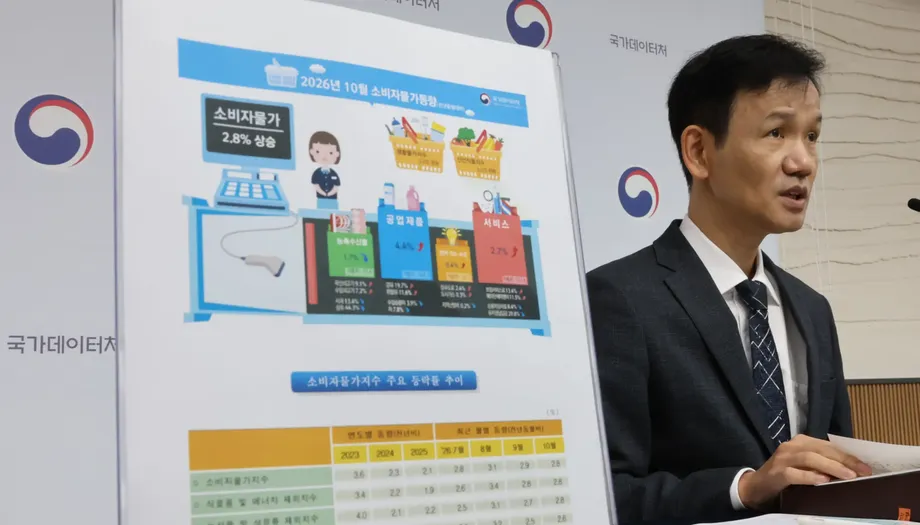
South Korea's consumer inflation slowed to 2.8% in October 2026, but a government estimate shows how much the result depended on intervention: without the petroleum price cap, inflation would have reached about 3.6%. Petroleum prices still jumped 14.9% from a year earlier, while falling agricultural prices helped households absorb some of the pressure.
Contents
- Cheaper vegetables bring relief, while fuel keeps prices rising
- What the slower inflation rate means
- Fuel prices rise despite the government cap
- Fresh produce gets cheaper, but meat and fish rise
- Processed food and restaurant bills take a larger bite
- Services and electronics keep underlying inflation firm
- Why the central bank expects November pressure
- Interest rate expectations turn to November 26
- Government prepares discounts for kimchi season
- Key Points
The October Consumer Price Trends figures, released by the Ministry of Data and Statistics on November 3, showed annual inflation easing from 2.9% in September and 3.1% in August. The consumer price index stood at 120.73, with the average price level in 2020 set at 100. That puts the measured basket of consumer purchases about 20.7% above its 2020 average.
October's improvement was uneven. Agricultural, livestock and fishery prices together fell 1.7%, but processed food prices rose 2.9%, insurance premiums increased 13.4%, and dining out became 2.9% more expensive. For families, the experience depended on whether they were buying fresh vegetables, filling a vehicle or paying for services.
The Bank of Korea expects inflation to remain in the high 2% range in November. Its next policy meeting is scheduled for November 26, with inflation still 0.8 percentage points above its 2% target and underlying price pressures holding firm.
What the slower inflation rate means
October's 2.8% annual increase means the consumer basket cost more than it did a year earlier, although the pace of that increase slowed. Consumer prices also rose 0.2% from September. Households therefore faced another monthly increase even as the annual inflation rate moved lower.
Economist forecasts had put annual inflation at 2.85% in one survey and 2.9% in another. October's monthly increase was below a forecast of 0.3%. Published September monthly figures were 0.3% and 0.2%, leaving the latest monthly pace either slightly slower or unchanged.
Annual inflation has now exceeded the central bank's 2% target for 14 consecutive months, beginning in September 2025. October matched July's 2.8% reading after a temporary rise in August. The recent sequence shows a gradual retreat from that August increase, rather than a steady decline throughout the year.
- May and June 2026: Inflation reached the 3% range as petroleum prices climbed amid Middle East conflict.
- July: Annual inflation eased to 2.8%.
- August: Inflation rose again to 3.1%.
- September: The rate slowed to 2.9%.
- October: Inflation eased to 2.8%, with prices rising 0.2% from the previous month.
- November 26: The Bank of Korea is scheduled to make its next interest rate decision.
Fuel prices rise despite the government cap
Petroleum products added 0.56 percentage points to October's annual inflation rate. Their 14.9% price increase was the strongest since July, when they rose 15.5%. Diesel climbed 19.7%, while gasoline increased 11.6%, putting particular pressure on drivers and businesses that move goods.
South Korea relies heavily on imported energy, making global oil prices a direct concern for household budgets and business costs. Transport prices rose 6.8% from a year earlier, while industrial product prices increased 4.4%.
The Ministry of Finance and Economy estimated that the petroleum price cap reduced October's inflation rate by about 0.8 percentage points. Adding that estimated effect back to the recorded 2.8% produces the ministry's 3.6% estimate for inflation without the policy.
The scale of that estimated reduction was larger than the 0.1 percentage point slowdown between September and October. Fuel policy was therefore a substantial part of the month's price picture, even though consumers continued to face sharply higher petroleum prices.
Electricity, gas and water prices rose a much smaller 0.4%. The broader category covering housing, water, electricity, gas and other fuels increased 2.0%, reflecting a wider set of household expenses than utility charges alone.
Fresh produce gets cheaper, but meat and fish rise
Agricultural prices fell 7.5% from a year earlier, including an 11.2% decline for vegetables. Lettuce prices dropped 44.3%, cucumbers fell 39.5%, and zucchini declined 38.4%. Apples were 13.4% cheaper, adding to the relief available to shoppers buying fresh produce.
The combined agricultural, livestock and fishery category fell for a third consecutive month. Its decline deepened from 0.3% in September to 1.7% in October, subtracting 0.14 percentage points from the annual inflation rate. The Bank of Korea attributed the improvement to better conditions for shipments of agricultural products.
Meat and seafood moved in the opposite direction. Livestock prices increased 4.8%, including a 9.1% rise for domestically produced beef. Fishery prices rose 5.4%, their fastest increase since January's 5.9%, while cutlassfish, also called hairtail, became 11.9% more expensive.
The fresh food price index fell 6.2%. That measure helps explain why some shopping trips became cheaper even as the broader consumer basket continued to rise. A household buying vegetables could gain more relief than one buying beef or fish.
Processed food and restaurant bills take a larger bite
Processed food inflation accelerated to 2.9% from 2.1% in September, its highest rate in 11 months. The previous comparable high was 3.3% in November 2025. The Bank of Korea linked the acceleration to increases in raw material and other input costs.
Food and nonalcoholic beverage prices rose just 0.5% when measured as a broad category. Within that modest increase, however, shoppers faced sharply different movements: cheaper agricultural products alongside rising prices for processed food, meat and fish.
Dining out prices increased 2.9%, matching February's rate and marking the strongest rise since then. Restaurant meals added 0.42 percentage points to annual inflation, compared with the 0.56 percentage points added by petroleum products.
Together, petroleum and dining out contributed 0.98 percentage points, equivalent to about 35% of the recorded 2.8% inflation rate. Those contributions show why cheaper produce could soften the result while leaving substantial pressure elsewhere in household spending.
The living cost index, which focuses on frequently purchased items, rose 2.6%, up from 2.5% in September. That increase moved in the opposite direction from the headline inflation rate, reflecting the growing cost of purchases such as processed food.
Services and electronics keep underlying inflation firm
Core inflation, which excludes food and energy, remained at 2.8% from a year earlier, matching September. It also rose 0.4% from the previous month, twice the monthly increase in the headline consumer price index. Economists use this measure to follow price movements beyond categories that can swing sharply with harvests or oil markets.
Service prices increased 2.7%. Insurance premiums rose 13.4%, and overseas package tours became 11.5% more expensive. Recreation and culture prices increased 5.1%, while furnishings and household equipment rose 4.0%.
Mobile phone prices climbed 10.8%, and computer prices rose 26.2%. Imported automobile prices fell 3.9%, providing an exception among larger purchases. Durable goods, such as electronics, are products people generally use for an extended period rather than consume immediately.
Bank of Korea Deputy Governor Lee Ji-ho described the uneven price picture at the bank's November 3 meeting to review inflation trends, which he chaired:
Consumer prices rose at a slower pace in October as shipments of agricultural products improved, but prices of private services and durable goods remained elevated.
Lee attributed persistent core inflation to accumulated cost pressures passing into travel, dining services and electronics. His assessment connects the higher prices consumers pay with expenses businesses have already absorbed and are now passing along.
Why the central bank expects November pressure
The Bank of Korea expects both rising business costs and demand for goods and services to keep inflation elevated. Cost pressure occurs when firms face more expensive materials, fuel or other inputs. Demand pressure arises when spending gives businesses more room to raise prices.
Middle East uncertainty remains central to the bank's outlook because of its effect on global oil prices. Petroleum inflation was already 14.8% in September before reaching 14.9% in October, with the price cap continuing to limit the effect on consumers.
Lee gave the central bank's November assessment at the inflation review meeting:
In November, inflation is expected to remain in the high 2 percent range, affected by global oil prices and a continued upward trend in core inflation.
The forecast suggests little immediate relief in the annual inflation rate after October's modest improvement. Its exact November level will depend partly on oil prices, while the persistent rise in services and goods beyond food and energy gives policymakers another concern to track.
Interest rate expectations turn to November 26
The Bank of Korea held its benchmark interest rate at 3.00% in October after raising it in July and August. Its November 26 meeting will bring the latest inflation figures into a decision that also takes place against rising household borrowing.
A survey of rate expectations projected a peak policy rate of 3.50%, allowing for an increase in November and another in the first quarter of 2027. The bank has not decided those future moves.
A higher benchmark rate generally makes borrowing more expensive. That can restrain spending and price increases, while also increasing costs for households and businesses whose loan payments change with interest rates. The forecast peak would be 0.50 percentage points above October's 3.00% rate.
October's figures leave the bank weighing slower headline inflation against core inflation that remains at 2.8%. Fresh produce supplied much of the relief, while restaurant meals, insurance, travel and electronics continued to become more expensive.
Government prepares discounts for kimchi season
The government plans to allocate 64 billion won, about $47.5 million, to discount events ahead of gimjang, the annual season when households prepare kimchi for winter. The spending targets a period when families buy ingredients in larger quantities.
First Vice Finance Minister Kwon Dae-young said October's result reflected rising processed food prices alongside falling agricultural, livestock and fishery prices. He described South Korea's inflation as stable compared with major countries amid high oil prices and Middle East uncertainty, citing measures including the fuel price cap.
The Finance Ministry also pledged to monitor essential household goods closely, take measures when needed, change the distribution system and act against unfair practices such as price collusion. Collusion occurs when businesses coordinate prices instead of competing independently.
For households, the immediate picture is mixed: cheaper vegetables and planned seasonal discounts offer relief, while fuel, processed food and services continue to stretch budgets. November's inflation figures and the central bank's November 26 decision are the next developments to watch.
Key Points
- South Korea's annual consumer inflation eased to 2.8% in October 2026, from 2.9% in September.
- Petroleum prices rose 14.9%; the government estimated inflation would have been 3.6% without the fuel price cap.
- Agricultural, livestock and fishery prices together fell 1.7%, led by cheaper agricultural products.
- Processed food and dining out prices each rose 2.9%, while core inflation remained at 2.8%.
- The Bank of Korea expects November inflation in the high 2% range and meets on November 26.
- The government plans 64 billion won in discount support ahead of the winter kimchi preparation season.