Two reactors need a new construction partner
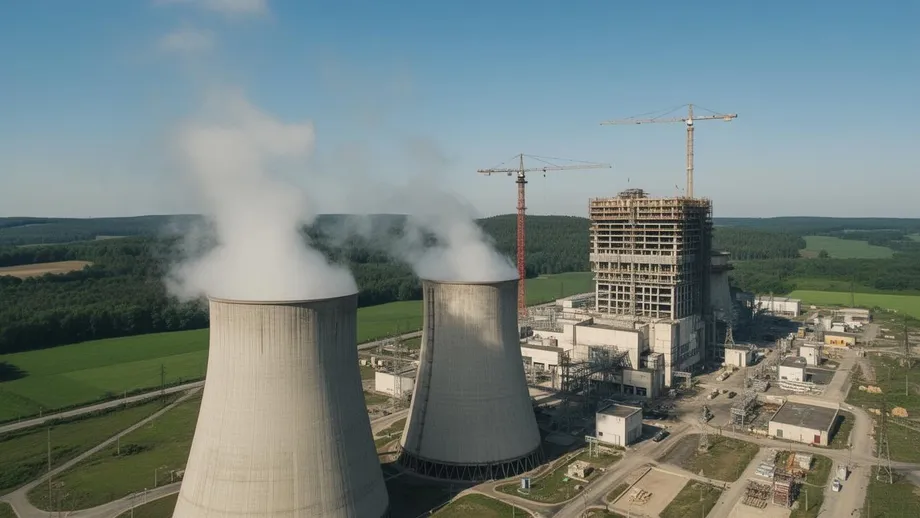
South Korea's Korea Hydro & Nuclear Power ended construction contract talks with Daewoo Engineering & Construction and Doosan Enerbility on October 29, 2026, leaving the Czech Republic's Dukovany nuclear expansion searching for a new builder. KHNP aims to sign a replacement by July 2027, ahead of site preparation planned for January 2028.
Contents
- Two reactors need a new construction partner
- Who pays when the design changes?
- The builders challenge the October deadline
- Why KHNP says negotiations had to end
- A price dispute that began before the main contract
- Which contracts continue?
- How a replacement will be chosen
- The dates the project must meet
- An eight year partnership faces a difficult separation
- Key Points
The project covers Dukovany Units 5 and 6, two Korean APR1000 reactors rated at 1,000 megawatts each. The main contract with Czech project company Elektrárna Dukovany II, known as EDU II, is worth about 407 billion Czech koruna. KHNP put its value at approximately 27 trillion won in its explanation of the construction dispute.
The breakdown followed about 15 months of negotiations and 78 working meetings, alongside a dispute coordination committee and discussions between senior managers. The central disagreement concerned both the construction price and who would pay when detailed reactor designs required more work.
KHNP is beginning to terminate its cooperation agreement with the construction consortium and preparing a competitive tender. The main agreement with EDU II remains in place, as do contracts for plant design and major equipment. Doosan will therefore remain involved as an equipment supplier even as its intended construction role ends.
For the Czech client, the immediate challenge is keeping preparations moving while the builder changes. For KHNP, the replacement must accept a workable price and division of responsibilities without disrupting commitments already made to EDU II. The original schedule targets a construction permit in 2029 and commissioning of the first unit in late 2036.
Who pays when the design changes?
KHNP wanted a contract with a fixed total price, similar to the arrangement used for the Barakah nuclear project in the United Arab Emirates. Under that structure, the construction company generally carries the risk of delivering its agreed work within the agreed sum.
Daewoo and Doosan wanted payment adjustments for additional construction quantities identified after detailed designs were completed. For example, if a later design required more concrete, steel or installation work, the builders wanted a way to calculate and recover the extra expense.
The consortium argues that it cannot control reactor design and should therefore receive adjustments for extra work caused by design changes. It points to Dukovany being the first commercial application of the APR1000 model, making careful agreement on construction quantities, responsibilities and schedules especially important.
KHNP takes the opposite view on financial exposure. It says its design partner and major equipment supplier have already accepted fixed total prices. Allowing the construction contract alone to settle additional costs later would leave KHNP carrying the risk of increases while its commitments to the Czech client remained in place.
The project also grew from an initial plan for one reactor to two units. That expansion increased the amount of construction involved and made agreement on additional payments more consequential. A replacement tender will still need to settle how later changes are priced and which company pays for them.
The builders challenge the October deadline
The Daewoo and Doosan consortium says KHNP changed the proposed subcontract conditions on October 7, leaving only about three weeks to review the revised terms before negotiations ended. It requested an extension through December 31, which KHNP rejected.
The consortium says it had accepted construction unit prices submitted to KHNP in January 2024. It also says it submitted a reduced proposal by October 29 that would have required it to absorb losses, but still failed to secure further negotiations.
In its statement, the construction consortium expressed its opposition to KHNP's decision and asked for discussions to resume:
We express regret over the unilateral announcement of a breakdown in negotiations without an extension of the negotiation period and cannot accept it.
The builders also accused KHNP of violating the principle of good faith by refusing further talks unless they accepted the revised conditions. Their objection concerns both the financial risks in the draft contract and the time allowed to assess them.
Why KHNP says negotiations had to end
EDU II had originally requested a construction contract by the end of September to protect the project timetable. KHNP says it then informed the Korean and Czech governments at the third bilateral Delivery Steering Committee meeting in October that it would end negotiations if no agreement emerged by the end of that month.
KHNP described its decision as a normal commercial step after several routes to agreement had failed. In its explanation of the breakdown, the company said:
KHNP and the contractor have made efforts to reach an amicable agreement through working-level talks, a dispute coordination committee and management-level negotiations, but failed to reach a final deal.
KHNP also alleged that the builders declined to perform installation work for reactor internal components and turbine generators, which it regarded as basic construction responsibilities. That disagreement puts the scope of work alongside price and risk allocation as issues the new contract must resolve.
Industry Minister Kim Jung-kwan said he respected KHNP's decision and pledged government support for successful construction in the Czech Republic. KHNP says it will coordinate with the Korean government, EDU II and partner companies to preserve the original schedule.
A price dispute that began before the main contract
The construction price remained unresolved when KHNP submitted its final bid in April 2024. At that stage, KHNP used an internally calculated price without having secured agreement with the builders on the contract amount and conditions. The dispute therefore predates the main agreement signed with EDU II on June 4, 2025.
During subsequent negotiations, KHNP reportedly sought a construction fee reduction exceeding 1 trillion won, more than 10% below the original bid. The consortium says it had already offered reductions it could bear only at a loss. KHNP rejected accusations that an excessively cheap main contract was forcing it to squeeze the builders.
To support its position, KHNP compared the approximately 27 trillion won value of Dukovany Units 5 and 6 with earlier projects. It said the amount was 2.62 times the value of two Barakah units, or 1.68 times after adjusting for inflation, and 2.4 times the value of South Korea's Shin Hanul Units 3 and 4.
Those figures are KHNP's stated comparisons of project contract values. The immediate negotiating problem is how much of the Dukovany budget can cover construction and how future changes will be funded.
KHNP also addressed payments arising from its intellectual property settlement with Westinghouse. It said those payments would be covered by reallocating funds within the existing project budget and rejected the suggestion that they were driving pressure to reduce construction fees.
Which contracts continue?
EDU II, a subsidiary of Czech utility CEZ, remains KHNP's client under the main contract. KHNP is responsible for delivering the project through several specialist companies, rather than having a single firm design, manufacture, build and prepare every part of the plant for operation.
KEPCO Engineering & Construction has signed the comprehensive design services agreement. Doosan Enerbility has signed supply contracts covering reactor and turbine generator equipment. Those equipment agreements continue despite the end of negotiations with the Daewoo and Doosan construction consortium.
KHNP is also negotiating with KEPCO Nuclear Fuel on fuel supply and with KEPCO KPS on commissioning and maintenance services. Signing those agreements is targeted for 2027. Commissioning is the process of checking and testing a completed plant and its systems before normal operation.
The division of responsibilities explains why replacing the construction consortium affects one major part of the project while other work continues. It also creates coordination demands: the new builder must work with designs and equipment being delivered under agreements that already exist.
How a replacement will be chosen
KHNP is preparing an open competitive tender under South Korea's National Contracts Act, with a target of signing a new construction agreement in July 2027. Potential candidates could include other major Korean construction companies and European firms. No replacement has been selected.
The new competition will need to settle the same difficult issues that ended the previous talks: the construction price, responsibility for design changes, payment for additional quantities and the precise scope of installation work. KHNP must fit those arrangements within its existing obligations to EDU II.
KHNP plans to carry out essential preliminary tasks itself or commission them separately during the gap. These include work on permits, designs for auxiliary facilities and routes for transporting heavy equipment to the site.
Keeping those tasks moving matters because a nuclear plant needs more than a reactor building. Large components must reach the site, supporting facilities need designs, and permit applications require technical preparation. KHNP's plan is to advance such work while the tender for the main builder proceeds.
The dates the project must meet
Dukovany's contracting history stretches back years before the current dispute. Daewoo and Doosan say they joined Team Korea as construction partners in 2018. The Korean team entered the Czech tender in 2022, and the Czech government named KHNP its preferred bidder in July 2024.
The next stages leave a limited interval between the planned appointment of a replacement and the start of site preparation. The main milestones are:
- June 4, 2025: KHNP signed the main contract with EDU II.
- October 7, 2026: The builders say KHNP presented revised subcontract conditions.
- October 29, 2026: KHNP announced the end of construction contract negotiations.
- July 2027: KHNP targets signing with a replacement builder.
- January 2028: Site preparation is planned to begin.
- 2029: The original timetable targets a construction permit, with groundbreaking planned for November.
- Late 2036: The first new unit is scheduled to reach commissioning.
A July 2027 signing would leave roughly six months before the planned start of site preparation. The incoming company would need to organize its team, review its responsibilities and coordinate with the design and equipment suppliers while preliminary work continued.
KHNP has committed to protecting the original timetable. Selecting a new builder, however, adds a procurement process and a transfer of construction responsibilities to a project already preparing for its next stages.
An eight year partnership faces a difficult separation
Daewoo and Doosan's involvement since 2018 means the change reaches beyond replacing a name on a contract. The consortium says it helped develop local networks, supported outreach in the Czech Republic and contributed to the effort that secured the main agreement. Daewoo reportedly held 55% of the intended construction work and Doosan 45%.
Ending the cooperation agreement could require settlement of costs already incurred. Possible injunction applications and other legal disputes have been raised as risks during that process. A contested separation could add work for KHNP while it prepares the replacement competition.
The project is South Korea's first major nuclear plant export since the Barakah agreement in 2009. Dukovany therefore carries commercial importance beyond the two reactors: it is a major opportunity for Korean companies to deliver a nuclear project in Europe.
For EDU II, the practical priority is a construction team that can work within the agreed budget, secure the necessary approvals and meet the schedule. For KHNP and prospective builders, the central task is a contract that gives each party a clear responsibility when designs, quantities or costs change. The failed negotiations show how much remains to be settled before the construction package is ready.
Key Points
- KHNP ended construction talks with Daewoo E&C and Doosan Enerbility on October 29, 2026, after disagreements over price, work scope and future cost increases.
- The Dukovany project covers two APR1000 reactors, each rated at 1,000 megawatts, under a main contract worth about 407 billion Czech koruna.
- The builders say revised terms arrived on October 7 and their request to continue talks through December 31 was rejected.
- KHNP targets a replacement construction agreement by July 2027 and plans to advance essential preliminary work during the gap.
- Design and equipment contracts remain in place, including Doosan's equipment supply role. Fuel and service agreements are targeted for 2027.
- Site preparation is planned for January 2028, with the first new unit scheduled for commissioning in late 2036.