A final destination after decades of travel
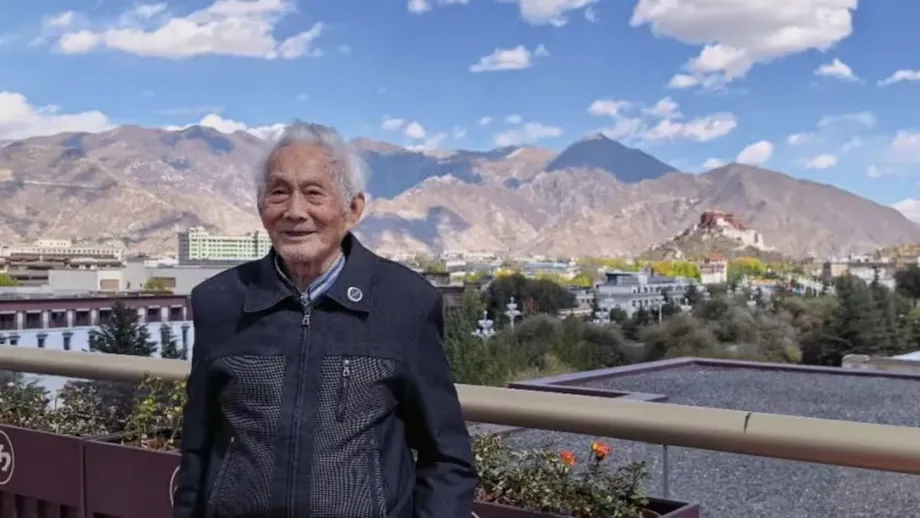
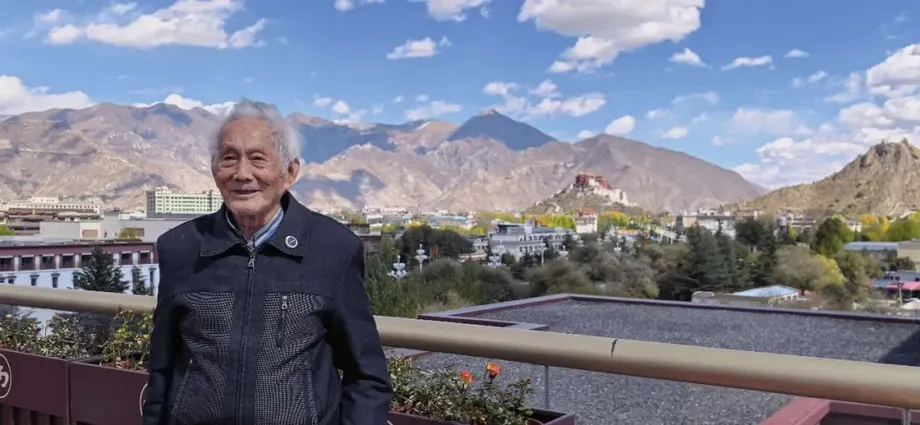
After travel companies declined to take him because of his age, a Chinese retiree surnamed Tan arranged his own journey of more than 3,000 kilometres from Wuxi to Lhasa. He used artificial intelligence to research the destination, booked his train ticket and hotel on his phone, and spent 43 hours travelling to Tibet.
Contents
- A final destination after decades of travel
- What Tan asked AI before leaving
- Why altitude and mobility mattered
- A lower berth and a welcome at the station
- Palaces, temples and everyday streets
- A travel ambition that grew after retirement
- The journey in dates
- More destinations are already on his list
- Key Points
Tan left Wuxi, in Jiangsu province, on October 10 and reached Lhasa on October 12. He returned home safely on October 21, having visited the destination he had saved until last in his travels across China. His age is given as 96 in accounts describing his return and as 94 in other accounts of the same journey. Verification involving Shanghai Jiao Tong University put his actual age at 94; the figure of 96 follows Wuxi's local nominal-age convention.
Before the trip, Tan had visited 33 of the 34 provincial level administrative areas on his travel list. Tibet remained because he considered it the most difficult destination. Relatives and friends worried about the effects of high altitude, while travel agencies refused his requests to join a group.
His journey attracted attention online after another traveller encountered him at a restaurant in Lhasa and filmed him. Behind the widely shared story was a combination of personal preparation, smartphone skills and practical help from people along the route.
What Tan asked AI before leaving
Tan began experimenting with AI after seeing his daughter use it on her phone the previous year. Curious, he downloaded an application and learned to use it himself.
Before leaving for Tibet, he asked whether someone of his age could travel to Lhasa. The assistant could not give him a definite answer. Tan recognised that people's physical condition varies, then continued researching the journey.
Tan, explaining why he decided to go despite that uncertainty, said:
For questions AI cannot answer, I will go to that place myself to find the answers.
He used the assistant for more specific tasks: checking altitude, finding attractions and putting together an itinerary. He separately used his smartphone to buy his train ticket and reserve accommodation. During his travels, he could also look up routes and book rides, including shared rides.
His experience shows the different tasks involved in planning this particular trip. AI helped him gather information about places and routes. The question that most concerned his family, how his own body would respond to the plateau, remained a personal health uncertainty before departure.
Why altitude and mobility mattered
Lhasa's high altitude was the main reason Tan's family and friends urged caution. At high elevations, lower air pressure means each breath supplies less oxygen than at lower elevations. Some visitors develop altitude sickness, which can involve headache, nausea, dizziness or unusual tiredness.
Tan said he experienced no symptoms of altitude sickness during his stay. His journey nevertheless involved another physical difficulty that had affected him for much of his life: muscle wasting in his left leg.
He had cycled for years to exercise the muscles, but places with many steps could still require assistance or a mobility aid. For him, reaching a destination and moving around it were separate practical tasks. Train berths, station transfers and access to attractions all mattered.
Travel agencies' refusal meant he had to arrange the journey outside a conventional tour group. Once in Lhasa, however, he received help with reservations and sightseeing, as well as assistance from transport and hotel staff.
A lower berth and a welcome at the station
Tan could initially obtain only an upper sleeping berth for the long train journey. A young woman travelling in a lower berth offered to exchange places with him.
He offered to pay the difference in fare, but she declined. The swap gave him a place to sleep without repeatedly climbing to an upper bunk, a useful change for someone with difficulty negotiating steps.
At Lhasa railway station, staff provided a wheelchair and accompanied him to the pickup area for cars booked through ride apps. Hotel workers also asked about his plans and whether he needed help.
Those individual actions made the journey easier at several points: sleeping on the train, leaving the station and organising each day. Tan had set out alone and handled his own bookings, while accepting assistance when people offered it.
His account of the trip gave considerable attention to these encounters. Alongside the sights, the willingness of strangers to help became one of the experiences he remembered most.
Palaces, temples and everyday streets
Tan's visits included Potala Palace Square, Jokhang Temple, Zongjiao Lukang Park and the Tibet Museum. He also visited Norbulingka, the historic palace and garden complex in Lhasa.
After learning about his journey, the Lhasa Culture and Tourism Bureau contacted him. It helped arrange visits to the Tibet Museum and Norbulingka, assisted with reservations and provided someone to accompany him during activities.
In an update shared through WeChat, the tourism department said staff had tracked him down after hearing his story. Once they learned he wanted to visit the Tibet Museum and Norbulingka, they promptly made reservations and accompanied him throughout the visits. Staff visited his hotel at midday on October 16 after obtaining his consent, then accompanied him to the two attractions following a discussion about his needs. The department described him as physically strong, with sharp hearing and eyesight, plenty of energy and clear communication, and said he repeatedly asked whether staff were tired. It also planned to accompany him to a Tibetan opera performance and on further sightseeing in Lhasa.
Tan also took an evening cruise on the Lhasa River and tried traditional Tibetan clothing. He travelled by bus through city streets, making time for ordinary urban life alongside the better known attractions.
Tan, describing conversations with younger visitors at the Potala Palace, said:
I met many young people at the Potala Palace. Talking with them made me very happy, and I felt younger myself.
His interest in conversation extended beyond that visit. On his travels, he liked taking local buses and taxis, walking through streets and speaking with residents. In Lhasa, those habits gave him ways to experience the city beyond a fixed sightseeing schedule.
A travel ambition that grew after retirement
Tan's family roots are in Taishan, Guangdong province. Biographical details about him describe a childhood in Malaysia and a return to China at age 19. The accounts giving those childhood details do not identify their original source.
He entered Shanghai Jiao Tong University in 1954 and studied vehicle manufacturing in a programme lasting five years. After graduation, he worked at the Puzhen vehicle manufacturing plant in Nanjing, now part of CRRC Nanjing Puzhen. His admission, course of study and subsequent employment were checked with Shanghai Jiao Tong University. Information from the university's Wuxi alumni association also places his graduation in 1959 and retirement in 1988.
Travel had interested him since he was young, but work and family responsibilities left limited time for it. Retirement in 1988 gave him the opportunity to pursue that ambition. He settled in Wuxi with his wife and began his travels with Beijing.
Over the following decades, his journeys took him across China, including Xinjiang before his Tibet trip. Lhasa was therefore the culmination of a long personal project, rather than his first attempt at travelling a considerable distance.
The scale of that project helps explain his determination. With 33 of the 34 provincial level areas on his list already visited, Tibet represented the remaining entry. He had deliberately postponed the destination he expected to be hardest.
The journey in dates
Tan's trip unfolded over 12 calendar dates from departure to his return to Wuxi. The outward train journey alone lasted 43 hours and covered more than 3,000 kilometres.
- 1988: Tan retired, settled in Wuxi and began devoting more time to travelling.
- October 10: He departed Wuxi by train for Lhasa after arranging his own ticket and accommodation.
- October 12: He arrived in Lhasa and began exploring the city.
- During his stay: He visited major attractions, took an evening river cruise and received assistance from tourism officials and other people he met.
- October 21: He returned safely to Wuxi.
The train carried him from the lower Yangtze River region towards the Qinghai-Tibet Plateau. For Tan, the long transfer was the necessary beginning of a visit he had postponed while completing the rest of his list.
More destinations are already on his list
Tan has further travel plans despite completing his circuit of China's provincial level areas. He wants to visit Guangxi and see the Pinglu Canal, and he also hopes to return to Hefei, in Anhui province, to discover how the city has changed. No departure date has been announced.
His advice to younger people combined curiosity with attention to health: get enough sleep, avoid staying up too late and travel when possible. His own journey required both the desire to go and the practical work of arranging tickets, accommodation and transport.
Tan, encouraging others to pursue places they want to visit, said:
Wherever you want to go, first try to take that first step bravely.
Key Points
- Tan travelled alone from Wuxi to Lhasa, spending 43 hours on a train over more than 3,000 kilometres.
- He used AI to research altitude and attractions, and booked his own train ticket and hotel by smartphone.
- Travel agencies declined to take him because of his age, verified as 94, or 96 under Wuxi's local nominal-age convention.
- He said he experienced no altitude sickness and returned home safely on October 21.
- Passengers, railway staff, hotel workers and Lhasa tourism officials helped during the trip.
- He hopes to visit Guangxi's Pinglu Canal and Hefei next, with no travel date announced.