A journey saved for the final stop
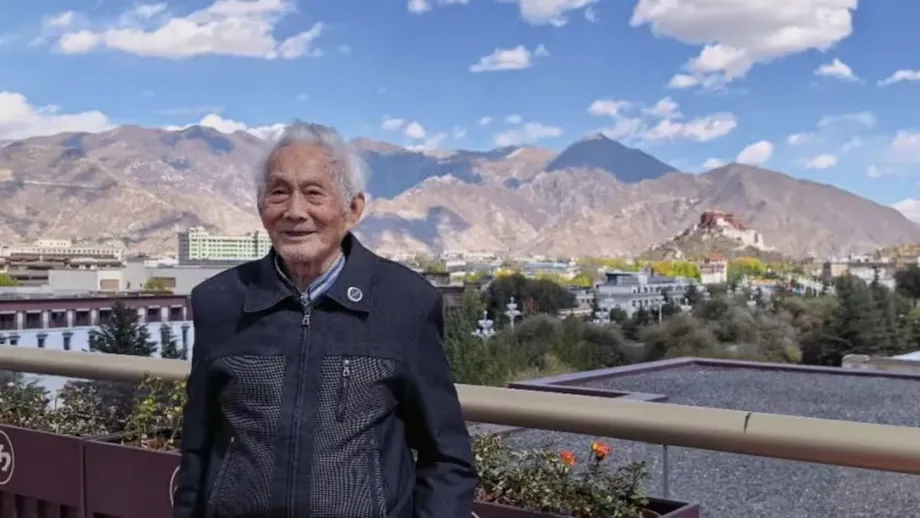
Tan left Wuxi in Jiangsu province on October 10 and reached Lhasa on October 12, completing a train journey he said lasted 43 hours. At 94, the retired railway worker had arranged his own tickets, hotel and sightseeing with a smartphone, after a travel agency declined to accept him because of his age.
Contents
- A journey saved for the final stop
- Why Tibet came after Xinjiang
- A smartphone handled the arrangements
- Travelling alone still involved help
- Lhasa offered more than famous landmarks
- Tourism staff stepped in on October 16
- Why his wife and daughter stayed home
- A railway career before a life of travel
- Health, daily habits and the next destination
- Key Points
His arrival in Tibet completed a national travel itinerary that began in Beijing and, according to accounts of his travels, covered all 34 of China's provincial administrative regions. He had saved Tibet for last because he considered it the most demanding destination.
Widely introduced online as Grandpa Tan, aged 96, he is 94 in completed years. The higher figure follows the traditional age reckoning used locally in Wuxi. His account gives the train journey as 43 hours, although a circulating video caption described it as 48 hours.
Tan said he felt well after arriving and had experienced no altitude sickness. He visited landmarks around the Potala Palace and Jokhang Temple, rode city buses and later received help from Lhasa tourism staff, who accompanied him to the Tibet Museum and Norbulingka.
His trip drew admiration for his independence, but it also exposed his family to hostile comments about why they had not accompanied him. Tan explained that his wife was already in her 80s and his daughter was over 60. He had chosen to travel without them partly because he worried about the strain on their health.
The details behind the widely shared journey reveal several kinds of support: technology that let him make arrangements himself, strangers who helped with physical obstacles, and local staff who offered assistance while respecting his plans.
Why Tibet came after Xinjiang
Tan's trip to Lhasa followed another demanding journey. He had visited Xinjiang in September, returned home and rested for about 20 days before setting out again. Long train rides were already familiar: on an earlier trip to Yunnan, he had spent nearly 40 hours aboard a train.
His relatives supported the preceding 33 stops on his national itinerary. Tibet brought a different response. Family and friends opposed the journey because they worried about the combination of prolonged travel and altitude sickness. A train conductor he encountered also urged him to reconsider.
Tan initially wanted to join an organised tour, but an agency turned him down because of his age. He then decided to make the arrangements independently. His experience of previous journeys helped explain his confidence, even as people around him remained concerned.
The main stages of his latest travels were:
- September: Tan completed a trip to Xinjiang, then spent about 20 days resting at home.
- October 10: He departed Wuxi for Lhasa.
- October 12: He arrived in Lhasa after the journey he described as lasting 43 hours.
- October 16: Lhasa tourism staff visited him and accompanied him to the Tibet Museum and Norbulingka. A representative of his university alumni association also contacted him.
A smartphone handled the arrangements
Tan bought his train ticket through 12306, China's railway ticket booking service, and reserved his hotel through a mobile app. He also used an app to call cars. These were tasks he completed himself, rather than arrangements made in advance by his family.
His use of artificial intelligence began the previous year, after he saw his daughter asking questions on her phone. Curious, he downloaded an AI assistant and learned to use it for travel research.
Before leaving for Lhasa, he used the assistant to look up information about elevation, attractions and routes. He also asked whether someone of his age could make the journey. The tool gave him no definite answer. An AI assistant can organise information and suggest itineraries; a person's fitness for travel requires an assessment of their health.
Tan's planning habits reflect a practical change in how he travels. He recalled a time when buying a railway ticket meant queuing at a window, finding accommodation often waited until arrival, and hotel staff were a main source of local advice. His phone now lets him complete much of that work before leaving home.
For him, digital skills make independent travel easier in concrete ways: he can secure a room, choose a route and arrange transport without asking someone else to handle each step.
Travelling alone still involved help
Tan had booked an upper berth on the train. A young woman in the same carriage offered to exchange her lower berth with him and declined his offer to pay the difference. The change made his place to sleep easier to reach.
At Lhasa railway station, staff provided a wheelchair and helped him reach the pickup area for cars booked through apps. Hotel employees also asked about his itinerary and whether he needed assistance.
Tan's mobility has a particular limitation. He said muscles in his left leg had wasted when he was younger, and he had spent years cycling to exercise the leg. His condition had improved, but places with many steps could still be difficult without an aid or another person's help. He also uses a walking stick.
Those details explain why assistance mattered throughout the trip. He could plan, book and choose where to go, while accepting help with a berth, a station transfer or a staircase. Sometimes difficult access meant missing a sight.
His journey brought together personal independence and practical support. The phone handled reservations; people helped where the physical environment required it.
Lhasa offered more than famous landmarks
Tan's sightseeing included Potala Palace Square, Zongjiao Lukang Park, Jokhang Temple, the Tibet Museum and Norbulingka. He also experienced a night excursion on the Lhasa River and wore Tibetan clothing for photographs.
The city streets interested him as much as the best known attractions. He took buses and taxis through different neighbourhoods, wanting to see everyday life rather than move only between tourist stops.
Across his travels, Tan has developed a familiar routine: visit museums to learn a city's history, explore night markets, ride public transport and talk with local people. These choices give his national itinerary a purpose beyond collecting destinations.
Tan, the retired railway worker making the journey, described how meeting younger visitors affected him:
This trip has been so enjoyable. I met many young people at the Potala Palace, and chatting with them made me very happy. I felt younger myself.
His account of Lhasa focused on those exchanges, along with the help he received from attraction staff and residents. Conversation and ordinary journeys through the city formed part of the visit alongside its monuments.
Tourism staff stepped in on October 16
Lhasa's culture and tourism bureau contacted Tan after his story attracted attention online. With his agreement, staff visited his hotel at midday on October 16 to ask about his plans and offer assistance.
They arranged reservations for the Tibet Museum and Norbulingka and accompanied him to both places. During the outings, he viewed exhibitions and posed for photographs, including pictures in Tibetan clothing at Norbulingka.
Staff described him as alert and able to communicate readily. They also said he repeatedly asked whether they were tired. Further plans included accompanying him to a Tibetan opera performance.
The visit came at a difficult moment for Tan. He had heard from his family about online abuse directed at them and was upset enough to stay in that morning. His mood improved after tourism staff offered reassurance and helped him continue sightseeing.
Why his wife and daughter stayed home
Tan said his family's absence reflected their age and physical limits. His wife is in her 80s, and his daughter is over 60. On a recent trip to Chongqing together, his daughter became unwell during the journey.
That experience weighed on his decision to go to Tibet alone. He said he did not want his wife and daughter to endure another exhausting trip for his sake. Their concern about his journey existed alongside his concern about what accompanying him would require of them.
Online criticism of the family therefore distressed him. While many viewers praised his determination, some questioned why relatives had let him travel alone and directed personal attacks at them.
Tan's explanation brings the ages of all three family members into view. A daughter over 60 may have her own health and stamina limits, while a wife in her 80s faces a demanding journey herself. For this family, travelling together had already proved difficult.
A railway career before a life of travel
Tan has family roots in Taishan, Guangdong, and was born and raised in Malaysia. He returned to China at 19 and entered Shanghai Jiao Tong University in 1954 to study vehicle manufacturing on a programme lasting five years.
After graduating in 1959, he worked at the Nanjing Puzhen rolling stock factory, now CRRC Nanjing Puzhen. He retired in 1988 and later settled in Wuxi, his wife's hometown. During his working years, he had regularly travelled between Nanjing and Wuxi.
Retirement gave him time to return to an interest he had enjoyed when young. Work and family responsibilities had previously left little opportunity for travel.
On October 16, Secretary Yu of Shanghai Jiao Tong University's Wuxi alumni association contacted him to ask how he was managing in Tibet and pass on greetings. Tan said people were looking after him and invited alumni representatives to meet after his return to Wuxi. He also hoped to visit the university again.
Health, daily habits and the next destination
Tan attributes part of his condition to regular movement and travel. He said he usually walks three to five kilometres after dinner and gets up at least once an hour when reading or watching television. He reads newspapers daily, keeps regular hours and aims for a balanced diet.
His report of feeling well in Lhasa sits alongside the concerns that preceded the trip. At high altitude, lower air pressure means each breath delivers less oxygen, and the body needs time to adjust. Older travellers, particularly those with heart disease, high blood pressure or other medical conditions, should discuss their plans with a doctor before departure.
Rest, a manageable itinerary and reliable contact with family are practical preparations for a plateau journey. Travellers should also check the weather, bring suitable clothing and seek medical care if they become unwell. Tan's own mobility difficulties made accessible transport and help with steps especially useful.
Lhasa completed this round of national travel, but Tan was already considering more destinations. He wanted to visit Guangxi to see the Pinglu Canal and return to Hefei to observe how the city had changed. No departure date for either visit was given.
His next plans follow the same interest that shaped his time in Lhasa: seeing places for himself, observing how they have developed and meeting the people who live there.
Key Points
- Tan is 94 in completed years and is widely described as 96 under traditional local age reckoning.
- He travelled alone from Wuxi on October 10 and arrived in Lhasa on October 12, describing a train journey of 43 hours.
- He independently booked transport and accommodation by smartphone and used an AI assistant to research his itinerary.
- A fellow passenger, railway employees, hotel staff and Lhasa tourism workers helped during the journey.
- He said he experienced no altitude sickness, though his leg condition made some stairs difficult.
- Tan said his wife and daughter stayed home partly because of their own age and the strain of long journeys.
- After completing his national itinerary in Tibet, he hoped to visit Guangxi and Hefei.