Beeline to gain 115 MHz of spectrum and a Nokia 5G network
VEON has agreed to buy Uzbekistan's Perfectum mobile operator for approximately $207 million, including about $93 million in outstanding financial debt, in a transaction that would increase Beeline Uzbekistan's radio spectrum holdings by roughly 50%.
Contents
- Beeline to gain 115 MHz of spectrum and a Nokia 5G network
- What the $207 million price includes
- Why the radio frequencies matter
- What Perfectum's standalone 5G adds
- Wireless broadband is part of the plan
- How the agreement reached the approval stage
- Perfectum's ownership changed before the VEON deal
- From a Vodafone project to a VEON acquisition
- What customers are waiting to learn
- Key Points
The agreement, announced on October 19, covers 100% of Rubicon Wireless, the company operating under the Perfectum brand. VEON says the necessary regulatory approvals have been obtained and completion is expected by the end of October 2026. The group will pay the cash portion from its existing funds.
Perfectum brings 115 MHz of spectrum in the 850 MHz and 3,800 MHz bands, network equipment and telecommunications infrastructure. Its assets include a 5G Standalone network built using equipment from Finland's Nokia.
For Beeline customers, the intended benefits are wider coverage, more room for mobile data traffic and the introduction of 5G services. VEON also plans to expand wireless broadband connections for homes and businesses, using the acquired assets alongside Beeline's existing network.
The agreement follows months of negotiations and regulatory review, as well as a change in Perfectum's investment plans. In August 2024, investor Farhod Mamatjanov had presented a project involving Britain's Vodafone. By August 2026, he said the company was working with VEON instead.
What the $207 million price includes
VEON's stated transaction value combines the payment for the business with the financial debt it will assume. Subtracting the approximately $93 million debt component from the $207 million total leaves about $114 million as the implied cash portion, using the rounded figures disclosed.
Debt therefore represents about 45% of the total transaction value. VEON says it will fund the cash consideration from money it already holds, while taking responsibility for Perfectum's outstanding financial obligations as part of the acquisition.
Mamatjanov, a major shareholder in InfinBank and founder of Uztex Group, had described a $200 million agreement with VEON during an August meeting with President Shavkat Mirziyoyev. The October announcement sets out the transaction more precisely, identifying both its total value and the debt included.
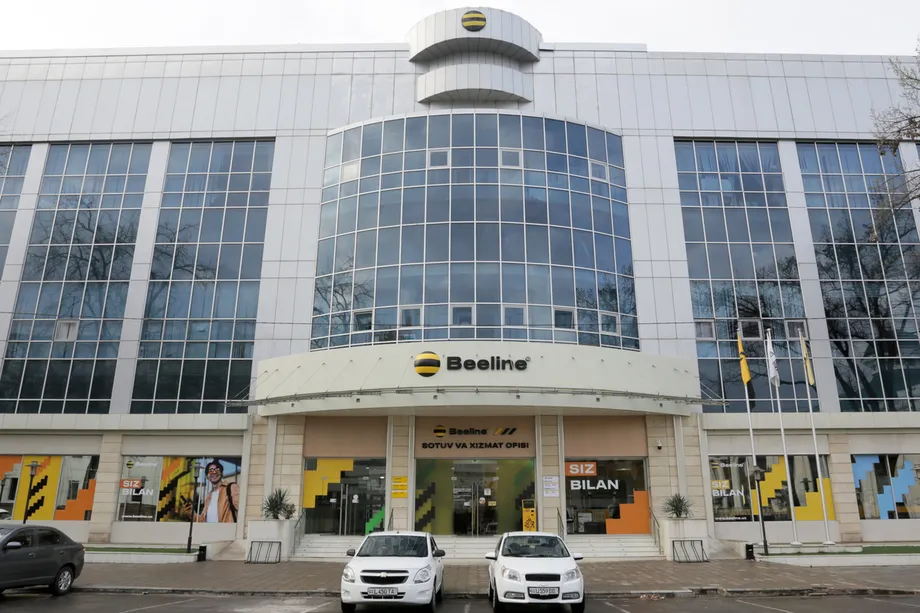
The acquisition would put Perfectum under the same corporate owner as Beeline Uzbekistan. VEON already operates in the country through Unitel, which has used the Beeline Uzbekistan brand since September 2006 and employs more than 2,000 people.
Why the radio frequencies matter
Perfectum's 115 MHz of spectrum is central to the purchase. Spectrum is the range of radio frequencies that an operator uses to carry calls and internet data between its equipment and customers' devices. Additional spectrum gives a network more space to handle traffic.
The two frequency bands serve different practical needs. Signals around 850 MHz generally travel farther and pass through buildings more easily than signals at higher frequencies. Spectrum around 3,800 MHz can support substantial data capacity, although the coverage from each site is usually smaller.
Beeline can use that combination to pursue both coverage and capacity. Coverage concerns where a customer can connect; capacity concerns how much traffic the network can handle at once. A location may have a signal but still experience slow connections when many people use it simultaneously.
VEON estimates that the purchase will increase Beeline Uzbekistan's spectrum holdings by approximately 50%. On that basis, the acquired spectrum would account for about one third of the combined portfolio. The company plans to use the assets to strengthen 4G/LTE as well as develop 5G, giving existing mobile services a place in the investment plan.
What Perfectum's standalone 5G adds
Perfectum's network uses 5G Standalone, often shortened to 5G SA. This means it has a dedicated 5G core, the central system that manages connections and directs data, rather than relying on a 4G core for key functions.
Nokia supplied the equipment used to deploy that network. VEON is therefore acquiring both radio frequencies and infrastructure already built around 5G technology, alongside the other equipment included in the deal.
VEON Group Chief Executive Officer Kaan Terzioglu described the combination as a way to improve connectivity and access to digital services for households and companies.
"By combining complementary spectrum and network assets, we can deliver better connectivity and expand access to the digital services people and businesses use every day," said Kaan Terzioglu, Group Chief Executive Officer of VEON.
Beeline Uzbekistan Chief Executive Officer Yevgeniy Nastradin said Perfectum's spectrum would support plans to improve coverage and capacity, introduce 5G and expand wireless broadband. He identified effective integration of the acquired assets as a priority.
Wireless broadband is part of the plan
VEON intends to use Perfectum's infrastructure to expand fixed wireless access for households and businesses. This is broadband delivered by radio to a router at a fixed location, rather than through a cable running into the property.
A home or business using this service typically connects its devices to the router through Wi-Fi or a local network. The router then communicates with the operator's mobile network. That makes the mobile network's capacity important for both people using phones and customers relying on it for their main internet connection.
Beeline's stated plans therefore extend beyond faster smartphone connections. The acquired spectrum could also support internet access for homes, shops and offices, depending on how the company deploys its combined infrastructure.
VEON also expects integration to reduce future capital and operating expenditure. Capital expenditure is money spent building or buying network assets; operating expenditure covers the continuing cost of running them. Combining infrastructure can allow an operator to coordinate investment and avoid some duplicated spending.
How the agreement reached the approval stage
Mamatjanov told Mirziyoyev at a meeting in the Khorezm region on August 18 that terms with VEON had been agreed in June. At that point, he said, permission from the Competition Promotion and Consumer Protection Committee was still needed.
Committee Chairman Halilillo Turakhojayev said an application for preliminary approval of the economic concentration had arrived on July 24. Economic concentration is the regulatory term for a transaction that brings businesses or ownership interests under common control. The committee was studying the mobile market and working through the remaining issues.
Mirziyoyev said he would personally oversee consideration of the matter. VEON's October announcement subsequently said the relevant regulatory approvals had been secured, allowing the companies to move toward completion.
The major steps unfolded as follows:
- October 27, 2020: A presidential decision set out plans to privatize Perfectum.
- March 2024: Company registry information showed Abdumalik Iminov owning 100% of Rubicon Wireless Communication.
- August 2024: Mamatjanov presented a planned telecommunications project involving Vodafone and Nokia.
- July 2026: The competition regulator approved Mamatjanov's proposed acquisition of a 50% stake in Perfectum.
- August 18, 2026: Mamatjanov discussed the VEON investment agreement with Mirziyoyev.
- October 19, 2026: VEON announced its agreement to acquire the entire operator, with completion expected before the month ends.
Perfectum's ownership changed before the VEON deal
Perfectum's route to the proposed sale began with privatization. When the October 2020 presidential decision was issued, the State Assets Management Agency held 65% of the business and US registered Amis Protrade International held 35%.
By March 2024, the company registry listed Iminov as the sole owner. Later that year, IMC-Capital and Kamron Akbarov joined the ownership structure. Perfectum's registered capital increased more than seventeenfold to 304.62 billion soums.
Before Mamatjanov's purchase, registry information showed Iminov holding 50%, IMC-Capital 37.5% and Akbarov 12.5%. The competition committee approved Mamatjanov's acquisition of the 50% interest in July 2026, with its commission finding that the transaction would have no adverse effect on competition.
The later registry breakdown lists Mamatjanov with 50%, IMC-Capital with 41.23% and Akbarov with 8.77%. IMC-Capital and Akbarov are also shareholders in the Uzcard payment processing business.
VEON's agreement covers all of Perfectum, bringing together the interests held across that ownership structure. The earlier July decision concerned Mamatjanov's acquisition of half the company; the October agreement concerns VEON's acquisition of the whole operator.
From a Vodafone project to a VEON acquisition
Mamatjanov's August 2024 presentation envisaged a different partnership. He described plans to develop a 5G Standalone network with Vodafone, using Nokia equipment and technology, with investment estimated at 250 million euros.
The planned financing consisted of 100 million euros through Uzpromstroybank with support from Finland's export agency, and 150 million euros from the founders. The founders' planned contribution represented 60% of that total, with the bank financing making up the remaining 40%.
The network launch was initially expected in the first quarter of 2025. In August 2026, Mamatjanov said the company had begun working with VEON instead of Vodafone.
The earlier 250 million euro figure described a network investment project. The October $207 million figure is the value of VEON's acquisition, including assumed debt. Readers following the project across those announcements are seeing a shift from a proposed partnership and buildout plan to a purchase by an operator already active in Uzbekistan.
What customers are waiting to learn
Perfectum subscribers still lack details about the service changes that could follow the purchase. VEON has not said whether the Perfectum brand will remain, how existing customers will be handled, whether tariffs or SIM cards will change, or when the expanded 5G and wireless broadband services will become available.
For Beeline users, the immediate development is the agreement to acquire more network resources. The improvements VEON describes will depend on integrating those assets with its existing operations. The company has presented wider coverage, greater capacity and more broadband access as objectives for that work.
Uzbekistan is one of VEON's key growth markets, according to Terzioglu. The Nasdaq listed group operates across five countries and reports more than 150 million connectivity users, placing the proposed purchase within a much larger telecommunications business.
The next stated milestone is completion by the end of October 2026. After that, the practical focus will be how Beeline combines the two networks and turns the additional spectrum and equipment into services customers can use.
Key Points
- VEON has agreed to acquire 100% of Perfectum's operating company for approximately $207 million, including about $93 million in debt.
- The company says regulatory approvals are in place and completion is expected by the end of October 2026.
- Perfectum brings 115 MHz of spectrum and a 5G Standalone network built with Nokia equipment.
- VEON expects Beeline Uzbekistan's spectrum holdings to grow by roughly 50%, supporting 4G, 5G and wireless broadband.
- The acquisition follows privatization, changes in ownership and an earlier proposed project involving Vodafone.
- VEON has yet to announce the future of the Perfectum brand or specific arrangements for existing subscribers.