Pipeline losses become funding for water infrastructure
Malaysia has secured an agreement to redirect RM5 billion in financing tied to two cancelled pipeline projects into a water supply scheme for northern Perak and Penang, reducing the country's estimated losses from RM8 billion to RM3 billion, according to Prime Minister and Finance Minister Anwar Ibrahim.
Contents
- Pipeline losses become funding for water infrastructure
- What the RM5 billion agreement changes
- How the original projects went wrong
- A decade of contracts, cancellations and negotiations
- Investigators are still seeking information
- Where the new water will go
- Why Penang wants a second major source
- Supply deadlines, charges and approvals
- What Sabah is promised instead
- Key Points
The agreement between Suria Strategic Energy Resources Sdn Bhd (SSER) and the Export-Import Bank of China (CEXIM) will finance the Northern Perak Water Supply Scheme. Its targets include 700 million litres of water a day for northern Perak, 300 million litres for Penang and another 500 million litres of untreated water for agricultural irrigation.
The Ministry of Finance's loan repurposing statement, dated October 30, 2026, says Malaysia remained liable for RM8 billion in loans after the Multi-Product Pipeline (MPP) and Trans-Sabah Gas Pipeline (TSGP) projects were terminated in 2018. The ministry describes the new arrangement as a partial recovery through the use of financing for essential infrastructure.
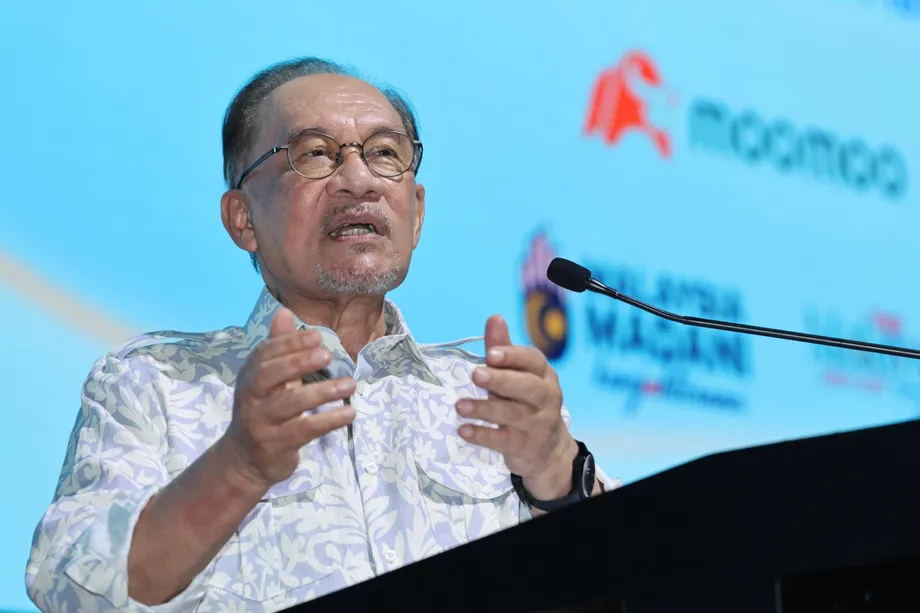
Anwar told the Dewan Rakyat on November 3 that investigations into the pipeline projects remain open. By 2018, RM8.3 billion had been paid against contracts worth about RM9.4 billion, although reported construction progress was only 13%. He said that progress figure had not been audited or verified.
The decision connects two public concerns: how Malaysia can recover value from expensive projects that failed, and how households, farms and businesses can obtain more dependable water supplies. It also leaves investigators pursuing responsibility for the original payments while a new construction programme takes shape.
What the RM5 billion agreement changes
SSER, a company owned by Minister of Finance Incorporated, signed the agreement through board member Mohd Fariszan Ahmad. CEXIM Vice President Kang Wang signed for the Chinese lender, with Anwar witnessing the ceremony.
The federal government had guaranteed the original pipeline borrowing. A government guarantee means the state must meet the repayment obligation if the borrower cannot. Cancelling construction therefore left Malaysia responsible for loans associated with projects that had not delivered their intended services.
Anwar said the restructuring recovers RM5 billion in value by directing financing towards the water scheme. Against the RM8 billion liability identified by the Finance Ministry, that represents 62.5%, leaving RM3 billion in estimated losses under the government's calculation.
Anwar, explaining the remaining cost to Parliament, said part of the RM3 billion reflected compensation for preliminary work and other expenses incurred by contractors. He described the agreement's financial effect:
The loan restructuring agreement reduces the country's losses to RM3bil as we recover RM5bil in value through financing for the new NPWSS development project,
The ministry's announcement does not set out the revised interest rate, repayment timetable, detailed movement of funds or a full breakdown of the remaining losses. Those terms would explain how the arrangement affects future federal payments alongside the value of the infrastructure it finances.
How the original projects went wrong
The two pipeline contracts were awarded through direct negotiation to China Petroleum Pipeline Bureau on November 1, 2016. Their combined value was approximately RM9.4 billion, with CEXIM loans covering 85% and the federal government providing guarantees.
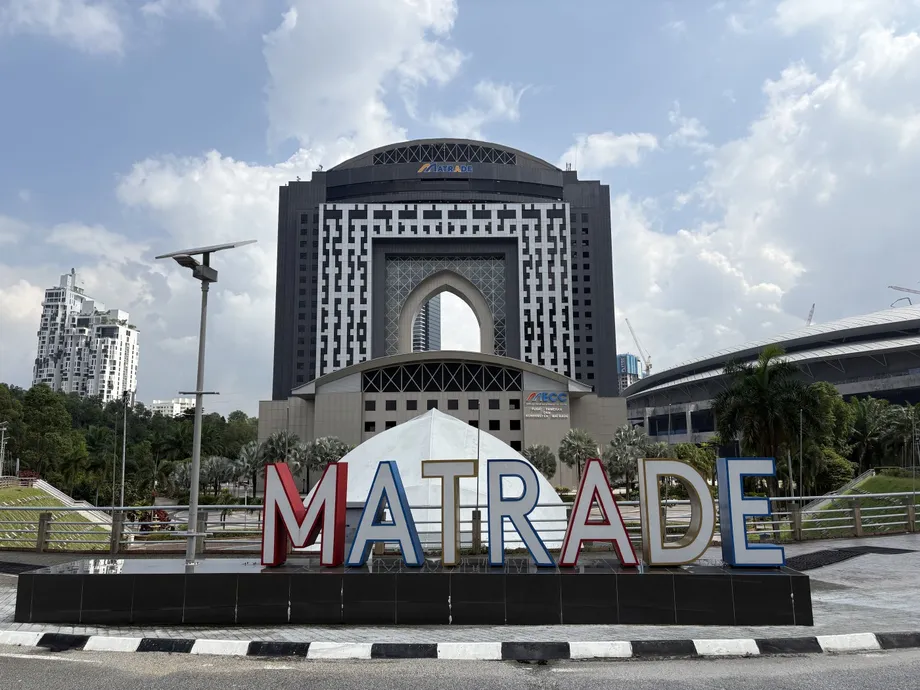
The MPP contract, worth RM5.35 billion, covered a petroleum pipeline stretching 600 kilometres from Melaka and Port Dickson in Negeri Sembilan to Jitra in Kedah. The RM4.06 billion TSGP was intended to connect the Kimanis Gas Terminal with Sandakan and Tawau in Sabah. Anwar described its length as 680 kilometres; another published description puts it at 662 kilometres.
Anwar identified the payment mechanism as a central failure. Payments followed a predetermined timetable rather than verified construction progress, allowing large sums to leave before officials had confirmed that corresponding work was complete.
Anwar, who also holds the finance portfolio, illustrated the arrangement in his parliamentary response:
If payment was due in December, it was paid even if the project had not progressed. I do not understand the method, but that was how payments were approved,
The 88% share of contract value paid by 2018 stood 75 percentage points above the reported 13% construction progress. Reviews also found unresolved land matters and doubts about the feasibility of gas supply for TSGP, while rights to install the MPP pipeline remained unsettled. These were basic requirements for building and operating the projects.
A decade of contracts, cancellations and negotiations
The pipeline decisions passed through several administrations. TSGP was proposed under the Barisan Nasional government to move gas from Sabah's west coast to a planned power plant on the east coast. The Pakatan Harapan administration cancelled the projects in 2018 after concerns emerged about payments and limited construction.
The subsequent record includes an attempt to bring TSGP back, followed by another cancellation and renewed negotiations over the financing:
- November 1, 2016: The pipeline contracts were awarded through direct negotiations with China Petroleum Pipeline Bureau.
- 2018: The projects were terminated after RM8.3 billion had been paid and construction progress was reported at about 13%.
- February 10, 2021: Muhyiddin Yassin's cabinet decided to revive TSGP, according to a parliamentary reply later given by then finance minister Tengku Zafrul Abdul Aziz. MPP remained subject to studies and negotiations.
- 2024: Malaysia renewed negotiations over the unresolved pipeline financing.
- February 19, 2025: A written Ministry of Economy answer in Parliament recorded that TSGP had again been cancelled.
- 2025: Anwar discussed the financing issue with Chinese President Xi Jinping and Premier Li Qiang.
- October 30, 2026: SSER and CEXIM signed the RM5 billion loan repurposing agreement.
The Finance Ministry said efforts by three previous administrations had failed to resolve the loan issue. The latest agreement creates a route to obtain infrastructure value from part of the financing while the investigation continues separately.
Investigators are still seeking information
Anwar told Parliament that reports he had received indicated elements of misappropriation. He said the Malaysian Anti-Corruption Commission had encountered difficulty obtaining information because the investigation involved two countries, including information sought from China.
Anwar, responding to questions about the status of the investigation, said:
The case has not been closed,
Jonathan Yasin, the member of Parliament for Ranau, asked about recovering payments for incomplete work and the outcome of earlier investigative efforts. Shafie Apdal, the member for Semporna, pressed for action involving Malaysian officials as well as Chinese companies.
The projects have also featured in allegations surrounding efforts to rescue the troubled state investment fund 1Malaysia Development Berhad (1MDB). Najib Razak's former special officer, Amhari Efendi Nazaruddin, testified during Najib's 1MDB corruption trial that the pipelines were among infrastructure deals offered to China as part of an alleged bailout arrangement. His testimony also implicated fugitive businessman Low Taek Jho, known as Jho Low, in planning those arrangements.
Anwar said the investigation involved leaders from previous administrations. The parliamentary discussion brought the financing settlement and demands for accountability into the same debate: Malaysia is seeking useful infrastructure while investigators continue examining how the original commitments and payments were approved.
Where the new water will go
The Northern Perak Water Supply Scheme will transfer raw water from Sungai Perak to Bukit Merah Dam, upgrade works along Sungai Kurau and Terusan Besar, and build water treatment plants. The Finance Ministry identifies Kamunting and Bogak as the plant locations; another description of Anwar's parliamentary remarks names Kamunting and Bagan Serai.
The ministry sets out three supply targets:
- 700 million litres a day for northern Perak, including the Kerian industrial area.
- 300 million litres a day for Penang.
- 500 million litres a day of raw water for agricultural irrigation.
The targets total 1.5 billion litres daily across water supply and irrigation. Treatment plants clean river water for distribution, while irrigation water serves agricultural needs. Anwar said Penang would receive treated water only.
Perak's proposed allocation links household and industrial demand with agricultural supply. The transfer to Bukit Merah and improvements to waterways are therefore part of the same programme as the treatment plants, rather than simply a pipe carrying water across a state boundary.
Anwar said China accepted Malaysia's condition that construction be awarded through open tender to local contractors. Open tender allows eligible companies to compete for the work. He also promised stricter governance and monitoring, addressing the procurement and payment failures he identified in the pipeline contracts.
Why Penang wants a second major source
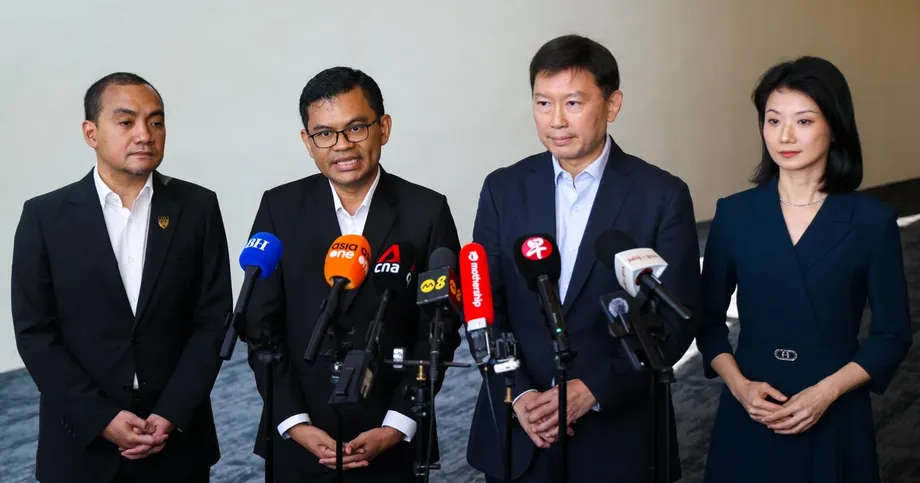
Penang's proposed purchase of water from Perak is intended to reduce its dependence on Sungai Muda. State infrastructure and transport committee chairman Zairil Khir Johari told the state assembly that Penang's water demand was projected to exceed 1,162 million litres a day by 2032.
A supply of 300 million litres daily would equal about 26% of that 1,162 million litre benchmark. Because projected demand is higher than the benchmark, its actual share would be slightly smaller, but it would still provide a substantial second source.
Penang Water Supply Corporation (PBAPP) and Prasarana Air dan Irigasi Perak Sdn Bhd (PAIP) signed a conditional agreement on July 15 for at least 300 million litres of treated water daily from 2032 to 2072. Zairil said PAIP would bear an estimated RM8.4 billion in infrastructure development costs, including construction, operation, maintenance and land acquisition.
The RM5 billion loan repurposing amount and the RM8.4 billion estimate describe different parts of the financing and delivery arrangements. The first concerns the value redirected from the pipeline borrowing; the second is the estimated infrastructure cost associated with the water supply agreement.
Zairil said purchasing treated water from Perak was more economical and practical than seawater desalination at a large scale. Desalination removes salt from seawater, a process requiring substantial electricity as well as investment in facilities.
Supply deadlines, charges and approvals
The conditional water purchase agreement involves capacity charges of around RM210 million annually. Such charges pay for making supply capacity available. At an unchanged annual amount, RM210 million over 40 years would total RM8.4 billion before financing effects or contractual adjustments.
Zairil identified risks including delayed or insufficient tariff adjustments, rising electricity and chemical costs, and supply disruptions. Consumer costs and future tariffs had not been finalised. Any proposed tariff adjustment would require National Water Services Commission (SPAN) approval before going to the federal Cabinet.
The supply agreement also required SPAN approval and approval from shareholders of PBA Holdings Berhad, PBAPP's parent company. In his October 30 assembly remarks, Zairil said an extraordinary general meeting for shareholder approval would be held the following month.
The intended supply period begins in 2032. If supply conditions are unmet by January 1, 2035, PBAPP can agree to an extension or allow the agreement to lapse. Other provisions address supplier default, insolvency and prolonged disruption followed by unsuccessful renegotiation.
A further clause allows conditional termination if the parties cannot agree on a rate review before the 22nd contract year. Zairil said this would involve paying the net present value of remaining capacity charges and outstanding amounts. Net present value expresses future payments as an equivalent amount today.
What Sabah is promised instead
Sabah lawmakers questioned the redirection of financing associated partly with an unfinished project in their state. Anwar said the federal government would continue supporting Sabah's electricity and pipeline needs through other projects, referring to nearly RM5 billion in support.
The projects he cited included the RM644 million Lahad Datu battery energy storage system and RM765 million in financing for the Southern Link electricity transmission project. Battery storage can hold electricity for later use, while transmission infrastructure moves power between parts of the grid.
Anwar also cited the RM4 billion Ulu Padas hydroelectric project, targeted to begin operations in 2030. It is financed by its developer under an independent power producer arrangement involving Sabah Energy Corporation. Under that model, a producer develops generation facilities and sells electricity into the supply system.
The three cited amounts total about RM5.4 billion, with different funding arrangements, including developer financing. For Sabah, the practical outcome will depend on those projects delivering storage, transmission and generation capacity after years of uncertainty over the proposed gas pipeline.
Key Points
- Malaysia has redirected RM5 billion in pipeline financing towards the Northern Perak Water Supply Scheme.
- Anwar says the agreement reduces estimated pipeline losses from RM8 billion to RM3 billion.
- RM8.3 billion had been paid by 2018 despite reported construction progress of 13%, a figure Anwar said was unverified.
- The water scheme targets 700 million litres daily for northern Perak, 300 million for Penang and 500 million for irrigation.
- Construction is to involve local contractors through open tender, according to Anwar.
- Investigations into suspected misappropriation remain open.
- Penang's conditional purchase agreement targets supplies from 2032, while Sabah's Ulu Padas hydroelectric project is targeted for 2030.