Kulim becomes the centre of BYD's Malaysian assembly plans
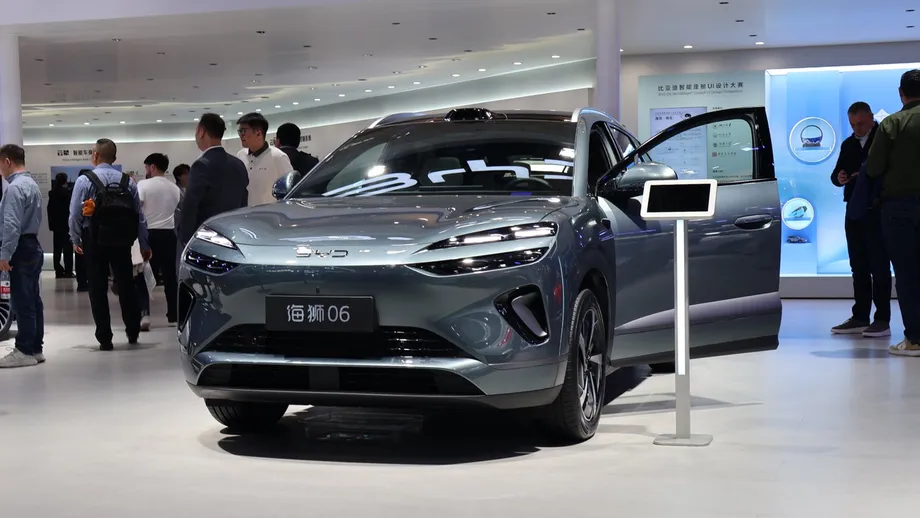
BYD has selected Inokom Corporation in Kulim, Kedah, to assemble its electric vehicles in Malaysia, replacing its proposed factory in Tanjung Malim, Perak, with a partnership using an existing manufacturing site. The appointment, announced on October 15, 2026, brings vehicle assembly into the same corporate group that already distributes BYD cars in the country.
Contents
- Kulim becomes the centre of BYD's Malaysian assembly plans
- What local assembly will involve
- Why the Tanjung Malim plan changed
- How the import rules affect buyers
- The tax window extends through 2027
- A limited import route before production begins
- What Sime Darby and Malaysian suppliers could gain
- Which vehicles could reach the Kulim line?
- The dates shaping BYD's next steps
- Key Points
The decision comes as Malaysia's rules for fully imported battery electric vehicles make local production more valuable. Since July 1, 2026, those imports must meet a minimum declared cost, insurance and freight value of RM200,000 and a motor power threshold of at least 180 kilowatts. Several popular BYD vehicles sell in Malaysia for less than RM200,000.
Inokom is 54% owned by Sime Darby, whose Sime Motors business has distributed BYD vehicles in Malaysia since 2022. Hyundai Motor Company and Bermaz Auto also hold interests in the assembler. The arrangement gives BYD access to an established factory, workforce and supplier network rather than requiring it to develop a dedicated plant.
The companies formalised their cooperation through a memorandum of understanding at BYD's headquarters in Shenzhen, China. BYD vice president Liu Xueliang and Sime Darby group chief executive officer Datuk Jeffri Salim Davidson attended the ceremony.
What local assembly will involve
Inokom will use the completely knocked down method, usually shortened to CKD. This means bringing in vehicle components and assembling them locally. Completely built up vehicles, known as CBU vehicles, arrive as finished cars from a factory abroad.
BYD said it chose Inokom after assessing Malaysian market conditions and manufacturing capabilities. The Kulim operation already assembles vehicles for several international brands, including BMW, Porsche, Mazda, Hyundai and Chery, and has experience with electrified vehicles.
Jacob Ma, managing director of BYD Malaysia, described the partnership as part of the company's continuing investment in the country:
Local assembly is an important part of BYD's long-term commitment to Malaysia.
Ma said the company wanted to bring its new energy vehicle and battery technology expertise closer to the Malaysian market. Using an existing assembly operation could reduce the construction work and initial spending needed before production, while allowing BYD to work with suppliers and employees already serving the automotive industry.
Why the Tanjung Malim plan changed
BYD announced plans for a Malaysian CKD plant in August 2025, with production then expected in 2026. Its proposed dedicated factory in Tanjung Malim was subsequently shelved, with the change becoming public in September 2026.
The earlier project targeted annual production of 50,000 vehicles, divided between 10,000 for Malaysia and 40,000 for export. Those figures would have allocated 20% of production to domestic buyers and 80% to overseas markets.
Conditions attached to that proposal required the export allocation and a price above RM200,000 for vehicles sold domestically. For a manufacturer seeking to sell more affordable electric cars in Malaysia, those conditions restricted both the number and price range of vehicles it could offer from the proposed site.
CGS International said the move to Inokom would free Sime Darby from the earlier limit of 10,000 domestic sales. Its assessment points to a central commercial advantage of the change: local assembly could support Malaysian demand without being tied to the previous factory's planned export split.
How the import rules affect buyers
Malaysia's Ministry of Investment, Trade and Industry, known as MITI, said the special exemption for CBU electric vehicle imports under franchise approved permits ended on December 31, 2025, after four years. Approved permits, or APs, are licences used to authorise vehicle imports.
MITI notified franchise AP holders at an engagement session on April 30, 2026, that the minimum motor power requirement would be adjusted from 200 kilowatts to 180 kilowatts. The ministry confirmed the July 1 implementation date in a statement on May 6.
The RM200,000 threshold concerns cost, insurance and freight, often abbreviated to CIF. This is the declared value of a vehicle together with insurance and transport to the importing country. A showroom price also reflects taxes, distribution costs and other charges, so buyers need to understand which value the rule uses.
Companies may continue selling qualifying remaining inventory under the earlier exemption conditions until it is exhausted. MITI said this includes existing stock, vehicles at ports and vehicles in transit. Buyers may therefore continue to see some imported models on sale under those earlier conditions while manufacturers arrange local assembly.
The tax window extends through 2027
Locally assembled electric vehicles receive different treatment from fully imported vehicles. CKD electric vehicles are outside the RM200,000 minimum CIF value and 180 kilowatt requirements applying to their fully imported counterparts, giving manufacturers a route to serve lower price segments.
MITI's EV import guidelines, updated in December 2025, also state that excise duty and sales tax exemptions for CKD electric vehicles extend through December 31, 2027. Excise duty is a tax charged on certain goods, while sales tax applies to their sale under the relevant tax rules.
CGS International said the exemption could be extended because of the government's support for local assembly. The published deadline is December 31, 2027; a later extension is an analyst expectation.
For BYD, the combination of local assembly and tax relief creates room to compete in market segments affected by the import restrictions. Buyers will ultimately see the result through the models offered, their equipment and their showroom prices.
A limited import route before production begins
MITI's guidelines establish a separate route for companies to import vehicles for market research and promotion before local assembly starts. Called AP MRA EV, the programme runs from January 1, 2026, through December 31, 2030.
Applicants need approval for a model to be assembled locally and either a manufacturing licence or an assembly contract with a Malaysian plant. Eligible models must be new to this permit programme and must not already be assembled in Malaysia. The rules cover battery electric vehicles, fuel cell vehicles, plug in hybrids and conventional hybrids.
The allocation is granted once for each model, with applications assessed individually. The ceilings are:
- 200 passenger cars or motorcycles per model.
- 50 commercial vans per model.
- 50 trucks per model.
- 30 buses per model.
Companies must begin assembly or production within two years of import approval and increase localisation to at least 30% within two years. Localisation means moving more of the manufacturing activity or sourcing into Malaysia. Import permits remain valid only until local assembly starts or December 31, 2030, whichever comes first.
These conditions give manufacturers a limited opportunity to introduce an approved model before production while committing them to assembly in Malaysia. Any BYD application under the programme would require the relevant model approval and compliance with those conditions.
What Sime Darby and Malaysian suppliers could gain
Sime Darby's role would expand from distributing BYD vehicles to participating in their assembly through Inokom. More assembly work could spread factory costs across a greater number of vehicles, which is what analysts mean by economies of scale.
CGS International cited Inokom's ability to produce up to 80,000 vehicles annually at 80% utilisation. That figure concerns the assembler's broader operations, which serve several brands. BYD's allocation will depend on the production programme agreed with Inokom.
Jeffri Salim Davidson, Sime Darby's group chief executive officer, pointed to the factory's workforce and supplier relationships as the basis for the partnership:
Our experience in vehicle assembly, supported by an established workforce and local supply chain, provides a strong foundation for this collaboration.
Jeffri said the cooperation could support local businesses and develop Malaysia's manufacturing capabilities. Depending on the scale of production and the work assigned locally, suppliers could find opportunities in components, transport, technical services and training. The localisation requirement in MITI's separate permit programme shows how policy can connect initial imports with a growing Malaysian manufacturing role.
Which vehicles could reach the Kulim line?
BYD's Malaysian range includes seven models: Dolphin, Atto 2, Atto 3, Seal, Seal 6, Sealion 7 and M6. Its premium Denza brand has a separate range comprising the D9, Z9 GT and B8. BYD entered Malaysia's passenger car market in December 2022 with the Atto 3.
The company has not announced which models Inokom will assemble, when production will begin, how many vehicles it will produce or how much the programme will cost. Those decisions will determine how quickly the agreement changes vehicle availability and pricing for Malaysian customers.
BYD is also exploring electric bus assembly and manufacturing in Perak through a memorandum of understanding signed with Malaysian bus maker Bus Cap Berhad in August 2025. That project involves a different partner and location from the passenger vehicle arrangement in Kedah.
Malaysia's partnership would add to BYD's manufacturing presence in Southeast Asia, alongside facilities in Thailand and Indonesia. Within Malaysia, the company faces competition from Proton as the government pursues a target for electric vehicles to account for 15% of total vehicle sales by 2030.
The dates shaping BYD's next steps
BYD's move from importing cars to arranging Malaysian assembly has developed alongside a changing tax and import framework. The main milestones are:
- December 2022: BYD entered Malaysia's passenger car market with the Atto 3.
- August 2025: BYD announced Malaysian CKD plant plans, with production expected in 2026, and signed a separate bus cooperation agreement with Bus Cap Berhad.
- December 31, 2025: The special exemption for CBU electric vehicle imports under franchise APs ended.
- January 1, 2026: MITI's market research and preassembly import programme took effect.
- April 30, 2026: MITI informed franchise AP holders about the adjusted import requirements.
- July 1, 2026: The RM200,000 minimum CIF value and 180 kilowatt minimum motor power requirements took effect for CBU electric vehicle imports.
- September 2026: BYD's proposed Tanjung Malim factory was shelved.
- October 15, 2026: BYD announced Inokom as its Malaysian assembly partner.
- December 31, 2027: The published CKD electric vehicle excise duty and sales tax exemptions expire.
- December 31, 2030: The AP MRA EV programme ends under its current guidelines.
The immediate commercial issue is the transition between remaining imported stock and vehicles assembled in Kulim. The agreement gives BYD an existing manufacturing base to work with, while the earlier stock concession allows eligible imported vehicles to keep reaching customers during that transition.
For Malaysian buyers, the practical outcome will be the range and price of locally assembled cars. For Inokom and its suppliers, it will be the volume of work secured and the amount of manufacturing activity carried out in Malaysia.
Key Points
- BYD has appointed Inokom in Kulim, Kedah, as its Malaysian CKD assembly partner.
- The partnership replaces a proposed Tanjung Malim factory targeting 50,000 vehicles annually, including 40,000 for export.
- Fully imported electric vehicles face a minimum CIF value of RM200,000 and motor power of at least 180 kilowatts from July 1, 2026.
- Eligible remaining imported stock may be sold under the previous exemption conditions until exhausted.
- MITI's guidelines set CKD electric vehicle excise duty and sales tax exemptions through December 31, 2027.
- BYD's production models, launch date, investment and assembly volumes await announcement.