National plan targets burning, traffic and dangerous air
Thailand's Ministry of Natural Resources and Environment has approved in principle five measures to tackle PM2.5 pollution in 2027, with targets to cut forest areas burned by at least 10%, agricultural areas burned by 10–15%, and average concentrations of the tiny particles by 5–10% compared with 2026.
Contents
- National plan targets burning, traffic and dangerous air
- How the 2027 measures are taking shape
- Giving farmers alternatives to burning
- Forest prevention focuses on 14 areas
- Vehicles, factories and construction face tighter checks
- What Bangkok's 20 day target requires
- Better measurements and faster warnings
- Protecting people while reducing emissions
- What will show whether the measures work
- Key Points
The draft also seeks to reduce the number of days when pollution exceeds the standard by 5–15%. It combines action against agricultural burning, forest fires and urban emissions with cooperation with neighboring countries and measures to protect public health.
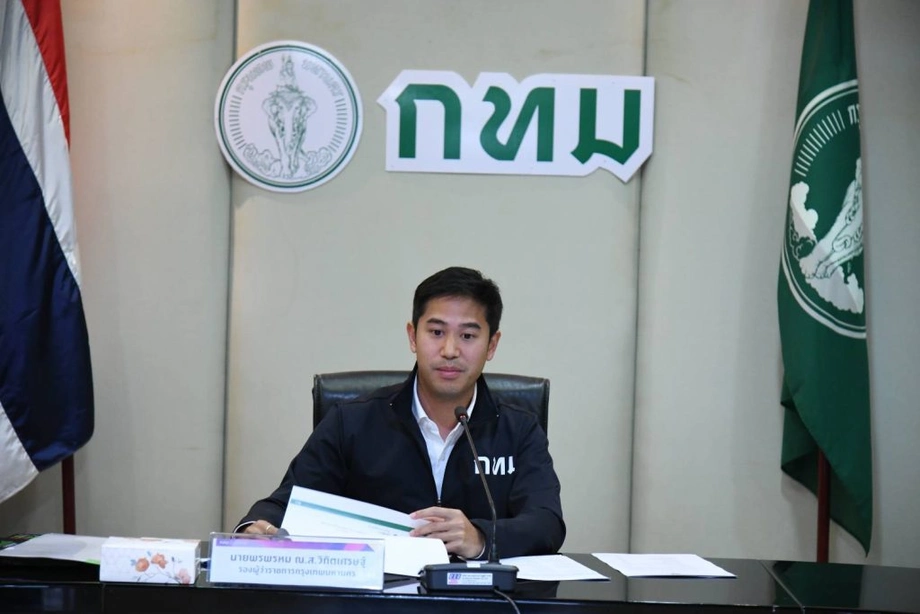
Bangkok is preparing a more specific local target: no more than 20 days above the PM2.5 standard in 2027. Deputy Governor Pornphrom Vikitsreth said the capital's count had fallen from 40 days to 28 days during the periods reviewed by the city. Reaching 20 would require another eight fewer days, a reduction of about 29% from 28.
The national package remains a draft requiring consideration by the National Environment Board and Cabinet. No dates for those decisions, final budget amounts or detailed rules for the proposed vehicle schemes have been announced.
How the 2027 measures are taking shape
The Pollution Control Department held a consultation on the draft wildfire, haze and particulate pollution measures on September 18, 2026. Deputy Director General Teerapong Wimonchitranon chaired the meeting, which brought together ministries, agencies and other sectors to comment on the proposals.
Environmental and Pollution Control Office 1's official consultation notice records that its director, Aweera Phakmat, assigned staff to participate online. Their comments and recommendations were intended to help prepare the measures for publication and practical implementation.
The national consultation and Bangkok's planning create several milestones before and during the next pollution season:
- September 18, 2026: The Pollution Control Department held its consultation on the national draft for 2027.
- Late 2026 to early 2027: Bangkok's preparations focus on the next seasonal pollution period.
- November 2026: Bangkok expects its advanced air monitoring Superstation to become fully operational.
- 2027: The national reduction targets and Bangkok's ceiling of 20 days above the standard are intended to apply.
The distinction between planning and implementation matters for residents. Approval in principle sets the ministry's intended direction; the next government decisions must turn that direction into funded work, operating instructions and responsibilities for the agencies involved.
Giving farmers alternatives to burning
Agricultural burning is one of the national plan's main targets. The ministry proposes promoting farming without burning, supplying machinery to manage crop residue, creating a platform for support from private businesses and preparing provincial fuel management plans.
Crop residue means the stalks, leaves and other plant material left after harvesting. Burning removes that material quickly but releases smoke and fine particles. Machinery can help farmers manage what remains without setting fields alight. The proposal therefore addresses the practical task farmers face after a harvest, alongside the pollution caused by burning.
Provincial fuel management plans would address vegetation that can burn. In this context, fuel means plant material, rather than petrol or diesel. Planning at provincial level gives local authorities a way to organize work around the crops, terrain and fire risks in their areas.
The target is to reduce agricultural areas burned by 10–15% against 2026. The private support platform and machinery provision are central to that approach because they are intended to give farmers workable alternatives when land needs to be prepared for another crop.
Forest prevention focuses on 14 areas
The ministry plans to concentrate forest fire prevention in 14 areas identified as presenting high risks. Personnel, drones and cameras that detect heat form part of the proposed response.
Each serves a different purpose. Personnel carry out prevention and response work on the ground, while drones and heat detection cameras can help teams locate possible fires and assess places that are difficult to reach. The national target is to reduce forest areas burned by at least 10% compared with 2026.
Funding preparations cover forest fire prevention as well as weather modification operations. The package places prevention alongside measures to respond when pollution develops, making the amount of land burned one of its main tests of progress.
Forest fires and agricultural burning have separate targets because they require different kinds of work. Farmers need ways to handle harvest residue, while forest teams need personnel, surveillance and plans for managing combustible vegetation across larger and sometimes remote areas.
Vehicles, factories and construction face tighter checks
Urban measures would strengthen checks on vehicles emitting excessive smoke, bus garages, construction sites and factories. The national package also proposes expanding Low Emission Zones and promoting a scheme called Greenlist Plus.
A Low Emission Zone is an area where authorities apply controls intended to reduce pollution from vehicles. Its practical effect depends on which vehicles are covered, the conditions for entry and how those conditions are enforced.
Bangkok is considering its own Low Emission Zone 2.0 and plans to expand its Green List to cover vehicles with four wheels and older diesel vehicles. These city proposals sit alongside the national measures, with both concentrating on emissions at their source.
The capital's planned work includes checks on vehicles emitting black smoke, controls at construction sites, inspections of pollution sources, monitoring of heat hotspots and enforcement against breaches of pollution controls. Hotspots are locations where monitoring detects unusual heat that may indicate burning and require investigation.
Governor Chadchart Sittipunt's approach, described by Pornphrom, focuses on vehicles, industry and biomass burning. Biomass means material from plants and other biological sources; burning crop residue is one example. This connects Bangkok's urban measures with the wider national effort to reduce smoke from fires.
What Bangkok's 20 day target requires
Bangkok uses a PM2.5 threshold of 37.5 micrograms per cubic metre in its count of days above the standard. A microgram is one millionth of a gram; the measurement describes the mass of particles in a given volume of air.
Pornphrom said the number of days exceeding that threshold had fallen from 40 to 28, a reduction of 12 days, or 30%. The proposed ceiling of 20 days would bring the count to half the earlier figure of 40.
The city and national targets measure progress differently. Bangkok is setting a maximum number of days, while the ministry proposes a percentage reduction against 2026. Keeping both measures visible will help residents follow the results in their own city as well as progress across Thailand.
Bangkok's pollution control arrangements focus on November through March, when the capital experiences PM2.5 above the standard. The city has prepared an environmental quality management action plan for fiscal year 2028 and a pollution reduction and elimination plan covering 2027–2032. Those plans have been sent to relevant agencies ahead of National Environment Board consideration.
Better measurements and faster warnings
Bangkok expects its advanced monitoring Superstation to be fully operational by November 2026. Its instruments are designed to examine what airborne particles contain, giving officials more information than a single concentration reading.
The equipment includes elemental analysis, measurements of organic and elemental carbon, and instruments for black carbon and brown carbon. These measurements help describe the chemical makeup of the pollution. The station will also use LiDAR, a technology that sends out laser light to study particles in the atmosphere.
More detailed measurements can support decisions about which sources need attention. A reading showing how much PM2.5 is in the air tells authorities about pollution levels; information about its composition adds clues about the processes producing it.
Bangkok's preparations also cover pollution warnings through Cell Broadcast. This technology sends alerts to compatible mobile phones within a selected area, allowing authorities to reach people near a developing problem. The city is also tracking weather conditions and the possible influence of El Niño as part of its assessment of the 2027 pollution outlook.
Protecting people while reducing emissions
The ministry's fifth measure combines timely pollution alerts with public health protection, particularly for vulnerable groups. Funding preparations include clean air rooms and protective equipment for the public.
PM2.5 refers to airborne particles measuring 2.5 micrometres or less across. Their small size allows them to travel deep into the lungs. Children, older people and people with existing heart or lung conditions are among those who can need greater protection during polluted periods.
Clean air rooms provide indoor spaces where particle levels can be reduced, usually through filtration and measures that limit the entry of polluted outdoor air. Together with warnings and protective equipment, they address people's immediate exposure while the longer work of reducing emissions continues.
The national plan also calls for cooperation with neighboring countries over transboundary haze, meaning smoke and particles carried across borders by the wind. This gives the package an international component alongside work in Thai fields, forests and cities.
What will show whether the measures work
The ministry has chosen four measurable outcomes: forest areas burned, agricultural areas burned, average PM2.5 concentrations and days above the pollution standard. Each captures a different part of the problem, from the amount of burning to the air people breathe.
Bangkok adds a concrete local benchmark through its proposed limit of 20 days. Its recent reduction from 40 to 28 gives residents a starting point for judging the next season, while the Superstation is intended to provide a more detailed picture of the pollution reaching the capital.
The practical work now centers on securing approval, preparing resources and coordinating agencies before the seasonal pollution period. For farmers, that means access to alternatives to burning. For forest teams, it means prevention capacity. For urban residents, it means tighter control of emissions and faster protection when air quality deteriorates.
Key Points
- Thailand's ministry has approved five draft measures in principle for tackling PM2.5 in 2027.
- National targets include at least 10% less forest area burned and 10–15% less agricultural area burned than in 2026.
- The ministry aims to cut average PM2.5 by 5–10% and days above the standard by 5–15%.
- Bangkok proposes no more than 20 days above the standard, following a reduction from 40 to 28 days.
- The national package still requires National Environment Board and Cabinet consideration.
- Bangkok expects its advanced air monitoring Superstation to be fully operational by November 2026.