Two trade negotiations approach a Manila deadline
Canadian Prime Minister Mark Carney will travel to Manila for the 49th ASEAN Summit with two trade agreements approaching a decision point: a bilateral pact that Ottawa expects could triple trade with the Philippines by 2035, and a regional agreement that Southeast Asian and Canadian ministers want negotiated by November before a planned signing in 2027.
Contents
- Two trade negotiations approach a Manila deadline
- What the September agreement actually commits ministers to do
- How close is the Philippines agreement?
- Why agriculture matters on both sides
- What the trade figures reveal
- Why Canada is pursuing both agreements
- A partnership extending beyond tariffs
- The milestones leading into November
- Key Points
Ottawa announced the trip on November 5, 2026. Carney will attend as a guest of the Philippine chair and is expected to meet President Ferdinand Marcos Jr. Philippine officials say only a small number of issues remain in the bilateral negotiations, although access for agricultural products has been a sticking point.
The economic stakes extend beyond the CAD3.4 billion in goods that Canada and the Philippines traded in 2025. Canada estimates that the wider ASEAN agreement could add nearly CAD2 billion to its economy, support about 14,000 jobs and open opportunities for more than CAD3.5 billion in exports.
The immediate goal is to finish negotiations. For the ASEAN agreement, ministers have set out a separate timetable for signing in 2027. Businesses would receive the agreement's benefits once it enters into force, after the necessary approval procedures.
Manila's summit is scheduled for November 16 to 18, while an earlier schedule gave November 15 to 17. Carney's office did not specify his exact arrival and departure dates in Manila. His wider journey includes Ireland, the Philippines, Cambodia and China, combining trade discussions with several international gatherings.
For both governments, the meetings offer a chance to turn months of technical bargaining into a political agreement. Exporters, farmers, investors and service providers would then have a clearer picture of the rules governing access to each market.
What the September agreement actually commits ministers to do
The clearest regional deadline comes from the joint ministerial statement issued after the Fifteenth ASEAN Economic Ministers-Canada Consultation in Manila on September 22. Philippine Trade Secretary Ma. Cristina A. Roque and Canadian International Trade Minister Maninder Sidhu co chaired the meeting.
The statement says ministers urged officials to finalize negotiations on the ASEAN-Canada Free Trade Agreement, known as ACAFTA, by the November summit. They also looked ahead to signing in 2027 and called for the preparatory work needed to reach that stage.
ACAFTA would become ASEAN's first free trade agreement with a North American partner. The ministers described it as a framework for expanding market access, trade and investment while giving businesses more predictable trading conditions.
A free trade agreement sets rules for commerce between participating economies. It can lower tariffs, which are taxes charged on imported goods, and address other obstacles to selling products or services abroad. The practical benefits depend on the final rules, the products covered and the timetable for applying them.
Canada was ASEAN's 16th largest trading partner and its 10th largest source of foreign direct investment in 2025, according to the statement. Those rankings show that Canada's investment role in Southeast Asia was stronger than its position in merchandise trade.
How close is the Philippines agreement?
Philippine Trade Undersecretary Allan Gepty said substantial progress was made during the fourth and final full negotiating round in Toronto from September 8 to 11. Discussions concentrated on the agreement's legal text and market access, meaning the conditions under which businesses can sell into the other country's economy.
Gepty, a senior official involved in Philippine trade policy, described the remaining negotiating workload this way:
very few remaining issues
Officials plan to handle those issues through smaller meetings and online exchanges rather than another full negotiating round. Philippine Ambassador to Canada JV Chan-Gonzaga also said specific matters were still under discussion, while expressing optimism about a positive announcement when the leaders meet.
The bilateral talks cover goods, services, business mobility, investment, intellectual property and legal provisions, including measures against corruption. Business mobility concerns rules affecting people who need to travel temporarily for commercial work. Intellectual property rules cover creations such as inventions, brands and copyrighted material.
Both governments have committed to concluding the negotiations within 2026. The agreement would be the Philippines' first bilateral free trade pact with a North American country, alongside the broader regional arrangement being negotiated through ASEAN.
Why agriculture matters on both sides
Agricultural market access remains among the sensitive parts of the Canada-Philippines negotiations. Gepty identified agricultural products as an area where negotiators had encountered difficulty, reflecting the care governments take when opening markets that affect farmers and food producers.
Philippine officials are also seeking new buyers for agricultural exports. The Department of Trade and Industry reported about $3.6 million in ube exports in 2025. Ube is the purple yam used in many Philippine desserts. Roque identified ube and calamansi, a small citrus fruit, as products with growing export prospects, alongside established shipments of bananas and pineapples.
Roque said coconut exports rose 34.4% in 2025. Philippine exports across all sectors grew a record 15.4% that year, with semiconductors, electronics, minerals and automotive parts remaining major export products.
For a farmer or food processor, a lower tariff can make a shipment more competitive abroad. Selling into another market also requires meeting its import conditions. The final agricultural terms, including which products receive better access and when, have not been announced.
Canada is one part of a wider Philippine effort to secure export markets. Roque said Manila was seeking to conclude agreements with Canada and the European Union. Negotiations with Chile had already concluded, with signing targeted for October.
What the trade figures reveal
Canadian government figures put bilateral merchandise trade at CAD3.4 billion in 2025. Canada imported CAD2.3 billion in goods from the Philippines and exported CAD1.1 billion, giving the Philippines a goods trade surplus of about CAD1.2 billion on those figures.
Philippine trade figures placed the relationship at $2.15 billion in 2025 and Philippine exports to Canada at $1.31 billion. They ranked Canada as the Philippines' 16th largest trading partner and 18th largest export market, accounting for 1.5% of Philippine exports.
Services show another important part of the relationship. In 2024, bilateral services trade totaled CAD3.2 billion, with Canada exporting CAD2.2 billion and importing CAD1 billion. Services include economic activities supplied by people and businesses rather than physical goods shipped across a border.
Canada therefore sold more services to the Philippines than it bought in 2024, while buying more Philippine goods than it sold in 2025. The two sets of figures help explain why negotiators are working on both goods and services. The services and merchandise totals refer to different years.
Canadian direct investment in the Philippines stood at approximately CAD1.7 billion in 2025, up 44% according to Canadian figures. That is an investment stock, meaning the accumulated value of investment held at a particular time, rather than the amount newly invested during the year.
Ottawa's expectation that the bilateral agreement could triple trade by 2035 is a forecast. For businesses, the eventual effect will depend on the negotiated terms, demand for their products and their ability to reach customers.
Why Canada is pursuing both agreements
Carney's government presents the Manila negotiations as part of a broader effort to diversify economic partnerships. Diversification means spreading trade and investment across more markets so that businesses have more places to sell and obtain supplies.
Carney, Canada's prime minister, described that approach in a statement announcing his international engagements:
Canada has what the world wants: the energy, the resources, the talent, the technology, and the capital. We are building our strength at home and diversifying our partnerships abroad. Canada is boldly unleashing our enormous potential, and we are just getting started,
Sidhu has said Canada already has preferential access to markets containing 1.5 billion consumers. He estimated that completing agreements with India, ASEAN and the Philippines could expand that reach to 3 billion. His estimate covered that broader negotiating agenda, including India.
The bilateral and regional negotiations give Canada two routes to deepen its Southeast Asian ties. One focuses directly on its relationship with the Philippines. The other seeks a shared framework with ASEAN's 11 members, reaching a much wider group of economies.
The September ministerial statement also supports practical cooperation in energy, digital activity and agriculture under the ASEAN-Canada trade and investment work plan for 2026 to 2030. Ministers welcomed business involvement, including the Canada-ASEAN Business Forum planned for November.
A partnership extending beyond tariffs
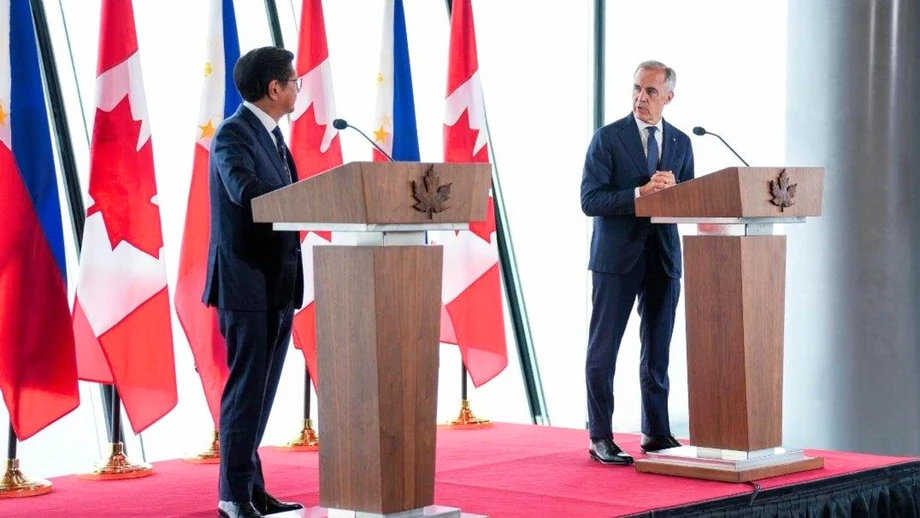
Marcos and Carney met in Vancouver on July 2, when the Philippine president made an official visit. The leaders elevated relations to a strategic partnership and renewed their commitment to completing the bilateral trade negotiations in 2026. They also agreed to strengthen cooperation in energy, defence, tourism and investment.
Security cooperation had already advanced in November 2025 with the signing of a Status of the Visiting Forces Agreement. That framework supports military visits for activities such as training and disaster response.
Manila is also preparing to host regional leaders while managing tensions with China. Philippine and Chinese foreign ministers agreed to maintain dialogue during talks before the summit on November 3, amid continuing maritime disputes. The trade negotiations form part of a crowded diplomatic agenda for the Philippine chair.
ASEAN and Canadian ministers identified geopolitical tensions, regional conflicts and disrupted supply chains as pressures on businesses. Their September statement singled out volatility in energy markets linked to the Middle East crisis, including disruptions affecting oil and gas supplies. They said smaller businesses faced a particularly unpredictable operating environment.
Canada is also continuing financial support through the ASEAN-Canada Plan of Action Trust Fund until the end of 2027. The funding helps less developed ASEAN members participate in negotiations in person. The September statement welcomed Timor-Leste's accession as ASEAN's 11th member in 2025 and supported assistance for its fuller participation in the regional economy.
The milestones leading into November
The negotiations have moved through several political and technical stages. July's leaders' meeting established a shared commitment, September's negotiating round narrowed the bilateral issues, and the ministerial consultation set the regional deadline.
- November 2025: Canada and the Philippines signed their visiting forces agreement.
- July 2, 2026: Marcos and Carney met in Vancouver, elevated ties to a strategic partnership and renewed the trade negotiating commitment.
- July 2026: Bilateral trade negotiations reached a third round.
- September 8 to 11: The fourth and final full bilateral round took place in Toronto.
- September 22: ASEAN and Canadian ministers called for regional negotiations to finish by the November summit, with signing planned for 2027.
- November 5: Ottawa announced Carney's trip.
- By the end of 2026: Manila and Ottawa aim to conclude their bilateral negotiations.
Carney's journey begins in Ireland and continues through the Philippines, Cambodia and China. His agenda includes the Sommet de la Francophonie in Phnom Penh and the Asia-Pacific Economic Cooperation leaders' meeting in Shenzhen. Canada will host the Francophonie summit in 2028.
The immediate test in Manila is whether negotiators can settle the remaining issues and give leaders an agreement to announce. The regional signing target already extends into 2027, making November a negotiating deadline within a longer process.
Key Points
- Carney will attend the Manila ASEAN Summit and seek progress on separate trade agreements with the Philippines and ASEAN.
- Philippine officials say few bilateral issues remain, with agricultural market access among the sensitive topics.
- ASEAN and Canadian ministers want regional negotiations finished by November, followed by signing in 2027.
- Canada and the Philippines traded CAD3.4 billion in goods in 2025.
- Ottawa expects the bilateral pact could triple trade by 2035 and estimates the ASEAN agreement could support about 14,000 Canadian jobs.
- Both agreements would be firsts: a Philippine bilateral trade pact with a North American country and an ASEAN trade pact with a North American partner.