Health preparations target a longer, harsher dust season
Thailand is preparing medical services, clean air rooms and home visits for a potentially worse PM2.5 season in 2027, after Ministry of Public Health figures showed that 40 provinces exceeded the country's fine particle pollution standard in each of the three years from 2024 to 2026.
Contents
- Health preparations target a longer, harsher dust season
- Why the weather warning changes the timetable
- Recent improvement sits beside persistent provincial exposure
- What the Safe Area application is meant to provide
- Risk registers will guide alerts and home visits
- A draft plan sets measurable pollution targets
- Farm waste could become a product instead of smoke
- Vehicles, factories and border haze are also in the plan
- How the preparations developed
- Key Points
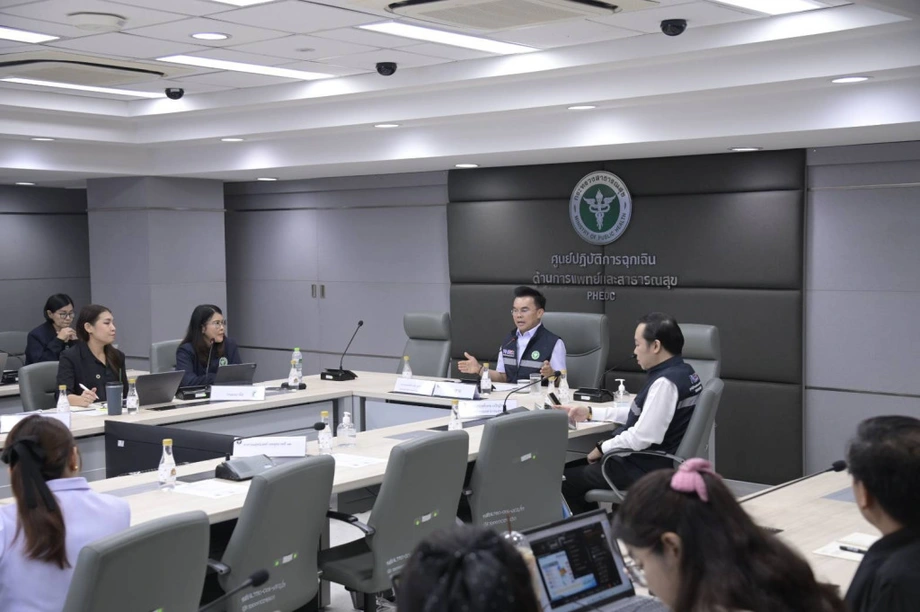
Dr. Sarawut Boonsook, deputy permanent secretary of public health, outlined the preparations on November 6, 2026. The priority areas cover the North, Northeast, Bangkok and surrounding provinces, with heightened health surveillance planned from November through May. Officials are concerned that a possible Super El Niño, prolonged drought and forest fires could make pollution more severe and persistent.
The ministry puts the vulnerable population at around 16 million nationwide. An account of Sarawut's briefing placed that estimate within the 40 priority provinces. The groups targeted for protection include young children, pregnant women, older adults and people with respiratory diseases, allergies, or heart and blood vessel conditions.
The preparations come alongside a draft environmental plan that seeks to reduce forest and agricultural burning, vehicle emissions and pollution from factories. Health officials are preparing to protect people during pollution episodes while environmental agencies work to reduce the smoke reaching their communities.
Why the weather warning changes the timetable
Surin Worakijthamrong, director general of the Pollution Control Department, said on November 4 that burning could begin in late December 2026 or early January 2027, rather than February, and continue until early May instead of ending around the middle of April. That would bring an earlier start and a later finish to the period requiring close attention.
El Niño is a warming of part of the tropical Pacific Ocean that can alter rainfall far beyond the ocean itself. A particularly strong event is often called a Super El Niño. For Thailand, the concern described by officials is prolonged dryness, which can leave vegetation more likely to burn and increase the risk of smoke.
The Ministry of Natural Resources and Environment also considered the possible influence of the Indian Ocean Dipole, a pattern of temperature differences across the Indian Ocean that can affect rainfall. Its planning assessment pointed to drier conditions and greater risks from fires and accumulating pollution.
The severity of the coming climate event and the eventual pollution levels remain uncertain. The health ministry's November to May surveillance period gives officials a broader preparation window than the late December to early May burning season described by Surin.
Recent improvement sits beside persistent provincial exposure
More than 60 provinces recorded PM2.5 above the standard during 2024 to 2026, according to the health ministry's review. Within that group, 40 provinces had exceedances in all three years, making them priorities for risk assessments and response plans.
PM2.5 means airborne particles measuring 2.5 micrometres or less across. Their small size allows them to travel deep into the lungs. Thailand's standard cited in the preparations is a daily average of 37.5 micrograms per cubic metre of air, a measure of the amount of fine dust in a given volume of air.
National monitoring presented to the environment ministry showed some improvement during November 1, 2025, to October 14, 2026: average PM2.5 fell 5% compared with the previous year, and the number of days above the standard also declined. Officials nevertheless observed pollution beginning to accumulate in several areas from early October 2026.
The national average and the provincial history describe different parts of the problem. Thailand recorded a lower average concentration, while many communities continued to experience days above the limit. For residents in those places, access to protected spaces and medical care remains a practical concern even after a better national result.
What the Safe Area application is meant to provide
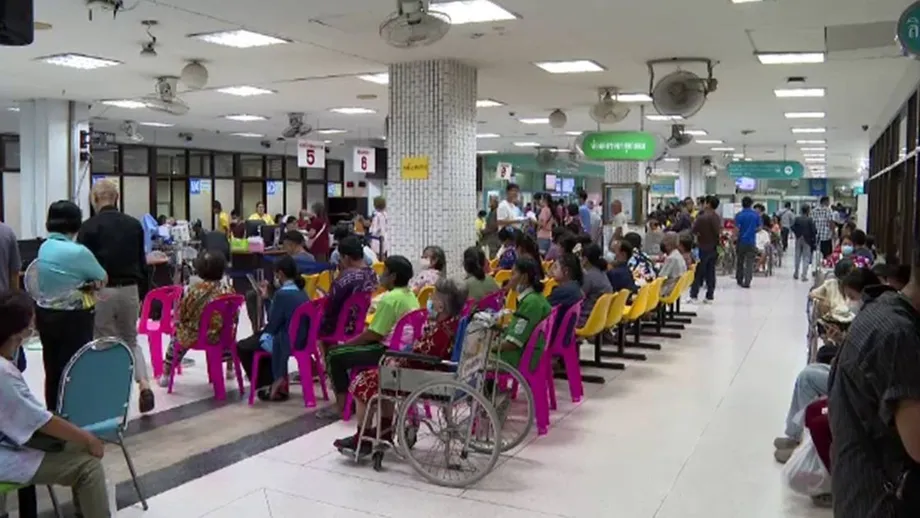
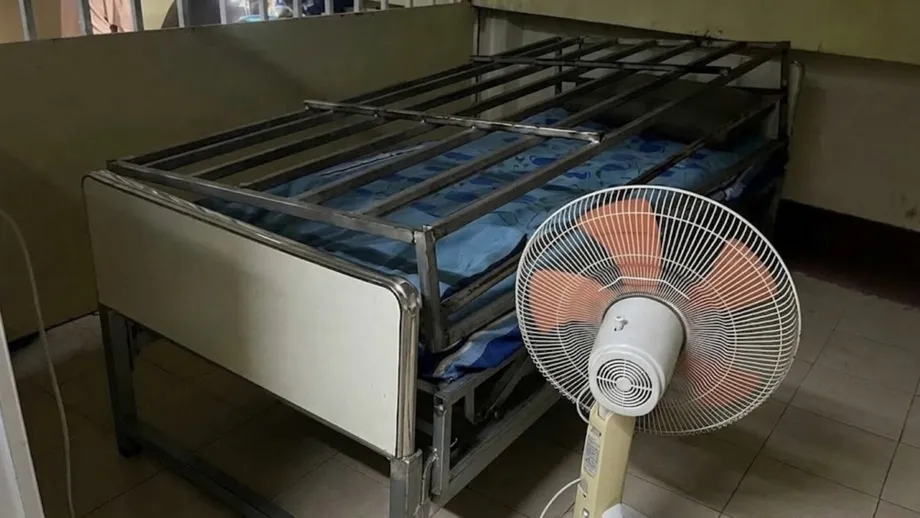
The health ministry is promoting the Safe Area application as a central route to help during pollution episodes. It is intended to bring together current location information for clean air rooms and protective tents or sleeping nets, alongside routes into pollution clinics.
Those clinics are to provide both consultations at health facilities and online appointments through telemedicine. Telemedicine allows a patient to speak with a medical professional remotely and receive an assessment without travelling to a clinic, which can be useful when outdoor air is polluted.
Health officials in every province and health region have been instructed to assess their risks and prepare response plans, with particular attention to the 40 priority provinces. The instructions cover readiness of medical services as well as access to spaces where exposure to dust can be reduced.
The environmental draft also calls for clean air rooms in communities and schools. Together, the two sets of preparations would place protected spaces closer to where people live and study, while medical services deal with symptoms and illness during the dust season.
Risk registers will guide alerts and home visits
The Department of Health, Department of Disease Control, academic centres and provincial agencies have been assigned to map and register people at greater risk. The planned registers are intended to help officials identify who needs targeted health warnings and who may need medical teams to visit at home.
Patients with respiratory diseases and allergies are a priority, along with those who have heart or blood vessel conditions. Young children, pregnant women and older adults are also included. Mapping these groups gives local teams a way to organise assistance by neighbourhood rather than relying entirely on people seeking help themselves.
Provincial governors, provincial disaster prevention and mitigation offices, local governments and local health funds under the National Health Security Office are expected to coordinate funding. Sarawut also called for health and environmental agencies to work together so that their activities do not duplicate each other.
Ministry inspectors, public health supervisors, provincial health chiefs, hospital directors and academic centres have been assigned to monitor implementation. Their role spans local delivery and coordination with the ministry, making preparedness a continuing responsibility through the 2027 season.
A draft plan sets measurable pollution targets
Raveewan Puridej, permanent secretary of the Ministry of Natural Resources and Environment, chaired a preparation meeting on November 5. Participants considered a draft 2027 plan covering agricultural burning, forest fires, urban pollution, haze crossing national borders and coordination of the response.
The draft sets targets against a 2026 baseline: a reduction of about 10% in forest area burned, 10% to 15% in agricultural area burned, 5% to 10% in average PM2.5, and 5% to 15% in the number of days above the pollution standard.
The proposed reduction in average PM2.5 is as large as, or twice, the 5% improvement recorded in the monitoring period ending October 14, 2026. Achieving that ambition during a drier season would require reducing emissions while weather conditions increase the risk of fires.
The ministry approved the broad approach in principle. Central budget support is being sought for forest patrol and firefighting equipment, incentives to reduce agricultural burning, and masks that protect against PM2.5 for people at risk. The measures and spending remain proposals, with no final budget amount or approval date announced.
Farm waste could become a product instead of smoke
The Ministry of Agriculture and Cooperatives is targeting reduced burning across 2.59 million rai in 56 provinces. That is approximately 414,400 hectares. Proposed alternatives include incorporating plant remains into soil and processing them into materials that can be sold.
Surin described discussions with SCG and Grace about turning agricultural residue into industrial products. One possibility is processing the material into pulp for paper cups, potentially increasing its value from around 1,000 baht per tonne to 10,000 baht per tonne.
That tenfold difference depends on producing a more valuable processed material. Farmers would need space, equipment and processing skills, rather than simply collecting crop remains for sale. Production costs, investment requirements and demand from buyers will determine whether the approach offers a workable alternative to burning.
Forest measures include heat detection technology, surveillance cameras, drones, firebreaks and management of combustible vegetation. Patrols and joint teams in conservation areas and national reserved forests would focus on places at high risk, including areas that burn repeatedly.
Vehicles, factories and border haze are also in the plan
The Pollution Control Department is discussing a vehicle maintenance promotion with Bangkok and private companies. Surin said Toyota could support discounts of up to 50% on filter replacements, giving an example of a cost falling from roughly 1,000 baht to 500 baht.
The department has discussed starting the campaign earlier with Bangkok Governor Chadchart Sittipunt. The wider urban programme includes checks on vehicles emitting black smoke, particularly buses, trucks and vehicles connected with construction, as well as proposed expansion of Low Emission Zones. These are areas where authorities apply measures to reduce vehicle pollution.
Factories and construction sites also fall within the draft controls. Proposed action includes closer inspection of industrial sources and tighter control of activities that produce pollution during severe episodes.
For northern and border communities, the plan includes cooperation with neighbouring countries through the ASEAN Agreement on Transboundary Haze Pollution. Proposed work includes exchanging information about heat detections and agricultural burning, and coordinating efforts to reduce fires across the region.
How the preparations developed
Thailand's latest preparations build on a nationwide pollution crackdown ordered by Prime Minister Anutin Charnvirakul on November 13, 2025. Governors were told to coordinate prevention, prepare emergency command centres and bring agencies under a single command when pollution rose.
The 2027 preparations add numerical reduction targets, a proposed market for agricultural residue and more detailed arrangements for reaching vulnerable residents. The sequence of announcements shows how environmental controls and health services are being prepared together:
- November 13, 2025: Anutin instructed governors nationwide to prepare for wildfires, haze and fine particle pollution.
- November 1, 2025, to October 14, 2026: National monitoring recorded a 5% fall in average PM2.5 compared with the previous year.
- November 4, 2026: Surin warned that burning could start earlier and continue into early May.
- November 5, 2026: The environment ministry considered the draft 2027 measures and proposed budget support.
- November 6, 2026: Sarawut outlined medical preparations, prioritising 40 provinces.
- November through May: Health agencies plan heightened surveillance during the coming dust season.
The practical task now is to have local response plans, protected spaces, patient registers and medical services ready before pollution intensifies, while agencies advance measures to prevent fires and reduce other emissions.
Key Points
- Forty priority provinces exceeded Thailand's PM2.5 standard in each year from 2024 to 2026.
- Officials warn that drought linked to a possible strong El Niño could worsen the 2027 dust season.
- The health response targets around 16 million vulnerable people through protected spaces, clinics, remote consultations, alerts and home visits.
- The draft environmental plan seeks reductions in burned area, average PM2.5 and days above the standard compared with 2026.
- Agricultural measures target 2.59 million rai across 56 provinces, alongside forest, vehicle, industrial and cross border action.
- Budget support and several proposed programmes still require further decisions.