Two dominant apps face penalties over restaurant pricing rules
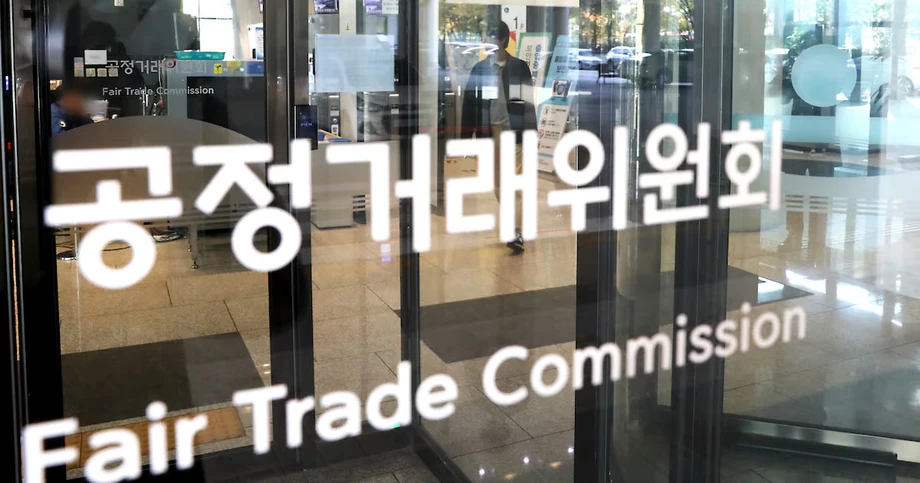
South Korea's Fair Trade Commission has announced provisional fines totaling 631.9 billion won against the operators of Baemin and Coupang Eats, finding that their restaurant pricing requirements weakened competition and helped push food prices higher across delivery apps.
Contents
- Two dominant apps face penalties over restaurant pricing rules
- How membership benefits became pressure on restaurants
- Why a promise of matching prices can raise prices
- What the FTC found in food prices and minimum orders
- Baemin's push toward its own delivery service
- The delivery estimates that reversed the actual result
- Why the penalties differ
- Both companies challenge the findings
- How the investigation developed
- Membership bundling faces further examination
- Key Points
The regulator announced on November 9, 2026, that Woowa Brothers, which operates Baemin, would face a fine of 331.1 billion won, while Coupang would face 300.8 billion won. The decision was made on October 29. Both companies dispute the findings, and Coupang says it will challenge the penalty through legal proceedings.
Baemin accounted for 58.45% of South Korea's delivery app market by order value in 2025, while Coupang Eats held 34.44%. Together, they controlled 92.89%, leaving 7.11% for every other competitor.
The central issue was a requirement that restaurants offer prices and other conditions at least as favorable as those on competing apps. Restaurants that failed to comply could lose access to delivery benefits for customers subscribing to Coupang's Wow membership or Baemin Club.
The FTC also penalized Baemin for pushing restaurants toward a more expensive delivery service and displaying delivery estimates that made restaurant delivery appear slower. Its investigation found that restaurant delivery was actually 1.4 minutes faster on average.
How membership benefits became pressure on restaurants
Coupang imposed its requirements from July 2023 to January 2026, according to the FTC. They covered six conditions: menu prices, minimum order amounts, discounts, delivery fees paid by customers, the number of menu items and operating hours.
A restaurant failing to meet those conditions could lose its Wow restaurant designation. That designation allowed paying Wow members to receive delivery benefits when ordering from the restaurant. From August 2023 to June 2024, Coupang also operated a support program allowing it to change participating restaurants' trading terms directly, the regulator found.
Baemin applied similar requirements from May 2024 to October 2025 to restaurants using its own delivery service. Eligibility for Baemin Club delivery discounts depended on three conditions: minimum order amounts, menu prices and discounts.
Restaurants faced a costly choice. The FTC said daily sales at businesses excluded from Wow restaurant status fell from 220,000 won to 90,000 won. At restaurants losing Baemin Club status, daily sales fell from 110,000 won to 30,000 won. Those figures represent declines of about 59% and 73%, respectively.
Coupang's share of participating restaurants holding Wow status rose from about 13% in July 2023 to 94% in October 2025. The corresponding share for Baemin Club increased from about 63% in May 2024 to 80% in January 2025. The FTC said the threat of losing sales left most restaurants with little practical choice but to accept the requirements.
Why a promise of matching prices can raise prices
The requirements are known as most favored nation, or MFN, conditions. In this case, they meant a restaurant could not give customers on another app a better deal without offering matching terms on the platform imposing the rule.
A smaller app might try to attract restaurants by charging lower commissions. Restaurants could then use those savings to offer cheaper meals, giving customers a reason to try the smaller app. The FTC found that the matching requirements weakened that route into the market.
A restaurant lowering its price on a smaller platform risked losing membership benefits on a much larger one unless it also lowered prices there. Alternatively, it could keep its existing price on the larger app and raise the cheaper price elsewhere. The regulator found evidence of the second response.
Among 62,378 restaurants that accepted Coupang's requests, 47,048 worsened their terms on Baemin rather than improving their Coupang terms, according to the FTC's analysis. That amounts to roughly three quarters of the restaurants accepting the requests.
The two leading apps increased their combined market share from 88.10% in 2023 to 92.89% in 2025, a gain of 4.79 percentage points. The FTC said their simultaneous use of matching requirements produced restrictions on competition similar to those caused by collusion, with restaurants aligning terms at higher prices.
What the FTC found in food prices and minimum orders
Baemin raised its commission for its own delivery service from 6.8% to 9.8% in August 2024. Coupang maintained a brokerage commission of 9.8%. For restaurants using Baemin's service, the increase meant a larger share of each sale went to the platform.
The FTC's economic analysis compared menu prices during six weeks before and after Baemin's commission increase. Prices rose 0.9% on Baemin's own delivery service and about 1% on Coupang Eats. The regulator concluded that restaurants trying to preserve their earnings passed higher costs into prices, while the matching rules helped spread those increases across apps.
Coupang's average minimum order amount rose from 15,338 won in April 2024 to 16,003 won in February 2025, an increase of 665 won, or 4.3%. Baemin's average increased by 212 won, or 1.3%, over the same period.
A minimum order amount is the least a customer must spend on food before a restaurant accepts a delivery order. Raising it can make a small meal more expensive by requiring the customer to add another item, even when delivery itself is advertised as free.
The FTC also estimated that Coupang's matching requirements increased Baemin menu prices by 350 won for an order worth 25,000 won using platform delivery and by 1,650 won using restaurant delivery. Those estimates show why the investigation extended beyond the delivery charge displayed at checkout to the price of the meal itself.
Baemin's push toward its own delivery service
Baemin offered two main arrangements. Under its Market Place service, restaurants arranged delivery themselves. Under its Own Delivery service, the platform handled delivery as well as the order.
The FTC estimated that Baemin's revenue as a share of transaction value in 2024 was 28% for Own Delivery orders, compared with 7.8% for Market Place orders. That broader revenue measure includes more than the brokerage commission alone.
Baemin began reducing or removing the visibility of restaurant delivery on its app in August 2023, according to the regulator. In March 2025, it combined previously separate restaurant delivery and Baemin delivery menus into a single food delivery menu and required matching menu prices and minimum orders between the services. The FTC identified that stage as the point at which the switch became coercive.
Baemin also abolished Ultra Call, a fixed fee advertising product, in April 2025. The regulator found that these changes effectively pushed restaurants toward the platform's more profitable delivery arrangement.
Restaurants offering restaurant delivery fell from 256,000 in June 2021 to 91,000 in July 2025. Over the same period, restaurants using platform delivery, including those using both arrangements, increased from 64,000 to 271,000.
The FTC said higher costs after switching prompted restaurants to raise menu prices and minimum orders to protect their margins. Independent delivery agencies that had handled restaurant orders also lost business, and some left the market.
The delivery estimates that reversed the actual result
Baemin's displayed delivery estimates relied on different methods for the two services. Restaurant delivery estimates used times entered by restaurant owners, who tended to allow extra time to avoid complaints about late meals. Estimates for Baemin's own delivery service learned from actual delivery performance.
Between April 2023 and July 2025, restaurant delivery took an average of 31.5 minutes, compared with 32.9 minutes for Baemin's economy delivery service, according to the FTC.
The estimates shown to customers pointed in the opposite direction. Restaurant delivery was displayed at 44.7 minutes, while economy delivery was displayed at 31.7 minutes. Restaurant delivery therefore appeared 13 minutes slower despite arriving 1.4 minutes faster on average.
The FTC found that Baemin had failed to explain the different calculation methods adequately and treated the advertising as a violation of the Fair Labeling and Advertising Act. For customers deciding between otherwise similar meals, the displayed waiting time could steer orders toward the platform's own delivery service.
Why the penalties differ
Coupang's 300.8 billion won penalty concerned the matching requirements. Baemin's sanction covered three findings. The announced components were approximately 160.2 billion won for matching requirements, 155.4 billion won for forcing a switch toward its own delivery service and 15.4 billion won for misleading delivery time advertising.
The FTC assessed Coupang's conduct over about 31 months, compared with about 17 months for Baemin's matching requirements. Coupang received a 20% increase because of previous legal violations, while Baemin received a 20% reduction for cooperation with the investigation.
The revenue used to calculate the matching requirement penalties was about 5.01 trillion won for Coupang and 4.01 trillion won for Baemin. The FTC included restaurant sales in areas where the relevant membership delivery benefits operated, an approach Coupang contests.
The regulator also ordered the matching practices to stop and required reporting on how restaurants are selected for delivery benefits. That reporting covers selection criteria, changes and notices, and the exclusion of restaurants from the programs.
Both companies challenge the findings
Woowa Brothers said it had argued that its conduct was lawful and would prepare its response after receiving the final written decision.
We have diligently sought to demonstrate that there was no illegality in this case,
The company also expressed dissatisfaction with how its arguments had been considered.
We regret that these explanations were not sufficiently taken into account.
Coupang Eats said its policy helped customers obtain reasonable prices and free delivery while increasing restaurant sales. It said it held only 7% of the market when the policy began and had never terminated a restaurant's contract for failing to meet price conditions. The FTC's findings concern exclusion from membership delivery benefits.
Coupang also said its own figures showed average sales per participating restaurant increased 98% over a year after free delivery for Wow members began. It disputes the penalty calculation, arguing that unrelated delivery revenue was included and that the process impaired its right to defend itself.
The company said an earlier FTC examination report had estimated a penalty of 25 billion to 42 billion won. It compared the final amount with a 468 million won fine imposed on Yogiyo in 2020, describing its penalty as more than 600 times larger. Coupang said Yogiyo had terminated contracts with 43 restaurants in that earlier case.
How the investigation developed
The proceedings stretched across several years of changes to delivery memberships, commissions and the way restaurants appeared inside the apps.
- July 2023: Coupang began imposing the matching requirements examined by the FTC.
- May 2024: Baemin introduced similar conditions for Baemin Club restaurants.
- July 2024: The investigation began following concerns raised in the National Assembly and public reporting.
- August 2024: Baemin raised its own delivery commission from 6.8% to 9.8%.
- May 2025: The FTC established a dedicated task force to handle delivery app cases.
- October 2025: Baemin's matching requirements ended, according to the FTC's findings.
- January 2026: Coupang's matching requirements ended, according to the FTC.
- October 29, 2026: The commission decided on the provisional penalties.
- November 9, 2026: The FTC publicly announced the decision.
The FTC also decided on October 27 to order corrections to Coupang contract terms charging brokerage and payment fees on prices before restaurant funded discounts. It found that charging commission on the discounted portion did not reflect the substance of the transaction.
Membership bundling faces further examination
A separate case concerning Coupang's membership bundle was returned for further investigation after two plenary meetings failed to produce a conclusion. The allegations concern the linking of shopping, Coupang Eats delivery and Coupang Play streaming through Wow membership.
The disagreement concerns which service should be treated as the primary product and which as an attached product. That matters in a tying case, where authorities examine whether access to one product is made conditional on taking another. The FTC has not announced a date for a new decision or a timetable for Coupang's court challenge.
Coupang faces these proceedings amid a wider dispute with South Korean authorities. In June, it received a 624 billion won penalty over a 2025 data breach affecting more than 33 million customers. The government had earlier confirmed 33.67 million leaked records, citing failures in authentication systems and security credential management.
The privacy dispute also drew American political attention. Republican lawmakers accused Seoul of discriminating against a company listed in the United States, a claim South Korean officials reject. Investment firms Greenoaks and Altimeter had already sought arbitration and trade action over South Korea's treatment of Coupang. Federal election records put contributions by Coupang's political action committee, COUPAC, at about $379,000 from the start of 2025 through September 2026.
For restaurants, the immediate purpose of the delivery app orders is greater freedom to set different prices and minimum orders on different platforms. For customers, the FTC expects that freedom to allow smaller apps to compete through lower charges and cheaper meals. The companies' objections now put the findings and penalty calculations at the center of the next legal stage.
Key Points
- The FTC announced provisional fines of 331.1 billion won for Baemin's operator and 300.8 billion won for Coupang.
- The companies controlled 92.89% of delivery app orders by value in 2025.
- The regulator found that matching requirements tied to membership benefits weakened competition and raised prices.
- Baemin also faced penalties over its delivery service switch and misleading delivery estimates.
- Coupang plans a legal challenge; Woowa Brothers will respond after reviewing the written decision.
- A separate investigation into Coupang's membership bundling will undergo further review.