TAIEX retakes 42,000 as technology shares rebound
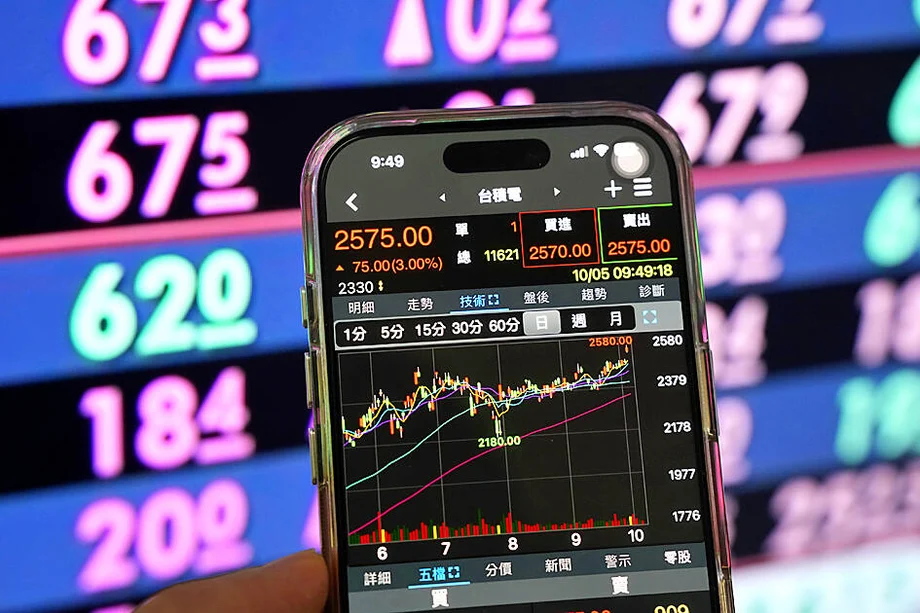
Taiwan's benchmark stock index climbed as high as 42,349 on November 9, 2026, gaining about 2,648 points during trading after the National Stabilization Fund authorized its tenth market support operation. TSMC rose NT$155 to NT$2,290, while buying spread across chipmakers, circuit board manufacturers, memory suppliers and financial companies.
Contents
- TAIEX retakes 42,000 as technology shares rebound
- How the selloff turned into a rebound
- What the NT$500 billion authorization means
- TSMC leads a much broader technology rally
- US chip gains provide the overseas spark
- Why the Taiwan dollar weakened as stocks rose
- Borrowed money remains a pressure point
- AI orders and policy concerns pull in different directions
- Past interventions explain the attention on major shares
- Key Points
The rebound followed an emergency meeting of the fund's committee on November 6 and a recovery in US semiconductor shares that Friday. Taiwan's Financial Supervisory Commission also tightened rules on short selling, giving investors another reason to reassess positions after a severe selloff.
The TAIEX opened at 40,347.28, up 645.64 points from Friday's close of 39,701.64, before pushing through 41,000 and 42,000. Its peak gain amounted to approximately 6.67%. Around 10:45 a.m., the index was at roughly 42,056, still ahead by about 2,354 points.
The index advance and TSMC's NT$155 rise were described as their second largest gains in points and dollars, respectively. Both figures were recorded during trading. The closing index level, final exchange rate and amount the stabilization fund had actually purchased were not yet available.
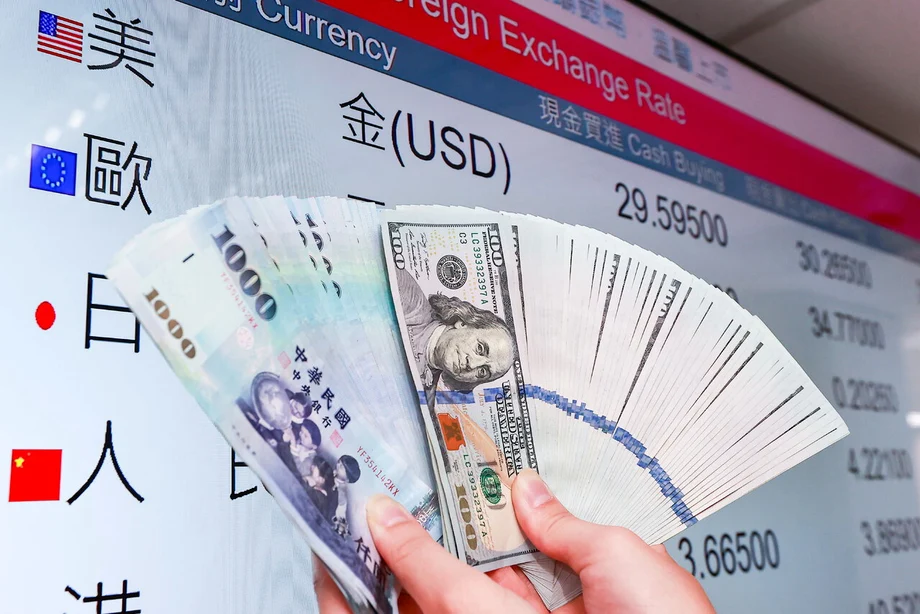
The rally restored part of the value lost during the previous week's plunge. At the same time, the Taiwan dollar weakened toward NT$33 per US dollar, showing that demand for foreign currency continued even as share prices recovered.
How the selloff turned into a rebound
November 9 brought a sharp reversal from Friday, when the TAIEX fell as much as 3,737.67 points before recovering part of the loss and closing down 1,873.08 points. Trading value that day reached NT$1.24 trillion.
The main developments unfolded across the following dates:
- October: Foreign investors sold a net NT$994.316 billion of Taiwanese shares.
- November 2 to 6: The detailed weekly tally put the TAIEX decline at 5,510.19 points, or 12.19%, its fourth consecutive weekly loss.
- November 6: The stabilization fund held its 131st extraordinary committee meeting and authorized a tenth intervention.
- November 6 in the United States: The Philadelphia Semiconductor Index rose 4.21%, and TSMC's American depositary receipts gained 6.33%.
- November 9: Taiwan's index opened above 40,000 and subsequently reached 42,349.
The detailed weekly decline of 5,510.19 points was lower than the loss of more than 6,000 points cited in another market assessment. Using the detailed tally, Monday's peak advance recovered approximately 48% of the previous week's lost points.
Taiwan had already experienced an October 30 selloff as concerns about US technology earnings spread through chipmakers and equipment suppliers. Monday's buying returned to many of those same businesses, including companies supplying power systems, cooling equipment and circuit boards for artificial intelligence infrastructure.
What the NT$500 billion authorization means
The National Stabilization Fund's latest operation has a funding ceiling of NT$500 billion. Its committee empowered the executive secretary to deploy money according to market conditions after heavy foreign withdrawals threatened investor confidence.
The ceiling sets the maximum resources available for support. Actual purchases depend on decisions made during the operation, and individual stock transactions are not disclosed in real time.
The government's action followed an earlier debate over intervention in which investors discussed whether the TAIEX might fall toward 33,000. The fund's rules set no automatic index level for buying. Its committee considers whether major events and movements of money threaten market order, confidence or national stability.
Financial Supervisory Commission measures taking effect on November 9 included a lower limit on securities lending for short selling and higher margin requirements for short sales. Short sellers borrow shares and sell them, hoping to buy them back later at a lower price. Requiring more collateral and restricting the available supply makes that strategy more costly or harder to execute.
In an earlier announcement on April 6, 2025, the commission specified three temporary stabilization measures effective from April 7 through April 11, 2025. The daily intraday order limit for sales of borrowed securities was reduced from 30% to 3% of each security's average daily trading volume over the preceding 30 business days. The minimum short-sale margin requirement for securities listed on the main exchange and the Taipei Exchange was raised from 90% to 130%. With approval from a securities finance enterprise or securities firm, investors could also use other collateral with market liquidity and an objectively and reasonably assessable value to cover shortfalls in margin financing down payments or short-sale margin.
The April announcement exempted borrowed-securities sales needed for hedging by securities firms issuing put warrants or exchange traded notes, conducting structured-product business at their business premises or equity derivatives transactions, or acting as liquidity providers for beneficiary certificates. It also exempted hedging by futures dealers making markets in stock options or stock futures, and borrowed-securities sales for quotations or hedging by securities firms acting as stock market makers. The commission said it would continue monitoring international financial conditions and the domestic capital market and adjust the measures as needed.
Stock analyst Li Yung-nien identified three immediate drivers of the rally: the fund authorization, the commission's stabilization measures and Friday's recovery in US technology shares. Together, they changed trading conditions after several sessions of intense selling.
TSMC leads a much broader technology rally
TSMC opened at NT$2,210, up NT$75, or 3.51%, from Friday's NT$2,135 close. Its subsequent rise to NT$2,290 lifted the gain to approximately 7.26%. Because the company carries the largest weighting in the TAIEX, its movement had a substantial effect on the benchmark.
MediaTek, Delta Electronics, Yageo and Largan Precision reached their daily upper trading limits during the session. Taiwan generally limits a stock's daily price movement to about 10%, so reaching that boundary means buyers have pushed it to the highest permitted price for the day.
More than 1,658 companies across the main exchange and the Taipei Exchange advanced. Around 10:45 a.m., electronics shares were up more than 6.5%, financial shares had gained more than 3%, and the Taipei Exchange index, which includes many smaller companies, was ahead by approximately 6%.
Buying extended through several manufacturing chains. Circuit board makers Gold Circuit Electronics and Topoint Technology reached their upper limits, while Compeq rose more than 8%. Unimicron, Kinsus, Zhen Ding-KY and Nan Ya PCB gained between more than 3% and 6%.
Semiconductor equipment and materials suppliers, including GlobalWafers and WIN Semiconductors, also reached their upper limits. Memory stocks strengthened, with Nanya Technology rising more than 9% and Winbond, Powerchip Semiconductor Manufacturing and Phison hitting their daily ceilings. Innolux reached its upper limit, while fellow display maker AUO gained more than 8%.
US chip gains provide the overseas spark
The Philadelphia Semiconductor Index's 4.21% rise on November 6 gave Taiwan's technology sector a strong signal before Monday's opening. TSMC's American depositary receipts, securities representing its shares in US trading, climbed US$22.34 to US$375.44.
Other US chip companies participated. AMD rose 11.04%, Micron gained 5.12%, and Nvidia advanced 2.78%. The Nasdaq Composite increased 1.09%, while the S&P 500 gained 0.31%.
The Dow Jones Industrial Average moved in the opposite direction, falling 237.33 points, or 0.46%. The strongest support for Taiwan therefore came from the technology and semiconductor parts of the US market rather than a uniform rise across all major indexes.
Japan's stock market gained more than 3% during Monday trading, and South Korean shares rose more than 1%. Those regional gains reinforced the recovery in Taiwan, where many listed manufacturers depend on international demand for chips and computing equipment.
Taiwan had experienced a similar burst of buying during the October 28 rally, when the TAIEX closed at 47,035.58. Monday's peak of 42,349 remained approximately 10% below that close, illustrating the size of the decline that preceded the latest recovery.
Why the Taiwan dollar weakened as stocks rose
The Taiwan dollar opened at NT$32.8 per US dollar and weakened as far as NT$32.937 before recovering toward NT$32.8. At its weakest, the currency had lost more than NT$0.16 against the dollar during the session. The depreciation later narrowed to less than NT$0.10.
A higher number in this exchange rate means more Taiwan dollars are needed to buy one US dollar. For investors moving money abroad, selling Taiwanese shares and converting the proceeds into dollars are connected steps that can occur at different times.
Foreign investors had sold approximately NT$524.4 billion of shares during the first trading week of November. Some demand to transfer those proceeds overseas continued into Monday, putting pressure on the currency while local equities rebounded.
Exporters provided a counterweight when they sold foreign currency receipts for Taiwan dollars. The balance between those conversions and overseas withdrawals helped determine the exchange rate during the session.
The October foreign selling total of NT$994.316 billion and the early November total of NT$524.4 billion together amounted to roughly NT$1.52 trillion. For the recovery to gain durability, investors were watching whether foreign institutions would reduce selling or begin buying again, easing the associated pressure to move money abroad.
Borrowed money remains a pressure point
Friday's plunge forced a rapid reduction in positions financed with borrowed money. Margin balances across the main exchange and the Taipei Exchange fell by NT$56.418 billion in one day. The main exchange accounted for NT$42.356 billion of that decline, consistent with the roughly NT$42.3 billion reduction cited by Uni-President Securities.
Margin financing allows investors to buy shares partly with loans. When the shares fall, the investor's own financial cushion shrinks. A broker may demand more collateral, and investors who cannot provide it may have to sell.
The margin maintenance ratio, a measure of collateral relative to borrowing, stood at about 131% excluding exchange traded funds and at 123% on the Taipei Exchange. Lower ratios leave investors with less room to withstand another decline.
Foreign investors also held net short positions of approximately 100,000 Taiwan index futures contracts. Futures are agreements tied to an index's value, and a net short position generally benefits from a decline or protects other holdings against losses.
Uni-President Securities expected trading to fluctuate around the annual moving average as the market sought a base. A moving average smooths price changes over a chosen period. Monday's rally also carried the TAIEX above its five day moving average of approximately 41,921, a much shorter measure of its recent trend.
AI orders and policy concerns pull in different directions
Lin Wei-chih, executive vice president of the Zhi-Pu Industry Trend Research Institute, linked the preceding decline to several pressures, including high interest rates, elevated inflation and energy costs, and investment funds reducing borrowed exposure.
Investors were also reassessing the cost and pace of US data center development as electricity and environmental rules drew political attention. Data centers need large amounts of power, water and cooling, so changes in those requirements affect construction budgets and expected returns.
The industry assessment cited 17.1 gigawatts of US projects under construction and 52.4 gigawatts of committed development, totaling 69.5 gigawatts. It argued that this pipeline could support Taiwanese manufacturers' orders through 2027. Gigawatts measure power capacity, providing a way to describe the scale of the planned computing infrastructure.
Lin's assessment also pointed to demand for more efficient equipment as construction and electricity costs rise. Delta Electronics supplies power and cooling systems, TSMC manufactures advanced chips, and MediaTek participates in the market for custom chip designs.
Those order expectations sit alongside continuing concerns about spending returns, US policy and financing costs. They help explain why the same companies can attract buyers after a steep decline while their share prices remain sensitive to changes in international expectations.
Past interventions explain the attention on major shares
The stabilization fund's eighth operation, from July 13, 2022, to April 13, 2023, deployed NT$54.508 billion and generated a net gain of NT$11.296 billion. Its ninth operation, from April 9, 2025, to January 12, 2026, deployed NT$12.25 billion and produced NT$9.932 billion in net gains, a return of approximately 81.08%.
TSMC contributed NT$9.078 billion of the eighth operation's gains and NT$7.772 billion of the ninth operation's gains, including dividends. The two operations shared eight holdings: TSMC, Hon Hai, Formosa Plastics, Delta Electronics, Quanta Computer, MediaTek, Fubon Financial Holding and ASE Technology Holding.
That history helps explain why investors focused on major companies after the latest authorization. Li Yung-nien cautioned against chasing a rally that had already risen sharply and suggested gradual purchases of a broad market fund such as Yuanta Taiwan 50 for investors seeking exposure.
For the remainder of Monday's session, Li identified overseas markets, the Taiwan dollar and the ability of major technology shares to retain their gains as practical indicators to watch. The central issue was whether buying would continue after the initial surge, with foreign withdrawals and leveraged positions still shaping trading.
Key Points
- The TAIEX reached 42,349 during November 9 trading, up about 2,648 points from Friday's close.
- The National Stabilization Fund authorized its tenth intervention with a funding ceiling of NT$500 billion.
- TSMC rose NT$155 to NT$2,290, while gains spread across technology, finance and smaller companies.
- The Taiwan dollar weakened as far as NT$32.937 per US dollar before recovering part of its loss.
- Foreign withdrawals, borrowing levels and international technology markets remained central to the recovery.
- Monday's peak advance recovered approximately 48% of the previous week's 5,510.19 point decline.