A sharp morning slide meets a policy response
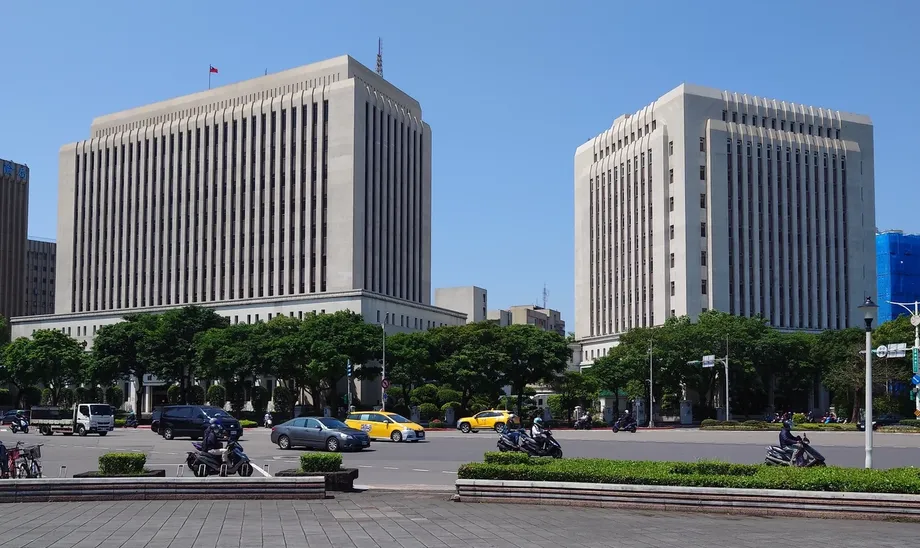
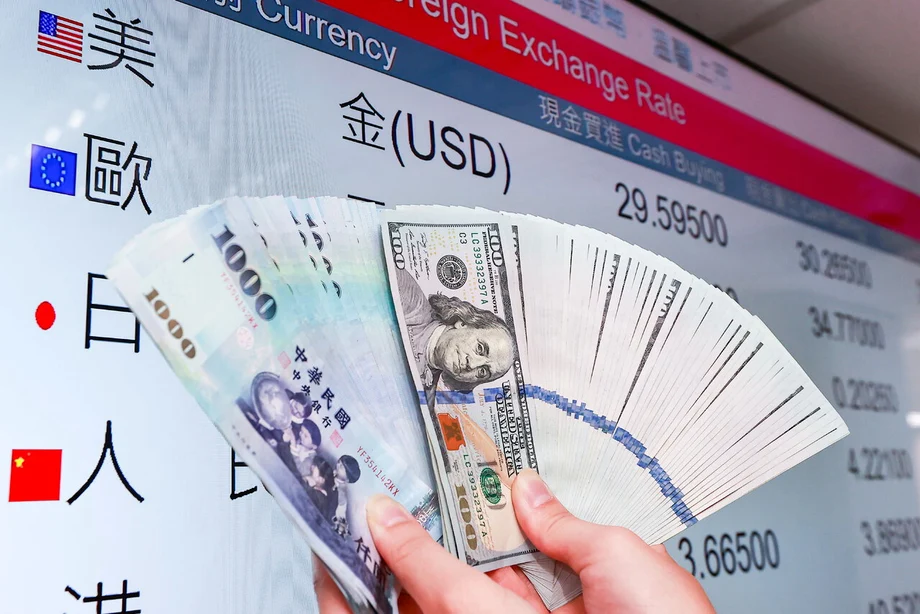
Taiwan's dollar recovered to NT$32.925 against the US dollar at the midday break on November 6, 2026, after falling to NT$33.04 during a morning of heavy foreign capital outflows and steep stock market losses. Central bank intervention and dollar sales by exporters helped pull the currency back below the closely watched NT$33 level.
Contents
- A sharp morning slide meets a policy response
- What the exchange rate numbers mean
- How the morning unfolded
- Why falling shares put pressure on the currency
- Exporters become an important source of dollars
- A separate easing of conversion limits
- AI uncertainty connects the market moves
- What the midday recovery changes
- Key Points
The Taiwan dollar opened at NT$32.92, weakened through NT$33 and then recovered after 10 a.m. Turnover at Taipei Forex Inc. reached US$1.196 billion during the morning session, as investors moving money out of Taiwan competed with exporters bringing dollar earnings home.
Foreign exchange dealers said the central bank intervened to slow the depreciation and coordinated with exporters to sell US dollars. Those sales increased the supply of dollars and demand for Taiwan dollars, helping counter the pressure from foreign investors taking funds out.
The recovery came while Taiwan's stock market was suffering an exceptionally severe decline. Shares fell as much as 3,737.67 points in early trading, crossing below both 40,000 and an annual moving average near 38,827. The currency's weakest morning level was its lowest in more than a year and a half.
The NT$32.925 figure was a midday reading, not the day's final exchange rate. Whether the currency could remain stronger than NT$33 through the afternoon was still unresolved, with dealers pointing to continued foreign outflows as the main source of pressure.
What the exchange rate numbers mean
Taiwan's exchange rate is quoted as the number of Taiwan dollars needed to buy one US dollar. A rise from NT$32.92 to NT$33.04 therefore means the Taiwan dollar has weakened: buying the same US dollar costs more local currency.
The opening rate of NT$32.92 represented a decline of NT$0.044 from the previous close, putting that earlier closing level at NT$32.876. At NT$33.04, the morning's weakest point, the Taiwan dollar had lost NT$0.164 against that closing level, a movement of about 0.5% in the quoted exchange rate.
By midday, the rate had recovered NT$0.115 from its weakest point to NT$32.925. It was still NT$0.049 weaker than the previous close. The intervention and exporter sales had therefore reversed much of the morning's decline, while leaving the currency slightly lower for the session.
For a business buying US$1 million, the difference between NT$33.04 and NT$32.925 amounts to NT$115,000. That simple calculation shows why movements that appear small on a currency screen matter to companies paying for imports or converting large export receipts.
How the morning unfolded
The November 6 trading session followed a public appeal to exporters by Tsai Chiung-min, director general of the central bank's foreign exchange department. On November 5, he urged companies with conversion needs to sell their foreign currency receipts instead of waiting too long for a better rate.
The sequence shows how quickly the balance shifted between demand for US dollars and support for the local currency:
- November 5: Tsai urged exporters to convert foreign currency when needed and cautioned that a reversal could bring many sellers into the market together.
- November 6 opening: The Taiwan dollar began trading at NT$32.92 per US dollar, down NT$0.044 from the previous close.
- Early trading: The currency weakened to NT$33.04 as foreign outflows continued and Taiwanese shares plunged.
- After 10 a.m.: Central bank intervention and exporter dollar sales helped bring the rate back below NT$33.
- Midday break: The currency stood at NT$32.925, with morning turnover of US$1.196 billion at Taipei Forex Inc.
NT$33 was the session's most visible reference point. Dealers focused on whether buying support could keep the exchange rate below it while investors continued seeking dollars to move money overseas.
Why falling shares put pressure on the currency
Foreign investors selling Taiwanese shares can put pressure on two markets in succession. Their stock sales weigh on share prices. When they exchange the Taiwan dollar proceeds for US dollars to transfer abroad, they also increase demand for the US currency.
Taiwan's early stock market decline reached 3,737.67 points, described as its largest intraday point loss on record. The fall carried shares below 40,000 and the annual moving average near 38,827. A moving average smooths prices over a period, giving traders a reference for comparing the current market with its recent history.
Uncertainty over US policy toward artificial intelligence data centers after the US midterm elections formed part of the backdrop. Four major US stock indexes had fallen sharply, followed by the selloff in Taiwan. Investors were confronting uncertainty about a sector closely tied to demand for Taiwanese technology products.
Dealers said the Taiwan dollar would remain under pressure if local shares failed to stabilize. They also said exporters' dollar sales were smaller than the scale of foreign outflows. That imbalance explains why a rebound during the morning could coexist with continuing concern about further depreciation.
Exporters become an important source of dollars
Taiwanese exporters often receive payment in US dollars but need Taiwan dollars for domestic expenses. Selling those dollar receipts creates demand for the local currency. During a period of capital flight, those transactions can provide a counterweight to investors buying dollars to leave.
A weaker Taiwan dollar can encourage exporters to wait. Each US dollar buys more local currency as the exchange rate rises, so a company expecting further depreciation may postpone conversion in the hope of receiving a better price.
Tsai's appeal addressed that timing decision. He urged exporters with a need to convert funds to act, warning that a sudden change in market direction could leave many companies trying to sell dollars at once. Dealers said some exporters were still waiting for more favorable levels.
The central bank's coordination with exporters on November 6 brought commercial currency flows into its effort to slow the decline. Exporters were selling their own foreign currency earnings, while the bank was also intervening in the market. The size of the central bank's purchases and the amount sold by exporters were not disclosed.
A separate easing of conversion limits
In a separate trading episode, foreign exchange traders said the central bank told some lenders that exporters' US dollar sales would no longer face daily limits. The previous general limit allowed exporters to sell up to US$10 million a day, although limits varied.
Traders said the bank contacted at least four banks that morning. The date of that session and the duration of the relaxation were not specified. During that session, the Taiwan dollar recovered from its weakest level since April of the preceding year but still closed down 0.35% at NT$32.592 per US dollar.
The currency had fallen about 2% in the preceding month amid persistent foreign equity outflows. Removing a daily conversion cap gave exporters more room to sell dollars, potentially increasing the flow of foreign currency available to meet demand from departing investors.
Eddie Cheung, senior emerging markets strategist at Credit Agricole CIB's Hong Kong branch, described the policy signal:
Given the underperformance of the Taiwan dollar, the headline is a signal that the authorities could be becoming less tolerant of Taiwan dollar depreciation,
The daily limits had been introduced after the Taiwan dollar experienced its biggest surge since the 1980s. At that time, the central bank sought to slow a rush of exporter dollar sales that could push the local currency up even faster. Relaxing the limits served the opposite market need: allowing more dollar supply when the Taiwan dollar was weakening.
AI uncertainty connects the market moves
Taiwan's exposure to AI investment helps explain why uncertainty about US data center policy mattered to its markets. Demand for servers, chips and other equipment links Taiwanese exporters to spending decisions by major technology companies.
The central bank had already examined risks surrounding that investment boom in materials submitted to lawmakers on October 27. Its warning about AI financing described how construction delays could postpone revenue, weaken asset values and make lenders less willing to fund further expansion.
The written materials were submitted ahead of central bank Governor Yang Chin-long's October 28 business report to the legislature's finance committee. They listed uncertainty over AI investment returns and rising financing risks among the main threats to the global economic outlook. The bank had outlined much of the same analysis in reference materials for its September 17 post-board-meeting press conference.
The bank identified four bottlenecks facing data centers: electricity, equipment supplies, residents' protests and local government reviews. These could delay facilities opening even as major US cloud service providers continued expanding capital spending. Emerging cloud providers and data center developers were increasingly relying on private credit, asset-backed financing and special purpose vehicles, or SPVs, raising both leverage and the complexity of financing structures.
Those materials put estimated global data center funding needs at US$3.2 trillion for 2026 through 2028. They also projected combined capital spending by Alphabet, Amazon, Microsoft and Meta of US$715.5 billion in 2026, rising to US$991.6 billion in 2027.
The 2026 spending estimate represented a 90.3% increase from 2025, with another 38.6% rise projected for 2027. The bank said operating cash flow was growing much more slowly than capital spending, sharply reducing free cash flow or turning it negative and leaving gaps to be filled by external financing. Of the US$3.2 trillion in global data center funding needs, about US$1.46 trillion was expected to come from equity, US$700 billion from private credit and US$650 billion from investment-grade bonds. Private credit and investment-grade bonds together accounted for more than 42% of the total.
The four major cloud providers had combined long-term borrowings and existing lease liabilities of US$604 billion on their balance sheets. Commitments and liabilities disclosed off balance sheet in financial statement notes totaled about US$2.424 trillion, roughly four times that amount. These included more than US$1.52 trillion in long-term purchase commitments to chip suppliers and about US$904 billion in leases due to begin once data centers under construction were completed. The bank warned that looking only at balance-sheet debt would understate the companies' payment obligations.
SPVs could build or buy AI infrastructure and raise funds from nonbank institutions without their debt appearing on the parent companies' balance sheets. The bank also highlighted a mismatch in maturities: graphics processing units had accounting depreciation periods of about four to six years, but chip life cycles had shortened to two to three years, while SPV leases and debt typically ran for five to 15 years. Chips pledged as collateral could therefore pass their economic useful life before the associated debt matured.
If AI profits and investment returns fell short of expectations, asset repricing and credit risks could reinforce each other, increasing financial market volatility and curbing further AI investment. Weaker revenue at major or emerging cloud providers could lead to capital spending cuts or debt defaults, spreading risk from the AI supply chain to private credit and other nonbank institutions. If those institutions also borrowed from banks, the risks could extend into the banking system.
The bank's materials also showed how closely Taiwan's growth depended on this investment cycle. The economy grew 14.15% in the first half of 2026, and the bank's September forecast put full-year growth at 11.48%. Net external demand and capital formation were expected to contribute 4.28 and 4.40 percentage points respectively, a combined 8.68 percentage points, or 75.6% of annual growth. The bank said changes in US cloud providers' capital spending would influence export growth across Taiwan's AI hardware supply chain.
The materials noted that doubts about AI capital spending returns had emerged after July, triggering a sharp technology stock pullback, and resurfaced in October, putting global semiconductor shares under pressure. Taiwan and South Korea, where technology stocks carry substantial market weight, were affected. The bank forecast Taiwan's growth would slow to 5.82% in 2027 because of the high 2026 comparison base, while continued demand for emerging technologies would support exports and private investment. It said it would monitor AI applications and international financial conditions and adjust monetary policy as needed to maintain price and financial stability.
For Taiwan, the connection runs from investment expectations to company earnings, share prices and currency transactions. A change in expectations can prompt investors to reduce their holdings; transferring the proceeds overseas then adds demand for US dollars. On November 6, that currency pressure was visible alongside the sharp fall in shares.
What the midday recovery changes
The recovery to NT$32.925 reduced the immediate cost of buying dollars compared with the morning's NT$33.04 extreme. Importers making payments in dollars faced a better rate, while exporters converting dollar receipts received fewer Taiwan dollars than they would have at the weakest point.
The central bank and exporters had absorbed enough demand to bring the rate back below NT$33 by midday. Continued foreign selling of stocks and conversion of the proceeds remained the key pressure identified by dealers.
The next test was the afternoon session. The morning had shown both the strength of demand for dollars and the ability of intervention and exporter sales to reverse part of the move within hours.
Key Points
- The Taiwan dollar weakened to NT$33.04 per US dollar on November 6 before recovering to NT$32.925 at midday.
- Dealers said central bank intervention and exporter dollar sales helped bring the rate back below NT$33 after 10 a.m.
- Morning turnover at Taipei Forex Inc. reached US$1.196 billion.
- Taiwanese shares fell as much as 3,737.67 points in early trading as foreign capital outflows pressured the currency.
- The central bank had urged exporters to convert receipts when needed; traders also described a separate relaxation of daily dollar sale limits.
- The midday recovery left the currency slightly weaker than its previous close, with afternoon trading still ahead.