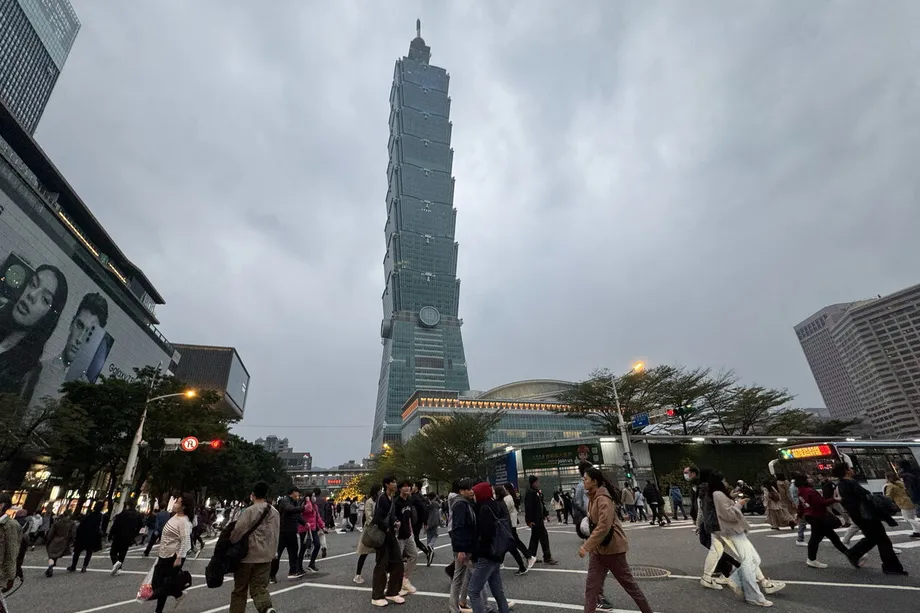
A smaller stake brings the Wei family back
Taipei 101 confirmed on October 27, 2026, that Taiwan Itochu Investment will transfer its entire 17.274% holding in the landmark's owner to Cheng Mei Venture Capital, a company represented by Ting Hsin Group's Wei Ying-chiao. The transaction brings the Wei family back into the shareholder ranks eight years after Ting Hsin sold its stake to the Japanese trading group.
Contents
- A smaller stake brings the Wei family back
- Who is buying the shares?
- Government investors retain the dominant position
- How Ting Hsin first entered and then left
- The 2018 deal also unwound a food business investment
- What the earlier investment earned
- The businesses behind the landmark
- The dates behind the ownership changes
- Key Points
The building's owner, Taipei Financial Center Corporation, welcomed Cheng Mei as a shareholder and thanked Itochu for its participation and contributions during its investment. The confirmation moves the story beyond earlier market speculation about a possible return.
Wei's office said he would act as a financial investor and support and respect the management team led by institutions with government investment. He is expected to stay out of Taipei 101's management. Financial investors generally seek returns through dividends and changes in the value of their shares, rather than running daily operations.
The returning investment is much smaller than the 37.17% holding Ting Hsin sold in 2018. At 17.274%, Cheng Mei's stake is less than half that former position. Institutions backed by the government held about 70% following purchases in 2025, leaving the Wei family's return within an ownership structure still dominated by that group.
No purchase price or completion date was disclosed in the announcement. The confirmed development is the planned transfer of Itochu's remaining holding, with Cheng Mei identified as the buyer.
Who is buying the shares?
Cheng Mei Venture Capital was established on July 14, 2026, according to Ministry of Economic Affairs business registration information. Wei Ying-chiao, a senior figure in the Ting Hsin Group, is its registered representative. Its registered activities include general investment, venture capital, investment consulting and management consulting.
Cheng Mei is the legal entity acquiring the shares. References to Ting Hsin or the Wei family's return describe the people and business interests behind the investment, while the shareholder entering Taipei 101 is Cheng Mei itself.
Wei's office said he was optimistic about Taipei 101's development over the long term and hoped to see the company continue growing alongside its other shareholders. The statement placed support for the existing management team at the center of his intended role.
Taipei 101 also framed the change as a shareholder transition. The company said it respected Itochu's decision to adjust its investment and would continue working with all shareholders to pursue steady growth and create lasting value for shareholders and society.
Government investors retain the dominant position
Six financial institutions with government investment expanded their Taipei 101 holdings in March 2025: Mega International Commercial Bank, First Bank, Taiwan Cooperative Bank, Hua Nan Financial Holdings, Chang Hwa Bank and Taiwan Business Bank.
The purchases involved shares released by Itochu and other shareholders. Itochu's holding fell from 32.14% to 17.27%, while the government investment camp's combined ownership rose to about 70%. The transactions were reported at NT$38.7 per share, with spending of more than NT$9.45 billion.
Itochu's reduction from 32.14% to 17.27% amounted to 14.87 percentage points. That left the Japanese group with the block now being transferred to Cheng Mei. The latest transaction replaces one substantial private shareholder with another while leaving the much larger government investment bloc in place.
The ownership balance has shifted considerably since Itochu entered. Its 2018 announcement listed the expected ownership after that transaction as 52.1% government, 37.2% Itochu and 10.7% other private companies. Compared with that 52.1%, the approximately 70% government investment position reported after the 2025 purchases represents an increase of about 18 percentage points.
How Ting Hsin first entered and then left
Ting Hsin, which grew through its Master Kong instant noodle business, began accumulating Taipei 101 shares in 2009. The Wei family eventually held about 37.17%, acquired for an estimated NT$7 billion to NT$8 billion, with an initial purchase cost of roughly NT$13 per share.
The holding made Ting Hsin an important private investor in the company behind one of Taiwan's best known buildings. Ownership provided exposure to several businesses within the same property, including the shopping mall, office leasing and observation deck.
Food safety scandals involving Ting Hsin's oil businesses in 2014 damaged the group's reputation and preceded its decision to dispose of its Taipei 101 investment. Late that year, Ting Hsin had discussed selling part of its holding to Cathay Financial and CTBC Financial.
The eventual buyer was Itochu. Ting Hsin sold its entire position in 2018 for US$665 million, reported at about NT$20.2 billion at the time. The share transfer was completed on July 30, 2018, although an earlier description placed completion in August.
The new purchase therefore reverses the direction of the earlier deal: the Wei family sold to Itochu in 2018, and a company represented by Wei is now acquiring Itochu's remaining shares. The size of the investment and the surrounding ownership balance have both changed.
The 2018 deal also unwound a food business investment
Itochu's entry into Taipei 101 was part of a wider rearrangement of its relationship with Ting Hsin. In its 2018 transaction announcement, published on February 15, the Japanese company said it had agreed on December 21, 2017, to sell its remaining 17.8% interest in Ting Hsin's holding company and acquire Ting Hsin's entire 37.2% interest in Taipei Financial Center Corporation.
Taiwanese authorities approved the transaction on February 14, 2018. Itochu said it would then work through the remaining matters needed to complete the sale and purchase.
Itochu had originally acquired 20% of Ting Hsin in 2009 and sold part of that investment back in 2015. The agreement reached in 2017 completed its departure from that holding while moving it into the company that owns Taipei 101.
Itochu's corporate statement explained its reason for acquiring the property investment:
ITOCHU has determined that stable revenue in cash can be expected, such as dividends, from the investment in TFCC and that ITOCHU's experience in the real estate business can also be utilized for proper operational management.
Dividends are payments a company makes to shareholders from money available for distribution. Itochu's explanation shows that regular cash returns were a central reason for its investment, alongside the opportunity to apply its property business experience.
What the earlier investment earned
Ting Hsin's original purchase and sale prices show why its first Taipei 101 investment attracted attention. The reported acquisition price was about NT$13 per share, compared with a sale price of approximately NT$32.9 in 2018.
Those figures produce a gain of about NT$19.9 per share before costs and taxes. The sale price was approximately 2.5 times the original purchase price. Ting Hsin also collected an estimated NT$3 billion in dividends during its years as a shareholder.
Estimates put the combined gain from selling the shares and collecting dividends at close to NT$16 billion. The figures are approximate: using the reported NT$20.2 billion sale proceeds, an acquisition cost of NT$7 billion to NT$8 billion and NT$3 billion in dividends produces a range of roughly NT$15.2 billion to NT$16.2 billion before costs and taxes.
The 2025 price of NT$38.7 per share was about 18% above the reported NT$32.9 sale price in 2018. That comparison provides a historical reference for Taipei 101 shares. Cheng Mei's new purchase terms remain undisclosed.
The businesses behind the landmark
Taipei Financial Center Corporation operates a shopping mall, leases office space and manages the observatory, according to Itochu's corporate description. A stake in the company therefore connects an investor to several sources of income, rather than to a single retail or tourism business.
Figures reported in March 2025 put the shopping mall's turnover for the preceding year at NT$23 billion and observation deck attendance at about 1.5 million visitors. The operating figures also included NT$2.57 billion in profit and a shareholder distribution of NT$1.75 per share.
Mall turnover measures sales activity at the shopping center. Company profit is the money left after the relevant costs are paid, while a dividend is the amount distributed for each share. Those measures help explain different parts of the property's commercial performance.
At the NT$38.7 purchase price reported in 2025, a dividend of NT$1.75 would equal about 4.5% of the price paid for a share. This calculation gives a simple comparison between that distribution and that purchase price; future distributions depend on company decisions and performance.
The dates behind the ownership changes
The Wei family's return follows a sequence stretching from its original investment in 2009 through Itochu's gradual reduction of its holding. The principal dates are:
- 2009: Ting Hsin begins acquiring Taipei 101 shares and eventually accumulates about 37.17%.
- 2014: Food safety scandals involving Ting Hsin's oil businesses precede its decision to sell the investment.
- December 21, 2017: Itochu agrees to sell its remaining Ting Hsin holding and acquire Ting Hsin's Taipei 101 stake.
- February 14, 2018: Taiwanese authorities approve the transaction.
- July 30, 2018: The share transfer to Itochu is completed.
- March 2025: Purchases by six financial institutions help bring the government investment camp's ownership to about 70%, while Itochu's stake falls to 17.27%.
- July 14, 2026: Cheng Mei Venture Capital is established.
- October 27, 2026: Taipei 101 confirms the planned transfer of Itochu's remaining 17.274% to Cheng Mei.
The central change is now the identity of a major private investor. Itochu is transferring its remaining position, the Wei family is returning through Cheng Mei, and Wei's stated role is to support the existing management as a financial investor.
Key Points
- Taipei 101 confirmed that Itochu will transfer its entire 17.274% stake to Cheng Mei Venture Capital.
- Cheng Mei is represented by Ting Hsin Group's Wei Ying-chiao, whose office says he will act as a financial investor.
- The purchase price and completion date were not disclosed.
- Institutions with government investment held about 70% after purchases in 2025.
- Ting Hsin sold its former 37.17% holding to Itochu in 2018 for US$665 million.
- The returning stake is less than half the size of Ting Hsin's former holding.