Taiwan forecast more than doubles as chip demand surges
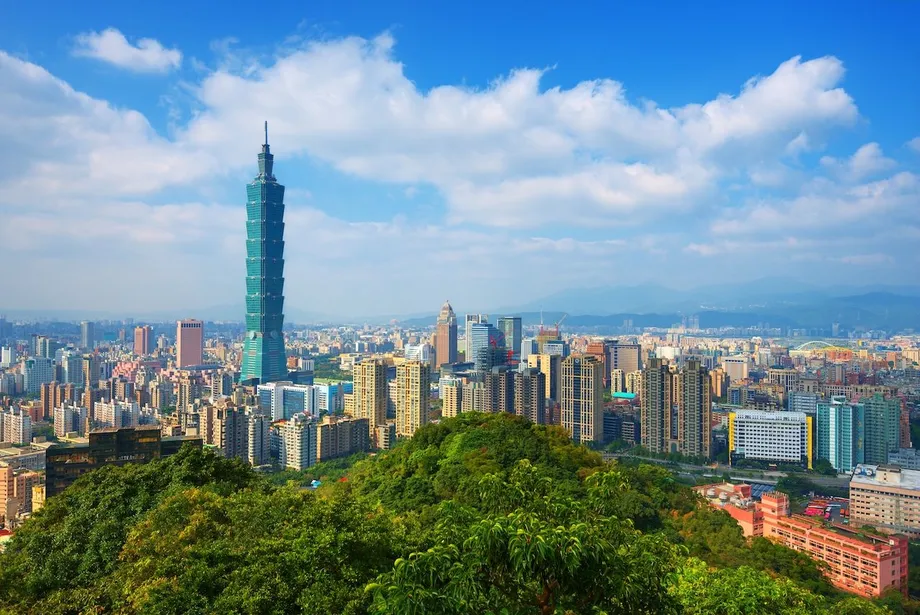
The International Monetary Fund has raised its forecast for Taiwan's 2026 economic growth to 10.7%, from 5.2% in April, putting it ahead of every other economy in the Asia-Pacific region as investment in artificial intelligence drives demand for computing hardware. The increase of 5.5 percentage points places Taiwan far above the IMF's projected global growth rate of 3.1%.
Contents
- Taiwan forecast more than doubles as chip demand surges
- How the outlook changed between April and October
- Where Taiwan stands against its neighbours
- Why AI spending benefits Taiwan so directly
- Export strength does not tell the whole domestic story
- Economists see room for growth beyond this year
- A global boom with increasingly uneven benefits
- Energy and AI returns are the main risks
- Turning the chip boom into broader growth
- Key Points
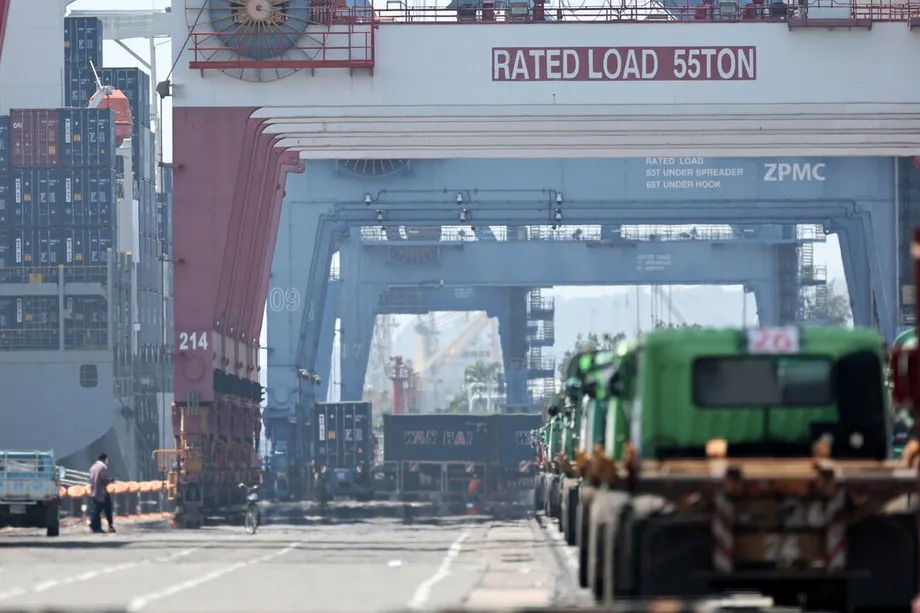
The October World Economic Outlook, titled Resilience under Strain, Urgent Choices, projects Taiwan's current account surplus at 22.0% of gross domestic product. Taiwan and South Korea together account for 62% of global net trade in computing hardware related to AI, according to the IMF, illustrating how concentrated the supply chain behind the investment boom has become.
The forecast is for real GDP, which measures economic output after adjusting for price changes. It is a prediction for the full year, not a confirmed growth result. Even after the sharp revision, the IMF estimate remains 0.35 percentage point below the 11.05% forecast issued in August by Taiwan's Directorate General of Budget, Accounting and Statistics.
Reports differ on whether Taiwan is the only economy expected to record growth above 10%. Some describe it that way, while others list Guyana at 22.3% and South Sudan at 10.5%. Those figures place Taiwan second among the economies identified, behind Guyana and just ahead of South Sudan. The consistent finding is Taiwan's regional lead and unusually rapid expansion.
The outlook also contains a warning: Taiwan's growth is forecast to slow to 4.3% in 2027. The immediate benefit from AI spending is substantial, but neither continued growth at this pace nor the eventual returns from that investment are assured.
How the outlook changed between April and October
The revision puts Taiwan on a stronger trajectory than the IMF expected six months earlier. Its projected 2026 growth rate is now slightly more than twice the April estimate and 1.9 percentage points above the 8.8% growth recorded in 2025.
The sequence of forecasts shows how expectations shifted as the year progressed:
- April 2026: The IMF forecast Taiwan's annual growth at 5.2%, inflation at 1.5% and its current account surplus at 18.1% of GDP.
- August 2026: Taiwan's Directorate General of Budget, Accounting and Statistics projected annual growth of 11.05%.
- October 12, 2026: Reports of the October World Economic Outlook put the IMF growth forecast at 10.7%, inflation at 2.0% and the current account surplus at 22.0% of GDP.
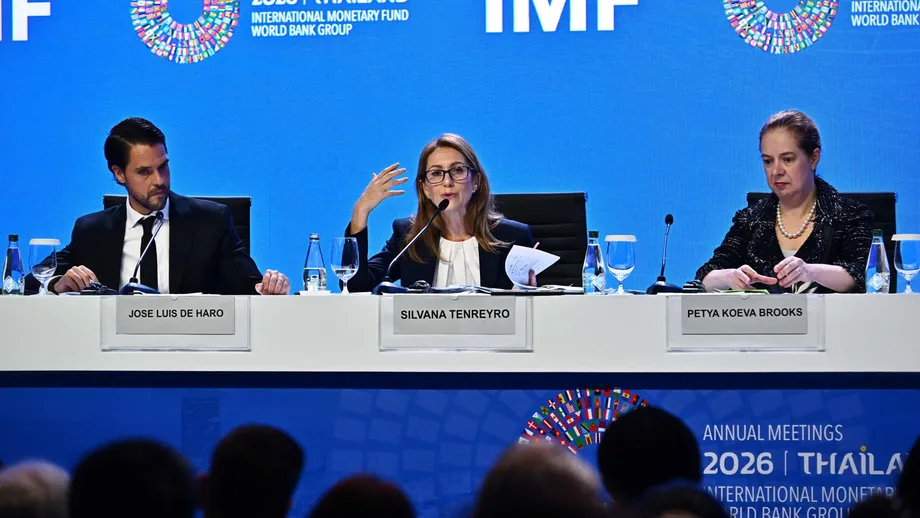
- October 13, 2026: IMF officials discussed the global outlook in Bangkok, where economists also assessed Taiwan's prospects during the IMF and World Bank annual meetings.
- 2027: The IMF projects Taiwan's growth at 4.3%, inflation at 1.8% and its current account surplus at 23.1% of GDP.
Reports date publication of the outlook to October 12, while accounts of its presentation and discussion in Bangkok carry October 13 dates. The forecasts concern the same October edition.
The expected slowdown next year is substantial: 4.3% growth would be 6.4 percentage points below the 2026 forecast. It would still represent an expanding economy, rather than a contraction. No comparable 2027 forecast from Taiwan's statistics agency is given here, so the August and October estimates can be compared directly only for 2026.
Where Taiwan stands against its neighbours
Taiwan's projected expansion exceeds Vietnam's 8.4%, India's 7.0%, Indonesia's 5.1% and Singapore's 5.0%. The IMF forecasts growth of 4.5% in China, 3.8% in Hong Kong, 3.3% in South Korea and 0.7% in Japan.
The gaps are large even among economies benefiting from technology demand. Taiwan's forecast is 7.4 percentage points above South Korea's, despite their shared importance in semiconductor supply chains. It is also more than twice China's projected rate, based on the respective figures of 10.7% and 4.5%.
Rapid Taiwanese growth does not mean Asia is accelerating as a whole. The IMF projects regional growth of 4.8% in 2026, down from 5.0% in 2025, followed by 4.4% in 2027. For advanced Asian economies, the 2026 forecast is 3.2%.
South Korea is expected to grow 2.8% in 2027, while China's growth is projected to ease to 4.0%. Reports agree on China's final forecasts but differ on the direction of the latest revision: one describes an upgrade, while another says both annual estimates were reduced by 0.1 percentage point from July. The shared figures are 4.5% for 2026 and 4.0% for 2027.
Why AI spending benefits Taiwan so directly
AI systems require powerful chips and computing infrastructure both to train models and to run them after deployment. Training develops a model from data; inference is the process through which a trained model generates an answer or performs a task. Investment in both activities creates demand for the hardware supplied by Taiwan's technology sector.
The IMF describes the industry as concentrated at two ends: advanced computing hardware upstream, and the development and operation of leading AI models downstream. Taiwan and South Korea occupy a central position in the hardware supply chain.
The 62% figure refers specifically to their combined share of global net trade in AI computing hardware. Some reports describe it more broadly as a share of the AI hardware industry, but it should not be read as a measure of all AI activity, software revenue or chip production. Net trade reflects exports after imports are taken into account.
Taiwan, South Korea, Malaysia, Mexico and the Netherlands together account for nearly 80% of the relevant hardware exports, according to accounts of the IMF charts. The United States and China account for nearly 80% of imports. That pattern connects spending by major AI markets to production across several manufacturing economies.
The IMF also models benefits for Singapore, Vietnam, Malaysia and Japan if Taiwanese and South Korean exports of computers, electronics and optical products increase by 40%. This is a hypothetical supply chain exercise, distinct from reports that Taiwan's electronics and optical equipment exports have grown by nearly 40%.
Export strength does not tell the whole domestic story
Taiwan's projected current account surplus has risen from the April forecast of 18.1% of GDP to 22.0%, an increase of 3.9 percentage points. The current account records trade in goods and services, income flows and transfers with the rest of the world. A surplus means receipts from abroad exceed payments abroad across those categories.
The IMF puts the surplus at 20.0% of GDP in 2025 and expects it to reach 23.1% in 2027. The rising share signals continued external strength even as annual GDP growth is forecast to slow.
Domestic indicators show a less dramatic change. Consumer price inflation is forecast at 2.0% in 2026, up from 1.5% in April, while unemployment is projected at 3.4% in both 2026 and 2027. Inflation is expected to ease to 1.8% next year.
These figures do not establish how the gains are distributed across households or industries. GDP growth measures total output, not whether wages, consumption or employment improve equally. The unchanged unemployment forecast also shows that a large output revision does not automatically produce a comparable change in the headline labour market measure.
The composition of export growth matters as well. An account of the IMF analysis says the rising value of AI hardware trade has been driven substantially by prices, rather than similarly large increases in shipment volumes. Higher export receipts should therefore not be treated as proof that the number of devices shipped has risen at the same pace.
Economists see room for growth beyond this year
Economists attending the annual meetings in Bangkok broadly viewed strong semiconductor demand as a credible explanation for Taiwan's forecast. British economist Paul Temperton said Taiwan's role in supplying chips for AI infrastructure made the growth projection understandable, given its dependence on exports.
Temperton believes the demand could last for several years and does not regard the industry as already being in a bubble. His suggested test is how much revenue AI companies generate over the coming years, rather than investment spending alone.
Iyabo Masha, director of the Intergovernmental Group of Twenty-Four, also expects semiconductor activity to keep expanding over the next two to three years, although growth could slow as the sector stabilizes. The G24 coordinates developing countries' positions on international monetary and development issues.
Emma Rafaelof of the U.S. Semiconductor Industry Association expressed optimism about an expanding AI market. Reports identify her variously as an economist and the association's global policy director. She argued that continued expansion requires cooperation among the United States, Taiwan and other economies, with sustained communication needed to support that cooperation.
These views support the prospect of further growth, not a promise that Taiwan will repeat a 10.7% annual expansion. The IMF's own 4.3% forecast for 2027 points to a slower pace while output continues to rise.
A global boom with increasingly uneven benefits
The IMF expects global growth of 3.1% in 2026 and 3.4% in 2027. This year's estimate is slightly above July's 3.0% forecast, but below the 3.5% expansion recorded in 2025. AI investment has helped offset the energy shock associated with the Middle East war.
That support is uneven. The IMF says 32 economies now account for 95% of global growth, compared with 54 in April, and it has downgraded forecasts for 47% of economies. Countries supplying AI infrastructure are benefiting while many energy importers outside those supply chains face higher costs and weaker purchasing power.
The United States is projected to grow 2.3% in both 2026 and 2027. Euro area growth is forecast at 1.1% this year, while India is expected to expand by 7.0% in both years. In contrast, the IMF forecasts contractions of 3.3% in Saudi Arabia, 16% in Iraq, 16.7% in Kuwait and 15.6% in Qatar during 2026.
Silvana Tenreyro, the IMF's economic counsellor and research department director, warned that the capacity to absorb repeated shocks is weakening:
The global economy has been resilient, but that resilience is reaching its limits, so we need to move from just coping to rebuilding.
Petya Koeva Brooks, the IMF's deputy research director, said measures such as drawing down energy reserves, switching suppliers and reducing oil demand had prevented global growth from falling to 2.5% this year. Their protective effect is fading as the conflict continues.
Energy and AI returns are the main risks
The IMF's central forecast assumes the Strait of Hormuz reopens in March 2027 and shipping conditions broadly return to their state before the war by October 2027. It assumes average oil prices of $96 a barrel in 2026 and $87 in 2027. These are forecasting assumptions, not confirmed dates or prices.
Global oil reserves are being drawn down by about 2.7 million barrels a day. In an adverse scenario where a worsening war keeps oil at $130 a barrel through the first quarter of 2027, the IMF estimates growth would be reduced by 0.2 percentage point in 2026 and 0.5 percentage point in 2027. Global inflation next year would rise to 5.2%, against the central forecast of 4.1%.
AI brings a separate risk. Spending on chips, data centres and electricity capacity is occurring before broad productivity gains have been demonstrated. If revenues and efficiency improvements disappoint, investment and asset prices could fall together.
In one IMF scenario combining disappointing AI gains with financial market stress, U.S. equities fall 20% and global output is 1.1% below the baseline by 2028. Asian output could be as much as 1.7% lower. A narrower investment retreat scenario puts Asian GDP about 0.5% below its baseline by 2029.
These scenarios use different assumptions and should not be added together. They describe possible deviations from the IMF's central forecast, not predictions that those losses will occur. Conversely, faster AI adoption and investment could raise global GDP by a further 0.6% by 2029, with much of the benefit going to the United States and China.
Turning the chip boom into broader growth
Masha urged Taiwan to use additional government revenue and other resources from the expansion to develop industries beyond technology. Eric LeCompte, executive director of Jubilee USA Network, a nonprofit organization advocating debt relief for developing countries, made a similar argument about employment and economic risk.
LeCompte said diversification would help Taiwan protect itself against excessive optimism about AI:
I think the most important thing for the Taiwan government if they're really going to hedge their risk or not be as concerned about the risks is they need to diversify how their economy is growing and they need to diversify their job sector,
Taiwan's National Development Council said the IMF revision recognized the country's economic momentum. It plans to continue the initiatives described as the Ten New AI Infrastructure Projects and the Thirteen Core Strategic Industries, using AI adoption, funding, talent development, regulatory changes and international expansion to extend activity beyond chip manufacturing.
No implementation deadlines, budgets or measured results for those initiatives are specified in the reports. The distinction matters: government plans to spread the benefits are not yet evidence that the expansion has reached every sector.
For Taiwan, the central policy challenge is to convert exceptional export demand into more varied sources of income and employment. The forecast shows an immediate advantage in the global AI supply chain, while the projected slowdown and risk scenarios explain why relying on that advantage alone would leave the economy exposed.
Key Points
- The IMF raised Taiwan's 2026 real GDP growth forecast from 5.2% to 10.7%, the highest projected rate in the Asia-Pacific region.
- The estimate remains below Taiwan's August official forecast of 11.05%.
- Taiwan and South Korea account for 62% of global net trade in AI computing hardware.
- Taiwan's current account surplus is projected at 22.0% of GDP, inflation at 2.0% and unemployment at 3.4% in 2026.
- The IMF expects Taiwan's growth to slow to 4.3% in 2027.
- Reports identifying Guyana at 22.3% and South Sudan at 10.5% contradict claims that Taiwan is the only economy forecast to grow above 10%.
- Economists advocate broader industrial development as energy disruption and disappointing AI returns threaten the outlook.