A diagnosis caught before the cancer spread
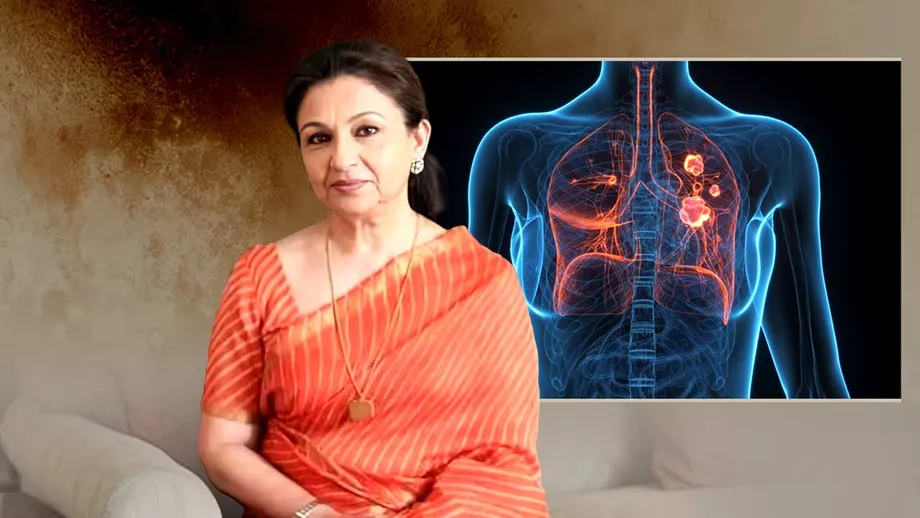
Actor Sharmila Tagore's lung cancer was detected at stage zero and removed surgically without chemotherapy, according to her daughter, actor Soha Ali Khan. Tagore, who has never smoked, brings a personal face to a medical reality: avoiding tobacco greatly reduces lung cancer risk, but does not eliminate it.
Contents
- A diagnosis caught before the cancer spread
- How the disclosure and research unfolded
- What stage zero actually means
- What the 871 tumor study found
- Pollution can also activate dormant cells
- What remains uncertain about smoke and other exposures
- Risks in kitchens, homes and workplaces
- Why treatment depends on more than smoking history
- Recovery still requires follow-up
- Symptoms should not be dismissed because someone never smoked
- Key Points
The wider picture is becoming more precise. On July 2, 2025, the US National Institutes of Health (NIH) announced findings from the Sherlock-Lung study, which examined tumors from 871 people who had never smoked across 28 geographic locations. Researchers found that exposure to fine particulate air pollution was associated with more genetic changes capable of starting or promoting cancer. People who have never smoked account for up to 25% of lung cancer cases globally, according to NIH.
These findings do not establish what caused Tagore's illness. Her tumor's pathology, environmental exposure history and exact treatment details have not been publicly established in the accounts of her diagnosis. Her experience illustrates the value of detecting disease before it invades surrounding tissue, rather than proving that any particular pollutant was responsible.
Soha Ali Khan described her mother's treatment in an interview with interviewer Nayandeep Rakshit:
With my mother, she was one of the very few people to be diagnosed with lung cancer at stage zero, and no chemotherapy, nothing. It was cut out of her and she is, touchwood, fine.
The distinction between an early, localized lesion and an invasive cancer explains why surgery alone can sometimes be sufficient. It also explains why this experience should not be treated as a guide to every lung cancer patient's treatment.
How the disclosure and research unfolded
Tagore discussed her illness during a 2023 appearance on Koffee With Karan, explaining why she could not take part in Karan Johar's film Rocky Aur Rani Kii Prem Kahaani. Her daughters Soha and Saba Ali Khan subsequently discussed their mother's lung cancer on All About Her. Saba also spoke about her own brain tumor diagnosis, a separate medical history.
The public disclosures and scientific findings span several years. The dates mark when information became public, not necessarily when Tagore was diagnosed or underwent surgery.
- September 10, 2022: Researchers at the Francis Crick Institute and UCL presented evidence that air pollution could activate lung cells already carrying cancer related mutations.
- April 5, 2023: That research was published in Nature.
- 2023: Tagore publicly discussed the illness that prevented her participation in Rocky Aur Rani Kii Prem Kahaani.
- April 12 and April 23, 2025: Accounts described Soha's disclosure of stage zero lung cancer and treatment without chemotherapy.
- July 2, 2025: The Sherlock-Lung tumor analysis was published in Nature, with findings announced by NIH and the National Cancer Institute.
What stage zero actually means
Stage zero non-small cell lung cancer is also called carcinoma in situ. Abnormal cells remain at their site of origin, without invading deeper tissue or spreading elsewhere. In descriptions involving the airway lining, the cells have not crossed the basement membrane, the thin barrier separating that lining from underlying tissue.
Dr Sajjan Rajpurohit, Senior Director of Medical Oncology at BLK-Max Super Specialty Hospital in Delhi, explained why this matters for recovery:
This means that the cancer is limited to the lining of the lungs and has not breached the protective barrier, what we call the basal membrane, that separates different cell and tissue types. At this stage, the cancer is non-invasive, so there is a high chance of recovery.
Some descriptions call stage zero a precancerous stage, while others call it the earliest cancer stage. The practical distinction is the absence of invasion. Stage zero is not a synonym for all non-small cell lung cancer, a broad category that includes cancers at much more advanced stages.
Detection can be difficult because these lesions usually cause no noticeable symptoms. They may be found incidentally during investigations for another condition. Descriptions of Tagore's illness say it was caught early, but do not establish the precise scan, tissue test or sequence of investigations that identified it.
What the 871 tumor study found
The NIH study announcement describes a whole genome analysis led by researchers at the National Cancer Institute and the University of California, San Diego. Whole genome sequencing examines DNA across a tumor, allowing scientists to identify patterns of mutations rather than checking only a few genes.
The team included Maria Teresa Landi, senior author and principal investigator of Sherlock-Lung, and Tongwu Zhang. Higher exposure to fine particulate pollution was associated with changes in TP53, a gene involved in controlling damaged cells, and mutation patterns previously associated with tobacco smoking.
The pollutants of interest include PM2.5, particles measuring 2.5 micrometers or less that can travel deep into the lungs. Traffic and industrial emissions are among their sources. The finding concerns particulate exposure, not a conclusion that every chemical in exhaust causes cancer through the same process.
Researchers also found an association between pollution exposure and shorter telomeres, the protective DNA sections at chromosome ends. Telomeres naturally shorten with age; the study linked particulate pollution with premature shortening.
This was an analysis of tumors from people who already had lung cancer. It helps explain possible biological processes, but does not calculate an individual's chance of developing cancer or identify the cause of every tumor. The figure of up to 25% means as many as one in four lung cancer cases globally occur in people who have never smoked, not that one in four people who never smoke will develop the disease.
Pollution can also activate dormant cells
Earlier research identified another route by which polluted air may contribute to cancer. The Francis Crick Institute findings described how PM2.5 could encourage the growth of lung cells already carrying mutations, without directly creating those mutations in the experiments.
Professor Charles Swanton, the study's lead investigator at the Francis Crick Institute and UCL and Cancer Research UK's Chief Clinician, described the mechanism:
Cells with cancer-causing mutations accumulate naturally as we age, but they are normally inactive. We've demonstrated that air pollution wakes these cells up in the lungs, encouraging them to grow and potentially form tumours.
The researchers examined data from more than 400,000 people in the UK and Asian countries. Areas with higher PM2.5 exposure had higher rates of lung cancer involving mutations in EGFR, a gene that helps regulate cell growth. Experiments in mice showed that blocking IL-1β, an inflammatory molecule released in response to pollution, prevented cancers from forming in that experimental setting.
The 2022 research and the 2025 analysis address different processes: activation of existing abnormal cells and associations with mutations found in human tumors. Neither establishes a preventive drug treatment for people exposed to polluted air. The Crick Institute also cited approximately 300,000 lung cancer deaths globally in 2019 attributed to PM2.5, a figure about outdoor particulate pollution, not deaths from passive smoking in India.
What remains uncertain about smoke and other exposures
Passive smoking remains a recognized lung cancer risk. Sherlock-Lung nevertheless found a more limited genetic signal from passive smoke than from particulate pollution in the tumors it examined. Exposure was associated with slightly greater mutation burdens and shorter telomeres, but not an increase in mutations identified as driving cancer or in specific mutation patterns.
That result does not mean passive smoke is safe. It means this particular tumor analysis did not find the same evidence of mutation related effects. A study of genetic patterns is not a complete measure of all health damage from an exposure.
The National Cancer Institute account adds another finding: a mutation pattern called SBS22a appeared almost exclusively in tumors from Taiwanese patients. That pattern is associated with aristolochic acid, a compound found in some medicinal plants. Researchers considered medicinal use of herbs containing it a likely exposure route, rather than an established explanation for every affected patient.
The origin of SBS40, the most prevalent mutation pattern in the study, remains unknown. Together, these findings show both the progress and the limits of the research: identifiable environmental signals explain part of the picture, while other processes still lack an explanation.
Risks in kitchens, homes and workplaces
Outdoor pollution is not the only concern for people who never smoke. The International Agency for Research on Cancer classifies outdoor air pollution and particulate matter as carcinogenic to humans. Indoor smoke also deserves attention, particularly where wood or coal is burned for cooking in spaces with poor ventilation.
Cooking fumes and combustion gases should not be treated as interchangeable hazards. Smoke from fuel and heated oil can worsen indoor air quality. Carbon monoxide is a dangerous toxic gas, but its presence alone is not evidence that it caused a lung tumor. Improving ventilation and reducing smoke at its source are practical precautions, not guarantees against cancer.
Radon is another exposure that cannot be identified by smell or sight. This naturally occurring radioactive gas can accumulate inside buildings, making testing necessary to determine indoor levels. The US Environmental Protection Agency recommends action at 4 picocuries per liter. That is a US action threshold, rather than a universal rule for every country.
Construction, manufacturing and mining can involve asbestos, diesel exhaust, dust or other hazardous substances. Appropriate workplace controls, ventilation and protective equipment matter. A family history of lung cancer and previous radiation treatment involving the chest may also contribute to risk. Even after reviewing these factors, doctors may be unable to identify one definitive cause.
Why treatment depends on more than smoking history
For stage zero disease, treatment aims to remove or destroy the abnormal cells before they invade surrounding tissue. Surgery may remove a small portion of lung or, in some circumstances, an affected lobe. The appropriate operation depends on the lesion's location and extent, along with the patient's health.
Localized options described for selected cases include photodynamic therapy, which combines a drug activated by light with targeted illumination, and laser treatment. Brachytherapy places a radiation source near the affected area. Their availability and suitability vary; they are not interchangeable choices for every patient.
Tagore's lack of chemotherapy fits the account of a lesion treated before invasion. It does not mean chemotherapy is unnecessary for other lung cancers. Adenocarcinoma, a type of non-small cell lung cancer, is particularly common among people who have never smoked. Some tumors contain EGFR changes that can help doctors select medicines aimed at a specific molecular target.
Treatment decisions therefore depend on the cancer type, stage, molecular findings and patient's condition. Surgery, targeted medicines, immunotherapy and chemotherapy have different roles. Smoking history alone cannot determine the treatment plan.
Recovery still requires follow-up
Successful removal of stage zero disease can allow a return to normal life, but continued monitoring remains necessary. Doctors watch for recurrence and for a new cancer that develops independently of the original lesion.
A relapse estimate of 10% to 15% has been reported in clinical discussion of stage zero lung cancer. It should not be presented as Tagore's personal risk: the estimate is not accompanied by details establishing her tumor type, operation or monitoring period. Her daughter's account indicates that she was doing well when the remarks were made, not that all future risk had disappeared.
Screening also requires careful interpretation. Some studies have reported reductions in lung cancer deaths of about 20% with regular low dose CT screening in selected groups at high risk. That benefit cannot automatically be extended to every person who has never smoked.
Routine screening of someone without symptoms differs from diagnostic testing for someone with a persistent cough or other concerning changes. Reports differ in how broadly they describe screening candidates, with some including family history. The safer conclusion is that eligibility should follow established guidelines and an individual medical assessment, rather than a blanket recommendation for scans.
Symptoms should not be dismissed because someone never smoked
Accounts differ over whether stage zero lesions can cause subtle symptoms. They agree that such lesions are usually without symptoms. A persistent cough, chest discomfort or breathlessness cannot identify the cancer stage and may arise from infection, asthma or other conditions.
Dr Sunny Jain, Clinical Director and Head of Medical Oncology at Marengo Asia Hospitals in Faridabad, advised women against dismissing persistent changes:
Women should not ignore a persistent cough, unexplained weight loss, increasing breathlessness or chest discomfort simply because they have never smoked. While these symptoms can occur due to several other conditions, they deserve medical evaluation if they persist or worsen. Coughing up blood, in particular, should never be ignored.
The practical response is neither to assume cancer nor to assume immunity. Symptoms that persist, worsen or include blood in sputum need medical assessment. Avoiding tobacco and passive smoke, reducing exposure to household fumes and observing workplace safety measures remain useful precautions. Air cleaners with HEPA filters can reduce indoor particles, but cannot remove every pollutant or replace control of pollution sources.
No exposure history or prevention measure can settle an individual diagnosis. Tagore's experience and the new research support two distinct messages: early localized disease may require less extensive treatment, and the causes of lung cancer extend beyond smoking.
Key Points
- Soha Ali Khan said Sharmila Tagore's stage zero lung cancer was removed surgically without chemotherapy.
- Stage zero disease has not invaded deeper tissue and often causes no symptoms.
- Sherlock-Lung analyzed 871 tumors from people who had never smoked across 28 locations.
- The July 2025 study linked particulate pollution with cancer related mutations and shorter telomeres.
- Earlier research showed pollution could activate cells already carrying mutations through inflammation.
- Passive smoke, radon, household smoke and workplace exposures remain relevant risks.
- Screening is for defined groups at high risk; persistent symptoms require medical assessment regardless of smoking history.
- Tagore's precise diagnosis date, tumor details and cause have not been publicly established in these disclosures.