Young children carry a heavy share of the haze burden
Indonesia's Health Ministry recorded 425,167 acute respiratory infection cases across seven provinces affected by forest and land fires by 5 p.m. on November 5, 2026. Children aged five and younger accounted for 95,627 cases, the largest number among the age groups listed, even as officials said daily infections were generally declining.
Contents
- Young children carry a heavy share of the haze burden
- Where the infections were recorded
- How the total climbed through October and November
- Why a falling daily trend can accompany a rising total
- Fine particles reached extreme levels
- A family's life inside one bedroom
- Community shelters offer cleaner air and urgent referrals
- Researchers estimate thousands of deaths from smoke
- Large deployments meet a reduced disaster budget
- The smoke burden reaches beyond the immediate fire zones
- Key Points
The youngest children represented about 22.5% of the cumulative total. Another 88,391 cases involved children aged six to nine. Together, those two age groups accounted for 184,018 cases, or approximately 43.3% of all recorded infections.
Health Ministry communications chief Aji Muhawarman said on November 8 that the downward trend over the preceding two months accompanied improving air quality in several affected cities. Families were also limiting unnecessary outdoor activity, using masks and gaining better access to health services, he said.
The figures describe two parts of the same crisis: fewer new illnesses on many recent days, alongside a growing total of infections accumulated during months of smoke exposure. For families with sick children, the practical concerns remain access to cleaner air, medical care and oxygen when needed.
Where the infections were recorded
The ministry's monitoring covered Central Kalimantan, West Kalimantan, South Kalimantan and East Kalimantan on Borneo, along with South Sumatra, Riau and Jambi on Sumatra. An update through November 2 covered 63 districts and cities across those seven provinces.
Older people also accounted for a substantial number of illnesses. By November 5, the ministry had recorded 56,462 cases among people older than 60, along with 9,332 among outdoor workers, 1,747 among people with asthma or chronic obstructive pulmonary disease, and 682 among pregnant women. Chronic obstructive pulmonary disease is a lasting lung condition that makes breathing difficult.
Health Ministry spokesperson Widyawati identified Banjarbaru, Pekanbaru and Pontianak as places with particularly large affected populations. Each faces the challenge of protecting residents whose work, housing or existing health conditions can make avoiding smoke difficult.
How the total climbed through October and November
Cases among children aged five and younger rose from about 40,000 at the end of September to approximately 62,000 in mid October and 69,000 on October 18. By November 5, that total had reached 95,627, an increase of roughly 55,627 cases since the end of September.
The broader monitoring figures show how the recorded burden grew:
- October 13: The Health Ministry had recorded 283,270 respiratory infection cases in the affected provinces.
- October 21: The total reached 333,470, including 75,172 among young children.
- November 2: Monitoring through 4 p.m. recorded 401,586 cases across seven provinces and 63 districts and cities.
- November 5: The total reached 425,167, including 95,627 among children aged five and younger.
- November 8: Aji said the trend in new cases had declined over the previous two months.
The cumulative total increased by 23,581 between the November 2 and November 5 updates. On November 5 itself, the ministry recorded 3,518 additional cases, 82 more than the previous day's addition.
Why a falling daily trend can accompany a rising total
Aji said the growing cumulative figure did not necessarily mean infections were suddenly accelerating. Weekly data from one province showed increases over three to four months that he described as modest, while poor air quality remained a risk factor.
A cumulative count works like a running total: each newly recorded case is added to everything already counted. A daily figure measures only the additions for that day. If daily additions fall from 10,000 to 3,500, the cumulative total still grows, just more slowly.
The ministry's chart covering September 6 to November 5 generally showed declining daily cases in Central Kalimantan, South Kalimantan, South Sumatra, Jambi, East Kalimantan and West Kalimantan, with fluctuations in several places. Aji linked recent improvement to lower readings on Indonesia's Air Pollutant Standard Index, known as ISPU, as well as changes in public behaviour and health services.
Respiratory infections affect the airways and can range from relatively mild illness to serious conditions requiring hospital treatment. Smoke adds a harmful exposure for people already struggling to breathe, while months of poor air leave health facilities managing a substantial accumulated burden.
Fine particles reached extreme levels
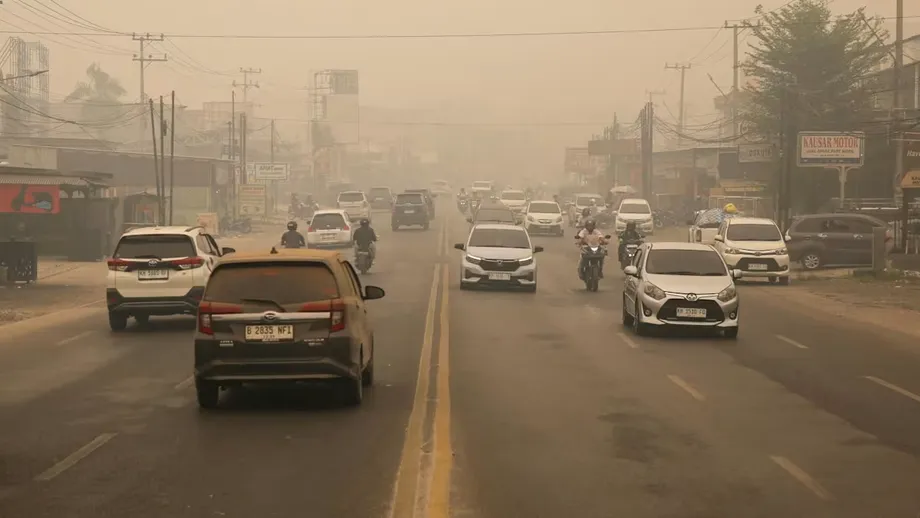
The Centre for Research on Energy and Clean Air, or CREA, documented the scale of exposure in its November 5 assessment. It put September's average PM2.5 concentration at 120 micrograms per cubic metre in Kalimantan, up from 57 in August. Sumatra's average rose from 37 to 51 over the same period.
PM2.5 consists of particles no more than 2.5 micrometres across, small enough to travel deep into the lungs. Some can enter the bloodstream. The measurement describes how much of this material is present in a given volume of air.
CREA reported September average daily concentrations of 372 micrograms per cubic metre in Palangkaraya and 327 in Pontianak. Those levels were approximately 25 and 22 times the World Health Organization's guideline of 15 micrograms per cubic metre for a 24 hour average.
Volunteer Melodyna Adhesiva, who measures pollution in Palangkaraya and shares readings publicly, described concentrations regularly reaching 300 and one reading above 3,000. Some of her team's devices reached their measurement limit at 999, restricting their usefulness outdoors during severe smoke.
Nationally, CREA estimated that the number of people breathing air classified as unhealthy to hazardous peaked at 57.8 million in September, compared with 41.3 million in August. In Kalimantan, the peak number exposed to hazardous air rose from 2.8 million to 6.4 million.
A family's life inside one bedroom
Palangkaraya, a city of about 300,000 people, has endured months of smoke from surrounding fires. For Apri Dona Yusmelita, a 27 year old mother of two, protecting her children has meant moving much of family life into the bedroom containing an air purifier.
Her son, aged five months, has received medicine through a nebuliser, a machine that turns liquid medication into a mist to breathe in. Yusmelita described repeated coughing and vomiting that made feeding and weight gain difficult.
The cough is phlegmy, so he always has to vomit," says Yusmelita, who also has a four-year-old. "So it's like he struggles to catch up to his target weight. Because he's constantly sick. So whatever he drinks, he vomits it all up, because he coughs so often.
Yusmelita moved the television into the bedroom to occupy the children. Over roughly four months, the family spent about half its time in that room, while rotating electricity outages interrupted daily life and smoke entered other parts of the house.
Sabrina Alfiana, another mother in Palangkaraya, took her son Fahreza Alfarizqia, aged four, to a shelter where he received nebuliser treatment. She described smoke entering through gaps and windows even when her family stayed indoors.
Community shelters offer cleaner air and urgent referrals
The Ranu Welum Foundation, a local Indigenous organisation, supports 14 community haze shelters. Churches and public buildings have donated rooms, with air purifiers, oxygen tanks and nebulisers helping people escape the smoke.
Roro Ardya Garini, the foundation's cofounder, said the shelters primarily serve children and older people, while welcoming others during particularly severe conditions. She described the basic need bringing residents through their doors:
"They come just to breathe," she says.
Volunteers also have to recognise when visitors need emergency medical care. Garini described a baby arriving with blue skin from severe oxygen deprivation and being sent straight to an emergency department.
The Health Ministry says treatment for young children depends on their condition. Mild illness can be managed at home, while a child whose condition worsens needs assessment by a doctor at a health facility. The ministry has said oxygen support is available through health facilities, and Widyawati reported that Riau had prepared 10 oxygen houses.
Widyawati also advised residents to avoid smoke exposure and refrain from rubbing eyes irritated by smoke or dust. Access matters as much as the number of facilities, she said, particularly for patients already having difficulty breathing.
Researchers estimate thousands of deaths from smoke
CREA estimated that exposure to fire smoke contributed to 3,560 deaths in Indonesia in September, compared with 1,700 in August. Its estimate for deaths from all air pollution rose from 3,740 to 5,310, an increase of 42%. Fire smoke accounted for approximately two thirds of September's total; other pollution sources accounted for 1,750 deaths.
The organisation calculated these figures using pollution models, measurements from 186 monitoring stations across 118 cities, population data and research linking particle exposure to mortality. The estimates cover deaths occurring within days of exposure. The government had not released a count of deaths attributed to haze.
CREA estimated that fire smoke accounted for 94% to 99% of deaths associated with air pollution in four Kalimantan provinces. Central Kalimantan had the highest estimated rate, at 14.1 deaths per 100,000 residents in September.
Individual families and firefighters have also reported fatal emergencies. In Samarinda, the family of Yazlyn Syanindita, aged 14 months, suspected thick haze contributed to her death after sudden breathing difficulties. In South Kalimantan, volunteer firefighter Nurdin, 51, died on October 21 after developing chest pain and shortness of breath while fighting a fire. Clinic head Dr Amalia Dewi suspected smoke poisoning based on the circumstances described by his colleagues.
Large deployments meet a reduced disaster budget
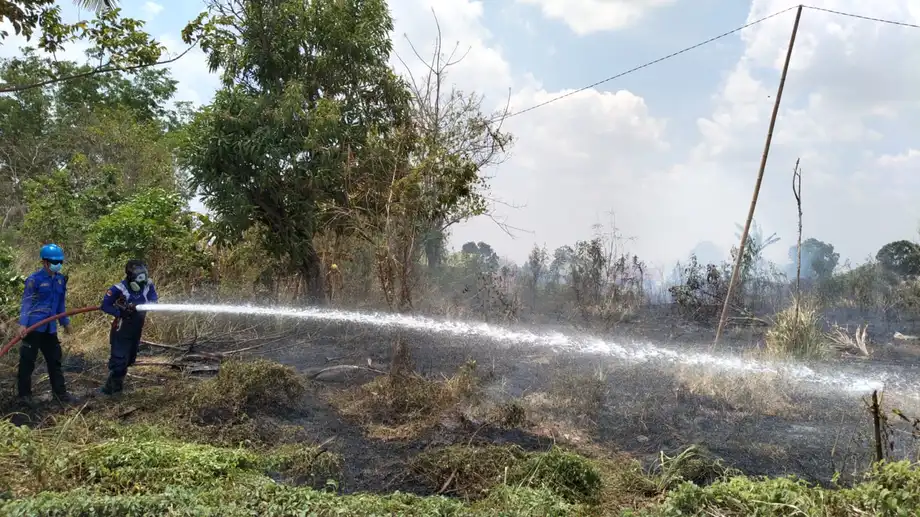
Indonesia's government has described a substantial response involving firefighting, attempts to produce rain, medical deployments and mask distribution. Its broader response figures included more than 72,000 personnel, over 2,100 health workers and 5.3 million masks.
CREA's assessment cited a reduction in the National Disaster Management Agency's budget from 2 trillion rupiah in 2025 to 491 billion rupiah in 2026, a cut of about 75%. The organisation argued that this constrained emergency operations while provinces faced sustained smoke exposure.
Fire activity continued despite suppression efforts. On October 19, the agency's dashboard recorded 1,024 hectares of burning land over the preceding 24 hours. TheTreeMap's satellite assessment estimated that fires affected about 1.9 million hectares from January through September, 38% more than during the same period in 2019.
President Prabowo Subianto had not declared a national disaster as of CREA's November 5 publication, despite demands from parliamentarians, environmental groups and protesters. Officials said regional capacity continued to function and task forces remained operational.
The smoke burden reaches beyond the immediate fire zones
Malaysia recorded increases in respiratory infections, asthma and conjunctivitis during the haze episode. Singapore had experienced 14 consecutive days of unhealthy air by October 18. Smoke also reached Brunei, Timor-Leste, the Philippines and Vietnam.
CREA called for peatland restoration, stronger penalties for illegal burning and a national clean air framework covering monitoring, public data and enforceable pollution standards. Draining peatlands leaves their carbon rich soil dry and more vulnerable to fire, making land management part of the health response.
Indonesia's recent decline in daily infections brings some relief, but families continue to manage illness accumulated during months of exposure. The combination of cleaner air, accessible medical care and better protection for people working outdoors will shape how quickly that burden eases.
Key Points
- Indonesia recorded 425,167 respiratory infection cases across seven provinces through November 5, 2026.
- Children aged five and younger accounted for 95,627 cases, about 22.5% of the total.
- The Health Ministry reported a generally declining trend in daily cases over the preceding two months.
- CREA estimated 3,560 deaths associated with fire smoke in September, using pollution and health modelling.
- Palangkaraya and Pontianak experienced September particle concentrations approximately 25 and 22 times the WHO daily guideline.
- Community shelters and health facilities are providing cleaner air, treatment and oxygen support.