Chip sales push exports to $61.6 billion in 20 days
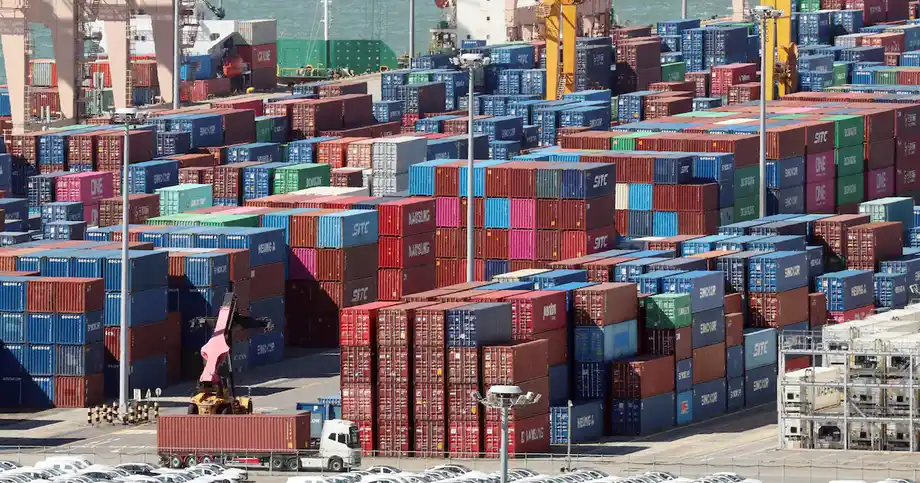
South Korea exported $61.612 billion worth of goods from October 1 to 20, more than double the value recorded a year earlier, as semiconductor sales surged amid global investment in artificial intelligence. Provisional figures released by the Korea Customs Service on October 21 showed exports rising 105.4%, setting a record for that stretch of October.
Contents
- Chip sales push exports to $61.6 billion in 20 days
- Why the working day figure matters
- Semiconductors account for almost half of exports
- Cars, petroleum and computer equipment also grow
- Sales rise across major trading partners
- Imports rise as energy purchases increase
- The trade surplus widens after a strong September
- A sequence of export records
- Key Points
Semiconductor exports reached $27.516 billion, an increase of 222.5%. Chips accounted for 44.7% of all exports, making them the largest force behind a sharp acceleration in overseas sales. Passenger cars, petroleum products and computer peripherals also recorded substantial increases.
The export surge was accompanied by a rise in imports, which climbed 42.8% to $47.117 billion. South Korea nevertheless recorded a trade surplus of about $14.5 billion because the value of goods sold abroad grew much faster than the value of goods bought from overseas.
The headline export increase includes the effect of having more working days than a year earlier. After accounting for that difference, average exports per working day still rose 65.9%, reaching a record $4.74 billion. That gives a clearer view of how much stronger sales were during the days businesses were operating.
Why the working day figure matters
The October reporting period contained 13 working days, compared with 10.5 in the same period a year earlier. Those extra 2.5 days gave exporters more time to ship goods and register overseas sales.
Average daily exports rose from about $2.86 billion to $4.74 billion. In simple terms, South Korea sold roughly $1.88 billion more goods abroad on each working day than it did during the comparable period last year.
The two growth rates answer different questions. The 105.4% increase measures the change in the total value shipped during October 1 to 20. The 65.9% increase measures the change in exports per working day. Both show a steep rise, while the daily figure accounts for the different number of operating days.
October's daily average also exceeded the previous record of $4.6 billion during September 1 to 20. That represents an increase of about 3%, calculated from the two reported daily averages, following an already exceptional September.
Semiconductors account for almost half of exports
Semiconductor exports rose to more than three times their value a year earlier. A rise of 222.5% means that every $100 in chip exports in the earlier period became about $322.50 in the latest figures.
Chips are the electronic components that process and store information in computers, phones and other equipment. Artificial intelligence systems rely on large amounts of computing power and memory, connecting investment in AI infrastructure with demand for semiconductors.
Global AI investment drove the record chip sales. The customs figures measure the dollar value of exports; a breakdown showing how much of the increase came from higher prices and how much came from more chips being shipped was not given.
Semiconductors represented 44.7% of exports, up 16.2 percentage points from a year earlier. Their earlier share was therefore about 28.5%. Put another way, chips grew from a little over one quarter of export earnings to almost half within a year.
Using the reported chip value and growth rate, semiconductor exports were approximately $8.53 billion in the earlier period. Their increase of about $18.98 billion accounts for roughly 60% of the approximately $31.61 billion rise in total exports. Chips therefore explain most of the additional export earnings, while other products supplied a substantial share.
Cars, petroleum and computer equipment also grow
Computer peripheral exports increased 424%, the fastest percentage rise among the product groups identified in the figures. That means their export value was more than five times the level recorded a year earlier.
Petroleum product exports rose 68.3%, while passenger car exports increased 40.9%. These gains show that the expansion extended beyond semiconductors, even though chips dominated the total increase.
The product figures also show why growth rates and export values need to be considered together. Computer peripherals had a higher percentage increase than chips, but semiconductors generated $27.516 billion in sales and accounted for nearly half of total exports. No dollar total was given for computer peripherals.
Subtracting semiconductor sales from total exports leaves about $34.096 billion in other goods shipped abroad. South Korea's export performance therefore combined an exceptional semiconductor surge with a larger pool of sales across other industries.
Sales rise across major trading partners
The United States and China recorded the strongest export growth among the major destinations listed. Shipments to the United States rose 154.9%, while exports to China increased 154.4%. In both cases, sales were more than two and a half times their levels a year earlier.
Exports to the European Union rose 78.2%, shipments to Vietnam increased 74.6%, and sales to Taiwan grew 36.7%. The gains spread across major markets in North America, Europe and Asia.
Those figures describe growth in shipments to each destination, rather than the size of each market. Without dollar totals by destination, they cannot be used to rank which country bought the most South Korean goods during the period.
For exporters, the geographic spread means the increase in overseas sales reached several important trading relationships at once. The United States and China had nearly identical growth rates despite being separate markets, while the European Union and Vietnam also registered large increases.
Imports rise as energy purchases increase
South Korea imported $47.117 billion worth of goods during October 1 to 20, an increase of 42.8%, or approximately $14.13 billion, from a year earlier. Energy imports, including crude oil, gas and coal, rose 53.5%.
Gas imports increased 112.4%, more than doubling in value. Crude oil imports rose 42.9%, semiconductor imports increased 78.4%, and machinery imports grew 43.7%.
South Korea both imports and exports semiconductors because the category covers many different products used in manufacturing and finished equipment. Companies can purchase components from overseas while selling other chips abroad.
Taiwan recorded the largest increase among the listed origins of imports, at 84.2%. Imports from China rose 71.1%, followed by Japan at 45.6%, the European Union at 34.6% and the United States at 12.9%.
The rise in purchases means the export boom was accompanied by a larger import bill. Even so, the increase in export earnings, about $31.61 billion, was more than twice the approximately $14.13 billion increase in imports.
The trade surplus widens after a strong September
The Korea Customs Service put the October 1 to 20 trade surplus at approximately $14.496 billion. A goods trade surplus means the country earned more from selling goods overseas than it spent buying goods from abroad.
Rounded to one decimal place, exports were $61.6 billion, imports were $47.1 billion and the surplus was $14.5 billion. The surplus was equivalent to about 24% of export earnings during the period, calculated from the reported totals.
South Korea had already recorded 20 consecutive months of monthly trade surpluses through September. October's provisional figures cover only the first 20 days, so the next full monthly result will include the remaining shipments and purchases through October 31.
A sequence of export records
September had set a demanding benchmark before the latest customs release. Exports rose 83.7% from a year earlier, their largest percentage increase since February 1974, and the monthly export value exceeded $120 billion for the first time.
The progression in reported export figures shows how quickly sales accelerated:
- May: Average daily exports reached about $3.9 billion.
- June: Average daily exports reached about $4.1 billion.
- September 1 to 20: Average daily exports reached $4.6 billion.
- September: Monthly exports rose 83.7% and exceeded $120 billion.
- October 1 to 20: Exports reached $61.612 billion, with a record daily average of $4.74 billion.
- October 21: The Korea Customs Service released the provisional October figures.
Exports for the year to October 20 reached $876.3 billion. Reaching $1 trillion would require another $123.7 billion, calculated by subtracting the reported cumulative total from that threshold.
The immediate picture is one of rapidly rising export earnings, with semiconductors supplying most of the additional sales. Cars, petroleum products and computer equipment contributed further gains, while higher imports absorbed part of the increase in money coming from abroad.
Key Points
- South Korea's exports rose 105.4% to $61.612 billion during October 1 to 20.
- Average exports per working day increased 65.9% to a record $4.74 billion.
- Semiconductor exports rose 222.5% to $27.516 billion, accounting for 44.7% of total exports.
- Exports increased across major destinations, including the United States, China, the European Union and Vietnam.
- Imports rose 42.8% to $47.117 billion, leaving a trade surplus of about $14.5 billion.
- Exports for the year to October 20 reached $876.3 billion, leaving $123.7 billion to reach $1 trillion.