First water drops target fires near homes
An Australian C-130 air tanker completed three waterbombing operations near Samarinda in Indonesia's East Kalimantan province by 3 p.m. Jakarta time on November 6, 2026, as authorities prioritised two fire hotspots close to residential areas. The deployment brings two aircraft and 20 Australian specialists into a wildfire response stretching across several Indonesian islands.
Contents
- First water drops target fires near homes
- Why East Kalimantan received the aircraft
- How the tanker and guide aircraft work together
- Haze has created a health emergency beyond the flames
- A fatal helicopter crash adds urgency
- From September assistance to November operations
- What Japan's earlier mission delivered
- Disaster assistance runs in both directions
- Protecting settlements is the immediate priority
- Key Points
The operation is scheduled for November 6 to 12. It began a day after the Australian embassy announced assistance following a joint technical assessment led by Indonesia's National Disaster Management Agency, known as BNPB. The tanker can carry up to 15,000 litres of water on each mission, while a Cessna Citation acts as its guide aircraft.
Berton Panjaitan, acting head of BNPB's disaster data, information and communication centre, said crews selected their first targets at a morning briefing. Their immediate task was to reduce the danger to people living near the fires.
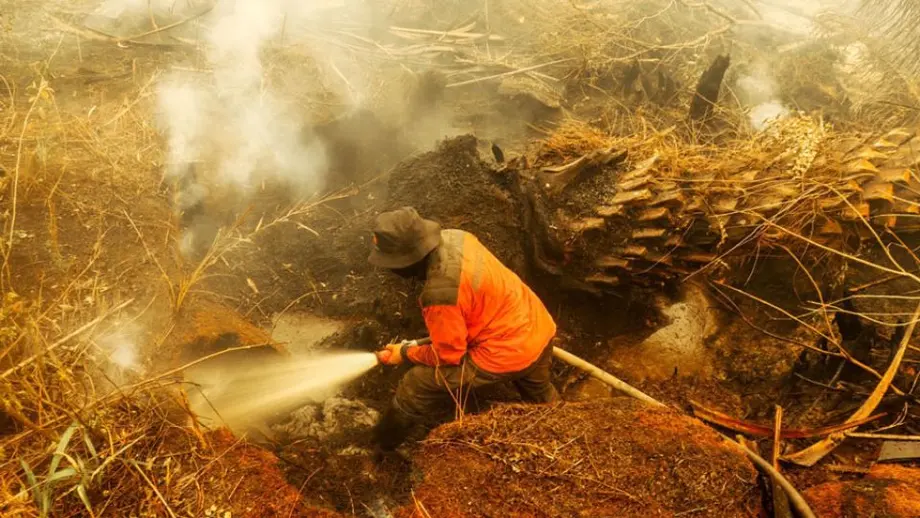
The Australian deployment comes during what has been described as Indonesia's most intense wildfire season in 11 years. Fires have affected Sumatra, Borneo and Papua, while Health Ministry figures recorded more than 400,000 cases of acute respiratory infections across seven provinces by November 2.
Why East Kalimantan received the aircraft
BNPB and Australian technical teams chose East Kalimantan after assessing where additional aircraft could help. BNPB head Lieutenant General Kristomei Sianturi said the province ranked second only to Central Kalimantan in urgency for fire management support.
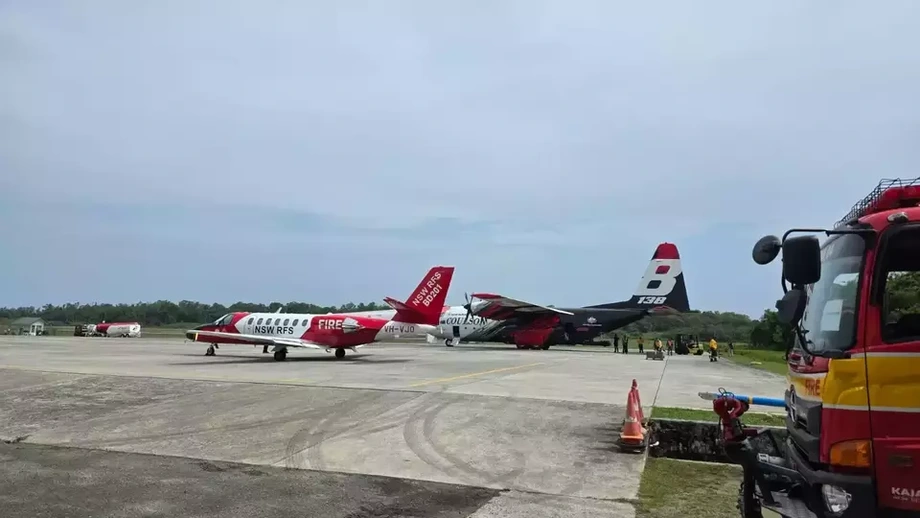
The Australian embassy's November 5 deployment announcement confirmed that the assistance would support operations across East Kalimantan. The package consists of a New South Wales Rural Fire Service C-130 Large Air Tanker, a Cessna Citation lead aircraft and a team of 20, including aerial firefighting specialists.
East Kalimantan Deputy Governor Seno Aji launched the first mission from Dhomber air base in Balikpapan on November 6. The aircraft headed toward Makroman, an area of Samarinda. Other priority locations include Anggana, Santan Ulu in Kutai Kartanegara, and Paser regency.
Seno said aerial operations would focus on fires that were difficult to reach by land. He put the area of fire being discussed at 40 to 50 hectares. The province's immediate priorities therefore combine two needs: reaching places where ground access is difficult and protecting settlements close to active hotspots.
Kapuas regency in Central Kalimantan could receive assistance if the East Kalimantan fires become controlled, Seno said. East Kalimantan remains the first priority, making any move dependent on conditions there.
How the tanker and guide aircraft work together
The C-130 carries the water, while the Cessna Citation serves as the lead or guide aircraft. A sortie means one operational flight. Each sortie can deliver up to 15,000 litres, allowing a large volume of water to be concentrated on a selected fire area.
Panjaitan said the tanker needed about 20 minutes to refuel after a sortie before resuming operations. Flight time, water loading and work over the fire also form part of the day's activity, so the refuelling interval is only one part of the operating schedule.
The Australian team includes pilots and support crew, with paramedics also identified among the deployed personnel. BNPB is coordinating with the Australians and agencies on the ground to direct the aircraft toward priority fires.
Up to six sorties a day are planned. At the maximum load of 15,000 litres per flight, six sorties would deliver 90,000 litres. The embassy described the tanker's daily capability as just over 100,000 litres, a higher capacity estimate than the six planned flights would provide.
Actual daily water delivery will depend on the flights completed and the amount carried on each. Authorities had reported three waterbombing operations by the afternoon of November 6, without giving the total volume dropped or the area brought under control.
Haze has created a health emergency beyond the flames
Indonesia's Health Ministry recorded more than 400,000 acute respiratory infection cases across seven provinces by November 2. These illnesses affect the breathing system, including the nose, throat and lungs. Smoke exposure can irritate airways and make breathing harder.
The fires have burned for months, affecting large areas of Sumatra, Borneo and Papua. Haze has also crossed national borders, extending the effects beyond communities close to the flames and straining Indonesia's relations with its neighbours.
Nusantara Atlas, a deforestation monitoring initiative, estimated that more than 1.9 million hectares burned during the first nine months of 2026. That is more than 19,000 square kilometres, using the conversion of 100 hectares to one square kilometre.
The national figures explain why the Australian mission is one part of a much larger response. Aircraft working near Samarinda address specific fire locations, while health services and disaster agencies face the consequences of smoke across multiple provinces.
A fatal helicopter crash adds urgency
A waterbombing helicopter crashed in Central Kalimantan on November 4, killing three crew members and injuring several others, according to an Environment Ministry department. The Transport Ministry said eight crew were aboard and that the helicopter crashed while loading water.
The accident occurred two days before the Australian tanker began its operations. It brought a loss of life to an emergency response already placing crews over active fires and requiring repeated flights to collect or load water.
Indonesia's response includes waterbombing, cloud seeding and international assistance, Sianturi said. Cloud seeding involves placing small particles into suitable clouds to encourage rain. It depends on suitable weather conditions, while waterbombing delivers water directly to selected locations.
Ground task forces remain part of the response alongside aircraft. BNPB has also continued monitoring hotspots and working to prevent fires from recurring, including on peatland, where burning can persist in organic material beneath the surface.
From September assistance to November operations
The Australian mission follows an earlier Japanese deployment and several weeks of continuing Indonesian operations. The sequence shows how international assistance has been organised into separate missions while domestic crews continue their work.
- September 16 to 29: Japan conducted an aerial firefighting mission in Kalimantan using three CH-47 Chinook helicopters.
- October 13: BNPB explained that Japan's mission had ended according to the agreed assignment and that Indonesian operations were continuing.
- November 2: Health Ministry data recorded more than 400,000 acute respiratory infection cases across seven provinces.
- November 4: A firefighting helicopter crashed while loading water in Central Kalimantan.
- November 5: The Australian embassy announced the aircraft and specialist team following a joint technical assessment.
- November 6: Australian waterbombing operations began, with three completed by 3 p.m. Jakarta time.
- November 12: The Australian operation is scheduled to finish.
The November schedule gives the Australian team seven days of planned operations. Any possible assistance to Kapuas depends first on progress against the priority fires in East Kalimantan.
What Japan's earlier mission delivered
Japan sent about 350 Self-Defense Forces personnel and three helicopters to West Kalimantan in September. BNPB said the three Chinooks completed more than 40 waterbombing operations and dropped about 220 tonnes of water during the September 16 to 29 mission.
Panjaitan explained on October 13 that the mission ended in line with arrangements between the two governments. Indonesia had expressed appreciation for the assistance and said its authorities could continue the response.
After the Japanese departure, Indonesia maintained ground task forces, air support, hotspot monitoring and prevention work. Panjaitan also warned that peatland could burn again, keeping the focus on repeated monitoring and suppression.
Australia's arrival now adds another period of foreign aerial assistance, this time centred on East Kalimantan. The two deployments took place in different provinces and at different stages of the continuing emergency.
Disaster assistance runs in both directions
Australian Ambassador to Indonesia Rod Brazier linked the deployment to Indonesian help during Australia's devastating 2020 bushfires. Indonesia sent disaster agency and military personnel through Operation Bushfire Assist.
Brazier, Australia's ambassador in Jakarta, described that history when announcing the new support:
Australia and Indonesia are close neighbours and enduring friends. Indonesia stood with Australians during the devastating 2020 bushfires, and we remember that support with deep gratitude. As President Prabowo has said, good neighbours help each other in difficult times.
The current deployment followed discussions between Indonesia's Coordinating Minister for Political and Security Affairs, Dudung Abdurachman, and Australia's Home Affairs Minister, Tony Burke. Technical teams then assessed where the aircraft should operate.
Australia also assisted firefighting in Sumatra in 2015, according to Tim Stapleton, the Australian embassy's minister counsellor for humanitarian and human development. The November mission extends that record of assistance between the neighbouring countries.
Sianturi, the head of BNPB, described the deployment as part of an established disaster management relationship:
Australia and Indonesia are longstanding partners on disaster risk management, demonstrated by this deployment. We look forward to continued close collaboration in the future.
Protecting settlements is the immediate priority
Samarinda's first Australian water drops were directed toward two hotspots near residential areas. For the communities involved, the most immediate objective is to stop those fires from reaching homes and threatening public safety.
Makroman, Anggana, Santan Ulu and Paser give the mission a defined set of priority locations. BNPB's coordination with the Australian crew and local agencies will guide how flights are allocated during the scheduled week.
The plan for up to six sorties a day provides repeated opportunities to attack selected fires. Ground teams, monitoring and prevention work continue alongside the aircraft, including the task of finding areas that remain hot or could ignite again.
November 12 is the scheduled end of the Australian operation. Until then, East Kalimantan's fire conditions will determine where the aircraft concentrate their work and whether support can be redirected to Kapuas.
Key Points
- Australian aircraft began firefighting near Samarinda on November 6, completing three waterbombing operations by 3 p.m. Jakarta time.
- The deployment includes a C-130 tanker, a Cessna Citation guide aircraft and 20 specialists from the New South Wales Rural Fire Service.
- Two hotspots near residential areas received priority, with operations scheduled through November 12.
- The tanker can carry up to 15,000 litres per sortie, with up to six sorties planned daily.
- Health Ministry figures recorded more than 400,000 acute respiratory infection cases across seven provinces by November 2.
- A November 4 helicopter crash in Central Kalimantan killed three crew members, according to an Environment Ministry department.
- Japan completed a separate firefighting mission in September, while Indonesia continues ground operations, air support and fire monitoring.