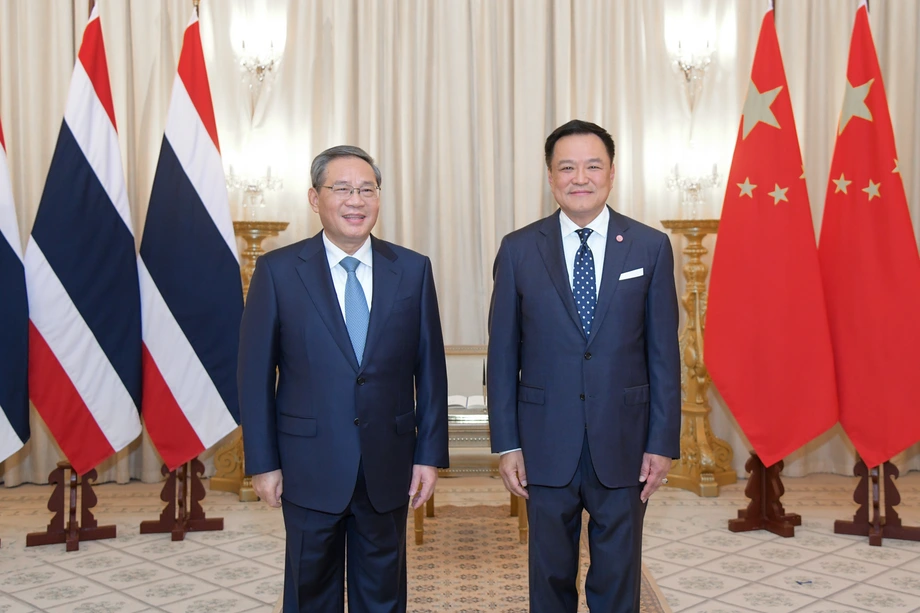
New fruit access and factory investment lead the agreements
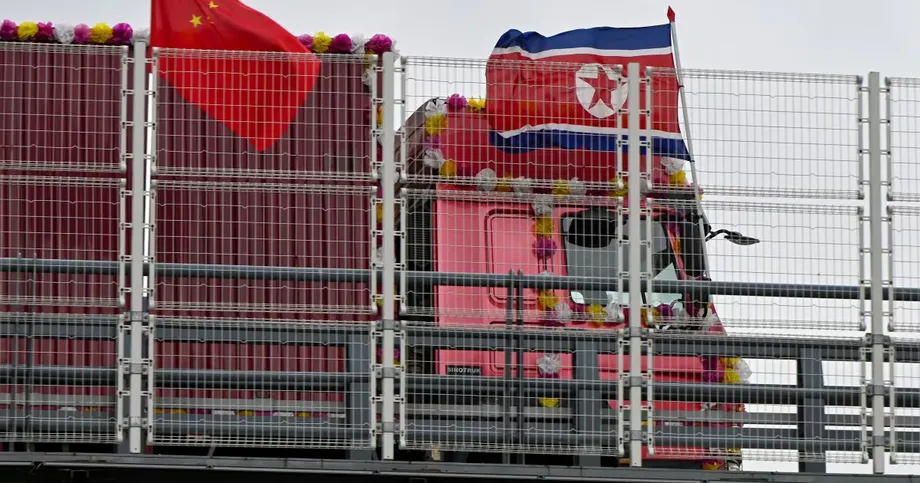
Thailand and China signed and exchanged eight cooperation documents in Bangkok on November 13, 2026, including agreements to open China's market to fresh Thai salacca, protect a durian export business worth 139.878 billion baht in the first nine months of the year, and deepen cooperation in electric vehicles and battery production.
Contents
- New fruit access and factory investment lead the agreements
- A busy visit follows decades of growing trade
- Durian rules reach from orchards to Chinese checkpoints
- Salacca growers gain another route to buyers
- Food safety and accurate measurement support the trade
- The vehicle pact aims to build more capability in Thailand
- Training students for the industries being promoted
- Security talks focus on scams and safer travel
- Northern rivers put environmental cooperation on the agenda
- Rice, rail and payments widen the economic talks
- Key Points
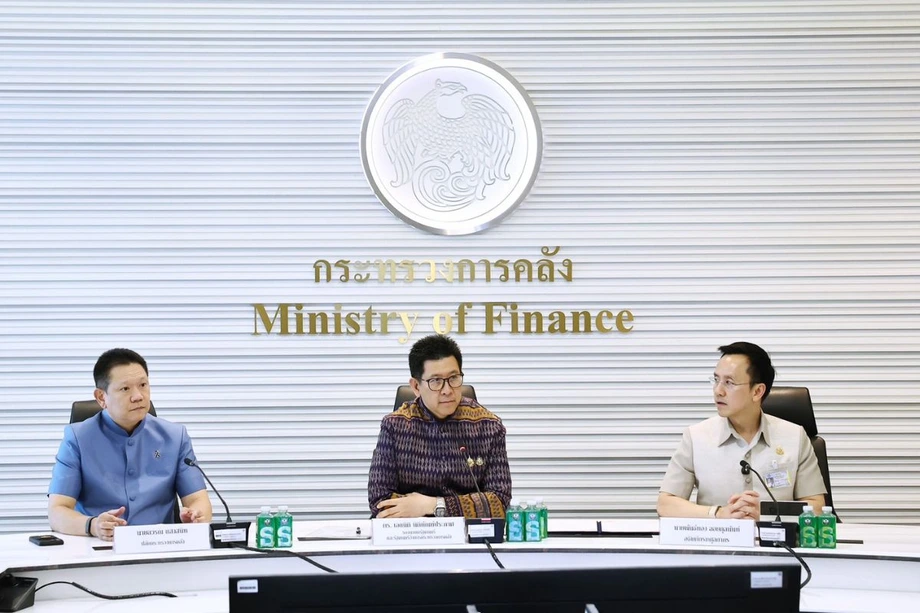
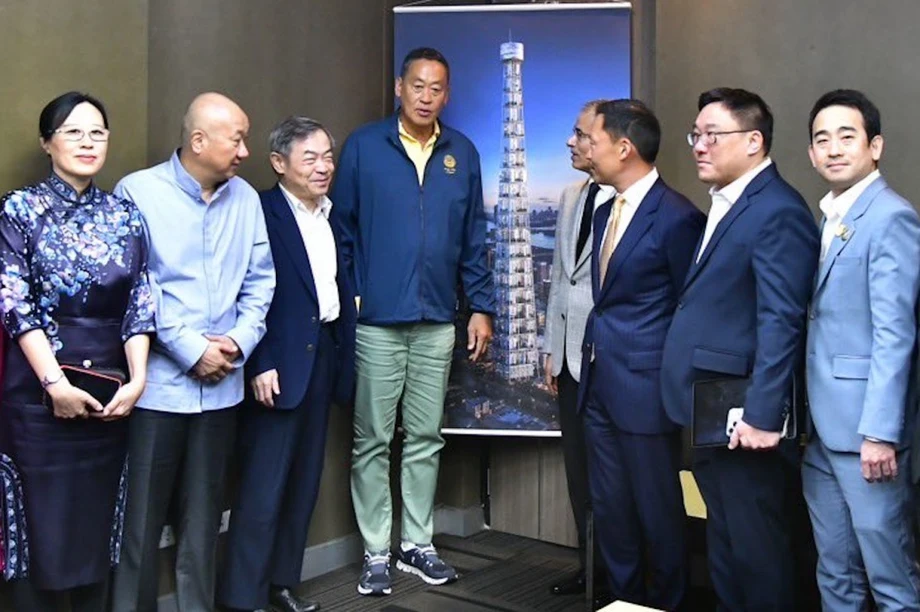
Thai Prime Minister Anutin Charnvirakul and Chinese Premier Li Qiang witnessed the ceremony at 6.30 p.m. in the inner Santi Maitri Building at Government House. Anutin, who also serves as interior minister, had welcomed Li at 5 p.m. during the Chinese premier's official visit from November 13 to 15.
The salacca agreement carries an estimated minimum export opportunity of 76 million baht a year, according to Thailand's Agriculture Ministry. The automotive agreement sets out cooperation over five years, covering investment, technology, standards, batteries and the businesses that supply vehicle factories.
Other documents address security, weights and measures, food safety, vocational education and consular staffing. Alongside the signing, China pledged support for water testing and pollution management in northern Thailand, where residents have raised concerns about contamination in rivers crossing the border.
Government spokesperson Ekkapob Pianpises presented the package as an effort to turn diplomatic cooperation into income, jobs and stronger industrial capabilities. The practical task now falls to ministries, customs authorities, training institutions and businesses responsible for carrying out the agreements.
A busy visit follows decades of growing trade
China is Thailand's largest trading partner. Chinese Foreign Ministry figures put bilateral trade at $153.26 billion in 2025, an increase of 14.4% from the previous year. Electronics, machinery, vehicles, agricultural products and tropical fruit form part of that relationship.
Government House counted eight documents at the signing ceremony. Cabinet preparations had identified seven cooperation documents, while an advance announcement about the environmental laboratory anticipated nine agreements during the visit.
Li's visit followed Anutin's trip to Beijing in July and was described by the Thai government as the first visit to Thailand by a Chinese premier in seven years. The main milestones are:
- July 1, 1975: Thailand and China established diplomatic relations.
- 2012: The countries upgraded their relationship to a comprehensive strategic cooperative partnership.
- April 7 to 9, 2026: Officials met in Bangkok on agricultural health and safety rules, with China inviting Thailand to join its food safety cooperation mechanism.
- July 2026: Anutin visited China for talks on closer cooperation.
- November 13, 2026: The two premiers witnessed the exchange of eight cooperation documents in Bangkok.
- November 15 to 16, 2026: Li was scheduled to attend the 29th China-ASEAN Summit in Manila after leaving Thailand.
Durian rules reach from orchards to Chinese checkpoints
Thailand's Agriculture Ministry and China's General Administration of Customs signed a protocol covering plant health requirements for fresh durian. The new arrangement is intended to replace the 2004 tropical fruit quarantine and inspection protocol with requirements suited to current trade.
Thai durian exports totaled 1,217,695 tonnes worth 139.878 billion baht from January 1 to September 30, 2026, according to figures cited in the Cabinet preparations. At that scale, reliable inspections and predictable entry procedures affect growers, packing businesses, transport operators and exporters.
Plant health rules, often called phytosanitary requirements, help prevent insects and plant diseases from travelling with agricultural goods. The durian protocol extends controls from orchards following Good Agricultural Practice requirements to packing houses following Good Manufacturing Practice standards. These systems cover how fruit is grown and how it is handled before shipment.
The Agriculture Ministry expects clearer requirements to improve inspections at Chinese checkpoints, reduce the risk of import suspensions and help fruit reach buyers while fresh. Eastern Thailand normally harvests durian from April to June, while the southern season runs from July to September, with additional harvests outside those periods.
Salacca growers gain another route to buyers
Fresh salacca, also known as snake fruit because of its scaly skin, is the focus of a second protocol between the Agriculture Ministry and Chinese customs. Thailand produces about 32,000 tonnes annually, with harvesting throughout the year and peaks in May to June and August to September.
The ministry estimates that access to China could generate at least 76 million baht in additional export value each year. That is a forecast for a new sales channel, with the commercial result depending on shipments and demand.
Thai officials expect the additional outlet to reduce pressure when large harvests leave too much fruit on the domestic market and push prices down. Growers and packing houses will also need to meet the importing country's requirements, connecting the new opportunity with improvements in production and handling.
Durian and salacca therefore serve different purposes within the package. The durian protocol seeks to protect a large existing export business; the salacca protocol creates room for another Thai fruit to reach Chinese consumers.
Food safety and accurate measurement support the trade
Thailand also signed a framework for cooperation on the safety of imported and exported food under the Belt and Road Initiative (BRI). China's General Administration of Customs established the mechanism in 2023, and the Cabinet preparation documents listed 19 member countries.
China invited Thailand to participate during the April technical meeting in Bangkok. A formal invitation and draft terms of reference were sent on April 9 to Thailand's National Bureau of Agricultural Commodity and Food Standards, the country's main coordinator for food safety.
The framework provides for exchanges of information, regulatory knowledge and practical methods among Thailand, China and other participating countries. For food exporters, the intended benefit is clearer understanding of safety requirements and better coordination when standards create difficulties at the border.
A separate memorandum between Thailand's Commerce Ministry and China's State Administration for Market Regulation concerns weights and measures. Accurate measurement is a basic part of trade: buyers and sellers need confidence that a stated weight or quantity is correct. The agreement seeks to improve precision, reduce discrepancies and strengthen trust among businesses and consumers.
The vehicle pact aims to build more capability in Thailand
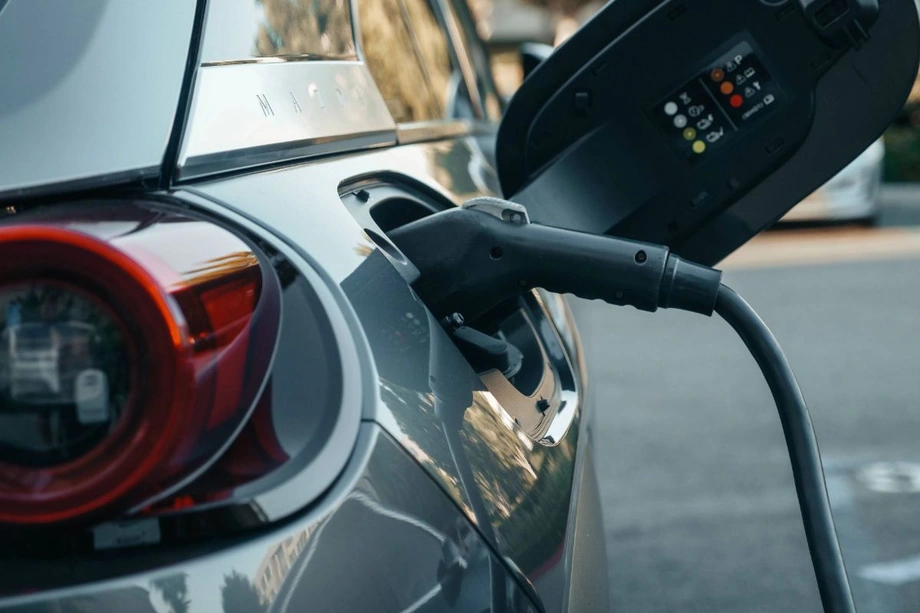
The automotive memorandum connects Thailand's Industry Ministry with China's Ministry of Industry and Information Technology for five years from signing. It covers electric and smart vehicles, battery manufacturing and recycling, investment, trade, standards, regulation and industrial policy.
A China-Thailand Automotive Industry Cooperation Working Group will coordinate the relationship and prepare annual implementation plans. Thailand's Office of Industrial Economics and the Chinese ministry's First Department of Equipment Industry are designated as the principal coordinating bodies.
The planned work includes exchanging market information, discussing policy, coordinating standards and encouraging acceptance of testing results. Cooperation between manufacturers, universities and research institutions is also part of the framework. For Thai parts makers, the central opportunity is to win a larger role in the network of suppliers serving modern vehicle production.
The agreement's activities and funding will be considered individually. Its terms leave spending decisions to later consideration and create no legally binding international obligations or automatic commitments on Thailand's state budget.
Deputy Prime Minister and Foreign Minister Sihasak Phuangketkeow explained before the visit that Thailand wanted investment to develop local expertise as well as production capacity. He described the government's expectations for Chinese investors:
We want Chinese investors to do more than assemble products: we want them to develop technology and transfer knowledge to Thai people, including AI and workforce development.
Thailand's concern is concrete. Electric passenger car imports reached nearly $2.4 billion in the first nine months of 2026, with China supplying 96% of that value. Bangkok has raised import taxes amid concerns about domestic assembly targets, while seeking more investment in local batteries, components and technology.
Training students for the industries being promoted
The education ministries signed a vocational education memorandum covering curricula, teaching, practical training, professional training centres and exchanges of students, teachers and specialists.
Thai officials want young people to gain skills that match industrial demand and have greater access to modern technology. Vocational education focuses on the practical knowledge needed for particular occupations, making it directly relevant to factories and their suppliers.
The education and automotive agreements address connected needs. Manufacturers require workers who can operate and maintain modern equipment, while students need training that leads to employment. Curriculum development, exchanges and practical experience are the proposed links between those two goals.
Security talks focus on scams and safer travel
The foreign ministries signed a memorandum under China's Global Security Initiative. The framework calls for consultation on areas and projects of cooperation, coordination through international and regional bodies, and activities consistent with domestic law and international obligations.
Anutin also called for stronger action against online scam networks, including exchanges of investigative information, tracing illegal financial flows and coordination to help victims. The bilateral discussions covered renewal of a cybersecurity memorandum and preparations for Thailand to host the first meeting of the two countries' foreign and defence ministers in a 2+2 format in early 2027.
Tourist safety gives that cooperation an immediate economic purpose. Thailand and China had already discussed a joint tourist safety group after Chinese arrivals fell 13.57% in October to 308,942. Those talks addressed fraudulent job offers that bring people through Thailand before criminal networks move them into Myanmar.
The eighth document concerns staffing at consulates general. Earlier agreements approved in 1988, 1993 and 1996 capped staffing at 12 people per consulate general. Thailand later opened five more consulates general in China without equivalent limits on Thai personnel.
The revised arrangement is intended to remove the old ceiling, with staffing settled through reciprocal consultations and written diplomatic confirmation. Officials expect greater flexibility to support consular services as trade, investment, tourism and travel expand.
Northern rivers put environmental cooperation on the agenda
China pledged to work with Thai agencies and academic institutions on a joint laboratory for testing water quality in northern Thailand. Preparations identified Mae Fah Luang University as the proposed location for a laboratory capable of testing toxic substances in the environment.
Residents, particularly in Chiang Rai, have complained about contamination in the Kok and Sai rivers. Ekkapob said Thai agencies, including the Pollution Control Department, had regularly tested border rivers and identified pollution sources, while Myanmar had yet to act.
The planned cooperation covers water quality management, treatment, technical support and expertise for the Mekong-Lancang region. During the leaders' discussions, China expressed willingness to support experts and equipment for monitoring pollution, exchange information and promote environmentally responsible mining upstream.
For communities along the rivers, better testing could provide a clearer basis for monitoring contamination and deciding what action is needed. An opening date for the laboratory, its budget and the detailed timetable for implementing the fruit protocols were not announced.
Rice, rail and payments widen the economic talks
Anutin also followed up on the purchase of 500,000 tonnes of Thai rice, with an initial lot of 40,000 tonnes already sold. That first lot represents 8% of the stated total, leaving further transactions to be pursued.
Thailand requested faster registration in China for Thai geographical indication products. These labels connect a product's identity and reputation to its place of origin. Anutin also sought suitable conditions for smaller Thai businesses selling through Chinese electronic commerce platforms.
The leaders discussed rail connections linking China, Laos and Thailand, with extensions toward Malaysia and Singapore, as well as international payment links and QR payments. Thailand also sought Chinese support for recognition of Thai traditional dress by UNESCO and closer cooperation between museums.
Regional discussions included safe and accessible artificial intelligence and bringing the upgraded ASEAN-China Free Trade Area agreement, known as ACFTA 3.0, into force. Thailand intends to carry the river pollution issue into regional meetings and seek Chinese cooperation through the Lancang-Mekong Cooperation framework.
The package brings several practical priorities together: keeping fruit moving through customs, attracting industrial work that develops Thai skills, improving help for travellers and building capacity to monitor polluted rivers. Annual automotive work plans, the proposed ministerial meeting in early 2027 and subsequent implementation decisions will provide the next opportunities to track progress.
Key Points
- Thailand and China exchanged eight cooperation documents at Government House on November 13, 2026.
- A fresh salacca protocol targets at least 76 million baht in additional annual exports.
- The durian protocol updates plant health controls across orchards, packing houses and border inspections.
- A vehicle industry memorandum sets out five years of cooperation on investment, technology, batteries and suppliers.
- Vocational education cooperation aims to connect practical training with industrial demand.
- Security discussions addressed online scams, victim assistance and tourist safety.
- China pledged support for water testing and pollution management in northern Thailand.
- Thailand plans to host a meeting of foreign and defence ministers from both countries in early 2027.