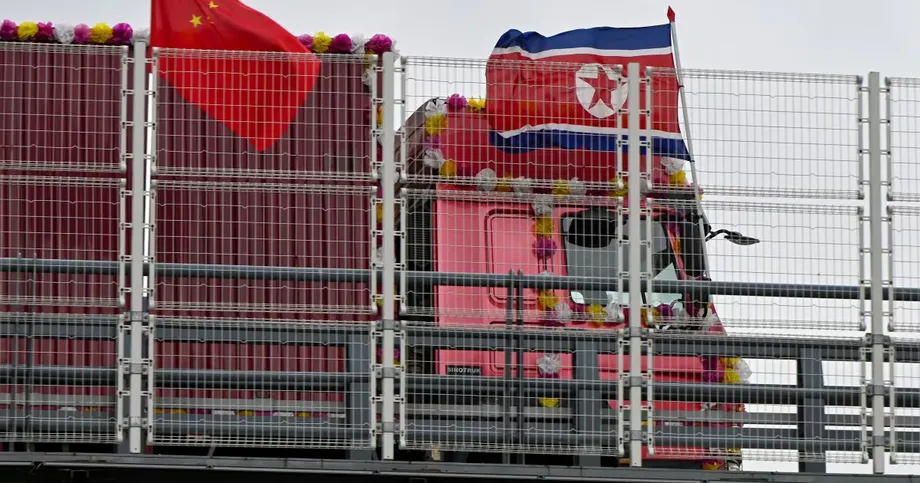
Four lanes connect a deeply unequal trading relationship
The New Yalu River Bridge opened on October 15, 2026, linking Dandong in China's Liaoning province with Sinuiju in North Korea after 12 years of delay. Its four lanes offer a new route for trucks carrying food, factory materials and finished products across a border that dominates North Korea's recorded foreign trade.
Contents
- Four lanes connect a deeply unequal trading relationship
- Why the bridge waited more than a decade
- Wigs and eyelashes rebuild an export business
- How the border production system works
- More work brings income, but limited control
- Tungsten adds revenue and a new vulnerability
- Food imports reveal what the crossing can change
- Sanctions and politics still shape the traffic
- Sinuiju seeks investors who want more than buildings
- Key Points
China accounted for 98.2% of North Korea's foreign trade in 2025, according to the Korea Trade-Investment Promotion Agency (KOTRA). North Korean exports of wigs and artificial eyelashes, meanwhile, reached $205.76 million worldwide that year, representing 43.9% of its exports. Together, those figures explain why the crossing matters beyond the diplomatic ceremony: it connects Chinese suppliers with North Korean workers and gives Pyongyang access to goods it needs.
The bridge could make that relationship faster and more practical. Chinese businesses send materials into North Korea for processing, then buy back the finished products. North Korean factories and households earn money from the work, while Chinese companies retain access to production requiring considerable manual skill.
The relationship is also sharply unequal. KOTRA calculated that North Korea imported $2.65933 billion in goods in 2025 but exported only $468.59 million. A better road can help factories obtain supplies, yet it can also allow imports to rise faster than the exports used to pay for them.
The economic stakes therefore extend beyond whether more trucks cross the Yalu River. They concern who controls orders, who receives the earnings and whether increased trade gives North Korea a stronger industrial base or a deeper dependence on its neighbour.
Why the bridge waited more than a decade
Construction began in 2011, and the Chinese side was completed in 2014. North Korea's connecting roads and customs facilities remained unfinished for years, leaving a completed crossing without the infrastructure needed to handle regular traffic.
Strained bilateral relations, sanctions and the COVID-19 border closures also contributed to the long wait. North Korean roads and border facilities were completed in 2026, allowing the approximately three kilometre crossing to enter service.
The older Sino-Korean Friendship Bridge, about 10 kilometres upstream, has a railway track and a single road lane. Opened in 1943, it limits vehicles to 20 tonnes and requires road traffic travelling in opposite directions to take turns.
The sequence shows how construction and political decisions had to come together:
- 2011: Construction of the New Yalu River Bridge began.
- 2014: The Chinese side was completed, but the crossing remained unused.
- June 2026: Chinese and North Korean leaders agreed to expand cooperation at a summit.
- October 14, 2026: China announced the bridge's opening date.
- October 15, 2026: The crossing officially opened.
- October 24, 2026: Kim Jong Un reportedly crossed the bridge for a visit to Dandong.
The announcement of the opening followed Chinese investment of approximately 2.2 billion yuan. A South Korean Unification Ministry official subsequently described the opening as the first visible implementation of agreements reached at the June summit.
Wigs and eyelashes rebuild an export business
North Korea's export recovery has relied heavily on products small enough to fit in a beauty shop rather than the coal and iron ore that once dominated its trade. Chinese customs figures put exports of wigs, artificial eyelashes and related beauty products to China at $166,737,894 in 2023, or 13.4 times their value a year earlier.
Those products represented 57.1% of North Korea's exports to China in 2023. Their value was also 4.4 times the 2019 figure, showing that the business expanded beyond simply recovering sales lost during the pandemic.
Growth began in the second half of 2022. By April 2023, monthly exports in the category had reached approximately $23.05 million. In 2024, wigs and eyelashes still represented a share in the high forties of North Korean exports to China.
KOTRA's 2025 assessment placed wigs and eyelashes within a broader customs category covering prepared feathers, down and related articles. That category earned $205.76 million and accounted for 43.9% of North Korea's worldwide exports. Its continuing importance is visible in September 2026, when wig exports to China were approximately $22.95 million, about 30% higher than a year earlier.
How the border production system works
Chinese suppliers provide hair and other materials. North Korean workers carry out detailed processing, including attaching individual strands to wigs, before finished goods return to China. Economists call this processing on commission: a producer receives materials from a customer and earns a fee for turning them into a product.
The arrangement resembles earlier clothing production across the border, when Chinese materials went to factories in Sinuiju and Pyongyang for sewing before garments returned to Chinese businesses. The current trade uses a similar division of tasks, with North Korea supplying labour and China providing materials, orders and market connections.
KOTRA linked increases in North Korean imports of production materials to this processing business. Imports in the prepared feathers and down category rose 21.9% in 2025, while imports of artificial filament fibres increased 19.3%.
Jeong Eun-lee, head of North Korean studies at the Korea Institute for National Unification, describes the arrangement as a division of production concentrated along the border. Her explanation connects labour shortages in China's northeast, where ageing and population departures have reduced the workforce, with North Korean households' urgent need for cash.
North Korean enterprises also benefit when Chinese customers supply equipment and materials that would otherwise be difficult to obtain. The factory can operate, workers receive processing income and the authorities gain access to foreign currency and goods.
More work brings income, but limited control
North Korean households can depend on wig production for basic purchases. Accounts from inside the country describe factory workers, homemakers and students taking part, including students missing school to finish orders.
One account described a skilled student completing a wig in five days and receiving 70,000 to 80,000 North Korean won, enough at the stated local price to buy about 10 kilograms of rice. The example illustrates the importance of the work to a household, though earnings vary with the task and local conditions.
North Korean producers generally receive processing fees rather than the full price paid by the final customer. Chinese partners provide materials and maintain the commercial relationships through which the goods are sold. More orders can therefore increase income without giving North Korean factories ownership of brands, distribution networks or advanced production equipment.
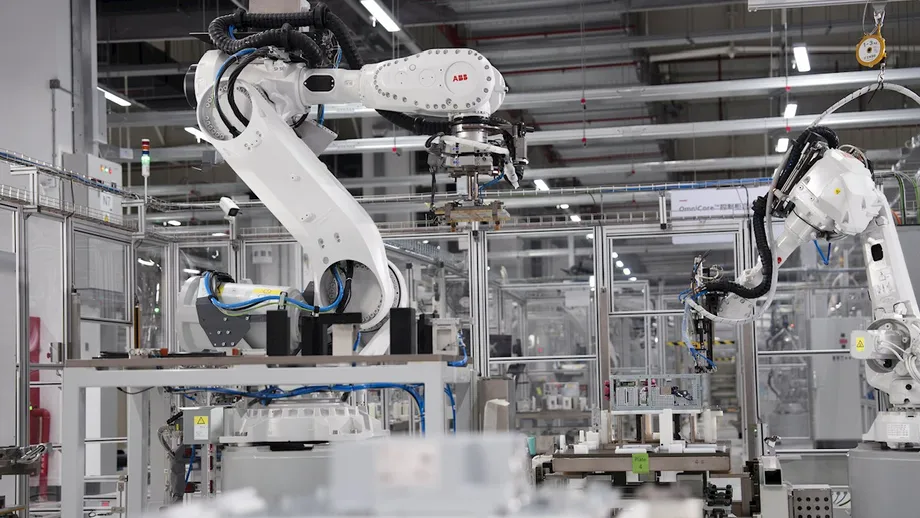
Chinese companies can also move difficult manual tasks across the border while investing in robots and more advanced equipment at home. For North Korean factories, dependence on outside materials leaves production vulnerable to decisions made by customers and authorities across the river.
The wider household picture remains difficult. During North Korea's recent economic recovery, estimated economic growth of 3.5% in 2025 coincided with rice prices reaching 5.2 times their May 2024 level by May 2026. Factory activity and purchasing power can move in very different directions.
Tungsten adds revenue and a new vulnerability
North Korea's dependence on a narrow range of exports predates the wig business. In 2016, anthracite coal and iron ore accounted for 48% of its exports to China. Sanctions later closed those major official export channels, leaving other products to take their place.
Chinese customs figures for January through September 2026 show North Korean exports to China rising 50.5% from a year earlier. Tungsten represented 20.5% of the total, while wigs, false beards, eyelashes and related goods represented 33.2%. Together, those two groups supplied 53.7% of export earnings.
Tungsten is a hard metal used in industrial tools and other specialised products. Its export value depends on both how much is sold and the price buyers pay. North Korean tungsten shipments fell from 2,502.5 tonnes to 1,514.7 tonnes, a decline of 39.5%, even as higher international prices supported earnings.
The weakness became more visible in the third quarter of 2026, when tungsten ore export earnings fell 82.5% from the preceding quarter as both prices and shipments declined. Wig exports helped cushion the reduction.
The Hyundai Research Institute calculated that the top 10 product groups supplied 88.5% of North Korea's exports to China in the first half of 2026. Such concentration means a price decline or a lost order in just a few products can quickly reduce the money available for imports.
Food imports reveal what the crossing can change
North Korea imported 7,064 tonnes of Chinese milled rice in September 2026, valued at approximately $3.62 million. The volume was 6.9 times the September 2025 level, while its value was 6.8 times higher.
Frozen duck imports reached approximately $6.23 million that month, an increase of 125% from a year earlier. Monthly purchases had remained above $6 million for four consecutive months.
These shipments preceded the bridge opening. Bilateral trade was already recovering, reaching approximately $299 million in September and $2.27 billion during January through September 2026, up 18.6% from the corresponding period a year earlier.
KOTRA puts bilateral trade in 2025 at approximately $3.07 billion; another published calculation attributed to China's General Administration of Customs gives $2.74 billion. The reason for the difference has not been explained. Both figures remain far below the $6.45 billion peak recorded in 2013.
The new route could make it easier to deliver heavier loads and factory inputs. Lim Eul-chul, a researcher at Kyungnam University's Institute for Far Eastern Studies, identifies heavy equipment, raw materials and energy products as potential cargoes. Those deliveries could help production, while rising food imports directly affect the supplies available to shops and households.
Sanctions and politics still shape the traffic
International sanctions continue to determine which goods and investments are permitted. Restrictions adopted over North Korea's nuclear and missile programmes cover major export sectors, while United Nations Security Council Resolution 2375, adopted in 2017, bans joint ventures with North Korean entities and individuals.
Phillip Park, a professor at the University of North Korean Studies in Seoul, explained the practical limit of the new crossing:
"The bridge could facilitate trade and logistics, but it does not remove international sanctions," Park added.
Lim also cautioned against expecting the crossing to restore earlier trade volumes immediately. The additional road capacity operates within decisions about border permissions, customs enforcement, permitted cargo and national security.
Christopher Green, a senior consultant for the Korean Peninsula at International Crisis Group, identified political choices as the central constraint:
"Lack of cross-border transit routes is not the main obstacle," Green said.
For Beijing, the crossing supports its position as Pyongyang's principal economic partner while North Korea expands relations with Russia. For Pyongyang, Chinese supplies provide access to everyday goods and industrial inputs. How much traffic grows will depend on how both governments manage that relationship.
Sinuiju seeks investors who want more than buildings
Sinuiju officials are seeking Chinese investment in hotels, inns and complexes combining restaurants, shopping and fitness services. The proposals gained momentum after the bridge opened and Kim Jong Un reportedly visited Dandong nine days later, meeting Wang Huning, chairman of the Chinese People's Political Consultative Conference.
Chinese investors want equity stakes, operating rights and agreed shares of profits. North Korean authorities have rejected similar demands in the past. Existing accommodation and service facilities near the bridge, including in the Nammin-dong area, are reportedly underused, adding a commercial concern to the legal restrictions on joint ventures.
An unnamed person familiar with the discussions estimated that fewer than 10% of current proposals become deals. The uncertainty covers payment as well as control: building a hotel is only the first expense, while earning a return requires customers, reliable operations and permission to transfer profits.
South Korean businesses also face a concrete supply chain issue. Chinese materials combined with North Korean processing can connect production across the border to markets farther away. Companies need to understand where work takes place and which restrictions apply before placing orders.
The bridge gives Dandong and Sinuiju a better physical connection. Lasting gains for North Korean households will depend on the income workers receive, the prices they pay and whether factories acquire capabilities beyond processing materials for foreign customers.
Key Points
- The New Yalu River Bridge opened on October 15, 2026, after a delay of 12 years.
- The four lane crossing links Dandong and Sinuiju and provides an alternative to an older bridge with a single road lane.
- China accounted for 98.2% of North Korea's recorded foreign trade in 2025, according to KOTRA.
- Wigs and eyelashes generated $205.76 million in exports in 2025, representing 43.9% of North Korean exports.
- Tungsten and hair products together supplied 53.7% of exports to China during January through September 2026.
- Food imports and bilateral trade were already rising before the bridge opened.
- Sanctions, investment terms and political decisions continue to shape trade and proposed projects in Sinuiju.