Growth returns, but pressure for reform weakens
North Korea's economy grew an estimated 3.5% in 2025, while rice prices rose to 5.2 times their May 2024 level by May 2026. Those two figures capture the central problem facing the country: closer ties with China and Russia are helping production recover, but ordinary households face sharply higher costs.
Contents
- Growth returns, but pressure for reform weakens
- China supplies the everyday economy
- Russia offers resources beyond ordinary trade
- Why more resources can mean less reform
- The party's plan keeps defense at the center
- Households face a different recovery
- Energy and sanctions constrain the next stage
- Seoul sees recovery and greater bargaining room
- Key Points
Rachel Minyoung Lee, a senior fellow at the Stimson Center, told a North Korea economics forum on October 22, 2026, that the same external support could reduce the leadership's incentive to allow businesses and individuals greater economic freedom. George Washington University's Institute for Korean Studies hosted the event.
Lee's argument concerns the choices available to Pyongyang. If China and Russia supply enough resources, revenue and equipment, North Korea can pursue some economic development while keeping tight control over production and trade. The leadership then has less reason to accept politically sensitive changes that would give people more authority over their livelihoods.
South Korea's Ministry of Unification has also assessed that North Korea has entered a recovery phase after recession. Its plan for inter-Korean relations covering 2026 to 2030 connects that recovery with closer cooperation with Moscow and efforts to restore practical ties with Beijing.
The economic gains and their limits are examined in the Korea Economic Institute of America's economic recovery analysis, written by Randall S. Jones, a nonresident distinguished fellow at the institute. Citing Bank of Korea estimates, Jones identifies weapons production for Russia and trade with China as the main sources of growth. His assessment also points to inflation, energy shortages and defense priorities as constraints on lasting improvements.
China supplies the everyday economy
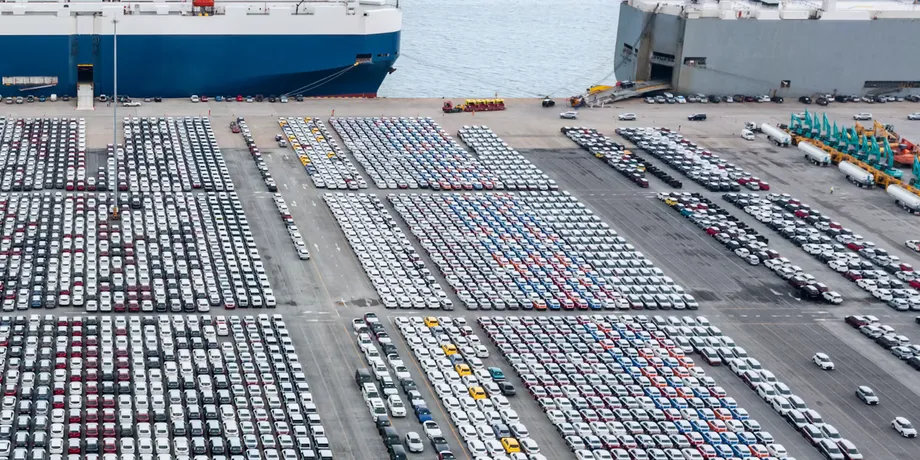
China's importance is visible in the composition of North Korea's trade. It accounted for 98% of the country's official trade in 2024, according to Jones's analysis. That concentration gives Beijing an outsized role in supplying factories, shops and households.
Lee said recovering trade with China gives North Korea better access to industrial raw materials, consumer goods and equipment. Raw materials feed production, machinery helps factories operate, and imported consumer goods reach people more directly. China has also continued supplying oil and fuel products.
Trade between the neighbors has reached its highest level since 2019, although Jones says it remains around half its 2014 peak. The comparison shows both the scale of the rebound from the pandemic period and the distance from earlier trading levels.
A planned new transport route adds a concrete dimension to that relationship. China and North Korea scheduled the New Yalu River Bridge opening for October 15, linking Dandong and Sinuiju after more than a decade of delays. The bridge measures 3,026 metres and has four lanes. Its initial business was expected to focus on freight.
For North Korean producers, access to supplies can ease an immediate production problem without changing who controls the factory. That is central to Lee's argument: a business can receive more materials and produce more goods while remaining subject to state decisions.
Russia offers resources beyond ordinary trade
Russia's economic relationship with North Korea has expanded rapidly from a small base. Official bilateral trade was just $3.8 million in 2022, roughly 0.2% of North Korea's total trade that year. It increased ninefold in 2023 and another 54% in 2024.
Military cooperation brings another, less transparent stream of resources. North Korea has supplied munitions and dispatched well over 10,000 troops to support Russia's war against Ukraine. Moscow has reportedly provided military technology, fuel and food shipments in return, with much of the exchange conducted through goods and assistance rather than cash.
Lee said cooperation with Russia also creates opportunities in transport and logistics, the work of moving and storing goods. Together, these channels give Pyongyang access to resources outside its conventional trade relationship with China.
North Korea's technicians may gain industrial experience as well. An October 14 study examined how work at Alabuga, a Russian drone manufacturing complex, could teach North Korean personnel about assembly lines and changes introduced during wartime production. Such experience can help weapons manufacturers organize production and incorporate new designs.
The value of military exchanges, and the share reaching civilian industries, remain unclear. Lee warned that revenue, technology and production experience gained through Russia may stay concentrated in military activities rather than improve the wider civilian economy.
Why more resources can mean less reform
North Korea's leadership faces a choice between increasing economic activity under state direction and giving enterprises greater freedom to make decisions. Lee argued that support from China and Russia makes the first option more workable.
Market reform, in this context, means allowing businesses and individuals more scope to decide what to produce, where to obtain supplies and how to use earnings. Such freedom can help producers respond to demand, but it also shifts some decision making away from the state.
Lee said the leadership already permits selected market mechanisms and business discretion when they serve state objectives. The governing principle remains centralized control: room to act is granted within priorities set by the authorities.
Private entrepreneurs operating through state institutions are particularly exposed to changes in policy. In November 2025, authorities reportedly ordered private businesses using state buildings to be incorporated into the official state economy. That would bring activities conducted in public factories or retail premises more directly under government administration.
Small market activity has continued alongside this tightening. Changes to agricultural law in 2022 and 2023, discussed by researcher Peter Ward, suggest farmers are expected to sell a share of grain production to the state, with some discretion over production and investment. North Korea's approach therefore combines selective flexibility with greater control over larger economic operations.
The party's plan keeps defense at the center
North Korea's Ninth Workers' Party Congress in February 2026 presented an active development program while retaining centralized management and priority for defense. Lee identified that combination as evidence that economic ambition can coexist with continued restrictions on market autonomy.
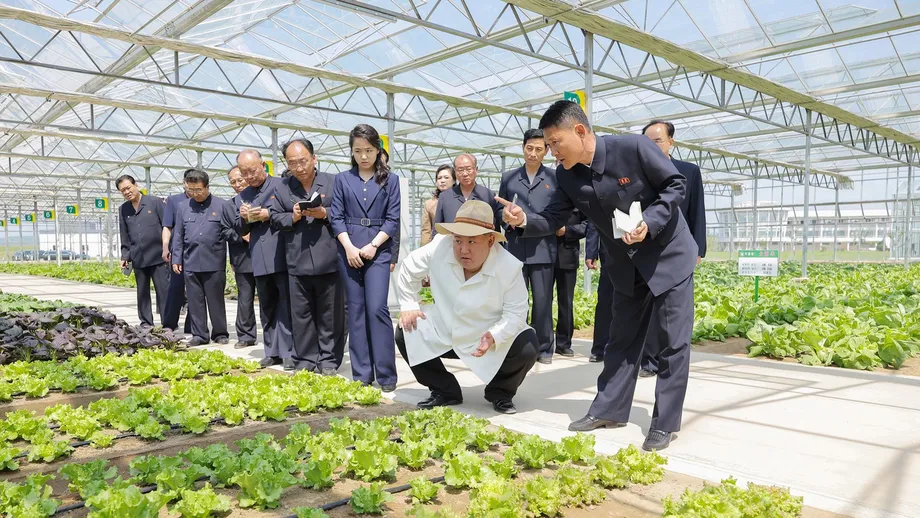
The congress declared the economic plan for 2021 to 2025 fulfilled. Five years earlier, the Eighth Party Congress had acknowledged that the plan for 2016 to 2020 had failed. In March 2026, Kim Jong Un set a target of raising industrial output to around 1.5 times its starting level during the new plan running through 2030, equivalent to an increase of about 50%.
The sequence places the recent recovery within a longer effort to rebuild production:
- 2024: North Korea launched its 20×10 regional development program, intended to build modern factories in 20 cities and counties each year for 10 years.
- 2025: Economic growth reached an estimated 3.5%, according to the Bank of Korea figures cited by Jones.
- February 2026: The Ninth Party Congress retained centralized control while setting new development goals.
- March 2026: Kim announced the industrial output target for the plan ending in 2030.
- October 22, 2026: Lee argued that stronger external support could weaken incentives for market reform.
Kim, North Korea's leader, explained his priorities in a March address to the Supreme People's Assembly, quoted in Jones's analysis:
Our style of development strategy was very correct as we directed great efforts to the development of the State and the economy while giving priority to getting a security guarantee of our own and consistently carrying on the line of bolstering up our nuclear forces.
Factories, housing, health care and rural living conditions feature in the development agenda. Defense spending competes with those goals for resources, including electricity, equipment and skilled labor.
Households face a different recovery
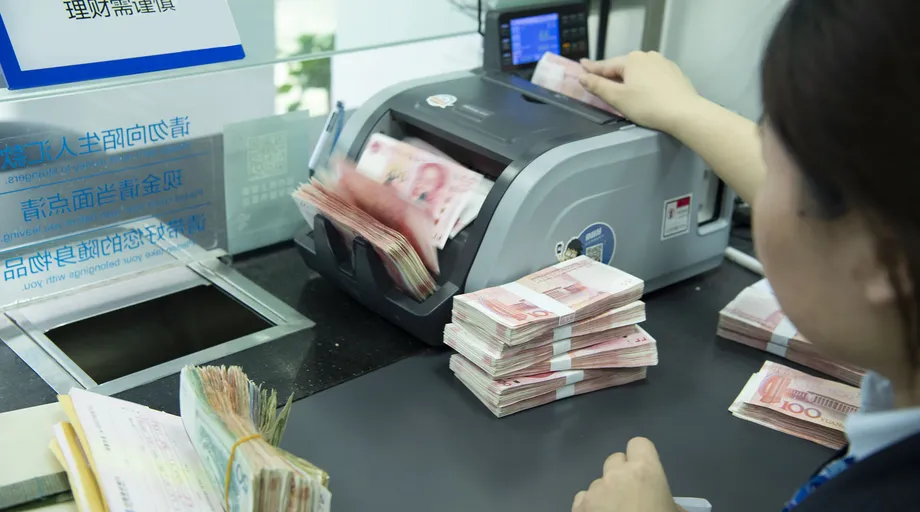
North Korea's won lost roughly three quarters of its value against the US dollar between May 2024 and May 2026, Jones writes. A weaker currency means more won are needed to buy a dollar, making imported goods more expensive in local money.
Rice prices rose 5.2 times over the same period. Put simply, rice costing 100 won at the beginning would cost 520 won at the end. That is a 420% increase, a severe strain for households whose incomes have not kept pace.
Jones links currency pressure partly to large but uneven increases in official state wages beginning in late 2023. Higher demand for foreign currency came alongside stricter controls on foreign exchange transactions and market activity, which limited supply. Rising food and import prices then made the loss of purchasing power more acute.
The Bank of Korea estimates show three consecutive years of growth above 3%, with output passing its 2017 level. Yet the mix of production matters for daily life. Increased weapons manufacturing adds to economic output, while families need affordable food, reliable energy and accessible consumer goods.
North Korea's economic statistics also carry substantial uncertainty. The Bank of Korea estimates output using South Korean prices and ratios for the value added during production. North Korea has not published regular national accounts since the 1960s, and prices and supplies vary widely across regions. The growth figures provide an estimate of national activity; household conditions require attention to wages, prices and access to goods as well.
Energy and sanctions constrain the next stage
Kim identified electricity, coal and corruption as obstacles to growth in his March 2026 address. Those constraints matter even when foreign partners supply more materials: factories still need dependable power to turn inputs into finished goods.
Jones's analysis describes slower mining growth because of reduced coal production and falling output in electricity, gas and water as thermal power generation declined. North Korea's electricity consumption per person is less than 7% of South Korea's level, illustrating the limited energy available to homes and industry.
International sanctions continue to restrict finance, investment and formal trade. Recent EU sanctions on cooperation, imposed on October 12, targeted a North Korean missile technician, Russian businesses employing North Korean workers and a shipping company accused of carrying Russian fuel to North Korea.
North Korea also has income channels outside conventional trade. Proceeds from cybercrime and cryptocurrency theft were estimated at more than $2 billion in 2025. Such revenues give the state additional means to fund its priorities, alongside assistance and exchanges with Russia and China.
Seoul sees recovery and greater bargaining room
South Korea's Ministry of Unification connects North Korea's recovery with a wider diplomatic strategy. Its plan for 2026 to 2030, submitted to the National Assembly's Foreign Affairs and Unification Committee, describes cooperation with Russia as resembling an alliance, including advanced weapons and technology transfers.
The ministry says Pyongyang is also seeking a practical recovery in relations with China. It assesses that North Korea is using rivalry between China and the United States, together with diplomacy toward traditional partners, to increase its freedom of action and negotiating power.
Seoul's plan seeks peaceful coexistence, a foundation for mutual growth and a Korean Peninsula free of war and nuclear weapons. Lee's assessment suggests that a recovering North Korea may have less economic reason to loosen domestic controls or seek resources through a different policy course.
Lee nevertheless drew a line between restoring activity in selected industries and sustaining improvements across the economy. Better access to Chinese and Russian resources can help production recover. Consistently raising productivity, meaning the amount produced with available labor and equipment, and improving living standards will be harder within the existing institutional framework.
Key Points
- North Korea's economy grew an estimated 3.5% in 2025, according to Bank of Korea figures cited by the Korea Economic Institute of America.
- Rachel Minyoung Lee says stronger ties with China and Russia may reduce incentives to give businesses and individuals more autonomy.
- China accounted for 98% of North Korea's official trade in 2024, while Russian military cooperation supplies additional resources and technology.
- The plan for 2026 to 2030 seeks higher industrial output while retaining centralized control and defense priorities.
- The won lost roughly three quarters of its dollar value, and rice prices rose 5.2 times between May 2024 and May 2026.
- Energy shortages, sanctions and limits on market activity constrain efforts to turn recovery into lasting gains for households.