A record share masks a steep fall in car sales
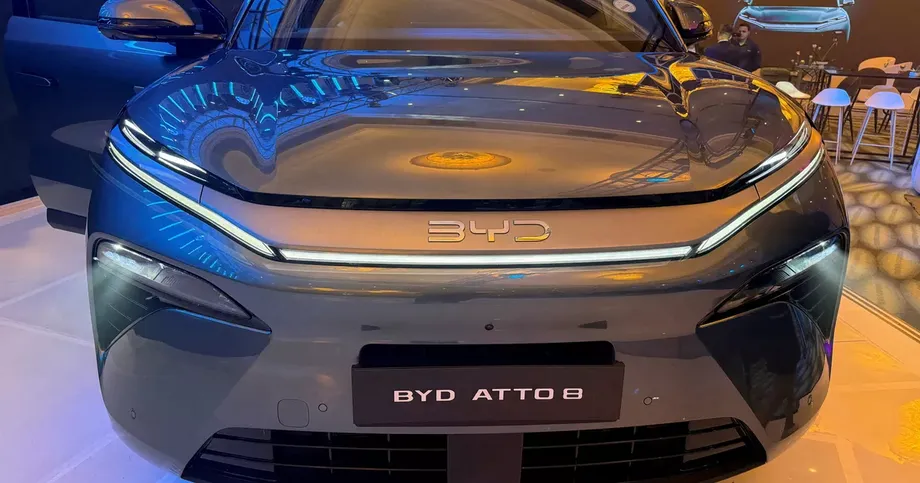
China's new energy vehicles took 67% of passenger car retail sales in September 2026, pushing conventional fuel vehicles below one third for the first time. Yet the record came during a sharp contraction: total passenger car retail sales fell 28% from a year earlier to 1.618 million, while new energy vehicle sales dropped 16.7% to 1.084 million.
Contents
- A record share masks a steep fall in car sales
- How a falling market produced a new record
- Why the engine is retreating unevenly
- Petrol prices sharpen the household calculation
- Why three different sales shares appear
- Exports carry growth while domestic demand falls
- Electric vehicles are changing China's oil balance
- Fuel use and total oil demand follow different paths
- The next test is sales, charging and investment
- Key Points
The China Passenger Car Association released the September figures on October 12. They show a market changing its choice of power much faster than it is finding new buyers. Conventional fuel vehicle retail sales fell 43%, including a 49% decline for vehicles powered solely by combustion engines. Ordinary hybrids, which combine an engine with an electric motor without plugging into a charger, grew 25%.
Higher petrol prices are accelerating that shift. By September 24, China's cumulative petrol price increases for the year reached 2,375 yuan per tonne, equivalent to roughly 1.90 to 2.03 yuan per litre. Families comparing vehicles now face a larger difference between the cost of filling a tank and charging a battery.
The consequences extend beyond car showrooms. The International Energy Agency estimates that electric vehicles displaced 1.5 million barrels of oil demand per day in China during the second quarter of 2026. That change is arriving alongside weaker demand for transport fuels, rapid export growth and mounting pressure on manufacturers to redirect spending toward electric models.
How a falling market produced a new record
September's 67% share was 9.1 percentage points higher than a year earlier, when the comparable share was 57.9%. New energy vehicles gained ground because their sales fell more slowly than the market around them.
A market share is a fraction: sales of one category divided by all sales in the same market. In September, 1.084 million new energy passenger vehicles divided by 1.618 million passenger vehicles gives approximately 67%. Subtracting those figures leaves about 534,000 vehicles outside the new energy category.
September brought the largest monthly decline in passenger car retail sales so far in 2026. The traditional autumn buying season therefore opened with fewer purchases, even as electric models occupied more of the remaining market.
Eight of September's 10 leading models by retail sales belonged to the new energy category. The two conventional entries, Toyota's Corolla Cross and RAV4, both offered hybrid versions. Their presence fits the wider growth in ordinary hybrids, although the model rankings do not provide a breakdown of sales by powertrain.
Why the engine is retreating unevenly
China's new energy vehicle category includes cars powered entirely by batteries and plug-in hybrids, which can charge from an external electricity supply but also carry a combustion engine. Ordinary hybrids sit outside that category and still rely on fuel, using an electric motor to improve efficiency.
The 49% fall in sales of vehicles powered solely by combustion engines, compared with 25% growth for ordinary hybrids, shows buyers moving along several routes. Some are abandoning petrol altogether. Others are choosing vehicles that use less of it.
Plug-in hybrid drivers can also reduce petrol consumption by charging more often. The IEA's account of the second quarter describes both stronger electric vehicle adoption and reduced gasoline use in plug-in hybrids. Oil demand can therefore change through how people drive cars they already own, as well as through new purchases.
Drivers still face practical differences between the options. Access to charging, journeys over long distances, cold weather and specialised uses affect which vehicle suits a household. Manufacturers must serve those needs while shifting product development, dealership resources and supplier orders toward the categories attracting more buyers.
Petrol prices sharpen the household calculation
Petrol's increase of roughly two yuan per litre makes fuel consumption a more visible part of the purchase decision. As a simple illustration, buying 100 litres now costs about 190 to 203 yuan more than before the year's cumulative increases. A family's annual increase depends on its mileage and vehicle efficiency.
The IEA's Global EV Outlook 2026 says electric cars generally have lower running costs because they use energy more efficiently. Higher oil prices linked to the Middle East conflict have widened those savings.
Purchase prices also matter. The agency found that 70% of battery electric cars sold in China in 2025 cost less than the average conventional car. In China's small car segment, electric models had already largely displaced conventional sales.
Policy and competition have helped create that position. China began supporting new energy vehicle purchases with subsidies in 2009, and introduced a vehicle trade-in programme in April 2024 that was expanded in 2025. A temporary halt to the programme contributed to slower electric car growth in 2025, according to the IEA. Prices, model choice, charging access and purchase support are working alongside expensive petrol.
Why three different sales shares appear
The 67% figure measures September retail sales of passenger cars in China. A separate set of figures from the China Association of Automobile Manufacturers puts new energy vehicle sales at 1.823 million in September, up 13.6%, representing 61.6% of new vehicle sales.
The manufacturers association uses a broader measure that includes commercial vehicles and exports. Passenger car retail figures track a narrower market closer to purchases by domestic end users. Passenger car wholesale figures, meanwhile, put the September new energy share at 65.4%.
The manufacturers association also recorded 12.472 million new energy vehicle sales during January through September, up 11.1%, with a share of 53.6%. That percentage covers nine months rather than September alone.
- 67%: September new energy passenger car retail share in China.
- 65.4%: September new energy passenger car wholesale share.
- 61.6%: September new energy share under the broader manufacturers association measure.
- 53.6%: New energy share under that broader measure for January through September.
Each figure answers a different question. Together they show a growing electric share across several measures, while the domestic retail figures reveal how weak household demand has become.
Exports carry growth while domestic demand falls
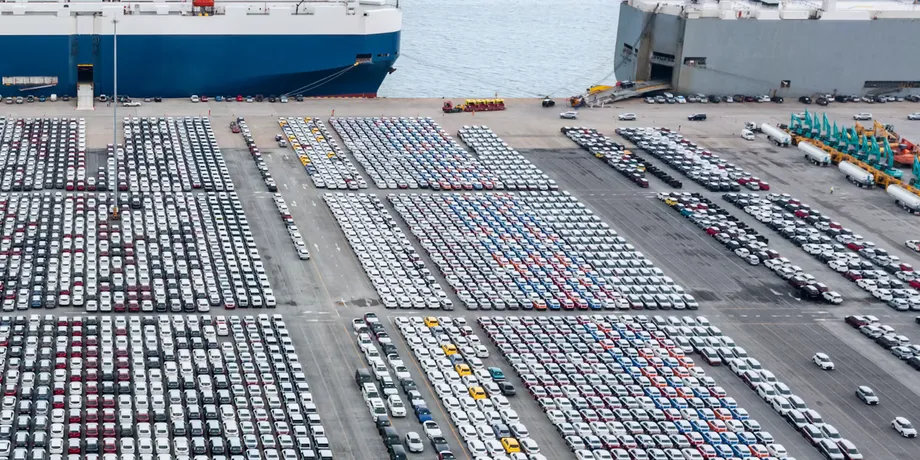
China exported 571,000 new energy vehicles in September, up 160% from a year earlier. By contrast, domestic new energy vehicle sales under the manufacturers association measure fell 10.6% during the first nine months of 2026 to 8.466 million.
That split explains how manufacturers can report rising sales across a broad measure while domestic retailers sell fewer vehicles. Overseas buyers are absorbing a growing part of production, making export demand increasingly important to company revenue and factory activity.
The expansion builds on an already large manufacturing base. The IEA says China produced nearly 75% of the world's electric cars in 2025, while Chinese automakers supplied 60% of global electric car sales. Chinese electric car exports doubled that year to more than 2.5 million.
Overseas expansion also brings financial risks. The IEA estimates that Chinese electric car exports exceeded overseas sales by more than 25% in 2025, leaving inventories to be sold later. From April 1, 2027, the export VAT rebate for new energy vehicles is scheduled to fall from 13% to 9%, according to the policy change described alongside the September figures. Manufacturers will have to account for that reduction when pricing exports and planning margins.
Electric vehicles are changing China's oil balance
The IEA estimates that China's electric vehicle fleet displaced around 1 million barrels of oil demand per day in 2025. Its estimate of 1.5 million barrels per day for the second quarter of 2026 is substantially higher, although the figures cover different periods. Oil displacement means fuel that would otherwise have been consumed if the same travel had relied on conventional vehicles.
The agency projects China's annual average displacement to reach 2.7 million barrels per day in 2030. Against a global projection of around 5 million barrels per day, China would account for approximately 54% of the total.
The war involving Iran and the near total closure of the Strait of Hormuz have increased pressure to conserve oil and use alternatives. The IEA expects a substantial part of the resulting reduction in demand to persist. In its oil market report, the agency described the lasting effect of major disruptions:
As the experience of the Covid-19 pandemic showed, large crisis-driven shifts can be slow to fade, leaving persistent impacts on oil demand and we expect that much of the lost ground will not be recovered,
China's changing vehicle purchases are one part of that adjustment. More frequent charging of plug-in hybrids can cut fuel use quickly, while the replacement of older vehicles gradually changes the energy needs of the wider fleet.
Fuel use and total oil demand follow different paths
China was already approaching a turning point before September's sales record. In a March 2025 commentary, IEA oil market analyst Ciarán Healy, China Programme Manager Rebecca McKimm and China Programme Officer Ivo Walinga said consumption of gasoline, jet fuel and diesel totalled almost 8.1 million barrels per day in 2024, 2.5% below 2021.
Oil also supplies chemical plants making plastics and fibres. China's petrochemical oil demand rose almost 5% in 2024, so falling transport fuel consumption can coexist with growth in other uses. The timing of the peak in total oil demand depends partly on the balance between those sectors.
The forecasts have varied. The IEA's March 2025 assessment expected total Chinese oil demand to plateau later in the decade, while the Economics and Technology Research Institute of China National Petroleum Corporation expected a turning point in 2025. Accounts accompanying the September sales figures cite a 2027 peak, about two years earlier than a previous forecast, while the newer IEA oil market assessment describes demand falling between 2025 and 2027. The exact peak year remains unsettled.
Transport changes extend beyond passenger cars. The March 2025 IEA commentary estimated that electric vehicles, natural gas freight transport, rail and other substitutions had avoided about 1.2 million barrels per day of oil demand growth since 2019. In 2025, one quarter of new trucks sold in China were electric, adding another route away from diesel.
The next test is sales, charging and investment
October began with continued weakness: passenger car retail sales reached 459,000 during October 1 through 11, down 24% from a year earlier. Manufacturers and dealers need a recovery in purchases as well as a larger electric share.
China's experience sits within a wider shift. Electric cars accounted for nearly 55% of Chinese car sales in 2025, compared with 28% in Europe and just under 10% in the United States, according to the IEA. The agency projected China's share to approach 60% across 2026. September's 67% domestic passenger retail reading covers a different period and market measure.
Electricity networks will need investment as more travel moves away from oil. The IEA projects that road transport electrification would add less than 6% to China's electricity demand in 2035 under current policies. Local charging demand can still strain particular connections, especially when many vehicles charge at once. Smart charging spreads that demand by moving charging to less busy hours.
The main dates trace a change already under way:
- 2025: Electric cars reached nearly 55% of Chinese car sales and displaced around 1 million barrels of oil demand per day.
- April through June 2026: The IEA estimates electric vehicles displaced 1.5 million barrels per day.
- September 2026: New energy vehicles reached 67% of passenger car retail sales.
- October 12, 2026: The passenger car association released its September figures.
- April 1, 2027: The scheduled new energy vehicle export VAT rebate reduction takes effect.
For households, the immediate change is a stronger financial reason to compare charging costs with petrol spending. For manufacturers, it is a market in which electric products command more shelf space and investment even while total domestic demand contracts. For energy planners, it means preparing for less transport oil use and more electricity consumption.
Key Points
- New energy vehicles took 67% of China's passenger car retail market in September 2026.
- Total passenger car retail sales fell 28%; new energy sales declined 16.7% and conventional fuel vehicle sales fell 43%.
- Ordinary hybrid sales grew 25%, while sales of vehicles powered solely by combustion engines dropped 49%.
- Petrol prices rose by approximately 1.90 to 2.03 yuan per litre through September 24.
- The IEA estimates electric vehicles displaced 1.5 million barrels of oil demand per day in China during the second quarter.
- Exports supported industry growth, while domestic demand remained weak and the export rebate is scheduled to fall in April 2027.