October setback puts border scams at the centre of tourism talks
Thailand and China plan to establish a joint tourist safety working group after Chinese arrivals fell 13.57% in October 2026 to 308,942, interrupting a recovery in the country's largest overseas visitor market. The proposed cooperation targets a specific danger: fraudulent job offers that draw Chinese nationals into Thailand before criminal networks move them across the border into Myanmar.
Contents
- October setback puts border scams at the centre of tourism talks
- What the joint working group would do
- Why the Myanmar border matters
- What the embassy warning said
- How much has the Chinese market weakened?
- Tour operators warn of a sharper fall in group bookings
- What Thailand needs to reach its annual target
- Other visitor markets offer limited relief
- November talks and the next diplomatic opportunity
- Key Points
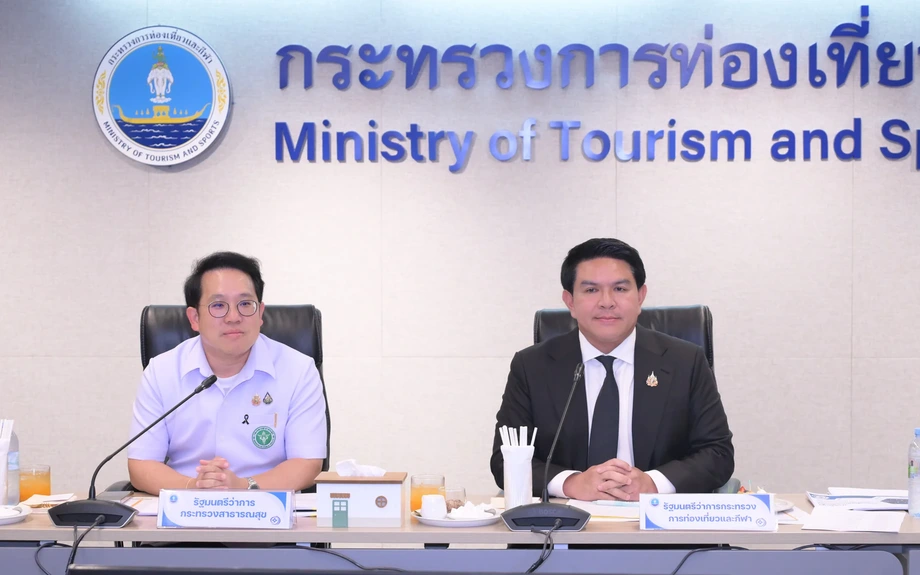
Tourism and Sports Minister Surasak Phancharoenworakul discussed the plan with Chinese Ambassador Zhang Jianwei on November 5. The ministry and Chinese embassy intended to establish the group the following week, bringing together information sharing, assistance for tourists and cooperation with the Tourist Police and administrative authorities.
The talks followed an October 16 embassy advisory warning about transport security, reported kidnappings and promises of lucrative work. The Tourism Authority of Thailand (TAT) said the warning contributed to the October decline, while also identifying flooding in Bangkok as another possible reason for weaker arrivals.
The stakes extend beyond one disappointing month. Thailand welcomed 25,464,306 international visitors from January through October, down 4.59% from the same period in 2025, according to Ministry of Tourism and Sports figures. Tourism revenue reached 1.241 trillion baht, down 2.85%.
China supplied 4,244,376 of those visitors, about one in six international arrivals. Chinese arrivals were still up about 12.4% over the first 10 months, making October a setback within an annual recovery. Thailand is now trying to protect that recovery while addressing the criminal routes behind travellers' fears.
What the joint working group would do
The proposed group would connect the tourism ministry, Tourist Police and Chinese embassy so they can exchange information about illegal businesses using Thailand as a transit point and coordinate help for people at risk. Administrative authorities are also expected to cooperate.
China is prepared to share information about individuals to help Thai authorities distinguish people involved in unlawful activity from legitimate visitors, Surasak said. Cases discussed included Chinese perpetrators targeting fellow Chinese nationals, alongside Thai participation in networks arranging illegal border crossings.
Surasak, speaking as Thailand's tourism and sports minister after the talks, described China's position on enforcement:
"China has made clear that it does not support Chinese nationals who break the law in Thailand and wants Thailand to take firm action," Surasak said.
The ministry will also work with security agencies to strengthen checkpoints, patrols and enforcement in vulnerable areas. The November 5 announcement set out the group's intended functions and planned establishment period; its detailed operating arrangements had yet to be announced.
Why the Myanmar border matters
Myawaddy, in Myanmar, was specifically identified by Surasak as a destination used by networks moving people across the border. A person may accept a job offer involving travel to Thailand, only to be deceived or forced into continuing to Myanmar. That connects recruitment fraud, transport through Thailand and exploitation across an international boundary.
Surasak described cases in which people were moved through unofficial crossing routes with their hands and feet bound. He said officers could establish checkpoints, search vehicles and intervene immediately when deception or coercion was involved. Thai authorities had previously intercepted such movements and rescued victims, he added.
People who initially cross willingly can be harder for checkpoint officers to identify as needing help, the minister said. Someone may believe a recruiter and agree to travel, with the danger becoming apparent only later. Warnings before departure are intended to help prospective recruits recognise suspicious offers earlier.
Zhang wanted tighter enforcement and did not want Thailand used as a transit route, according to Surasak. For the proposed working group, that means connecting assistance for visitors with investigations into the people arranging recruitment, transport and border crossings.
What the embassy warning said
The October 16 advisory urged Chinese nationals to plan journeys carefully and pay attention to security when travelling and using transport services. It followed reported kidnappings involving Chinese nationals and specifically cautioned online influencers and entertainers about fraudulent offers of highly paid work in Thailand.
The embassy described travel advisories as a standard responsibility toward Chinese citizens. Zhang told Surasak that similar warnings had been issued several times, while Chinese media coverage had turned the latest notice into a major issue, according to the minister.
Some Chinese social media users also expressed concern about being unfairly associated with illicit businesses operating in Thailand. Others recommended domestic travel because they considered it safer. The government's proposed information sharing is relevant here: authorities want to identify criminal participants while continuing to welcome ordinary visitors.
Safety concerns have an earlier, widely recognised reference point. Chinese actor Wang Xing was abducted in January 2025 after being drawn into a recruitment scheme and taken across the Thailand–Myanmar border. His case helped drive last year's travel shift, when Chinese travellers reconsidered Thailand and looked at alternatives including Vietnam.
How much has the Chinese market weakened?
October's 308,942 Chinese arrivals were below September's 349,182, a decrease of 40,240 visitors, or about 11.5%, in one month. The decline occurred during a month that included China's National Day Golden Week holiday, normally an important period for overseas travel.
Subramania Bhatt, chief executive of Singapore travel marketing technology company China Trading Desk, attributed the weakness to a normal slowdown after Golden Week combined with renewed concern about traveller safety. He identified organised tours as particularly vulnerable to cancellations.
Bhatt explained why reassurance matters when travellers can choose another destination:
"For Chinese travellers, safety and confidence are important destination-selection factors, especially when alternative Southeast Asian destinations are readily available," he said.
TAT also pointed to Bangkok flooding from late September into early October. Heavy rainfall left parts of the capital under water, creating another potential reason to postpone a trip. Officials therefore face several pressures at once: fear of criminal networks, disruption from flooding and the usual changes in demand after a major holiday.
The longer comparison shows how much ground Thailand is trying to regain. Chinese arrivals fell from 6.73 million in 2024 to 4.47 million in 2025, a loss of 2.26 million visitors, or roughly one third. The increase during the first 10 months of 2026 follows that much weaker year.
Tour operators warn of a sharper fall in group bookings
The Association of Thai Travel Agents (ATTA) estimates that Chinese arrivals on organised tours fell by at least 40% in October, much more sharply than the 13.57% decline in total Chinese arrivals. Its figures describe the group travel segment, while the ministry's total includes visitors travelling through other arrangements.
ATTA president Thanapol Cheewarattanaporn warned that total Chinese arrivals could be 20% below the previous year's levels in November and December unless authorities took stronger action. He also estimated that arrivals on Chinese group tours could fall by more than 50% during Lunar New Year 2027 if confidence was not restored. Those are industry forecasts, with the outcome depending partly on the response to safety concerns.
Thanapol urged closer cooperation with Chinese authorities and promotional roadshows in China involving TAT and private tourism businesses. His central concern was that operators could not repair confidence through marketing alone and needed government action on security.
The pressure comes during an important trading period for hotels, restaurants, transport providers and tour companies. A reduction in organised groups can remove many bookings together, affecting businesses that plan rooms, vehicles and staffing around scheduled arrivals.
What Thailand needs to reach its annual target
Thailand is targeting between 5.1 million and 5.5 million Chinese visitors for the full year. With 4,244,376 recorded through October, it needs another 855,624 to reach the lower target and 1,255,624 to reach the upper target.
Across November and December, that means an average of about 428,000 to 628,000 Chinese arrivals per month. Both figures are above October's 308,942, so reaching the target requires a substantial improvement during the final two months.
TAT plans to restore confidence through more active safety communication, selected travel experiences and partnerships with Chinese media. Earlier in the year, incentives covering around 1,000 Chinese charter flights helped support demand, according to ATTA.
The association has also proposed incentives for 300 flights from China and Russia, targeting 45,000 tourists and 2.25 billion baht in revenue. The tourism ministry instructed TAT to support airlines through its existing annual budget and said it could seek additional central budget funding from the cabinet later.
Other visitor markets offer limited relief
Thailand's October weakness extended beyond China. Total international arrivals were approximately 2.265 million, down 12% from October 2025. Malaysian arrivals fell 26.97% to 276,157, while Indian arrivals declined 7.89% to 196,980.
China nevertheless remained the largest market for the first 10 months, ahead of Malaysia's 3,226,484 visitors and India's 1,924,417. Malaysia's total was down 16.34%, while India's was down 3.05%. Chinese growth during that period was therefore helping offset losses elsewhere.
European demand presents another concern. ATTA representatives described a contraction of 20% to 30% in parts of the market during the high season, citing expensive airfares and weaker confidence in connections through Middle Eastern airports. Thanapol, meanwhile, expected European arrivals in the final two months to remain broadly unchanged from the corresponding period in 2025.
Bomb threats affecting nearly 30 European flights added to concerns about flying, although all the flights landed safely. Tourism officials also reported that arrivals from the Middle East remained below the previous year's levels amid regional tensions. These pressures leave businesses with limited scope to replace missing Chinese bookings quickly through other markets.
November talks and the next diplomatic opportunity
Prime Minister Anutin Charnvirakul's government plans to use the Asia-Pacific Economic Cooperation Economic Leaders' Meeting in Shenzhen, China, on November 18–19 to reinforce its message that Thailand is ready to welcome international visitors safely.
ATTA has proposed that Anutin also visit his ancestral village in Guangdong province during the trip. Thanapol suggested the visit could draw attention to longstanding ties between Thailand and China. The proposal is part of the industry's effort to pair practical cooperation with a more reassuring public message.
The key developments span several dates:
- January 2025: Wang Xing's abduction and transfer across the Thailand–Myanmar border heightened concerns about fraudulent recruitment.
- October 16, 2026: The Chinese embassy issued its latest safety advisory.
- October 2026: Chinese arrivals fell 13.57% from a year earlier to 308,942.
- November 5, 2026: Surasak and Zhang discussed the proposed joint safety working group.
- The following week: The ministry and embassy planned to establish the group.
- November 18–19, 2026: The APEC meeting in Shenzhen provides the government's next planned opportunity to promote its safety measures.
For travellers, the proposed response centres on clearer warnings, coordinated assistance and stronger action against routes used by criminal networks. For tourism businesses, the immediate test is whether those measures help restore bookings during the final two months of the year and before Lunar New Year 2027.
Key Points
- Chinese arrivals fell 13.57% in October 2026 to 308,942, the first annual decline since February.
- Thailand and China plan a joint working group to exchange information, coordinate tourist assistance and address criminal transit networks.
- The October 16 embassy warning covered transport security, reported kidnappings and fraudulent job offers.
- China remained Thailand's largest visitor market, with 4,244,376 arrivals from January through October, up about 12.4%.
- Thailand needs roughly 856,000 to 1.26 million more Chinese arrivals in November and December to meet its annual target.
- ATTA warns of further weakness in Chinese bookings and is seeking stronger security cooperation and government support.