A safer local train must also pass the rush hour test
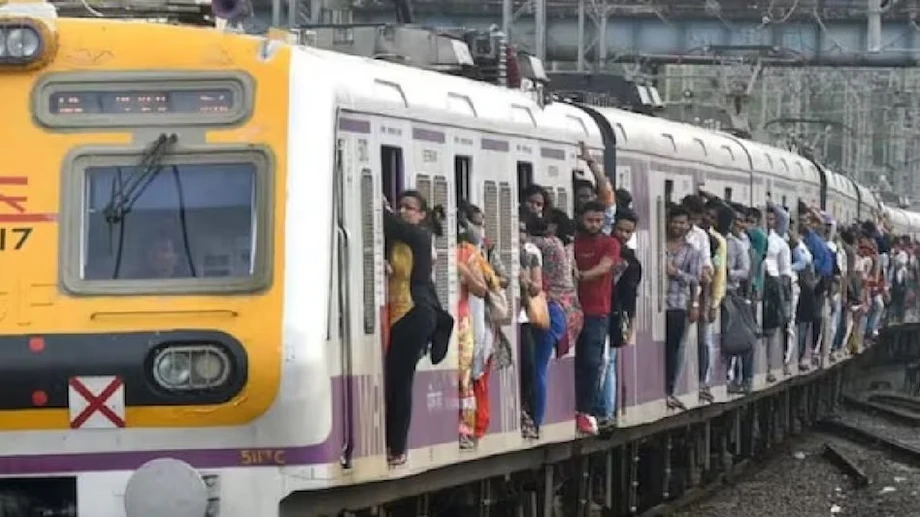
Mumbai's new local train has a stated capacity of 5,698 passengers, automatic doors and no air conditioning. Built by the Integral Coach Factory (ICF) in Chennai, the train is intended to tackle a deadly feature of suburban travel: passengers falling from crowded trains that run with their doors open.
Contents
- A safer local train must also pass the rush hour test
- Why the Mumbra accident accelerated the project
- How the doors and emergency features work
- Keeping air moving with the doors shut
- What changed between the prototypes and the latest arrival
- What railway engineers still have to check
- Closed doors will change boarding as well as travel
- Affordability explains the non-AC approach
- How the prototype fits into the larger train programme
- Key Points
The 12 coaches have 1,003 seats and standing space for 4,695 passengers. Doors will remain shut while the train moves and open at stations. Wider windows, ventilation equipment on the roof and slatted sections in the doors are intended to keep fresh air circulating inside.
The project followed the June 9, 2025, accident between Diva and Mumbra, where passengers fell from overcrowded trains and five people died. Central Railway must now establish whether the new design can provide safer travel while handling Mumbai's intense crowding, heat and frequent station stops.
Two prototype trains have been built. The first arrived at Kurla car shed for certification trials, with officials initially estimating about three months before passenger service. A subsequent development saw the second prototype reach Mumbai after technical changes in Chennai, while the older prototype was due to return to the factory for improvements.
Regular passenger service still depends on satisfactory technical trials, safety checks and certification. No confirmed opening date has been announced. For commuters, the practical change would be substantial: boarding would end when the doors close, rather than continuing as a train begins to move.
Why the Mumbra accident accelerated the project
Passengers standing near the doors of two overcrowded trains travelling in opposite directions fell onto the tracks during the June 9 accident. Five deaths and several injuries gave fresh urgency to the Railway Board's decision to introduce automatic doors on trains without air conditioning.
Government Railway Police figures show that 2,287 people died across Mumbai's suburban railway network in 2025. Of these, 525 died after falling from moving trains, while 1,063 died while crossing railway tracks. Falls therefore accounted for about 23% of recorded deaths, and track crossing accounted for about 46%.
The figures show why closed doors address a major part of the safety problem while track safety requires its own measures. Doors can keep passengers inside a moving coach; safer ways to cross the railway are needed for people travelling between platforms or neighbourhoods.
Government Railway Police records and information obtained through Right to Information requests also recorded 6,760 deaths and 14,257 injuries from falls involving overcrowded non-AC local trains between January 2014 and May 2025. Railway activist Samir Zaveri has cited another 1,185 injuries from falls during 2025, alongside the police total of 525 deaths.
How the doors and emergency features work
The new train has automatic sliding doors on both sides of each coach. An interlock connects the door system with the train's movement controls, preventing departure until the doors are closed. Anti-drag features are intended to address the danger of a person or an object becoming trapped as the train leaves.
Inside, emergency talk-back units near the doors allow passengers to communicate with the driver. A passenger information system displays the next station, route details and safety messages. These features become especially useful when boarding and departures depend on a controlled door sequence.
Connections between coaches, known as vestibules, allow passengers to move through the train rather than remain confined to the coach they first enter. Internal sliding doors also provide an alternative route out of a section if a main side door fails to open.
The design includes eight second-class and four first-class coaches. Around 82% of its stated passenger capacity is standing space, calculated from 4,695 standing passengers out of 5,698 in total. Seating has been reduced slightly while standing space has increased, making reliable ventilation particularly important during crowded journeys.
Keeping air moving with the doors shut
Railway officials say the new design increases airflow capacity by nearly 65%, using blowers mounted on the roof and two air intakes. Louvres, the angled slats fitted into the doors, allow air to pass through while the doors remain closed.
The wider sliding windows measure 1,966 millimetres by 900 millimetres, compared with 990 millimetres by 915 millimetres on existing non-AC trains. The new windows are almost twice as wide and have roughly 95% more surface area, although the airflow passengers experience will also depend on crowding and how the ventilation system operates.
Earlier trials found that carbon dioxide levels inside closed non-AC coaches rose to 2.5 times their previous level. People breathe out carbon dioxide, so its accumulation helps show whether enough fresh air is replacing the air inside a crowded space. Fresh air and cooling are also different things: ventilation can replace stale air without providing the temperature control of air conditioning.
Somesh Mishra, a daily commuter from Virar, described the concern facing passengers who currently rely partly on open doorways for air:
If doors are going to remain closed, then the airflow inside has to be really strong and well-designed. Otherwise, the train will feel like a sealed moving box during peak hours. In Mumbai's humidity, even a small ventilation failure can make the journey extremely uncomfortable.
Parel commuter Abhishek Dange and Currey Road traveller Nishant Patil have raised similar concerns about air circulation during long, crowded journeys. Trials involving load simulations and passenger runs will be central to assessing conditions inside the coaches.
What changed between the prototypes and the latest arrival
ICF built two prototype trains as part of the project. One reached Kurla car shed, while the other underwent initial testing on the 63.27 kilometre Khajuraho–Mahoba section near the border between Madhya Pradesh and Uttar Pradesh, within the Jhansi railway division.
The Research Designs and Standards Organisation (RDSO), the railway body responsible for technical research and standards, identified technical shortcomings during those tests. The train returned to ICF for changes before being sent to Mumbai. Central Railway officials also said the older prototype at Kurla would be sent back to Chennai for improvements.
The project's main stages are:
- June 9, 2025: The accident near Mumbra killed five passengers and accelerated plans for automatic doors on non-AC trains.
- During 2025: Early plans envisaged trials from October and passenger service before the end of that year.
- During the earlier Kurla testing programme: Central Railway General Manager Dharamveer Meena inspected door trials.
- At the first prototype's Mumbai arrival: Officials estimated roughly three months of certification work before public service.
- During subsequent development: The second prototype returned from technical improvements in Chennai, with further testing required in Mumbai.
The early programme also envisaged initially fitting two automatic door coaches into each local train. Another early plan referred to 3,405 coaches across 279 rakes. The current prototypes instead provide a complete train of 12 coaches for evaluation.
What railway engineers still have to check
Central Railway will test the train across different parts of Mumbai's suburban network. Checks cover ordinary and emergency braking, acceleration, electrical equipment, suspension, bogies and door operation. Bogies are the wheeled assemblies beneath the coaches that support them and guide them along the track.
A Confirmatory Oscillograph Car Run, or CoCR, measures how a train behaves at different speeds. Engineers examine vibration, coach movement, stability, ride comfort and the interaction between wheels and rails. The aim is to identify movements or forces that need correction before passengers are carried regularly.
Station stops present another demanding test. Engineers must establish how long boarding and alighting take, whether passengers obstruct the doors, and whether repeated opening and closing affects reliability. A door that repeatedly encounters an obstruction can hold up departure, with delays spreading to following trains.
Earlier automatic door experiments encountered sensors repeatedly activating in crowds, delays, overheating motors and ventilation problems. Western Railway's 2019 experiment with doors on a train of 15 coaches never reached regular passenger service. Another attempt in 2023 encountered technical difficulties.
Subodh Jain, a former Central Railway general manager, has described the new design as imaginative while identifying door failure during a journey as a major concern. His assessment puts dependable operation and emergency arrangements alongside ventilation as essential parts of the testing programme.
Closed doors will change boarding as well as travel
Mumbai's suburban network operates 3,234 daily services across 376 route kilometres. One operating estimate puts daily use at about 6.6 million passengers; broader estimates put it at 7 million to 8 million. At that scale, even small changes to boarding time can affect large numbers of journeys.
Central Railway runs 1,820 services, including 94 AC services, while Western Railway runs 1,414, including 133 AC services. Together, the 227 AC services make up about 7% of the daily total. Most journeys therefore still depend on trains without air conditioning.
Vandana Sonawane, president of the Maharashtra Women's Passenger Association, supports closed doors and has proposed police deployment near them during the initial period to help manage boarding.
We welcome the closed-door trains; it's a necessary safety step, especially for women. But just shutting doors won't control the crowd; people may still hang outside or block entry. Initially, there should be police deployment at doors to manage boarding. Despite challenges, women commuters strongly support this move as it can prevent fatal falls.
Vestibules may help passengers spread through the train, but access at each doorway will remain crucial. A train with closed doors needs boarding to finish before departure, placing greater pressure on orderly queues, clear exits and enough space for people waiting on platforms.
Affordability explains the non-AC approach
A Churchgate–Virar journey illustrates why the railway is pursuing a closed door train without air conditioning. The stated ordinary non-AC fare is Rs 20, compared with Rs 115 on an AC service. The AC ticket costs 5.75 times as much, a difference of Rs 95 for one journey.
Zaveri has proposed replacing first-class accommodation with three AC coaches in each non-AC train as another way to broaden access to safer travel. That is a proposal from a railway activist; the prototype now undergoing evaluation uses the fully non-AC design.
The fare gap makes the current project consequential for passengers who rely on cheaper travel. Its purpose is to bring controlled doors to ordinary local services while solving the ventilation problems that AC trains handle through their cooling and air circulation systems.
How the prototype fits into the larger train programme
Railways has sanctioned 238 trains of 12 coaches under Mumbai Urban Transport Project III and IIIA, at a stated cost of Rs 19,293 crore. These are AC trains, with arrivals expected to begin in 2028. Railway Minister Ashwini Vaishnaw has also said the process of providing automatic door systems on the 238 new locals has begun.
The larger procurement programme and the two non-AC prototypes operate on different timescales. The prototypes are being assessed for passenger service now, while the new AC fleet is expected to arrive later. Neither programme supplies an immediate replacement for every existing open door train.
Capacity projects include platform extensions, additional tracks and station improvements. Listed schemes include the 17.5 kilometre fifth and sixth lines between CSMT and Kurla, costing Rs 891 crore, and a sixth line covering 30 kilometres between Mumbai Central and Borivali, costing Rs 919 crore. More track capacity can support additional services, addressing crowding alongside the door safety programme.
For the new non-AC local, the next milestone is satisfactory testing followed by fitness certification and the required safety clearance. Passengers will gain a usable new option only when the train can keep its doors secure, its air moving and its station stops workable under Mumbai conditions.
Key Points
- ICF has built two prototype non-AC local trains with automatic doors for Mumbai.
- The design has 12 coaches and a stated capacity of 5,698 passengers, including 1,003 seats.
- The second prototype reached Mumbai after technical improvements; the older prototype is due for further work in Chennai.
- Officials say airflow capacity has increased by nearly 65%, supported by roof blowers, wider windows and louvred doors.
- Police recorded 525 deaths from falls from moving trains across the suburban network in 2025.
- Regular service requires successful technical and safety checks. No confirmed opening date has been announced.
- A separate programme covers 238 new AC trains, with deliveries expected to begin in 2028.