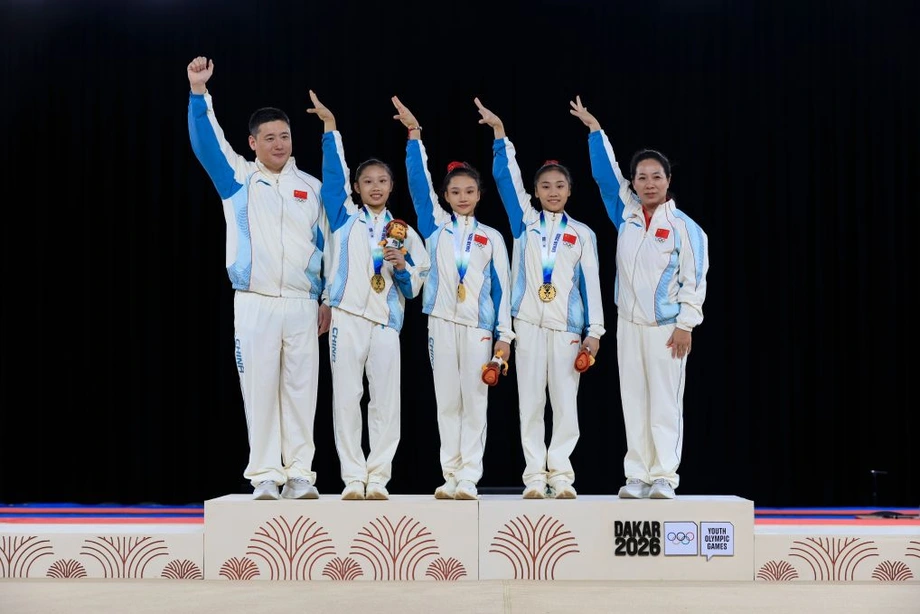
A narrow victory completes a Chinese double in Dakar
China won the first women's artistic gymnastics team title in Youth Olympic Games history on November 9, 2026, scoring 107.798 points to beat Japan by just 0.234 at Dakar Expo Centre in Diamniadio, Senegal. Chen Ziyan, Xie Guying and Zhong Qi recovered from an early deficit to secure gold, with Japan taking silver on 107.564 and France bronze on 105.231.
Contents
The victory completed a sweep of the inaugural gymnastics team titles for China. Earlier on Monday, Li Lezheng, Yang Lanbin and Zhao Ruiyang won the men's competition with 158.463 points, ahead of Japan and Great Britain. Dakar 2026 introduced artistic gymnastics team finals to the Youth Olympic programme, making both Chinese teams the first champions in their events.
The women's result depended on a sharp change in fortunes across four apparatuses. Japan built a lead of 1.533 points on vault. China recovered ground on uneven bars, moved ahead on balance beam and finished floor exercise with enough points to protect a much smaller winning margin.
The Olympic Information Service's official competition report identified China's balance beam performances as central to the comeback. Chen's 14.266 was the highest score on that apparatus in the women's team final.
Why every routine counted
Eight teams contested the women's final across vault, uneven bars, balance beam and floor exercise. Each country entered three gymnasts, with no reserves. Two athletes performed on each apparatus, and both scores counted toward the final total.
The arrangement is called the 3-2-2 format: three gymnasts on the team, two competing on each apparatus and two scores counting. Across four apparatuses, that produces eight counting routines. Coaches had to choose which two athletes would compete at each stage, while every gymnast's performance directly affected the result.
China entered the final after finishing first in qualification on November 8, beating Japan by 0.500 points. Japan competed before China on each apparatus in the final, so the Chinese gymnasts knew the scores they were trying to match or overcome.
The final margin was less than half China's advantage in qualification: 0.234 points compared with 0.500. The narrower gap reflected a contest in which Japan's early strength and China's recovery kept the title undecided until the last rotation.
Japan takes control on vault
Japan opened strongly through Nanami Togo and Yume Minamino, who scored 13.700 and 13.866 respectively on vault. Their combined 27.566 helped Japan establish its lead of 1.533 points after the first apparatus.
Xie Guying, a member of China's winning team, said the athletes had expected Japan to gain ground at that stage. She explained that China still had opportunities to recover on apparatuses that better suited its gymnasts.
Even though Japan led after the vault, we know that this apparatus is their strength and our weakness," Xie said. "But we have apparatuses that we are strong at and we would be able to come from behind.
Zhong and Xie began that recovery on uneven bars, scoring 14.133 and 14.233. Their combined 28.366 reduced China's deficit to 0.733 points. Japan remained in front, but China had recovered 0.800 points in one rotation.
Uneven bars requires gymnasts to move between two bars set at different heights, linking swings, releases and catches before a dismount. For China, the two routines supplied the first substantial step back toward gold.
Balance beam changes the lead
Zhong and Chen then delivered the performances that reversed the standings. Zhong scored 14.100 on balance beam, followed by Chen's 14.266. Together, they earned another 28.366 points, exactly matching China's combined score on uneven bars.
China moved from 0.733 points behind Japan to 1.167 ahead. That was a swing of 1.900 points on a single apparatus, enough to give the Chinese team some protection before the final rotation on floor.
Chen Ziyan, whose beam score led the field, said the apparatus had decided the contest between the two leading teams.
The difference between gold and silver today was the balance beam," Chen said. "We were able to showcase China's traditional strength in this apparatus.
Balance beam demands acrobatic skills, turns and controlled landings on a narrow raised surface. China's two scores mattered together: under the final's format, neither could be dropped from the total.
Xie scored 12.833 on floor exercise, and Chen followed with 12.200. Their combined 25.033 brought China to 107.798. Japan recovered 0.933 points during the final rotation, reducing China's lead from 1.167 to 0.234, but finished just short of gold.
How the women's final unfolded
China's path to the title stretched across two days, beginning with the qualification lead and ending with a much closer finish. The sequence shows how much the standings changed between the first and last apparatuses.
- November 8: China finished first in women's qualification, 0.500 points ahead of Japan.
- November 9, vault: Japan established a lead of 1.533 points.
- Uneven bars: Zhong and Xie reduced China's deficit to 0.733 points.
- Balance beam: Zhong and Chen moved China into a lead of 1.167 points.
- Floor exercise: China finished on 107.798, beating Japan's 107.564 by 0.234.
France's Caly Chayani, Lilou Marliac and Louane Plisson took bronze with 105.231 points, finishing 2.567 behind China. Italy placed fourth on 100.296, followed by Egypt on 93.730, Romania on 93.497, Australia on 91.263 and Czechia on 89.863.
Xie Guying described the gold medal as a shared achievement by the three Chinese gymnasts, whose eight routines all contributed to the winning total.
"We fought as a team, so the effort we put in together is what matters most," Xie said.
China's men win by a wider margin
China's men's team had secured its title during the morning session. Li, Yang and Zhao competed across six apparatuses and finished on 158.463, beating Japan's 156.230 by 2.233 points. Great Britain took bronze with 153.763.
China performed particularly well on floor exercise, horizontal bar and parallel bars. Yang, a medallist at the 2025 junior world championships, said the gymnasts had felt nervous the night before the final but were excited to compete together.
Yang Lanbin, a member of the winning Chinese men's team, described the feeling after securing gold.
We are very excited, and I'm really happy to share this energy with all the guys.
Japan's silver medal team comprised Hiroto Fujimoto, Ikki Nishihara and Naoto Shiroiwa. Nishihara said Japan had hoped to win but acknowledged China's performance.
I feel like Japan is a great country in gymnastics, and that we could have taken the gold medal," Nishihara said. "But unfortunately China was stronger today, and we could only get the silver medal.
Great Britain's Uzair Chowdhury, Benjamin Porter and Lucas Scully finished 2.467 points behind Japan. Germany placed fourth on 148.995, followed by Belgium, Egypt, Mexico and Italy.
Porter, a member of Britain's bronze medal team, said all three gymnasts had completed their routines cleanly and described his pride in the result.
To have this bronze medal around my neck, I'm just super, super proud of us.
Individual titles are next
The men's and women's individual all-around finals were scheduled for Tuesday, November 10. In an all-around competition, each gymnast builds an individual total across all the apparatuses, rather than contributing selected routines to a team score.
Xie and Zhong entered the women's final after finishing first and second in qualification. They placed ahead of Polina Dmitrieva and Japan's Minamino, the 2025 junior world champion, giving China two leading contenders immediately after its team victory.
Yang and Li were set to represent China in the men's all-around final. Britain's Chowdhury topped qualification and was the only gymnast to score above 80 points, setting up another contest involving athletes who had already reached the team podium.
The qualification results gave China a strong starting position in both competitions. Tuesday's finals would award individual medals, following a Monday on which the Chinese gymnasts had collected both available team golds.
A busy medal day beyond gymnastics
China's gymnastics double formed part of a wider medal haul on November 9. In athletics at Diop Stadium, Chen Shijie won silver in the men's 110 metres hurdles with a personal best of 13.40 seconds. Jamaica's Page won in 12.95, finishing 0.45 seconds ahead.
Liu Sen also achieved a personal best, clearing 2.14 metres for men's high jump silver. South Africa's Le Roux won with 2.16 metres, a difference of two centimetres. Liu Han added bronze in the men's 400 metres with 47.16 seconds, while the United Arab Emirates' Omar won in 46.40.
Ethiopia collected three athletics golds that day, winning the men's 2,000 metres steeplechase, men's 1,500 metres and women's 800 metres. Athletics was due to conclude on November 10, when 14 gold medals were scheduled to be decided.
China's women's basketball team reached the 3x3 final by beating host Senegal 21-19 in the semifinal. It then lost 12-11 to Poland to take silver. In the men's final, Senegal beat Lithuania 14-13 to secure gold for the host nation.
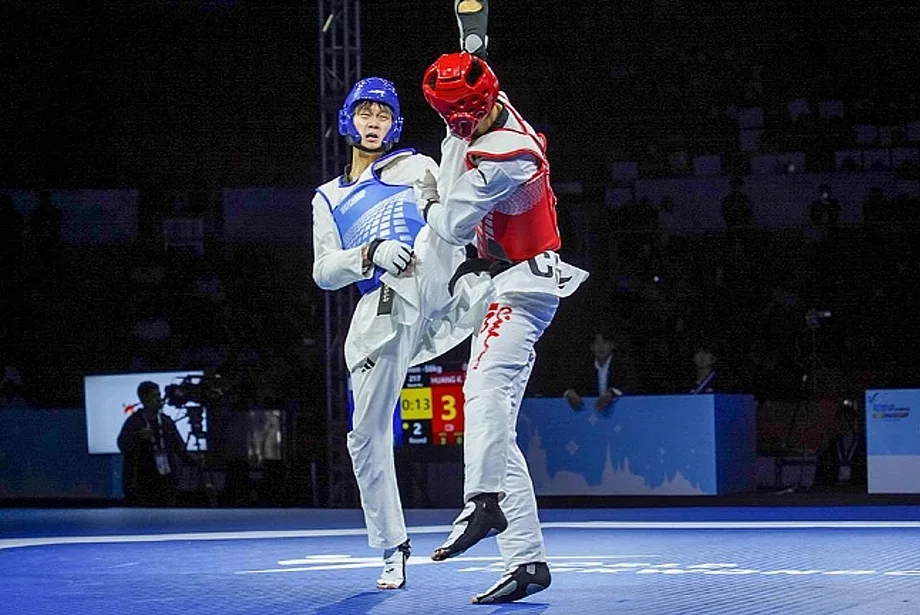
Hong Kong, China's Ho Cheng Him won the men's individual foil title in fencing, defeating Japan's Masashi Maeda 15-8. Chinese Taipei's Cheng Po-yu won the men's 55 kilogram taekwondo title.
China was listed at the top of the medal table with 23 medals, comprising 13 gold, seven silver and three bronze. The two gymnastics titles supplied a major part of Monday's success, with further medal opportunities scheduled for the following day.
Key Points
- China won the inaugural Youth Olympic women's gymnastics team title with 107.798 points.
- Japan finished just 0.234 points behind; France won bronze with 105.231.
- China recovered from a deficit of 1.533 points after vault, taking the lead on balance beam.
- Chen Ziyan's 14.266 was the highest beam score in the women's team final.
- China also won the men's team title with 158.463 points, ahead of Japan and Great Britain.
- The individual all-around finals were scheduled for November 10, with Xie Guying and Zhong Qi leading women's qualification.