A shared martial art moves toward recognition under Pyongyang's name
North Korea's application to recognize taekwondo as a traditional martial art has received a recommendation for inscription on UNESCO's Representative List of the Intangible Cultural Heritage of Humanity. A final decision is scheduled for November 30 to December 5, 2026, in Xiamen, China, while South Korea's attempt to secure a joint listing has stalled.
Contents
- A shared martial art moves toward recognition under Pyongyang's name
- What UNESCO is being asked to recognize
- How the nomination process reached this point
- Why Seoul's application came later
- Political silence has blocked cooperation
- What the 2018 wrestling agreement shows
- One martial art, different sporting systems
- Recognition brings cultural visibility, not ownership
- What South Korea can do next
- Key Points
Pyongyang submitted its nomination in March 2024. Seoul filed its own application on March 31, 2026, about two years later, describing taekwondo through the culture of the dojang, the training hall where instructors teach techniques, discipline and community values across generations.
The evaluation body's recommendation puts North Korea close to securing its sixth entry on the list. Recommendations are rarely overturned, although the final decision belongs to the Intergovernmental Committee for the Safeguarding of the Intangible Cultural Heritage at its 21st session.
For South Korea, the immediate challenge is cultural diplomacy. The country helped turn taekwondo into an Olympic sport with a worldwide following, yet North Korea is now closer to obtaining UNESCO recognition for its own practice of the martial art. Seoul faces criticism over its timing, coordination and ability to translate that global sporting success into a heritage nomination.
Korea Heritage Service Administrator Huh Min acknowledged the setback in a November 2 statement, citing strained relations between the two Koreas and other difficulties.
Due to strained South-North relations and other reasons, a joint listing is effectively very difficult," Huh wrote. "I deeply regret this.
South Korea's heritage agency says it will continue seeking recognition, either independently or through a future expansion of a North Korean inscription. Both routes would require further procedures.
What UNESCO is being asked to recognize
North Korea's nomination is titled "Taekwon-Do, traditional martial art in the Democratic People's Republic of Korea." South Korea's official English title is "Taekwondo: A Dojang-centered Korean Training Tradition." The names point to different descriptions of a shared cultural practice.
The Korea Heritage Service's nomination announcement describes the South Korean tradition as a community built around training halls. Instructors and practitioners train together, passing on techniques, rules of conduct and values through repeated practice. Some students eventually become instructors themselves, continuing that cycle.
UNESCO's intangible heritage system, established under a convention adopted in 2003, concerns living traditions: skills, knowledge and practices that people maintain and pass on. For taekwondo, that means looking at teaching, relationships and participation, as well as the movements performed during training.
Kim Ji-hyun, manager of the Policy Team at the Korean National Commission for UNESCO, explained the focus on present communities and their practices.
"With intangible heritage, what matters is how a community practices and transmits a tradition today. The idea is to recognize the diversity of how the same cultural tradition is passed down in different countries," Kim said.
How the nomination process reached this point
South Korea's interest in a UNESCO listing stretches back at least to 2016. In 2018, the international taekwondo organizations associated with the two Koreas agreed to cooperate on a joint bid, but no formal nomination followed. Kukkiwon, the World Taekwondo Headquarters in Seoul, established a task force in 2021.
Domestic disagreements then slowed progress. They included whether taekwondo should first receive national intangible heritage designation, debates about its historical origins and difficulties coordinating the organizations involved.
The main steps leading to the current review were:
- 2023: South Korea selected hanji making, rather than taekwondo, for the 2026 UNESCO review cycle.
- March 2024: North Korea submitted its taekwondo nomination. South Korea submitted its hanji nomination.
- August 9, 2024: The Korea Heritage Service said the government had not discussed or pursued a joint taekwondo inscription.
- January 8, 2026: South Korea selected taekwondo for preparation as a possible joint or expanded inscription.
- March 31, 2026: Seoul submitted its taekwondo nomination.
- November 2026: North Korea's nomination received an inscription recommendation, while Seoul acknowledged that a joint listing was effectively out of reach under current conditions.
- November 30 to December 5, 2026: The intergovernmental committee is scheduled to make its final decision in Xiamen.
The August 2024 position and the 2026 application mark a change in government policy. Joint inscription became an explicit objective in the Korea Heritage Service's 2026 plans, after earlier cooperation efforts among taekwondo organizations had failed to produce a government nomination.
Why Seoul's application came later
South Korea's nomination timetable is shaped by competition among domestic candidates and UNESCO's effort to give countries with fewer existing inscriptions more opportunities. According to the heritage agency, South Korea effectively receives consideration for one independent nomination every two years.
Hanji, the culture of making traditional Korean paper, had already been selected in 2023 for consideration in 2026. Ginseng traditions are scheduled for a decision in December 2028. That timetable means an independent taekwondo nomination might not be examined before 2030.
The Korea Heritage Service's official announcement confirms that it submitted the ginseng and taekwondo files, but describes different plans for them. Ginseng has a specified 2028 decision date. Taekwondo was prepared for possible joint or expanded inscription, a route that depends on cooperation as well as evaluation.
Agency spokesperson An Ho said the government approached the issue through diplomatic channels involving the foreign affairs and unification ministries, while feedback from UNESCO evaluation committee members suggested a joint bid would be difficult.
An also described the effect of domestic candidate selection on the timing of the application.
During internal selection processes, taekwondo was pushed back in priority.
Political silence has blocked cooperation
North Korea has not responded to South Korea's outreach, according to Lee Jun-yong, deputy director of the Korea Heritage Service's World Heritage Division. Without engagement from Pyongyang, Seoul has little room to negotiate a shared inscription.
Lee described the agency's position and its possible next step.
We understand there has been no response from the North Korean side," Lee said. "We will continue pushing for an expanded joint inscription through remaining channels. However, if North Korea remains unresponsive, we will restart internal open call procedures to pursue an independent listing.
Sporting contacts have also weakened. World Taekwondo Secretary General Seo Jeong-kang said exchanges with the International Taekwon-Do Federation through channels in Vienna had completely ceased since 2019. Earlier cooperation included joint performances during the 2018 PyeongChang Winter Olympics.
The heritage agency says it consulted relevant ministries and met UNESCO officials to request support. It has not disclosed the detailed exchanges that followed South Korea's March application. Its account of the current effort also includes domestic negotiations: the agency says it brought together five major South Korean taekwondo organizations and coordinated their positions before submitting the file.
What the 2018 wrestling agreement shows
Ssireum, traditional Korean wrestling, offered Seoul a model for cooperation. Its 2018 inscription remains the only joint listing by the two Koreas across UNESCO's World Heritage, Intangible Cultural Heritage and Memory of the World categories.
North Korea initially applied in 2015 and South Korea in 2016. After further work on the nominations, both countries sent letters to UNESCO's director general requesting joint consideration. The committee combined the applications into one inscription.
The decision recognized shared roots, similarities in practice and transmission, and the sport's social and cultural role in both societies. Taekwondo's joint application would have required a comparable willingness to cooperate, at a time when the channels supporting such cooperation have narrowed.
Other shared traditions have followed a different route. South Korea's Arirang inscription came in 2012 and North Korea's in 2014. South Korea's kimjang, the practice of making and sharing kimchi, was inscribed in 2013, followed by North Korea's kimchi making tradition in 2015.
The Korea Heritage Service points to these examples when explaining that South Korea can still seek its own taekwondo inscription. UNESCO recognition allows different communities to have their ways of practising and transmitting a shared tradition acknowledged.
One martial art, different sporting systems
Taekwondo developed along different paths after Korea's division. South Korea built its international sporting reach largely through World Taekwondo, known as WT. North Korea's practice is associated with the International Taekwon-Do Federation, or ITF, with a stronger focus on traditional martial discipline and techniques using both hands and feet.
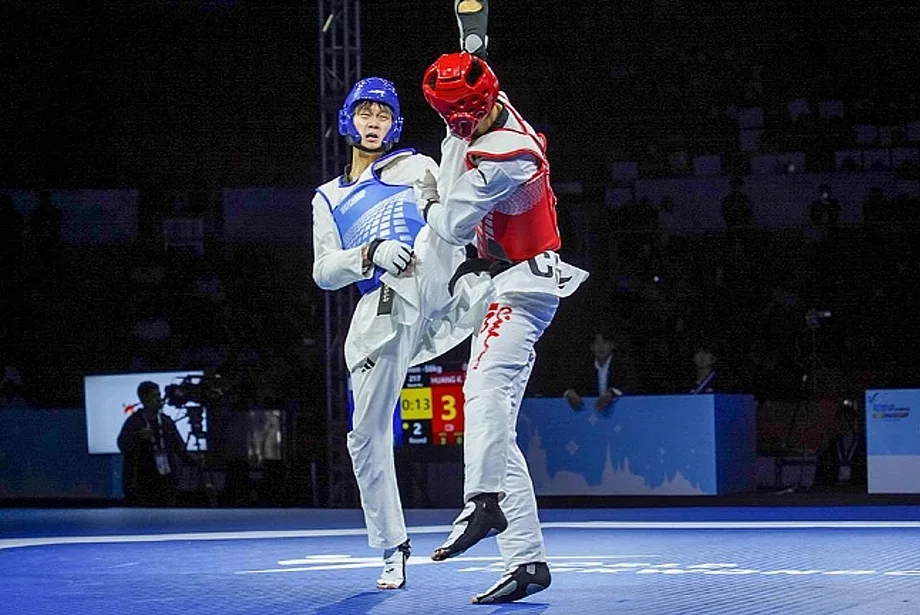
The systems differ in competition rules, terminology and sequences of movements practised during training. WT competitions use protective equipment for the body and head, electronic scoring and an emphasis on kicking. ITF competition uses gloves and protective footwear and permits punches to the face under its rules.
World Taekwondo has 215 national associations, and an estimated 200 million people practise taekwondo worldwide. The sport became an official Olympic medal event at the 2000 Sydney Games. Those figures help explain why the UNESCO issue has attracted such attention in South Korea: international sporting reach and success in obtaining heritage recognition have followed different schedules.
Kukkiwon said on November 5 that it saw little immediate concern for tournament operations because Olympic taekwondo continues within the WT framework. It also expressed regret that joint recognition had become difficult and promised support for South Korea's future inscription efforts.
Recognition brings cultural visibility, not ownership
The Korea Heritage Service says inscription gives no country exclusive rights over taekwondo. South Korean instructors, organizations and practitioners would retain the ability to teach, compete and pursue recognition for their own training culture.
The concern in Seoul is about international standing. Critics argue that Pyongyang could cite a UNESCO listing when presenting its account of taekwondo's history and legitimacy, giving North Korea a prominent cultural credential while South Korea's application waits.
North Korea already has five entries on the Representative List: Arirang, kimchi making, the joint ssireum inscription, Pyongyang cold noodles and traditional clothing customs. Taekwondo would become its sixth, with one of those six shared with South Korea. North Korea also obtained Memory of the World recognition in 2017 for the martial arts manual Muyedobotongji.
South Korea currently has 23 Representative List entries. Hanji making has also received an inscription recommendation and would become its 24th if approved in Xiamen. The contrast helps explain the nomination pressure described by Seoul: it has a larger existing list and several traditions competing for limited review opportunities.
What South Korea can do next
South Korea has two stated options: seek an expansion of a North Korean inscription, with Pyongyang's agreement, or prepare an independent nomination through its domestic selection process. An expansion changes the scope of an existing inscription and must undergo evaluation and committee review.
The heritage agency says the South Korean file's focus on mental and physical discipline within dojang communities gives it a basis for an independent application. Its official announcement also promises continued consultations with taekwondo organizations, relevant ministries and UNESCO.
Domestic accountability remains part of the dispute. The Korea Heritage Service has criticized the administration of former President Yoon Suk-yeol for failing to take effective measures after North Korea applied in March 2024. The longer record also includes earlier disputes about heritage designation, competing nominations and fragmented responsibility among taekwondo bodies.
Taekwondo organizations are preparing to discuss their response with the government. Taekwondo Promotion Foundation Secretary General Shin Sung-il said the foundation would consult relevant agencies, while Kukkiwon pledged continued cooperation. For a future application, the central task is to turn agreement among those bodies into a coordinated plan for documenting and preserving the training tradition.
The next scheduled decision is the Xiamen committee session beginning November 30. South Korea has announced no confirmed review date for an independent taekwondo nomination; 2030 is a possible earliest opportunity under the current timetable.
Key Points
- North Korea's taekwondo nomination has received a UNESCO inscription recommendation.
- The final decision is scheduled for November 30 to December 5, 2026, in Xiamen, China.
- Pyongyang applied in March 2024; Seoul submitted its application in March 2026.
- South Korea's nomination focuses on training culture within dojang communities.
- Seoul says joint inscription is effectively very difficult under current conditions, and Pyongyang has not responded to outreach.
- A North Korean inscription would grant no exclusive rights over taekwondo.
- South Korea plans to pursue an independent or expanded inscription, with no confirmed review date for an independent bid.