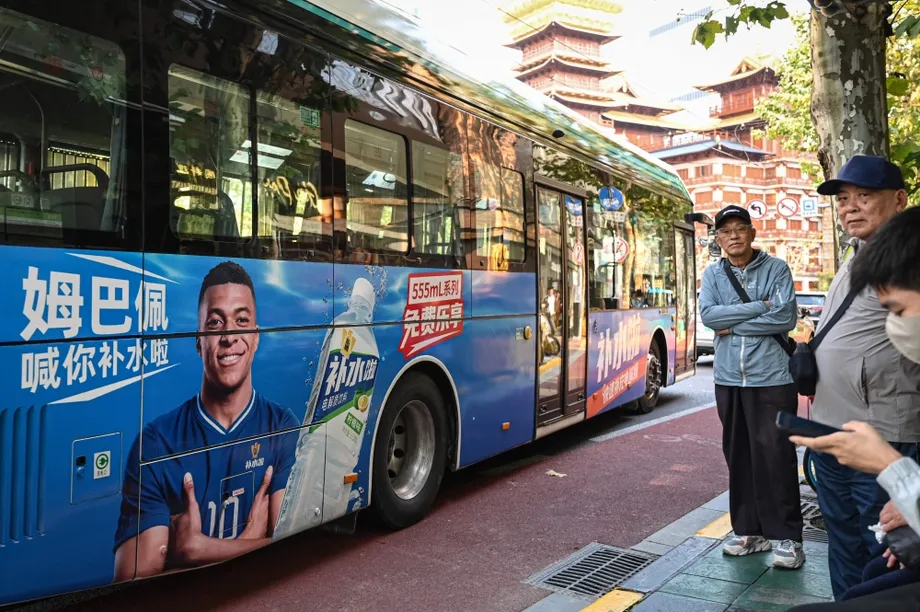
A football star's apology becomes a league crisis
Kylian Mbappe apologised on Tuesday after Dongpeng Beverage, dairy producer Mengniu and cheesemaker Milkground ended their partnerships with the Real Madrid forward over a video apparently referring to Mao Zedong. China Media Group said it had decided on Monday to suspend broadcasts of La Liga matches, extending the consequences from one player's commercial contracts to the Spanish league.
Contents
- A football star's apology becomes a league crisis
- What the circulating video shows
- How the dispute spread
- Why the sponsors moved so quickly
- Why Mao remains politically sensitive
- Fans encounter anger and gaps in information
- La Liga seeks to protect its wider relationship
- Earlier disputes show the reach beyond one athlete
- Key Points
The broadcaster, which oversees Chinese state television network CCTV, also demanded an apology from Real Madrid. It described public apologies from La Liga, Real Madrid and Mbappe as a "basic prerequisite" for further discussion, leaving the club facing a demand that the statements from Mbappe and La Liga had not satisfied.
In its original announcement, China Media Group called Mbappe's remarks concerning China "seriously erroneous" and said the suspension covered La Liga matches, all games featuring Mbappe and advertisements endorsing him. The broadcaster's head also wrote to La Liga president Javier Tebas, calling on Real Madrid and Mbappe to issue a prompt and sincere public apology, address the incident's negative impact and submit a written apology to China Media Group.
Mbappe, the captain of France's national team, issued his apology in French, Chinese and English. He acknowledged that his reaction to an image of himself had offended people in China and Chinese communities elsewhere.
Mbappe said in his statement:
My comment was ill-judged, and I now understand that it hurt many people in China and in Chinese communities around the world. I apologise to everyone my words have upset.
The commercial response reached beyond advertising deals. Xiaohongshu said its contract with Mbappe had ended, while his account on the Chinese social platform, followed by more than a million people, displayed a suspension notice citing violations of community guidelines.
For Chinese football fans, the most immediate consequence is the interruption of television coverage of a league containing 20 clubs. Real Madrid is one of them, meaning a dispute involving its forward now affects access to matches involving teams whose players had no part in the remarks.
What the circulating video shows
The clip shows Mbappe discussing internet memes, images or videos that people copy and change to make a joke. Asked about a favourite meme featuring himself, he describes his face being placed onto another person's image and refers to that person as a Chinese dictator.
An image apparently depicting Mao with Mbappe's face then appears. Mbappe does not say Mao's name in the circulating clip. He also says that he and his friends use the meme.
The exchange has been identified as coming from The Bridge, a French online talk show hosted by fellow Real Madrid player Aurelien Tchouameni. Its original video could not be found on the programme's YouTube channel, and the circulating video's authenticity could not immediately be independently verified. Its first broadcast date is also unclear: it has been described as an interview from the previous spring, while Mbappe's apology calls it recent.
The joke belongs to a wider set of memes portraying Mbappe as an authoritarian ruler because of his influence in football. Those comparisons have involved several historical figures, rather than Mao alone.
Mbappe had discussed similar images in a September interview, acknowledging their intended humour while expressing discomfort about comparisons with people responsible for suffering. His earlier comments show that he had already publicly considered the historical meaning of these jokes before the current backlash.
How the dispute spread
Monday brought the circulation of the clip and China Media Group's decision to suspend La Liga broadcasts. By Tuesday, the response included corporate withdrawals, apologies and a statement from China's foreign ministry.
The main developments unfolded in this order:
- In September, Mbappe discussed earlier memes comparing him with dictators and said their historical associations made some of them less funny.
- On Monday, the video circulated widely on Chinese social media. China Media Group said it decided that day to suspend La Liga broadcasts.
- On Tuesday, Dongpeng, Mengniu and Milkground announced that they were ending their relationships with Mbappe.
- La Liga expressed regret, and Mbappe published his apology in three languages.
- China Media Group demanded an apology from Real Madrid before further discussion.
The timing matters for the next stage of the dispute. The broadcaster made its suspension decision before the apologies, then publicly maintained pressure for a response from the club. No date was given for broadcasts to resume.
Why the sponsors moved so quickly
Dongpeng, Mengniu and Milkground sell consumer products in a market where a celebrity's image can appear repeatedly in shops, advertisements and online promotions. Their announcements turned public criticism of Mbappe into immediate decisions about who would represent their brands.
Dongpeng said it was terminating all cooperation with the France captain. The beverage company explained its position in a statement:
Our company firmly opposes and has a zero-tolerance policy towards any behaviour that offends national sentiments.
Mengniu likewise said it opposed words and actions that hurt Chinese people's feelings. The companies' announcements did not spell out the disputed remark, but their decisions followed its rapid circulation.
Dongpeng had used images generated by artificial intelligence showing Mbappe consuming its drink in World Cup advertising. Chinese social media users also called for the company to remove his image from bottles, showing how the controversy reached products that customers encounter away from football.
Xiaohongshu's response involved two different developments: the platform said its contract with Mbappe had ended, and his account was suspended for violating community guidelines. He had appeared in a widely circulated advertisement for the platform in 2024.
The companies did not disclose the value of the terminated partnerships. Their decisions nevertheless removed several routes through which Mbappe had maintained a commercial presence in China, from dairy and drinks advertising to a social account with more than a million followers.
Why Mao remains politically sensitive
Mao founded the People's Republic of China in 1949 and remained its dominant leader until his death in 1976. China's ruling Communist Party continues to give him a central place in the country's history, and his portrait appears on the 100 yuan banknote.
His rule also included policies associated with enormous human suffering. The Great Leap Forward, a campaign intended to transform agriculture and industry rapidly, contributed to famine that historians estimate killed tens of millions of people. The Cultural Revolution brought political persecution, violence and social upheaval.
The Communist Party has acknowledged mistakes under Mao while maintaining that his achievements outweighed them. That official position helps explain why a joke about his image can become a political dispute involving national identity, rather than remaining a discussion about one footballer's sense of humour.
China's foreign ministry said it was aware of the controversy and warned that words and actions hurting Chinese people's feelings would meet opposition across society. Coverage identified the spokesperson differently, naming Guo Jiakun in some accounts and Lin Jian in another; the ministry's stated objection was consistent.
Fans encounter anger and gaps in information
Weibo's leading topic about Dongpeng ending its partnership with Mbappe accumulated 430 million views. At one reported snapshot on the afternoon of the 27th, five of the platform's ten leading searches concerned the player, illustrating how thoroughly the controversy occupied the discussion.
Views count attention to a topic, including repeated visits, rather than providing a count of individual people. The figures show the scale of circulation, while the comments reveal a mixture of anger, demands for boycotts and questions about what Mbappe actually said.
Some posts concealed the meme or obscured the phrase referring to a Chinese dictator because users considered those elements offensive. Other users asked for the exact words amid the criticism. Some voices defended Mbappe, although the most prominent reactions described his comments as insulting.
Zhang Jingqi, a 30-year-old worker at a Beijing shopping mall, described how the controversy had changed his view of the player:
I used to really enjoy watching Mbappé play on the pitch.
Zhang said his admiration had faded after the news broke. His response captures the personal part of the dispute: a footballer admired for his performances had become associated with an insult in the eyes of some supporters.
Sports industry author Mark Dreyer described a broader commercial pressure, in which public outrage prompts brands to protect their interests. He warned that episodes like this could make international athletes and celebrities more cautious about engaging with China.
La Liga seeks to protect its wider relationship
La Liga apologised for the offence caused among Chinese fans while separating the player's comments from the league's position. Its statement said:
These comments were made in a personal capacity and do not represent La Liga.
League president Javier Tebas said La Liga was working with Chinese partners to overcome the situation. His response reflected the wider exposure created when a broadcaster reacts to one athlete by suspending an entire competition.
China Media Group said Tebas replied to its letter on Tuesday afternoon, condemning Mbappe's conduct and apologising for the offence caused. He said La Liga would take appropriate measures, handle the situation with the utmost seriousness and keep the broadcaster updated. In its reply, China Media Group said La Liga, Real Madrid and, in particular, Mbappe himself must publicly apologise as soon as possible, making clear that no talks could take place before those apologies.
China Media Group's announcement gave a direct institutional basis for the suspension. Earlier indications had included information attributed to CCTV staff, while La Liga fixtures for the coming weekend were still visible on the broadcaster's online schedule. The published schedule therefore remained out of step with the announced decision.
Advertising involving Mbappe was also removed from CCTV, according to information attributed to broadcaster staff. His commercial visibility and the availability of league coverage were being affected at the same time.
Real Madrid now occupies a central position because China Media Group explicitly asked the club to apologise. Mbappe can address his own words, and La Liga can speak for the competition, but the broadcaster has also demanded a response from his employer.
Earlier disputes show the reach beyond one athlete
In October 2019, Houston Rockets executive Daryl Morey posted support for Hong Kong protesters with the message "Fight for freedom, stand with Hong Kong". China suspended sponsorship arrangements involving the NBA, and CCTV stopped showing its games for a year.
That episode offers a concrete comparison with the present dispute. An individual associated with one team made a statement, while commercial and broadcasting consequences reached a much larger sporting organisation. In Mbappe's case, the announced television suspension similarly extends across La Liga.
Former NBA player Dwight Howard faced criticism in 2023 after referring to Taiwan as a country in a video with Lai Ching-te, then the island's vice president and now its president. Beijing claims Taiwan as its territory. The controversy showed another way an athlete's comments can collide with political positions that Chinese authorities regard as fundamental.
Mbappe's case differs in its immediate subject, a meme apparently involving Mao, but the practical pressures are familiar: sponsors reconsider partnerships, online criticism spreads and sporting organisations try to preserve relationships with Chinese audiences and business partners.
The next concrete issue is whether Real Madrid responds to the broadcaster's demand and whether that opens discussions about restoring coverage. For now, Mbappe has apologised, three major consumer brands have cut ties, and Chinese viewers face a television suspension affecting far more than one player's appearances.
Key Points
- Mbappe apologised in French, Chinese and English over a video apparently referring to Mao Zedong.
- Dongpeng Beverage, Mengniu and Milkground ended their partnerships with him.
- China Media Group said it decided on Monday to suspend La Liga broadcasts, all games featuring Mbappe and advertisements endorsing him, before the apologies.
- The broadcaster demanded prompt public apologies from La Liga, Real Madrid and Mbappe as a "basic prerequisite" for talks, and asked the club and player to address the incident's negative impact and submit a written apology.
- Mbappe's Xiaohongshu account, followed by more than a million people, was suspended for violating community guidelines.
- The original interview's broadcast date remains unclear, and no date was announced for La Liga coverage to resume.