Emergency stores remain thin despite a rice surplus
Japan's agriculture ministry is considering buying an additional 100,000 tons of rice to rebuild emergency reserves after releasing 590,000 tons in 2025. The proposal would come on top of a buyback of 210,000 tons initiated in September 2026, as the government tries to refill its stores without putting fresh pressure on food supplies.
Contents
- Emergency stores remain thin despite a rice surplus
- How the shortage led to conditional sales
- Who would supply the rice being bought back?
- Why purchases do not translate directly into reserve growth
- Why the ministry thinks the market can spare more rice
- Falling retail prices and rising spot prices can coexist
- Rain and buying patterns tighten some supplies
- A smaller staple harvest is under consideration
- Shorter storage could mean more regular purchases
- Key Points
The purchases address an unusual imbalance. Government reserves fell to around 320,000 tons after the emergency releases, far below the roughly 1 million tons considered appropriate. At the same time, rice held by private businesses has accumulated beyond the level the ministry considers suitable, putting pressure on prices and farmers' earnings.
The Ministry of Agriculture, Forestry and Fisheries is also considering a production guideline of 6.93 million tons for rice eaten as a staple in 2027. That would be 470,000 tons, or about 6.4%, below the projected 2026 harvest of 7.4 million tons. Farmers would be encouraged to grow more rice for animal feed and processing, where supplies are considered insufficient.
The immediate decision depends on harvest estimates reflecting conditions through October 25, including the effects of prolonged September rain. The ministry plans to explain its approach at an October 30 advisory council meeting, with a decision on the additional purchase possible in November after updated harvest figures are published.
For households, the issue is whether rice remains affordable after the shortage that began around summer 2024. For farmers, it is whether falling prices leave enough income to keep growing it. The government must also restore the reserve intended to help when ordinary supplies come under strain.
How the shortage led to conditional sales
The government released reserve rice in 2025 after the shortage sent prices sharply higher. Its emergency response included auctions under a system that attached a future buyback condition to sales, connecting the release of rice with the later rebuilding of public stocks.
The ministry's conditional sale records document the rules and administration of that operation. The governing guidelines were issued on February 14, 2025, and amended on March 19 and April 16. The official page lists results and contract quantity documents for three auction rounds, alongside a notice canceling the fourth tender announcement.
The main steps stretch across several harvests:
- Summer 2024: A rice shortage began, followed by sharp price increases.
- March 10 to 12, 2025: The first auction under the conditional sale program took place.
- March 26 to 28 and April 23 to 25, 2025: The second and third auction rounds followed.
- During 2025: Total emergency reserve releases reached 590,000 tons.
- September 2026: The ministry initiated a buyback of 210,000 tons, the first under the stockpiling system introduced in fiscal 2011.
- Late October 2026: The ministry began considering another 100,000 tons, with updated harvest data due in November.
The official records also track what happened after the auctions. They include a final monthly sales report for November 2025 and distribution records covering March 17, 2025, through July 5, 2026. The ministry states that all purchasers have finished selling the rice covered by that reporting program.
Who would supply the rice being bought back?
The September operation sought 210,000 tons from the 2025 crop. The ministry began negotiating purchases with up to 10 companies and organizations that had successfully bid for a combined 310,000 tons of reserve rice at the March and April 2025 auctions.
The National Federation of Agricultural Cooperative Associations secured more than 90% of the rice sold in those auctions and was expected to supply most of the buyback. The ministry said it would disclose the quantity purchased and number of contracts after the deals concluded.
The September purchase process is distinct from another 210,000 tons from the 2026 crop for which the ministry had already signed contracts. Those purchases belong to the same effort to rebuild reserves, but involve different harvests and arrangements. The proposed additional 100,000 tons would expand that effort further.
Why purchases do not translate directly into reserve growth
Japan's reserve total changes as rice enters and leaves storage. Older rice is removed for animal feed and other uses, so adding together the announced purchases and the remaining stock would give an incomplete picture of the rice ultimately held.
The government expects reserves eventually to reach around 590,000 tons after rice from the 2020 crop has been exhausted from public stocks. That projection accompanies the purchases already described, while the extra 100,000 tons remains under consideration.
A reserve of 590,000 tons would still be 410,000 tons short of the roughly 1 million tons considered appropriate. The proposed extra purchase equals about one tenth of that desired reserve level, making it a step toward replenishment rather than a complete refill.
The remaining 320,000 tons after the emergency releases represented about 32% of the desired level. Rebuilding from such a low base requires the ministry to manage incoming purchases alongside the scheduled removal of older grain.
Why the ministry thinks the market can spare more rice
Private rice inventories reached 1.5 million tons at the end of August, a record for that time of year. The ministry considers the supply position favorable enough to contemplate another buyback without creating a shortage in the commercial market.
Earlier figures also show how much rice had accumulated. Private inventories stood at 2.43 million tons at the end of June 2026, compared with an appropriate range of 1.8 million to 2 million tons. That placed stocks 430,000 tons above the upper end of the range.
June and August figures describe different points in the rice trading year, during which stocks change as businesses sell older grain and prepare for the next harvest. The record comparison for August is with previous August levels, while the June figure is assessed against the ministry's June inventory benchmark.
Projections extending to the end of June 2028 suggest substantial stocks would persist even after an additional 100,000 tons is bought back. Private inventories are expected to reach between 2.23 million and 2.57 million tons, still above the appropriate range of 1.8 million to 2 million tons. Even the lowest projection exceeds the upper benchmark by 230,000 tons.
Falling retail prices and rising spot prices can coexist
Rice prices are moving differently at different stages of the market. The Ministry of Internal Affairs and Communications' September consumer price index, released on October 23, showed rice prices down 20.6% from a year earlier. It was the largest annual decline in comparable records beginning in 1971.
Some prices for immediate wholesale transactions nevertheless rose in early October. Such spot transactions allow traders to buy rice for near term delivery, rather than through longer supply arrangements.
Crystal Rice's October 20 price figures put Kanto Koshihikari at 15,285 yen per 60 kilograms in the first half of October, up from 14,279 yen in the second half of September. That increase of 1,006 yen was about 7%. The figures cover first grade rice delivered to Kanto, including packaging but excluding tax.
Other varieties also rose over the same period. Akita Akitakomachi increased from 14,887 yen to 16,402 yen per 60 kilograms, while Niigata general Koshihikari rose from 16,995 yen to 18,599 yen. Despite those recent gains, the varieties covered by the price series had traded at roughly 34,000 to 36,000 yen for the 2025 crop.
The retail index measures what consumers pay across the market, compared with a year earlier. The spot figures capture recent changes in particular wholesale transactions. Together, they describe a market where prices remain much lower than last year, while some newly harvested rice has become more expensive over recent weeks.
Rain and buying patterns tighten some supplies
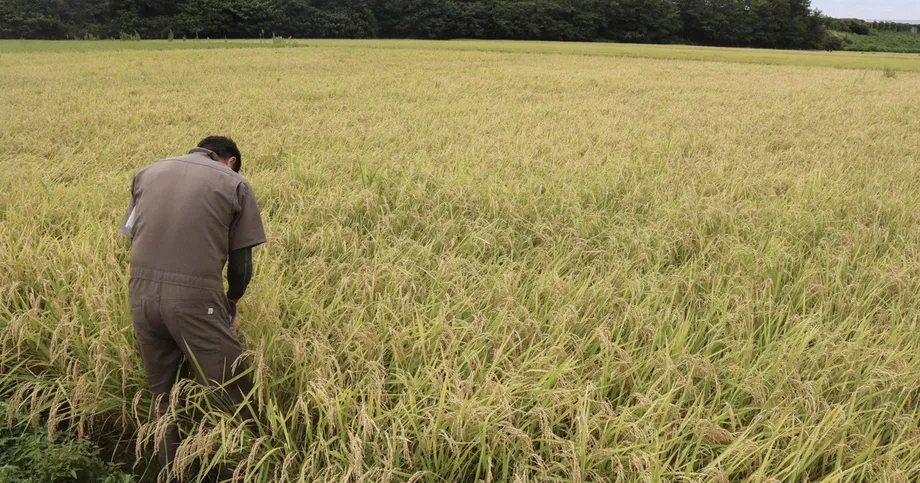
Prolonged rain has added uncertainty about both harvest volume and quality. September's wet weather delayed harvesting in some areas, and the updated figures based on conditions through October 25 are expected to capture more of its effects.
The distribution of the new crop also matters. Agricultural cooperatives and prefectural branches of the national cooperative federation set provisional payments to farmers at around 15,000 to 18,000 yen per 60 kilograms of brown rice. Commercial collectors were gathering rice at roughly 12,000 to 14,000 yen.
Those different payment levels helped draw more of the 2026 crop into cooperative channels. Commercial dealers consequently had less rice available for immediate trading, including supplies used for supermarket promotions, even while national inventories remained high.
Older rice adds another layer of competition. Rice from the 2025 crop remaining in warehouses can be redirected toward restaurants and other business users. Those sales compete with newly harvested rice for buyers, keeping pressure on suppliers trying to sell the 2026 crop.
A smaller staple harvest is under consideration
The proposed 2027 production guideline of 6.93 million tons matches the lower end of projected staple rice demand for the year beginning in July 2027. Demand is estimated at between 6.93 million and 7.1 million tons.
At the upper end of that demand range, consumption would exceed the proposed harvest by 170,000 tons. Existing inventories are therefore central to the ministry's planning: rice already in storage remains part of the supply available to buyers alongside the next harvest.
The guideline has no compulsory force. Farmers' planting decisions and growing conditions will determine actual output. If production falls by the proposed amount, less newly harvested rice would enter the staple market, affecting the quantity available for sale and potentially prices.
The ministry plans to encourage production for animal feed and processing instead. That would shift rice toward uses where supplies are considered short, rather than asking agriculture to reduce every category of rice production equally.
Shorter storage could mean more regular purchases
The ministry is also considering shortening the reserve storage period from five years to three or four years. Rice would move out of public stores sooner, and the government could increase the quantity it purchases each year to replace it.
Annual replacement purchases and the immediate buyback serve related purposes. The extra 100,000 tons would help repair the gap left by the emergency releases. A shorter storage cycle would change the routine pace at which the government buys rice and removes older stocks.
Farm organizations have called for an early additional buyback to support prices as excess commercial stocks weigh on sales. Government buying reduces the amount left for private buyers, while replenishing the emergency reserve. The ministry has said its September operation would have no major effect on price trends.
No final purchase date or revised storage rule has been announced. The next decision points are the October 30 council meeting and the November harvest update. Those figures will help the ministry judge how much rice the rain affected before it commits to taking more supply into public stores.
Key Points
- Japan is considering buying back another 100,000 tons of rice after initiating a purchase of 210,000 tons in September 2026.
- Emergency releases totaling 590,000 tons in 2025 left government reserves at around 320,000 tons, against a desired level of roughly 1 million tons.
- Private inventories remain high, with projections showing stocks above the appropriate range even after the proposed extra purchase.
- The ministry is considering a 2027 staple rice production guideline of 6.93 million tons, about 6.4% below the projected 2026 harvest.
- A shorter reserve storage period of three or four years could increase regular annual government purchases.
- Updated harvest estimates due in November will help determine the timing of the additional buyback.