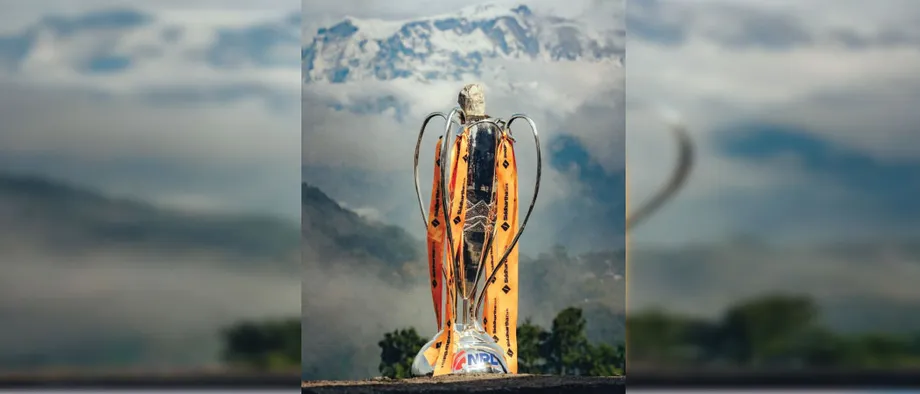
Eight teams anchor a growing cricket economy
The Cricket Association of Nepal (CAN) expects the third Nepal Premier League to generate around Rs 1.5 billion in transactions over roughly a month, with eight franchises supporting a growing business in broadcasting, hotels, restaurants, transport and merchandise. The champions will receive Rs 15 million, while television rights alone have risen to Rs 146.4 million, nearly five times the previous edition's price.
Contents
- Eight teams anchor a growing cricket economy
- What makes up the Rs 1.5 billion estimate?
- Earlier seasons show how the money was shared
- Broadcasting and sponsors provide the financial engine
- Hotels gain weeks of bookings
- International players bring tourism exposure
- Fans support restaurants, shops and transport
- Players receive higher rewards and new opportunities
- Technology improves as stadium capacity falls behind
- Key Points
The tournament at the Tribhuvan University International Cricket Ground in Kirtipur is becoming a commercial event whose spending extends well beyond the boundary. Teams bring players, coaches and production staff. Supporters travel from other parts of Nepal, and restaurants sell food alongside live screenings to fans unable to secure stadium seats.
CAN treasurer Padam Bahadur Khadka and secretary Paras Khadka put the association's expected revenue or transactions at Rs 700 million to Rs 750 million. Adding franchise spending brings their central estimate to about Rs 1.5 billion. All amounts are in Nepali rupees.
The strongest evidence of growth comes from the league's completed seasons. CAN disclosed revenue of Rs 473.6 million for the second edition, compared with Rs 276.9 million for the first, an increase of Rs 196.7 million, or about 71 percent.
The new forecast measures a broader flow of money than those earlier revenue figures: spending by the organiser and teams, with further business expected for suppliers and services. For Nepal's cricket economy, the practical issue is how much of that activity reaches players, local businesses and the grounds needed to accommodate growing demand.
What makes up the Rs 1.5 billion estimate?
Padam Bahadur Khadka's combined estimate pairs Rs 700 million to Rs 750 million in CAN activity with roughly the same amount of franchise spending. Another estimate attributed to him puts average expenditure at Rs 150 million per team, which would total Rs 1.2 billion across eight teams, compared with Rs 700 million to Rs 750 million collectively in the central calculation.
The sponsorship and ticketing breakdown also varies. Khadka has put sponsorship receipts at about Rs 200 million and sponsorship, tickets and partnerships together at Rs 700 million to Rs 750 million. Other figures attributed to him put tickets alone at Rs 700 million to Rs 750 million, with sponsorship at Rs 200 million or Rs 300 million. CAN has yet to present a reconciled breakdown explaining how these categories fit together.
A transaction total counts money changing hands. Revenue is money received by a particular organisation, while profit is what remains after expenses. Some payments also move within the league economy, such as money distributed by CAN to teams and then spent by teams on accommodation.
Paras Khadka, CAN's secretary and the NPL governing council coordinator, says costs are rising alongside income. His priority is keeping the competition financially sustainable while using cricket earnings for district and provincial development and national team preparation.
Earlier seasons show how the money was shared
CAN's financial details released in March 2026 put the second edition's organising costs at Rs 219.6 million against revenue of Rs 473.6 million. The association distributed approximately Rs 161.8 million to the eight franchises and retained about Rs 92.1 million.
Franchise distributions had been Rs 31.6 million after the inaugural edition. The second season's payout was therefore more than five times as large, giving teams a much bigger return from the competition's central income.
The league's commercial development can be traced through several milestones:
- First edition: CAN generated Rs 276.9 million in revenue and distributed Rs 31.6 million to franchises.
- Second edition: revenue reached Rs 473.6 million, and franchise distributions rose to about Rs 161.8 million.
- March 2026: CAN released the second edition's financial details.
- Third edition: CAN projects around Rs 1.5 billion in combined transactions and introduces the Decision Review System.
- November 15: the league stage is scheduled to finish, after which CAN plans a Rising Stars team from players whose franchises do not advance.
Broadcasting and sponsors provide the financial engine
Himalaya Sports paid Rs 146.4 million, excluding tax, for the third edition's television rights. The previous television agreement with Kantipur Television was worth Rs 30 million. The increase is Rs 116.4 million, making the new contract about 4.9 times the earlier price.
CAN also received Rs 180.4 million from NetTV. Together, the two named deals total Rs 326.8 million. A broader figure of Rs 335 million has been given for media and ticketing rights combined.
Digital distribution has become a source of paid income as well. The first edition was available free on YouTube and television, while the second introduced a subscription model, with DishHome acquiring rights for streaming over the internet. This gives the league ways to earn from viewers outside the stadium.
Siddhartha Bank is the title sponsor, and Red Bull is the principal sponsor of the Himalaya Sports broadcast. Other commercial partners include Bajaj Pulsar, Prostyle, Nepal Life Insurance, Proton, Asian Paints, Soyam and Himstar. Franchises also negotiate their own sponsorships.
Janakpur Bolts chief executive Niroj Khatiwada says the number of team sponsors has grown three to four times between the first and third seasons. Larger broadcasting contracts and more team sponsors give franchises several sources of income to help meet their expanding budgets.
Hotels gain weeks of bookings
Each franchise travels with roughly 30 to 35 people, including players, coaches, support staff and videographers, according to Hotel Association Nepal treasurer Yubaraj Shrestha. Across eight teams, that represents about 240 to 280 people before visiting supporters are counted.
Shrestha estimates that each team occupies 25 to 30 hotel rooms and books accommodation for at least six weeks. Training camps begin about a week before the tournament, extending hotel demand beyond the matches themselves. All eight franchises are staying in separate hotels.
Each team's hotel bill is estimated at Rs 8 million to Rs 15 million. Applied across the league, those estimates imply Rs 64 million to Rs 120 million in accommodation spending, with between 200 and 240 rooms occupied by team groups.
Shrestha says regular hotel business also supports suppliers, including farmers. He describes the benefit as extending beyond the hotel receiving the booking:
Consistent business for a hotel helps stimulate activity in several other sectors, including agriculture. This contributes to the wider economy.
International players bring tourism exposure
The eight franchises have six overseas players each, bringing the foreign contingent to 48. Paras Khadka says players from 10 of the world's 12 Test nations are expected to participate, widening the range of international audiences with a reason to follow the tournament.
Andre Russell's social media activity illustrates the attention a famous player can attract. A photograph of him wearing a Dhaka topi received more than 50,000 reactions and over 1,800 comments. David Warner is another prominent international player expected in the competition.
Shrestha, a hotel businessperson involved in sports tourism, says these players can introduce Nepal to followers unfamiliar with the country:
Players like Russell have a unique fan following. Some of the people who follow him may have learned about Nepal for the first time because of his participation.
Teams also arrange excursions during breaks, including visits to Everest Base Camp, Shrestha says. Hotel Association Nepal president Binayak Shah says supporters from places associated with franchises, including Sudurpaschim, Biratnagar, Lumbini and Chitwan, are travelling to watch matches and using accommodation at different prices. Members of the Nepali diaspora and fans of overseas players are adding to that demand.
Fans support restaurants, shops and transport
Group stage tickets cost Rs 500 for general seating and Rs 1,000 for premium seating. During the knockout stage, those prices rise to Rs 1,000 and Rs 1,500 respectively. For spectators, the match ticket is only part of the day's expense, alongside travel, food and sometimes accommodation.
Restaurants in Kathmandu and other urban centres have arranged large screens and packages combining meals with cricket viewing. Limited stadium seating and strong ticket demand give these businesses an audience of supporters who want to watch together elsewhere.
Food stalls and shops around the Kirtipur ground gain customers buying snacks, bottled water, soft drinks, tea and coffee. Transport operators also serve the thousands of spectators arriving on match days. Mingma Dandu Sherpa, former president of the Koshi Province Cricket Association, says the competition creates work in broadcasting, sponsorship and supporting services as well.
Merchandise gives franchises another income stream. Lumbini Lions lists a playing jersey from the second season at Rs 2,000. Biratnagar Kings, Karnali Yaks and Chitwan Rhinos sell official jerseys online, while Janakpur Bolts offers scarves and jerseys. Fan clothing and accessories allow teams to earn from supporters watching both inside and outside the stadium.
Players receive higher rewards and new opportunities
The champions' prize rises from Rs 11 million in the second edition to Rs 15 million in the third, an increase of about 36 percent. The inaugural winners received Rs 10 million.
The runners-up will receive Rs 8 million, third place Rs 4 million and fourth place Rs 3 million. Together, the four awards total Rs 30 million, compared with Rs 20.1 million previously, an increase of about 49 percent.
CAN's provisions allow a marquee player, the leading domestic player associated with a franchise, to receive up to Rs 2 million. Each franchise may spend up to Rs 9 million on its 14 domestic players. Players also gain training, contact with experienced internationals and possible sponsorship opportunities.
Paras Khadka says CAN is coordinating with overseas cricket boards to obtain the permissions foreign players need to participate. After the league stage ends on November 15, CAN plans to select a Rising Stars team from players in the four eliminated franchises and involve it in preparation and matches for one day cricket.
Technology improves as stadium capacity falls behind
The third edition introduces the Decision Review System (DRS), which uses video and tracking technology to help review umpiring decisions. Planned tools include three dimensional ball tracking for leg before wicket decisions, which involve judging whether a ball stopped by the batter's body would have hit the stumps. Reviews will also cover run outs, stumpings and no balls.
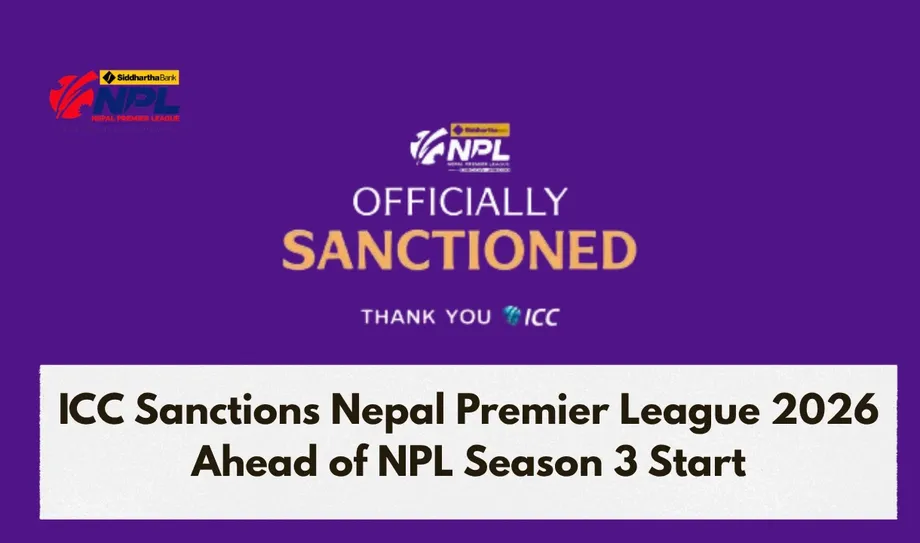
Paras Khadka had described DRS as too expensive during the previous edition. Its arrival follows earlier improvements in spectator seating and floodlights. CAN president Chatur Bahadur Chand says ICC recognition followed scrutiny of transparency, player payments and controls against match fixing.
Security plans call for more than 1,000 police personnel daily, supported by CCTV, drones, officers in plain clothes and Armed Police Force personnel outside the stadium.
Ground capacity remains a pressing constraint. Paras Khadka says Nepal urgently needs a stadium accommodating at least 25,000 spectators. Mulpani Cricket Stadium and Gautam Buddha International Cricket Stadium remain stalled or incomplete, leaving Kirtipur to carry much of the country's major cricket activity.
Shah wants the NPL incorporated into a planned sports tourism strategy, while Sherpa calls for more grassroots cricket, trained technical personnel and activity across districts and provinces. The league is already generating larger contracts and longer hotel bookings. Expanding grounds and local cricket programmes would give those earnings a lasting role beyond the tournament.
Key Points
- CAN projects around Rs 1.5 billion in combined tournament transactions, including franchise spending.
- Second edition revenue reached Rs 473.6 million, about 71 percent above the first edition.
- Third edition television rights sold for Rs 146.4 million, nearly five times the previous price.
- Estimated hotel spending across eight teams totals Rs 64 million to Rs 120 million.
- The champions will receive Rs 15 million, and the top four prizes total Rs 30 million.
- DRS is being introduced as CAN seeks larger grounds and more investment in domestic cricket.
- CAN plans a Rising Stars team after the league stage ends on November 15.